In 2019, MIT professor Patrick Winston gave a legendary 1-hour lecture called “How to Speak.”
It has 18M+ views for a reason.
His frameworks:
• Your ideas are like your children
• The 5-minute rule for job talks
• Why jokes fail at the start
15 lessons on communication:
BREASTMILK
She thought she was studying milk.
What she uncovered was a conversation.
In 2008, evolutionary anthropologist Katie Hinde was working in a primate research lab in California, analyzing breast milk from rhesus macaque mothers. She had hundreds of samples and thousands of data points. Everything looked ordinary—until one pattern refused to go away.
Mothers raising sons produced milk richer in fat and protein.
Mothers raising daughters produced a larger volume with different nutrient balances.
It was consistent. Repeatable. And deeply uncomfortable for the scientific consensus.
Colleagues suggested error. Noise. Statistical coincidence.
But Katie trusted the data.
And the data pointed to a radical idea.
Milk is not just nutrition.
It is information.
For decades, biology treated breast milk as simple fuel. Calories in. Growth out. But if milk were only calories, why would it change depending on the sex of the baby?
Katie kept digging.
Across more than 250 mothers and over 700 sampling events, the story grew more complex. Younger, first-time mothers produced milk with fewer calories but significantly higher levels of cortisol—the stress hormone.
The babies who drank it grew faster.
They were also more alert, more cautious, more anxious.
Milk wasn’t just building bodies.
It was shaping behavior.
Then came the discovery that changed everything.
When a baby nurses, microscopic amounts of saliva flow back into the breast. That saliva carries biological signals about the infant’s immune system. If the baby is getting sick, the mother’s body detects it.
Within hours, the milk changes.
White blood cells surge.
Macrophages multiply.
Targeted antibodies appear.
When the baby recovers, the milk returns to baseline.
This was not coincidence.
It was call and response.
A biological dialogue refined over millions of years. Invisible—until someone thought to listen.
As Katie reviewed existing research, she noticed something unsettling. There were twice as many scientific studies on erectile dysfunction as on breast milk composition.
The first food every human consumes.
The substance that shaped our species.
Largely ignored.
So she did something bold.
She launched a blog with a deliberately provocative name: Mammals Suck Milk.
It exploded. Over a million readers in its first year. Parents. Doctors. Scientists. People asking questions research had skipped.
The discoveries kept coming.
Milk changes by time of day.
Foremilk differs from hindmilk.
Human milk contains over 200 oligosaccharides babies can’t digest—because they exist to feed beneficial gut bacteria.
Every mother’s milk is biologically unique.
In 2017, Katie brought this work to a TED stage. In 2020, it reached a global audience through Netflix’s Babies. Today, at Arizona State University’s Comparative Lactation Lab, she continues reshaping how medicine understands infant development, neonatal care, formula design, and public health.
The implications are staggering.
Milk has been evolving for more than 200 million years—longer than dinosaurs walked the Earth. What we once dismissed as simple nourishment is one of the most sophisticated communication systems biology has ever produced.
Katie Hinde didn’t just study milk.
She revealed that nourishment is intelligence.
A living, responsive system shaping who we become before we ever speak.
All because one scientist refused to accept that half the story was “measurement error.”
Sometimes the biggest revolutions begin by listening to what everyone else ignores.
BREAKING STUDY: Infant Vaccination Increases Death Risk by Up to 112% vs Unvaccinated
Louisiana Department of Health death records reveal that infants vaccinated at 2 months are far more likely to die in the following month than unvaccinated infants. By Nicolas Hulscher, MPH @NicHulscher@McCulloughFund@BrianHookerPhD https://t.co/EIqPJYRzAg
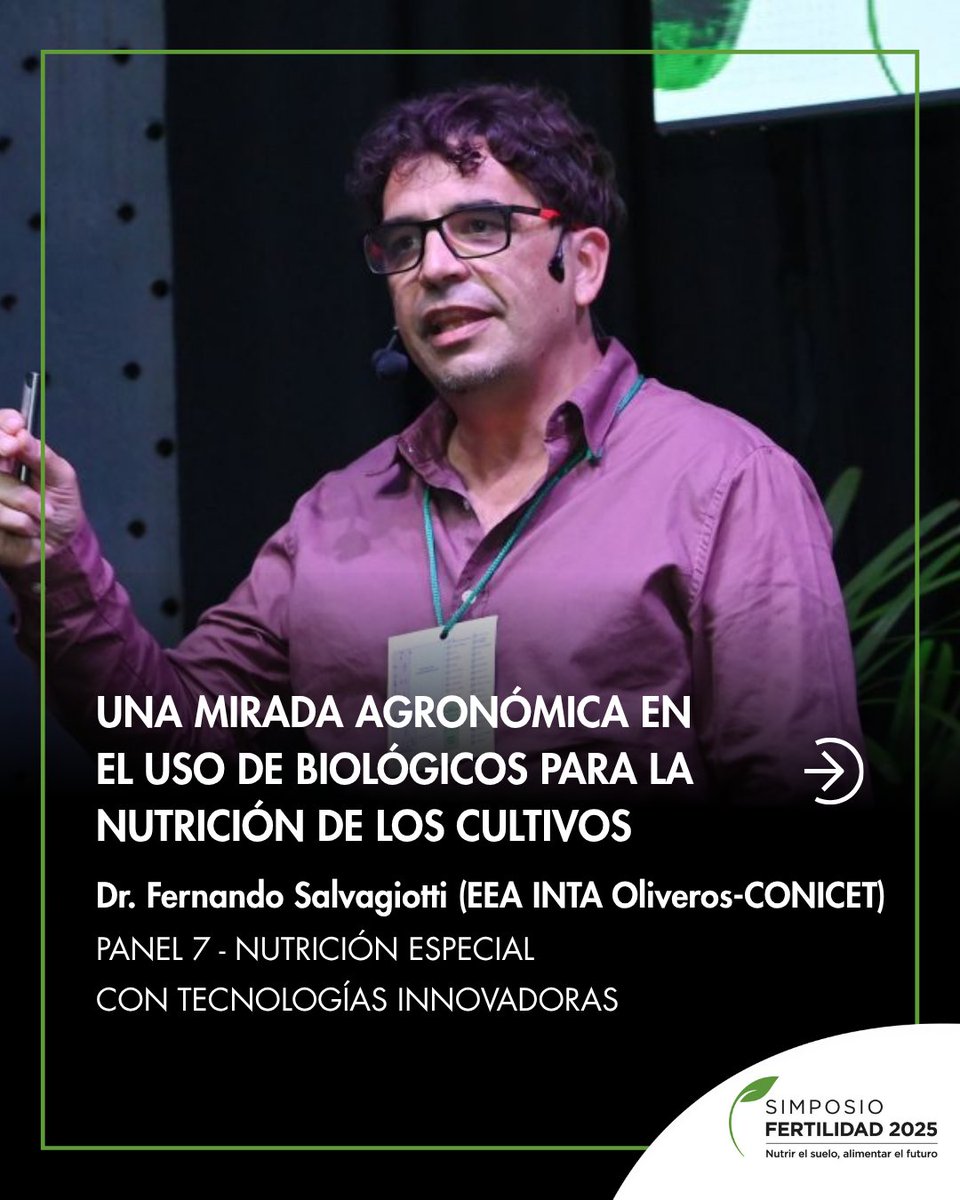
Los productos biológicos son aliados estratégicos para una agricultura más eficiente y sustentable.
Durante el Simposio de Fertilidad 2025, el Dr. Fernando Salvagiotti analizó las diferencias y complementariedades entre bioestimulantes y biocontroladores, destacando su papel en la nutrición y sanidad de los cultivos.
🔬 Mientras los bioestimulantes promueven el crecimiento y mejoran la tolerancia al estrés, los biocontroladores actúan sobre plagas y enfermedades, contribuyendo al equilibrio ecológico del sistema productivo.
🌾 Dos herramientas, un mismo objetivo: cultivos más sanos, suelos más vivos y producción sostenible.
👉🏼 Conocé más sobre las presentaciones del Simposio 2025:
🔗 https://t.co/wqUPMOc2xC
#fertilizantes #nutrientes #nutrición #cultivos #suelo #agro #ProducciónSostenible #bioestimulantes #biocontroladores
@FerSalvagiotti
Intense pink aurora shortly after sunset tonight driving south out of Fairbanks, Alaska. Some of the most stunning color in the aurora I have ever seen!
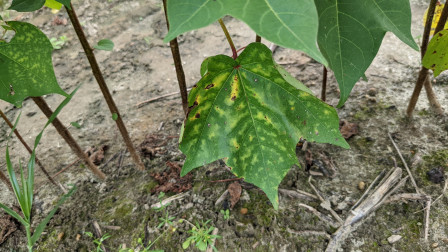
Most corn hybrids are susceptible to southern rust, but a few resistant hybrids may be available. Resistant hybrids may contain a specific type of gene (known as an Rpp gene) that confers resistance to southern rust.
Some moderately-susceptible hybrids may be available that do not contain specific Rpp genes. Such hybrids may use multiple genes that slow down southern rust development.
Selecting disease-resistant hybrids is the cornerstone of corn disease management. Ask local Extension for more information.
@DTelenko@alisonrISU@tjcksn@alabamaED@baldpathologist@YuanZeng3@MahDuffeck@ppp_trey@travisfaske@cropdoc08@NationalCorn@MandyBish1@maddishires@NeCGA@ilcorn #corn
Tar spot samples coming in today, 5 counties turned on. I still suggest waiting to pull the fungicide trigger till we get full tassel/silk as the hot weather will slow it down. Thanks to @purdueppdl for providing images of stromata and ascospores. @PurdueCorn@PurdueExtension@PurdueBPP
I have added a few more counties today in Indiana from our tar spot scouting rounds. We are still only finding a single tar spot stromata on a lower leaves in V8-V10 corn. This extremely hot weather is lowering the risk in the model (example for Pinney Purdue Ag Center in Porter County). I would still wait to see what happens the next few weeks before pulling the fungicide trigger. @PurdueExtension@badgercropdoc@MartinChilvers1
This is for you. @ScottAdamsSays
The world-famous author and creator of Dilbert announced that he has terminal cancer of the worst kind and has just a few weeks to live.
I have been reading Dilbert since the late 90s. I have read almost all of his books too....
1/3
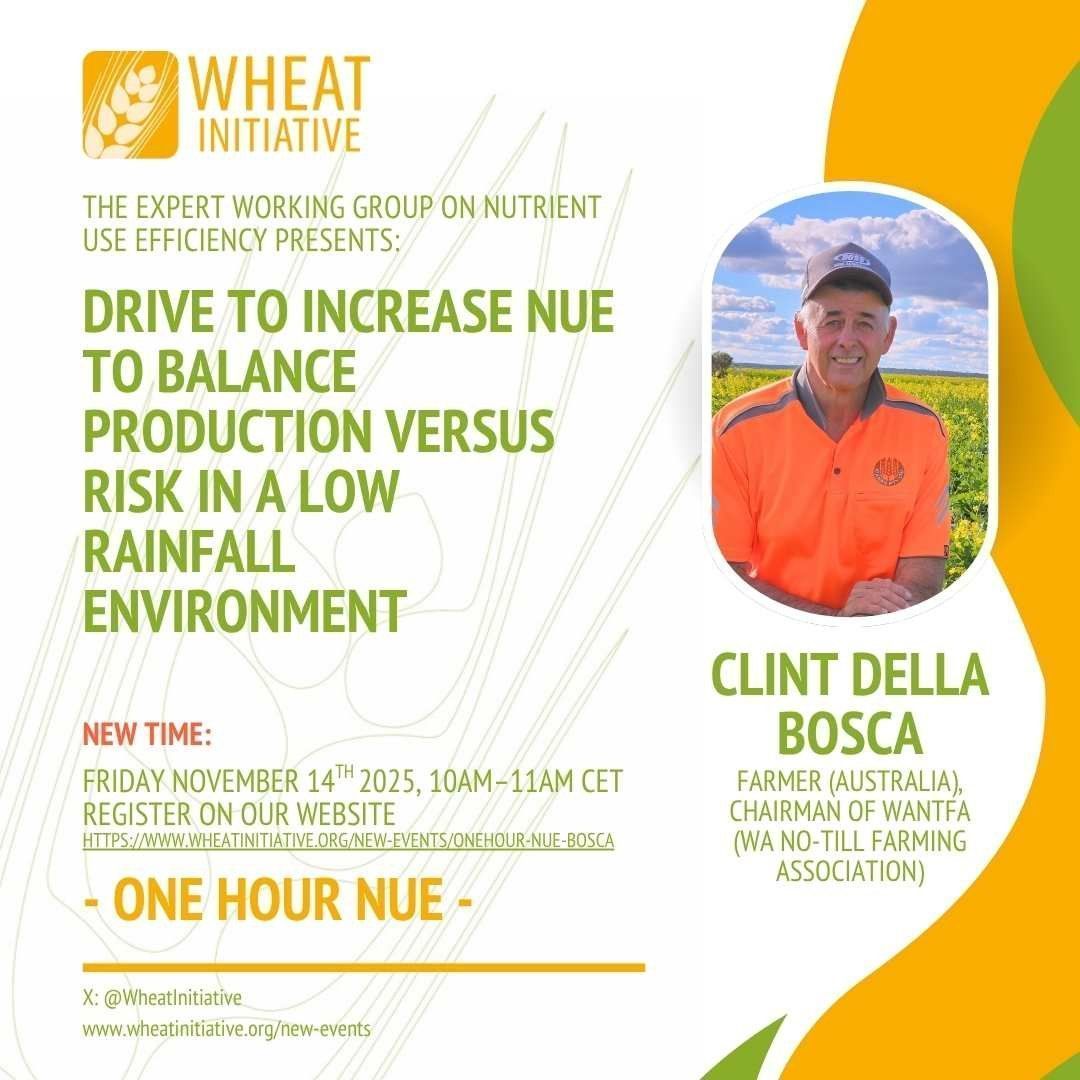
The #nitrogen conundrum "even if yield of the coming crop could be accurately predicted it would be of little use in determining the amount of N fertilizer farmers" https://t.co/AuScv608ro
Thanks for driving this collaboration forward @peterthorburn2