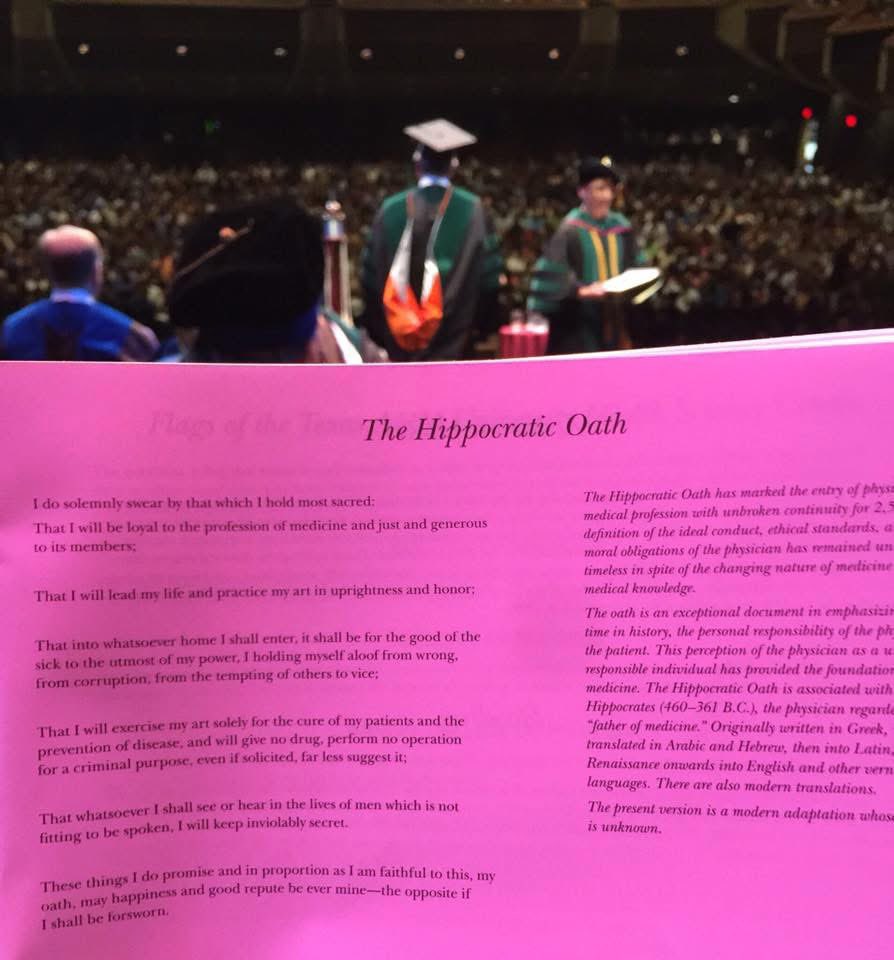
People ask me all the time why i stay in medicine when I understand business, economics, and finance so well.
Easy answer – when I got into medical school after playing college football, my Dad – who was the first kid in his family to go to college & ultimately medical school, sent me a letter and said, “you’re entering the noblest of professions”.
I still believe that! Wholeheartedly
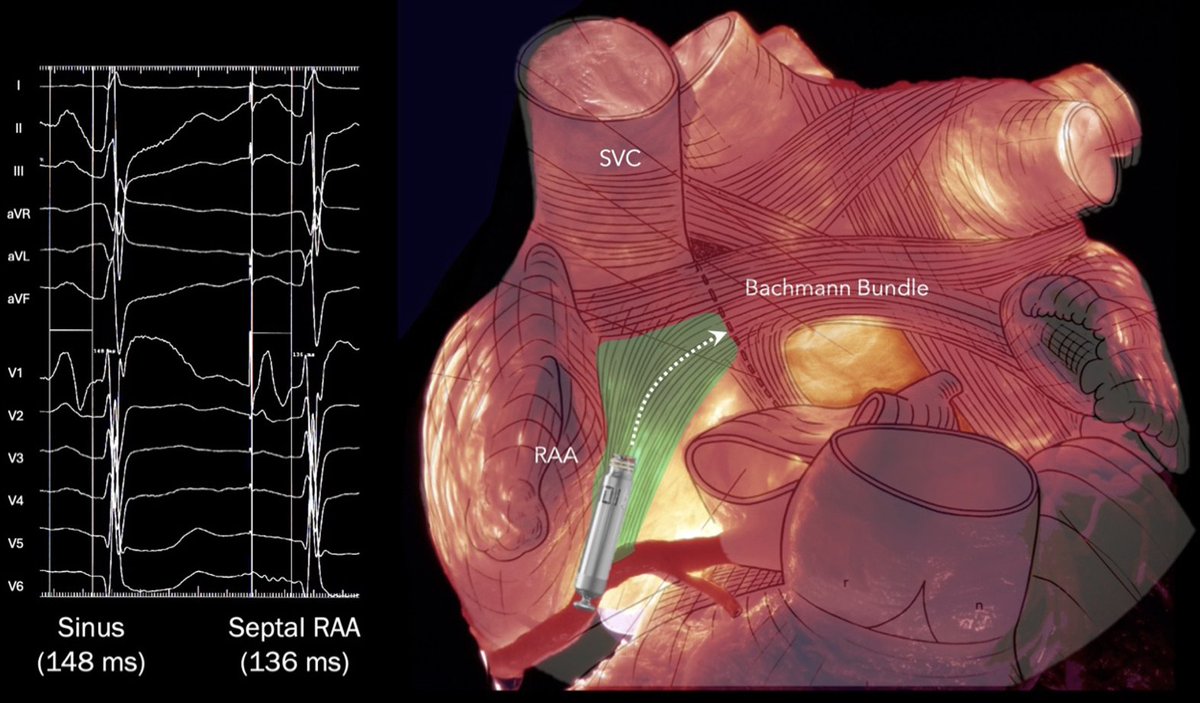
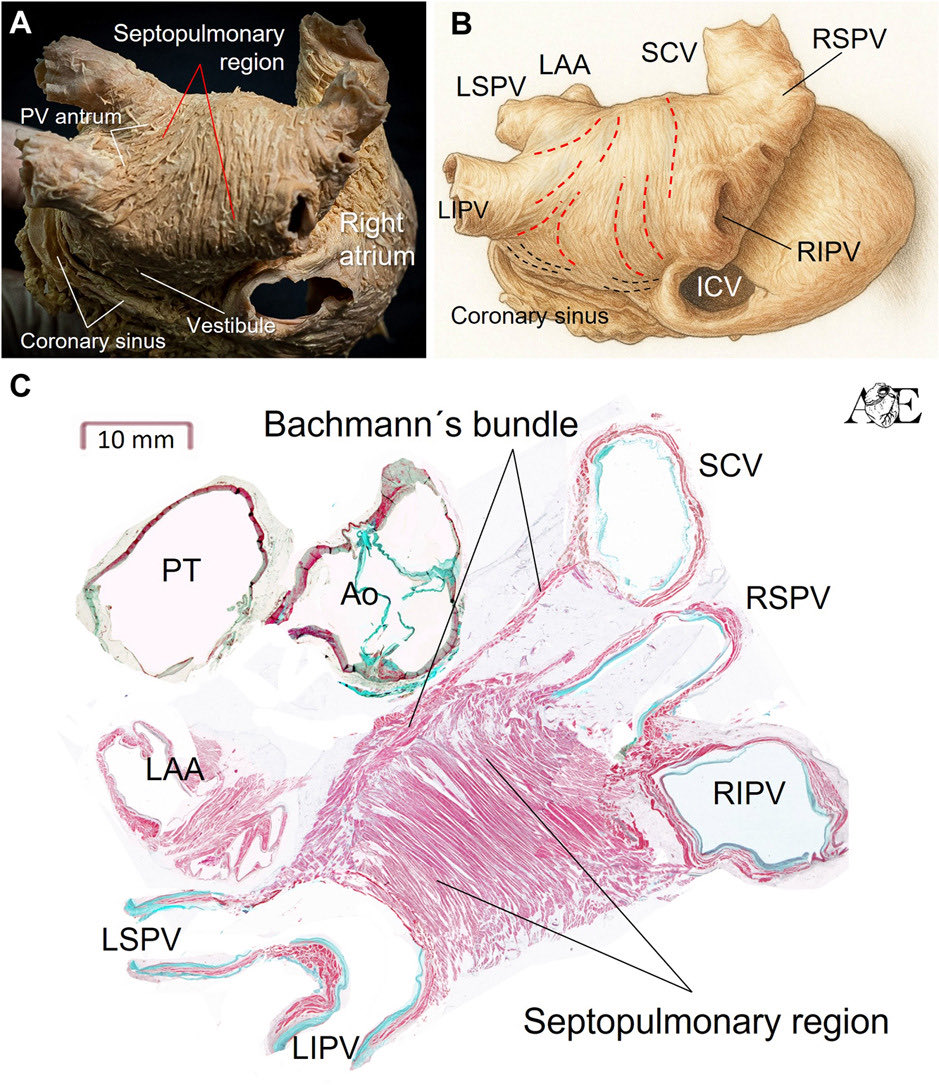
There is a lot to learn about in the inputs into Bachmann's area. Is the septal base of RAA enough?
Congrats to @alexandra_regia for publishing our alternate site leadless case & re-exploring anatomy. The band of fibers bifurcates around both appendages in McAlpine. @lusty63@jacabreracardio@shivkumarmd@Dr_JozaEP
Septal Implantation of a Leadless Atrial Pacemaker: Relevant Anatomy for Alternate Sites into Bachmann’s Area https://t.co/yrKkcPettf
CLEAR-VT is not just a “new catheter” story.
Dual-energy lattice-tip ablation may improve efficiency in complex VT, but the safety signals are just as important as the efficacy signal.
EP Edge Clinical Minute reviews the tradeoff.
#VT#EPeeps#Electrophysiology #EPClinicalMinute
Is larger-footprint ablation the future of scar VT, or are we underestimating platform-specific risk?
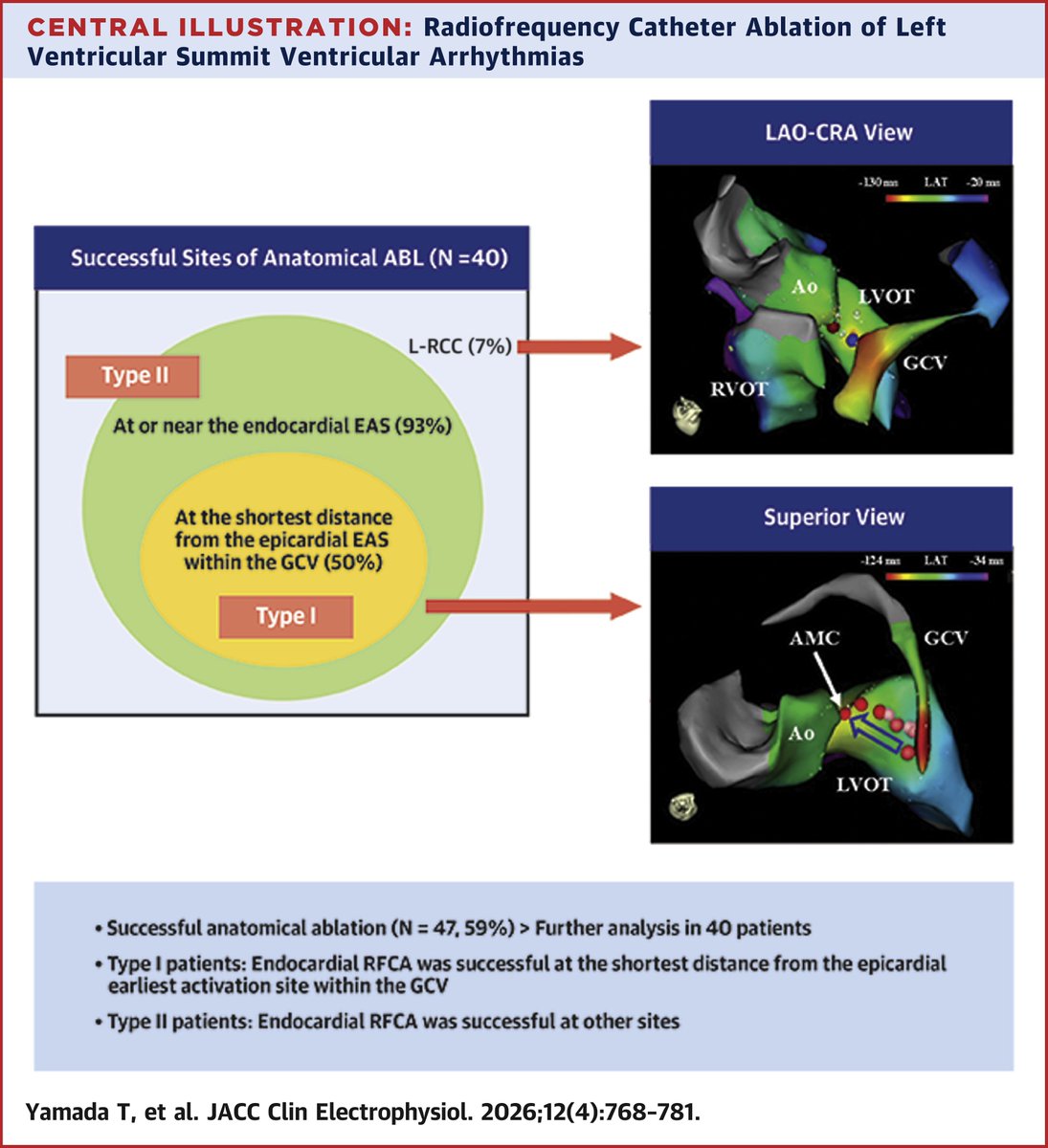
This #JACCCEP study suggests that endocardial radiofrequency catheter ablation of LVS VAs through an anatomical approach should first target the endocardial earliest activation site (EAS) rather than sites anatomically closest to the epicardial EAS. https://t.co/ifcDUeBfRo
Recognizing the septopulmonary region not as an isolated “bundle,” but as a functional 3D myocardial architecture, is essential for interpreting mapping data & optimizing ablation strategies
@JACCJournals@DrRoderickTung@davidgzcasal@DamianSanc1955
https://t.co/nnirFWiTnc
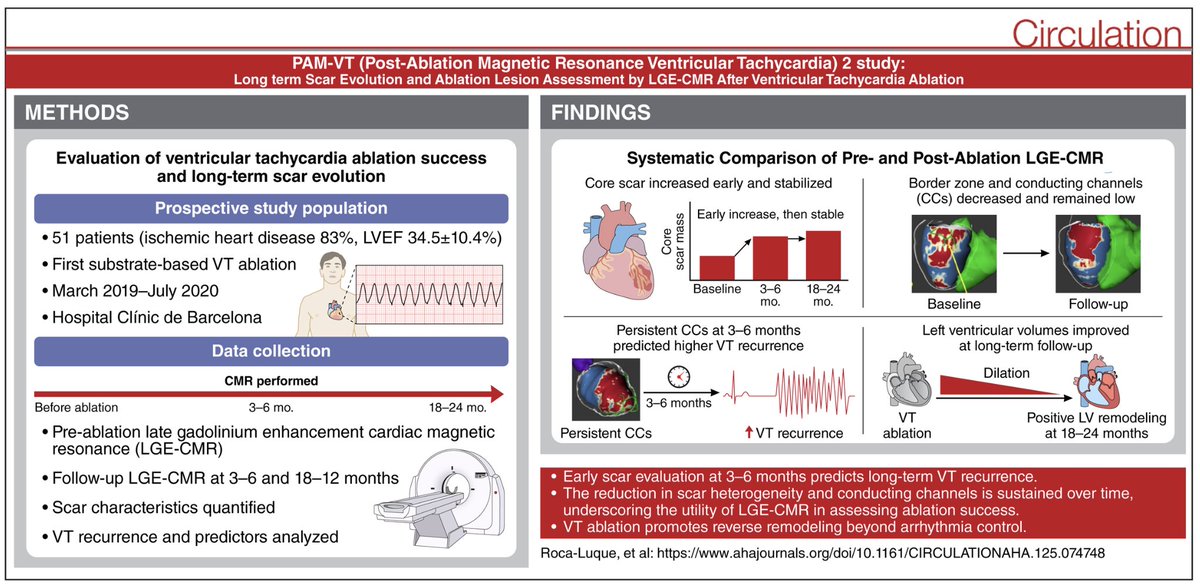
Recently published in @CircAHA our long-term PAM-VT2 study: Post-ablation MRI to predict long-term VT recurrence, to assess scar evolution, new +remodelling effect after ablation proved! A long journey working together EP, imaging, bioengineers. https://t.co/frY1ugnr1U
Yet another reason to avoid targeting the posterior fascicle with LBBaP.
Posteromedial papillary muscle perforation with preserved electrical parameters: a novel complication of LBBaP
https://t.co/yymXEhcGoe
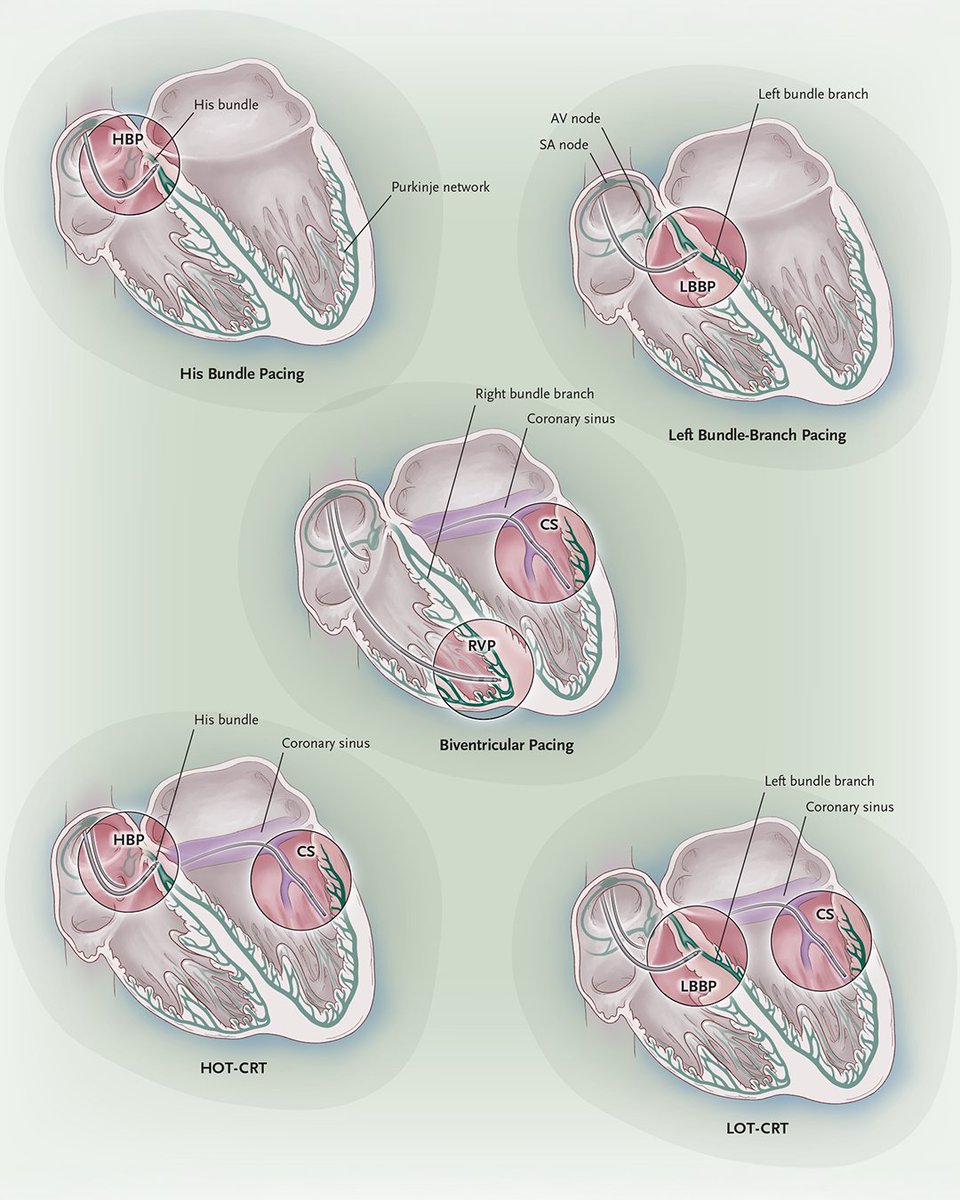
Cardiac physiologic pacing, also known as cardiac resynchronization therapy, is indicated in patients with heart failure, reduced left ventricular ejection fraction (LVEF) of 50% or less, and either a high (or anticipated high) ventricular pacing burden or a wide QRS complex. Traditionally, physiologic pacing has been achieved with biventricular pacing with a right ventricular lead and a coronary sinus branch lead. Randomized trials involving more than 10,000 patients with heart failure have shown clinical, exercise, and quality-of-life benefits associated with biventricular pacing, as well as improved LVEF and reduced mitral regurgitation and ventricular volumes. These benefits are greatest in patients with left bundle-branch block and a QRS duration of 150 msec or longer. Recent studies support targeting the His bundle or left bundle branch as an alternative cardiac physiologic pacing strategy. Ongoing randomized trials are expected to more clearly define the comparative efficacy and safety of conduction system pacing as compared with biventricular pacing.
Read the Review Article “Physiologic Pacing in Heart Failure” by @MihailChelu, MD, PhD, Jeanne E. Poole, MD, and Kenneth A. Ellenbogen, MD (@KennethEllenbo1), from the Baylor College of Medicine (@bcmhouston), University of Washington (@UW), and Virginia Commonwealth University School of Medicine: https://t.co/RuLZCpYUXn
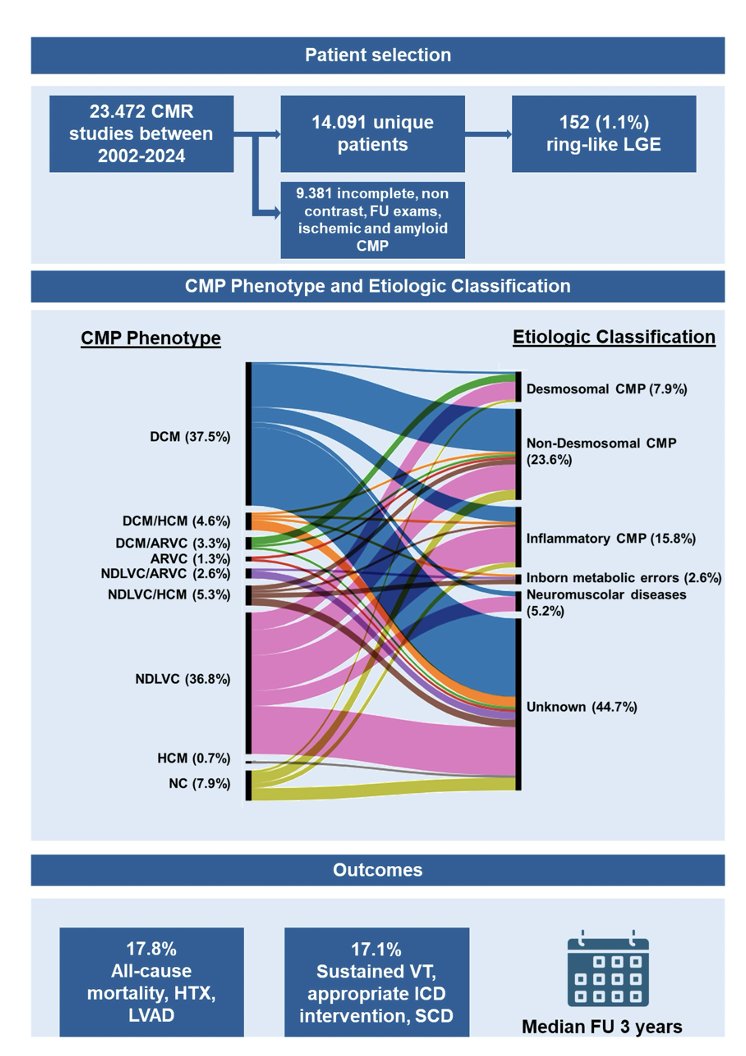
🍩Ring-like late gadolinium enhancement (LGE) is an uncommon cardiac MRI finding, present in ~1% of patients undergoing CMR.
🍩Most commonly present in dilated and non-dilated left ventricular cardiomyopathies, and spans multiple etiologies, including genetic, inflammatory, and idiopathic causes.
🍩Over a median follow-up of three years, patients with ring-like LGE experienced ~18% with major arrhythmic events and a similar proportion of death, heart transplantation, or LVAD implantation.
🍩Ring-like LGE represents a shared high-risk myocardial substrate rather than a disease-specific imaging pattern.
#whyCMR #CVimaging #SCMR2026
Purkinje and septal substrate modification as a therapeutic option for patients with STEMI and refractory ventricular fibrillation #OpenAccess
https://t.co/UwSKKbVm3c
Trans–right atrial access to the left ventricle for catheter ablation of ventricular tachycardia in a patient with double left-sided mechanical valves: First case report from Latin America, by @FellowEP and colleagues
@Ufrontera#HRO2GlobalVoices#EPeeps
https://t.co/IpOjce4ZJP
The target paraseptal fat pads at the Waterston’s groove can be reconstructed with ICE as the only imaging modality to guide anatomical cardioneuroablation. Adjacent structures to avoid (right phrenic nerve) can also be reconstructed. @EuropaceEiC@CleClinicHVTI