We recently found an unexpected deletion in the amyE-back homology arm commonly used for cloning in B. subtilis -- check out the details in our short preprint: https://t.co/QQoUuoXnEo
Excited to share our latest work from @bioSavinov, a K99 fellow in the lab (and corresponding author!). Andrew worked w/ @SassSeabass (@keating_lab) to develop FragFold: a massively parallel computational approach to discover inhibitory protein fragments! Check out his thread:
We are delighted to share a new method for live-cell transcriptome recording: Molecular Time Capsules!
https://t.co/oHy539VJz9
We envision MTCs will help reveal the origins of phenotypic heterogeneity, and facilitate the study of transcriptomes in hard-to-access locations. (1/n)
Congrats to Li lab graduate student Manraj Gill on receiving an MIT School of Science DEI Service Fellowship for his deep engagement in the mentorship of underrepresented students both within @MIT and in the broader community! @MITBiology@ScienceMIT
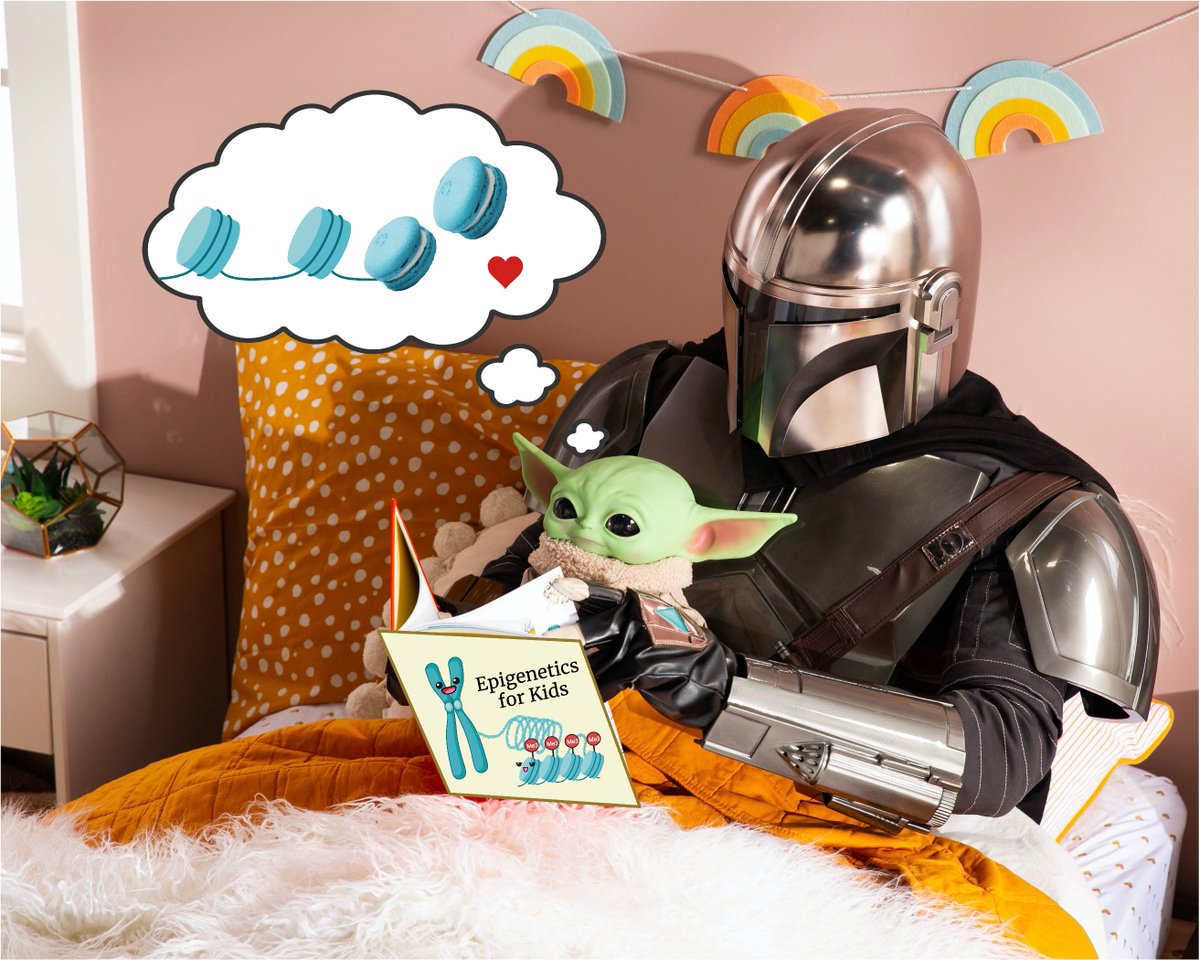
What do the #epigenome and #Grogu have in common? Answer: the Force is strong in both of them.
In our latest review (in press) with @dpmelters @NCIYaminiDalal, we discuss how mechanical forces shape chromatin structure, leading to biological functions. https://t.co/MwRbCxUlOf
I'm happy to share our work on computer-aided synthesis planning of hybrid enzymatic/synthetic reaction pathways with @Geneticdesigner and @cwcoley!
https://t.co/aJs1z4h7Q3
Caspases control programmed cell death in eukaryotes. Type III-E CRISPR harbors caspase-like proteases. Our new Science paper explains how Craspase switches on protease activity in RNA-guided fashion - safe alternatives to Cas nucleases in therapeutics.
https://t.co/6LZKtFes7L
IscB-ωRNA is as active as Cas9 in test tube, but only a fraction in size. Want to learn about their similarity and differences in high-res? What might be holding its activity back in human cells? Further miniaturization? Check out our new publication. https://t.co/fLXTGmmld4
Check out our, @GeneWeiLiLab @julianstanley_, new paper showing that a large fraction of RNA molecules in bacteria are fragments of canonical full-length mRNAs with consequences for differential RNA-seq analysis: https://t.co/esNmOMljXu
Sad to learn that #Yale Prof. and colleague #SidneyAltman, 1989 Chemistry #Nobel recipient, has died. His publication on the #ribozyme action of #RNaseP was a milestone discovery in the now exploding field of #ncRNA. The photo shows him celebrating the news of his Nobel Prize.
The work of a great scientist and one of my best friends, @vera_rinaldi 🥳
It was always fun to make wild conjectures together as to what could be going on here! Congratulations!
The latest Spotlight piece I've written for the @RNASociety featuring @RNABob . It was great to know Bob and learn about his exciting research on riboswitches!
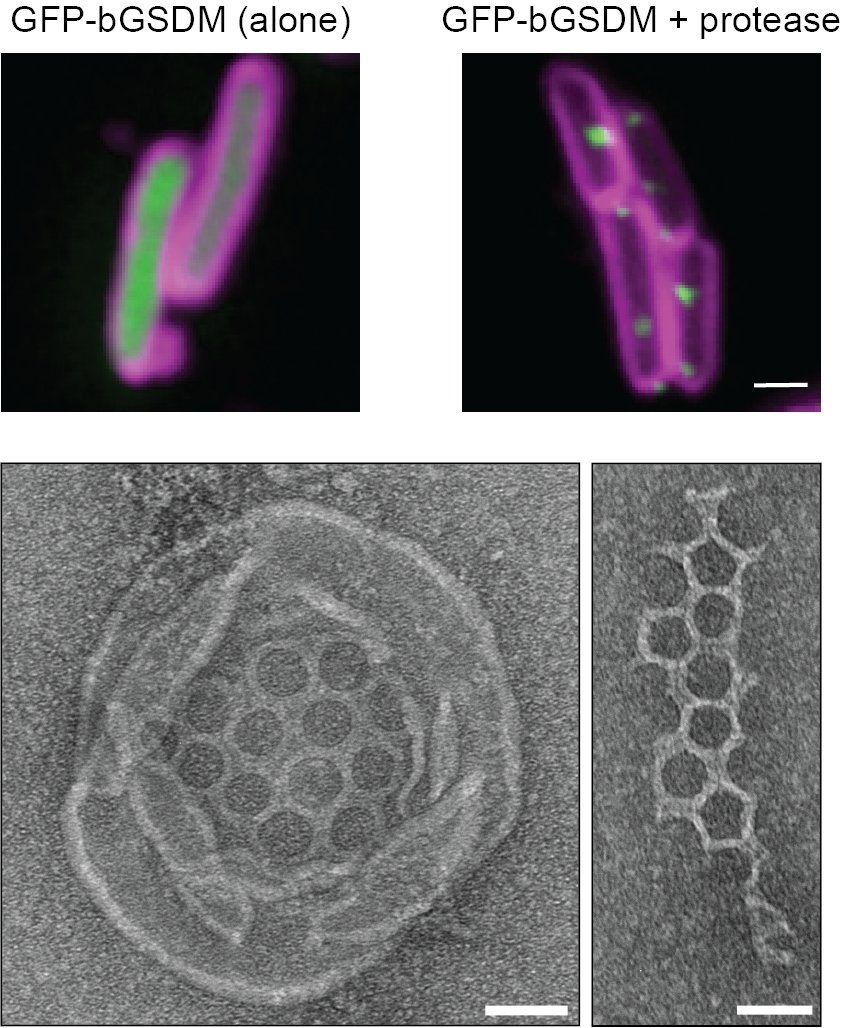
Pyroptosis is conserved between human and bacteria: caspase-activated gasdermins form pores and protect bacteria from phage
Fantastic collaboration with the Kranzusch lab, now out in @ScienceMagazine
Congrats @TanaWein & @algejohn !
https://t.co/c84iN8irhz
Finally out-- Intimate look at how an anion can snap-lock a polyanionic riboswitch into a tight pseudoknot to upregulate bacterial #detox machinery: labor of love by postdocs Rajeev Yadav (now @michiganstateu), Julia Widom (now @uoregon) & Adrien Chauvier https://t.co/6sj5FG6mWO