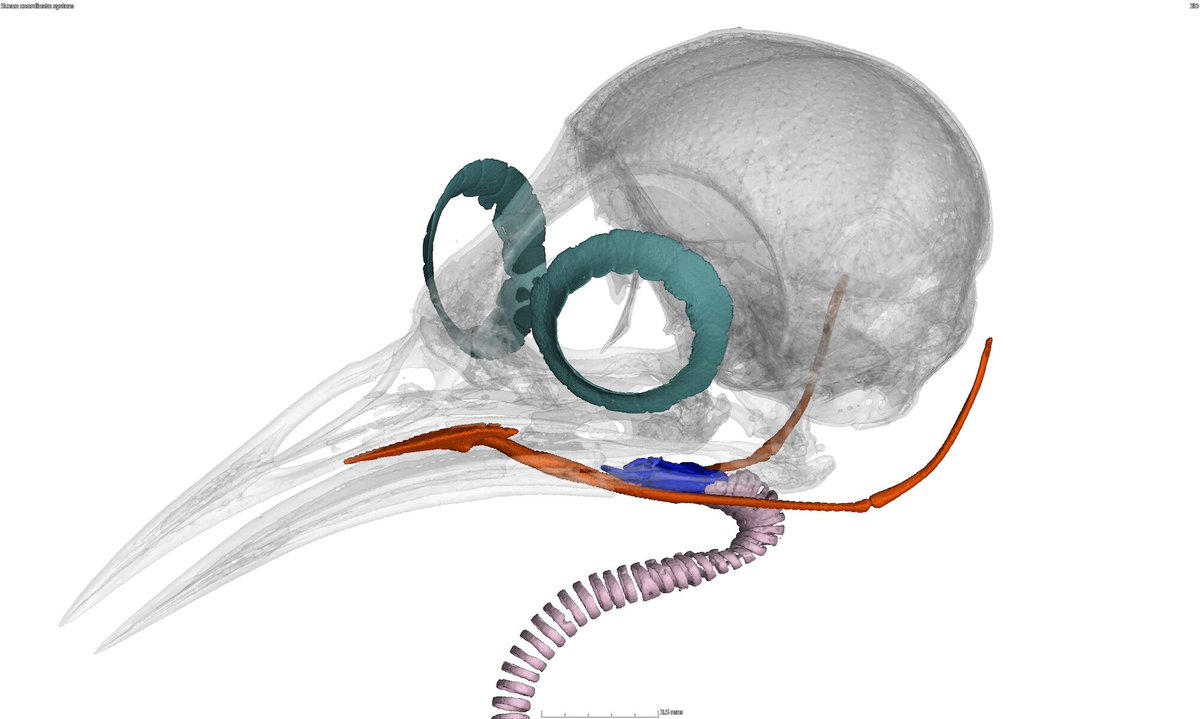
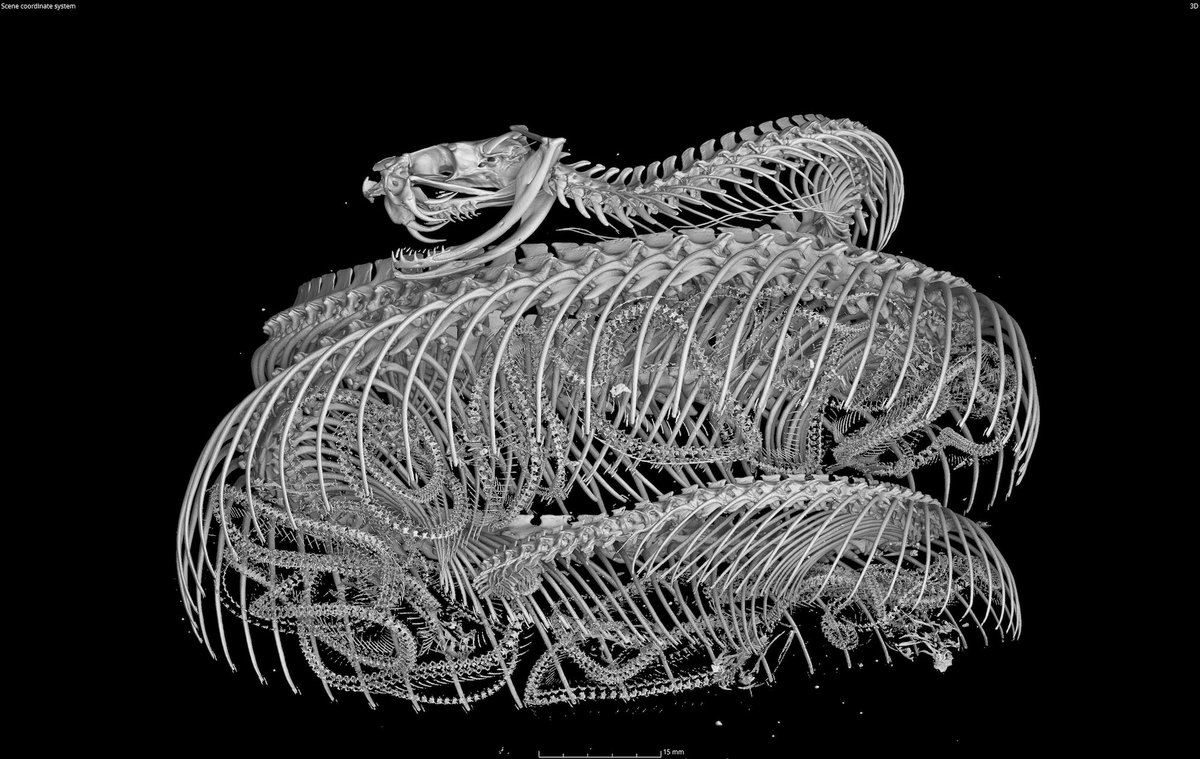
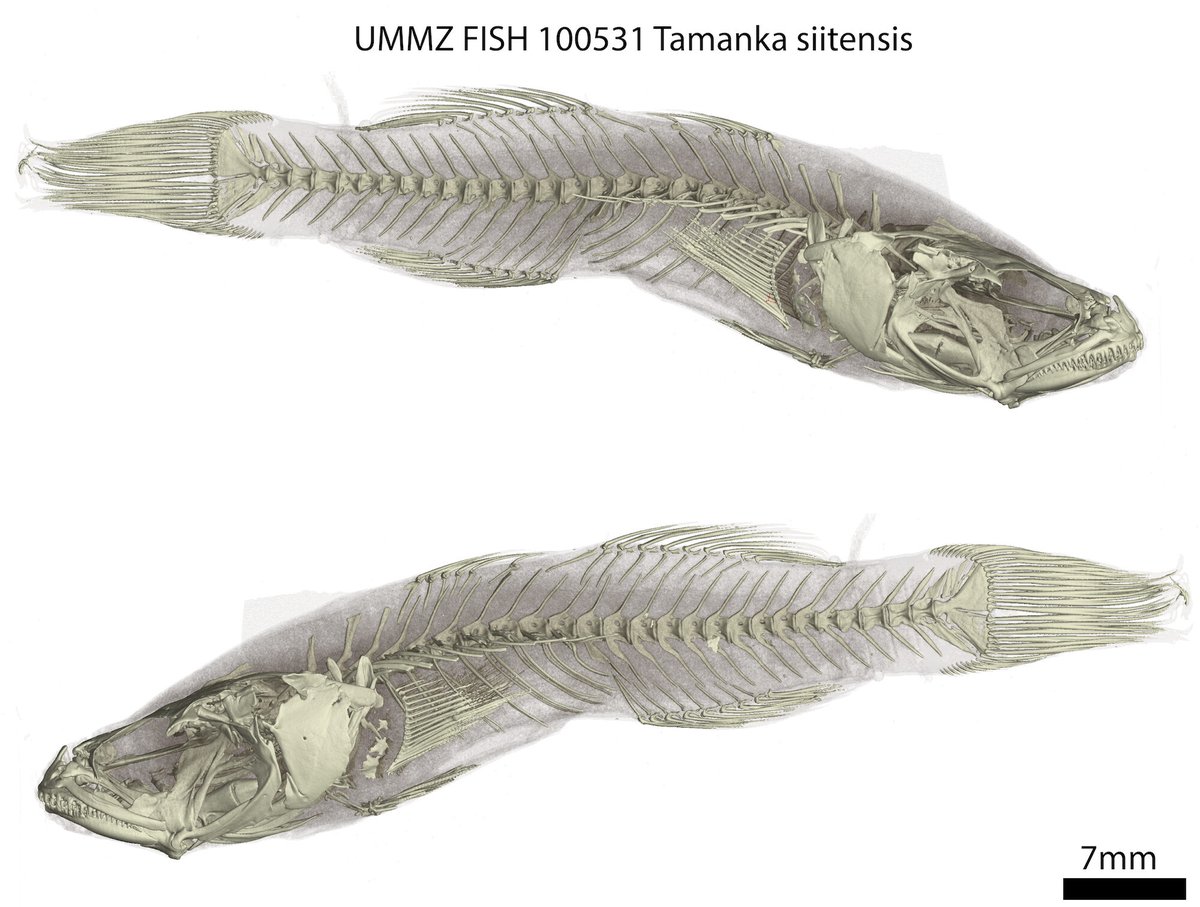
Are you interested in high-throughput #diceCT scanning. If so, check out our paper! @scaleyhan@jcroweriddell @jaimiAgray and Alison Davis Rabosky
https://t.co/SMmul3ZD5S
Scientists CT-scanned thousands of natural history specimens, which you can access for free
Natural history museums have entered a new stage of scientific discovery and accessibility with the completion of open Vertebrate (oVert), a five-year collaborative project among 18 institutions to create 3D reconstructions of vertebrate specimens and make them freely available online.
The project is led by the @FloridaMuseum of Natural History and includes several biologists from the University of Michigan. A paper summarizing the project and its impacts was published online March 6 in the journal BioScience.
Natural history museums got their start in the 16th century as cabinets of curiosity, in which a few wealthy individuals amassed rare and exotic specimens, which they kept mostly to themselves. Since then, museums have become a resource for the public, with exhibits that showcase biodiversity for anyone interested in learning about it.
However, most natural history collections remain behind closed doors, accessible only to scientists who must either travel to see them or ask that a small number of specimens be mailed on loan. The research team behind oVert wants to change that.
“If you require someone to get on a plane and travel to you to collaborate, that’s prohibitive in a lot of ways,” said David Blackburn, principal investigator of the oVert project and curator of herpetology at the Florida Museum of Natural History. “Now we have scientists, teachers, students and artists around the world using these data remotely.”
Between 2017 and 2023, oVert project members took CT scans of more than 13,000 specimens, with representative species across the vertebrate tree of life. This includes more than half the genera of all amphibians, reptiles, fish and mammals.
More than 1,600 specimens from @umichLSA's Museum of Zoology collections were scanned as part of the #oVertTCN project—mostly mammals, reptiles, amphibians and fish, along with a few birds. The museum also scanned several hundred specimens for partner institutions.
“The University of Michigan Museum of Zoology is the home to some of the largest collections of vertebrates in the world. We were able to utilize those collections and our own in-house CT scanner to produce 3D models of thousands of our voucher specimens, as well as material from collaborating collections,” said Cody Thompson (@codythompson51), mammal collections manager and associate research scientist at #UMMZ.
The other U-M co-authors of the @AIBSbiology
BioScience paper are Alison Davis Rabosky, Ramon Nagesan, Daniel Rabosky and Gregory Pandelis.
Learn more: https://t.co/X1iSwpFK3s
Natural history museums have entered a new stage of scientific discovery and accessibility with the completion of open Vertebrate (oVert), a five-year collaborative project among 18 institutions to create 3D reconstructions of vertebrate specimens. #umeeb
https://t.co/3ZeShzH1rD
Five years after its start, the openVertebrate project has made thousands of 3D natural history specimens available for free online. https://t.co/mcwJufhMBZ @NewsfromScience
Five years after its start, the openVertebrate project has made thousands of 3D natural history specimens available for free online. https://t.co/BglEGNlawb
With the completion of a years-long project called openVertebrate, the insides of more than 13,000 museum specimens are seeing the light of day.
https://t.co/9WtvCox7hq
What’s the most ridiculous way you’ve had to come up with to mount a specimen for CT scanning? 😂 This is a strongly curved gorilla rib at ~8 micron resolution!
Today we're learning some incredible things about micro-CT analysis and 3D rendering with @DragonflyWizard and other speakers at @OrsDragonfly3D first ever symposium, hosted at @UMich
I'm very happy to finally say Doctor @mirandanicole_c! Miranda successfully defended her Ph.D at @UMich. Congratulations to my partner in life, I'm incredibly proud of her!!
MSU ALERT: There have been shots fired near Berkey Hall on the East Lansing campus. Please secure-in-place immediately. Police are active on scene. More information to follow.
The @NoCTURNetwork is working to compile a comprehensive list of CT scanning labs in academic institutions around the world. If you work at, or know of, a lab that you think should be included in this list, please fill out this form! https://t.co/MtGakz1hSJ