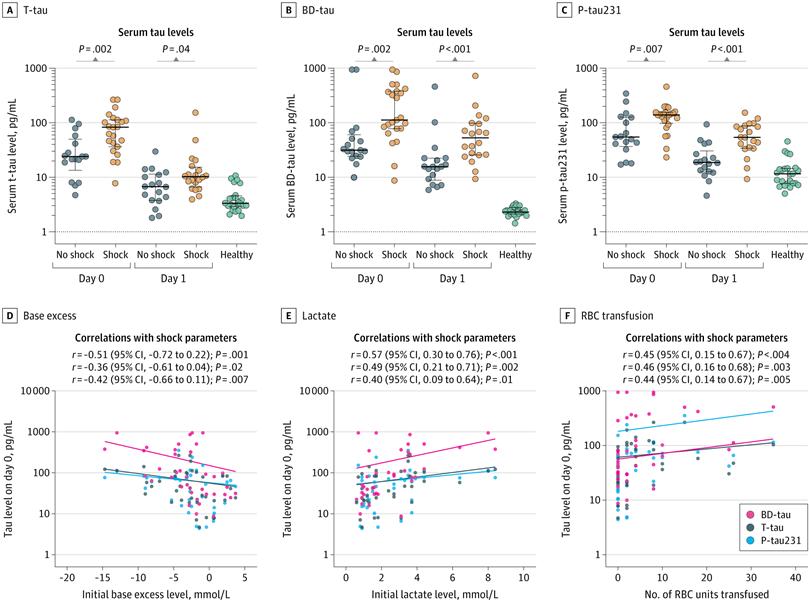
Blood total tau, phosphorylated tau, and brain-derived tau were elevated after multiple traumatic injuries, correlating with injury severity and outcome, with sustained BD-tau elevation in the acute phase. https://t.co/djEkg1fMFU
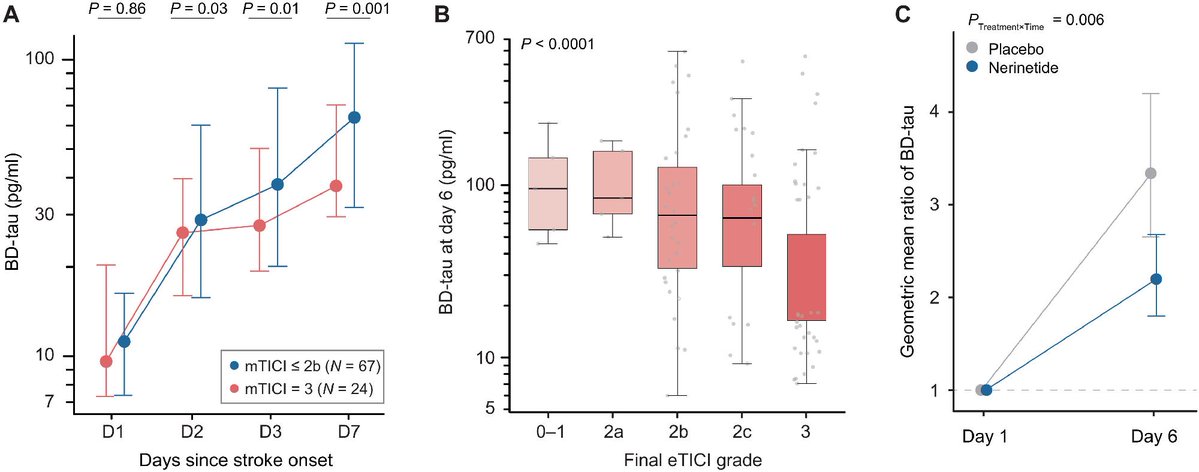
Monitoring markers of tau protein in the blood can predict functional outcomes in patients recovering from ischemic stroke better than MRI, according to a comprehensive study of more than 1200 patients in @ScienceTM. https://t.co/g4ZgO2CZuR
A recent study showed that newborns have high levels of p-tau, a biomarker for #Alzheimer disease.
Understanding how infants clear the protein could help prevent aggregation, which leads to #neurodegeneration in adults.
https://t.co/vDj5Ip4OmK
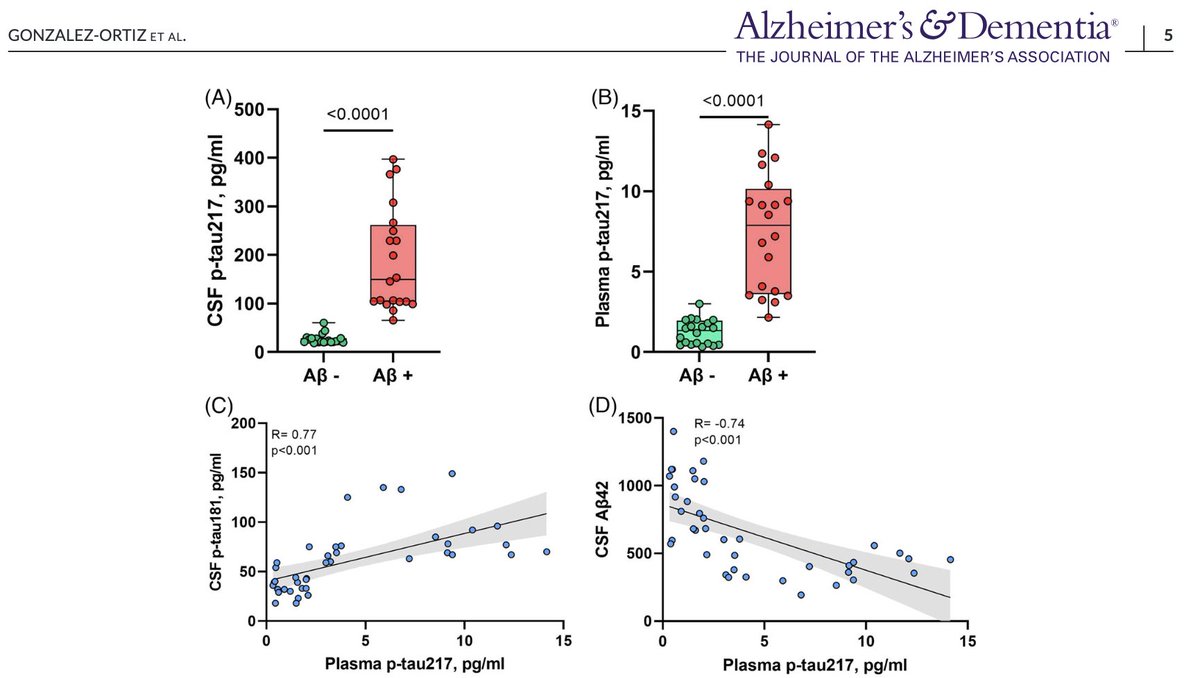
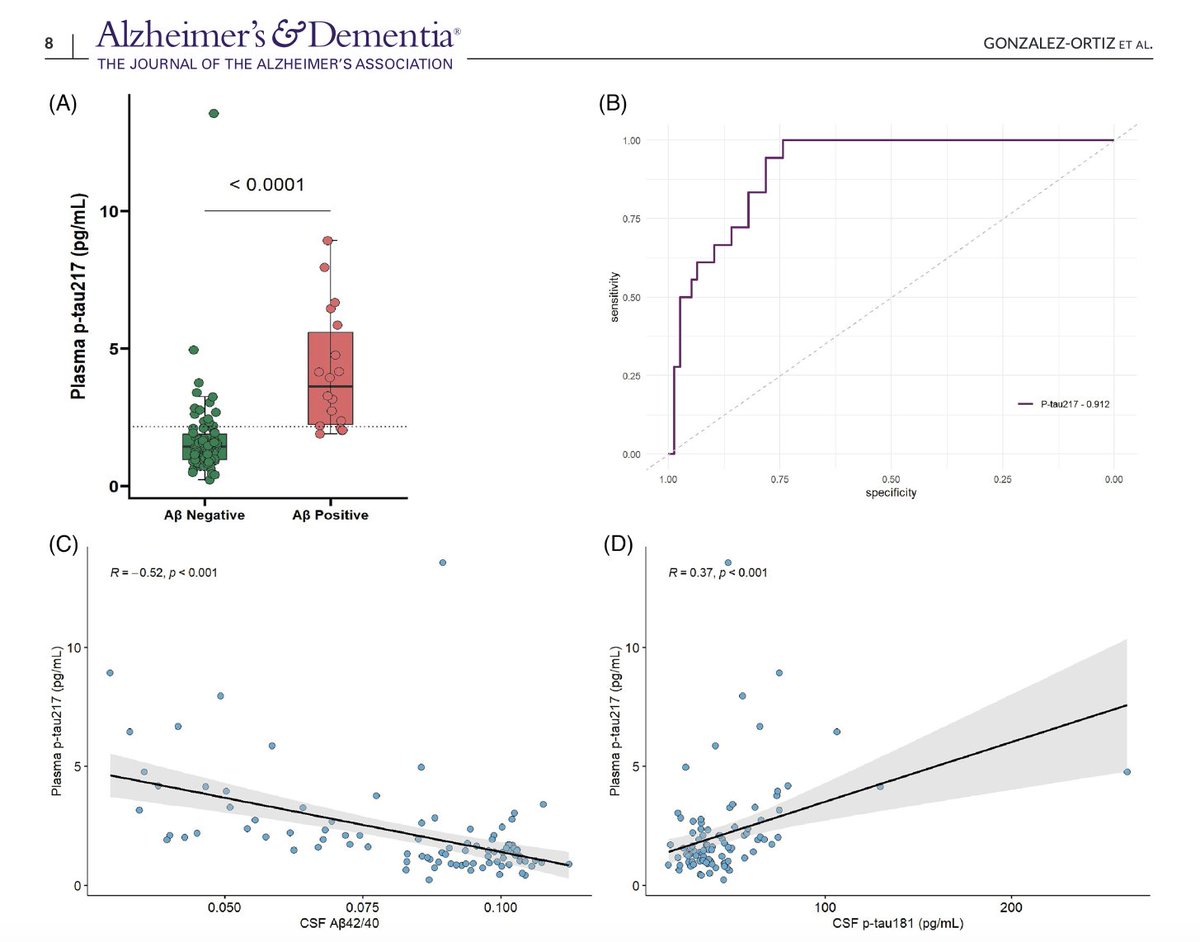
Gonzalez-Ortiz et al. report plasma p-tau217 measurement in newborns; levels are significantly higher in healthy newborns than in AD patients. Levels of serum p-tau217 in premature newborns remain increased up to 18 weeks post birth (https://t.co/nOjb3iamJZ)
@Rantes
Differentiating between MCI subtypes in individuals attending memory clinics was associated with the diagnostic performance of blood p-tau217 models to determine brain amyloidosis in patients’ clinical management. https://t.co/MDOvCLG6b8 @Rantes_
Check out our new study!
☑️p-tau 181 and 217 in blood are not as specific for AD as previously thought,
☑️they are also elevated in the blood of patients with ALS,
☑️IHC and MS analyses disclosed both p-tau species in muscle biopsies from ALS cases.
https://t.co/nhyQdQ6hms
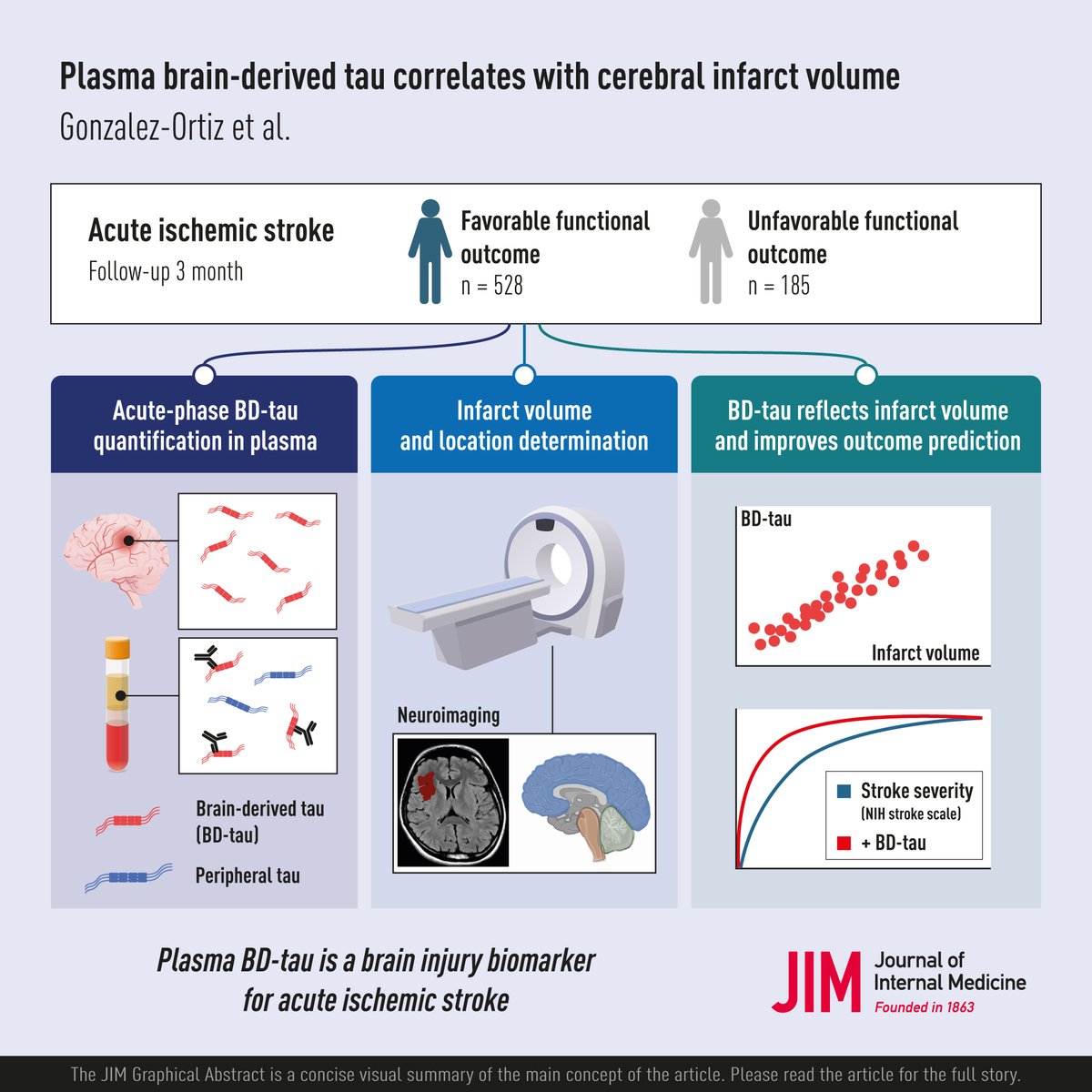
New article reports a strong correlation between plasma BD-tau and infarct volume in acute ischemic stroke.
➡️BD-tau adds prognostic value for clinical outcome after stroke.
➡️Could BD-tau be the troponin of the brain?
🔗https://t.co/II6XvUHLDq
#IschemicStroke#troponin
#STROKE: Plasma brain-derived Tau levels on admission can accurately discriminate for 90-day good outcome (mRS 0-3) among acute ischemic stroke patients after successful endovascular therapy. #AHAJournals https://t.co/fVRzWeeuoa @neuro_varela@chusaojoao@UPorto@Rantes_
In @NatureComms, we validate plasma BD-tau as AD-type N marker:
- BD-tau is amyloid driven & assoc. w/ atrophy;
- Abnormal p-tau & BD-tau confers faster cognitive decline and atrophy;
- BD-tau is less responsive to kidney fxn effects.
https://t.co/u3qvLikEaC
@Rantes_
We have shown the performance of plasma BD-tau as a neurodegeneration marker, but what about tracking acute neuronal injury? The results of BD-tau in the precision medicine in stroke cohort (PROMISE) are presented in this very elegant paper 👇 🧠🩸
Happy to share our first @ugot (UGOT) p-tau217 publication. We developed the first academic immunoassay for p-tau217 in blood and checked its performance focusing on preclinical and prodromal AD.
https://t.co/MvmqqFjYUb
- Capable of identifying Aβ positive individuals, assessed either by amyloid PET or Aβ 42/40 ratio in CSF, even in early stages of the disease continuum.
- Strong correlations with blood p-tau217 measured by IP-MS
- Stronger correlation with plasma BD-tau than with plasma NfL
Happy to share our most recent publication, where we explore the performance of plasma BD-tau and p-tau181 in Alzheimer’s disease and rapidly progressive dementias, including Creutzfeldt-Jakob disease 👇
@TommyKakari
https://t.co/yz7O4M6gFR