Ep 136 of DC EKG with Joe Grogan: Tom Barker breaks down the truth about drug pricing. He explains why Part D worked, how the IRA changed things, and why competition matters more than government price controls. Watch & Subscribe: https://t.co/GV0zVygO09
This is the largest such increase in 15 years - with no obvious justification.
Back then NY was emerging from a recession, Medicaid enrollment was up & a temporary boost in federal aid was expiring.
Now, the economy is growing, enrollment is dropping and federal aid is rising.
In 340B, tax-exempt hospital systems buy discounted drugs, mark them up by as much as 1,000% or more and bill patients and insurers the list price.
$80 billion+ every year and growing
TY @RepMGriffith for focusing on affordability
@C4AHC
https://t.co/hUPEPxXkeR via @cardinalnewsva
One of the most amazing things I’ve ever seen: a standing ovation for the full Daraxonrasib results
I feel inspired and energised, to put it mildly — we have a targeted therapy for pancreatic cancer now, and nothing is undruggable anymore
It's truly impressive that someone could publish an article like this without mentioning the pandemic.
It was a while ago, but I seem to recall shaming was a pretty hot topic
In Canada, patients wait an average of seven months between a specialist referral and treatment. In the UK, officials are actively discouraging referrals to manage demand. That's the reality of government-run healthcare.
https://t.co/kgS4iVDZWm
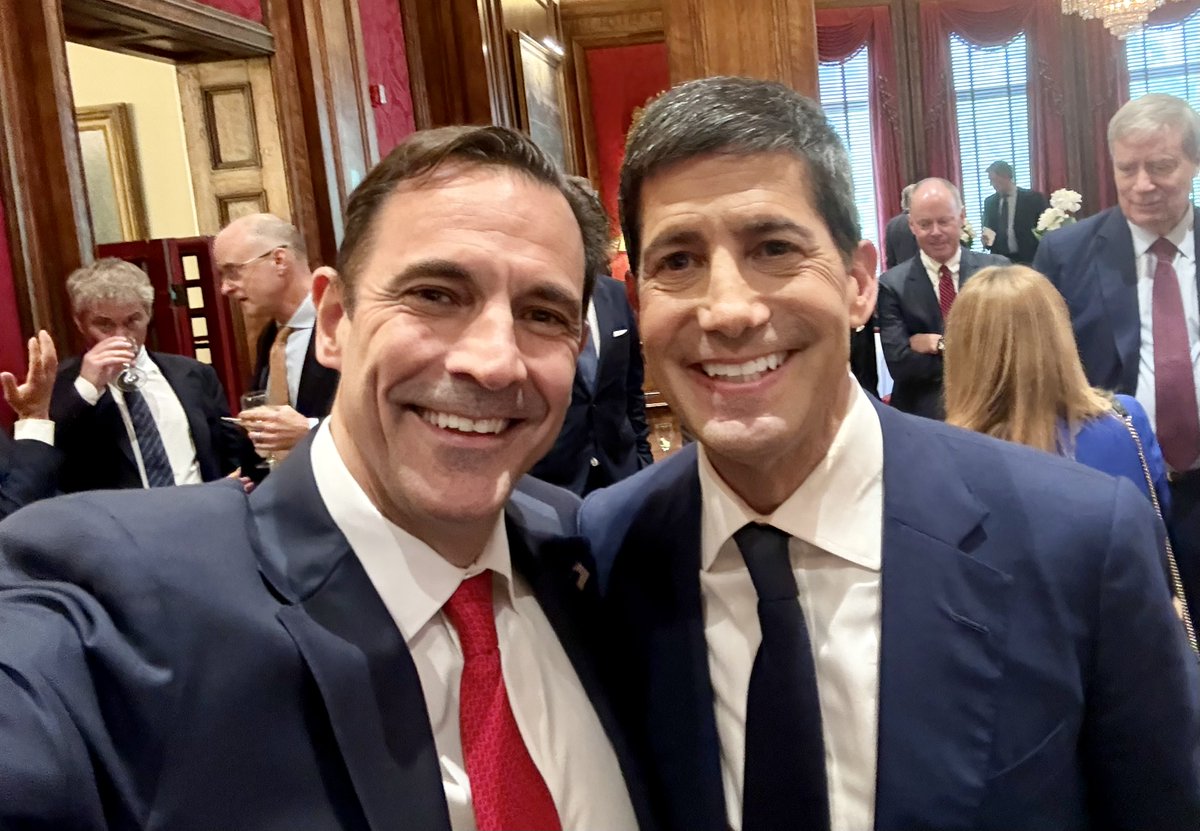
Beautiful Friday evening at Marine Barracks in DC to watch the Sunset Parade in honor of my good friend and former OMB colleague, Undersecretary of War for Acquistion, Mike Duffey. Grateful for the service & sacrifice of the Marines & all the men and women in our armed forces.
Radioisotopes are essential to cancer treatments, diagnostic imaging, advanced manufacturing, and space exploration.
For too long, America let Russia and China dominate global access.
Great to see @Oklo stepping up to bring this critical supply chain back home.
New op-ed with @johnrgraham
"The hospital lobby is powerful, and change will require overcoming their lobbying efforts to protect the status quo. ... [H]ealthcare will remain unaffordable until the cronyism comes to a halt."
Read the full piece here: https://t.co/gT4mw0qN49
How disconnected from reality do you have to be to conduct a study about access to home health care in New York without so much as mentioning the state's off-the-charts levels of utilization, spending and employment?
As a young socialist, Hayek read Ludwig von Mises’ 1920 paper “Economic Calculation in the Socialist Commonwealth.”
Mises showed that socialist central planning isn’t merely inefficient, it’s impossible.
Without private property and genuine market prices, planners lack any rational way to allocate scarce resources or determine real costs and needs.
Even Oskar Lange, a leading socialist in the calculation debate, effectively conceded the point.
While he promoted “market socialism” with trial-and-error pricing by a central board, real-world socialist planners in Eastern Europe quietly relied on world capitalist market prices as a guide.
Without external free-market price signals, pure socialism would be economically blind and coordination would collapse.
Mises went further, arguing that interventionism, the “middle way” of government meddling, is inherently unstable.
Each intervention creates problems that invite more interventions, eventually leading to full socialization.
Price controls cause shortages, subsidies distort production, and the cycle continues until the economy is fully planned.
The lesson is clear.
Rational economics requires genuine market prices emerging from voluntary exchange and private property.
Half-measures don’t stabilize the system. They accelerate the drift into central planning.
The Austrian School understood this decades before the collapse of the Soviet bloc proved it in practice.
This line about the MCO tax from GNYHA's budget memo speaks volumes:
"While the new MCO tax generates significantly less revenue than the current tax, it serves as an important placeholder for future budget negotiations."
Hey @NYHammond, does the graph change at all if we have an economic downturn? What if NYC or NY has a downturn? Does this plan depend on a federal bail out down the road? If NYC can't pay their obligations now during an economic boom.....
This is the largest single part of the budget-balancing package that Hochul and Mamdani announced two weeks ago, which was framed as an infusion of cash from the state to the city.
The pension piece boils down to allowing the city take out a loan, with interest, at the expense of its own taxpayers.
Should work out well. If, by chance, it doesn't, will there be any finance experts left on Wall Street in 8 years or will NYC have to call down to Florida to figure out what to do?
Here is what NYC's pension reamortization will look like.
The city will save $16.7B in pension contributions over the next seven years at a cost of $24.3B over the following five.
Net increase: $7.6B.
(This does not include the ~$151M annual cost of sweeteners for Tier 6.)
Before we put our faith in government to resolve the price-setting errors that we have all come to call "site of service differentials," remember the federal government has already been trying and failing for >10 years.
From the NYT's @sangerkatz in 2015: https://t.co/d5e5qjjQsO
The Trump admin is right to abandon the activist, big government policies of the Biden era.
Biden’s DoJ aimed to take a bulldozer to companies and industries that weren't all in on their progressive agenda.
𝐓𝐡𝐞 𝐌𝐨𝐬𝐭 𝐈𝐦𝐩𝐨𝐫𝐭𝐚𝐧𝐭 340𝐁 𝐩𝐚𝐩𝐞𝐫 𝐘𝐨𝐮'𝐥𝐥 𝐄𝐯𝐞𝐫 𝐑𝐞𝐚𝐝
If you care about #340B policy, use the long weekend to read this outstanding new paper:
"Stretching Scarce Authorizing Legislation as Far as Possible: A Legislative History of the 340B Drug Pricing Program."
Sayeh Nikpay @saynikpay and her colleagues went back to the early 1990's to reconstruct the program's origins. Their research draws on interviews with 18 key participants and 175 primary source documents spanning 1990–1992.
Their conclusion is difficult to ignore:
340B was originally designed as a narrow policy solution to address an unintended consequence of Medicaid’s best-price provision and to support core safety-net providers.
But the paper makes a compelling case that today’s program extends far beyond Congress’s original intent.
Whether you support or oppose the current structure of 340B, this paper is essential reading for anyone who wants to understand how we got here.
Read it here: https://t.co/MrD8O31wNI
One especially fascinating detail: The disproportionate share hospital (DSH) eligibility threshold of 11.75% was chosen to qualify two specific hospitals and secure bipartisan support from Senator Hatch and Representative Bliley.
In other words, the threshold was not grounded in any broader scientific or policy rationale.
Amazing.
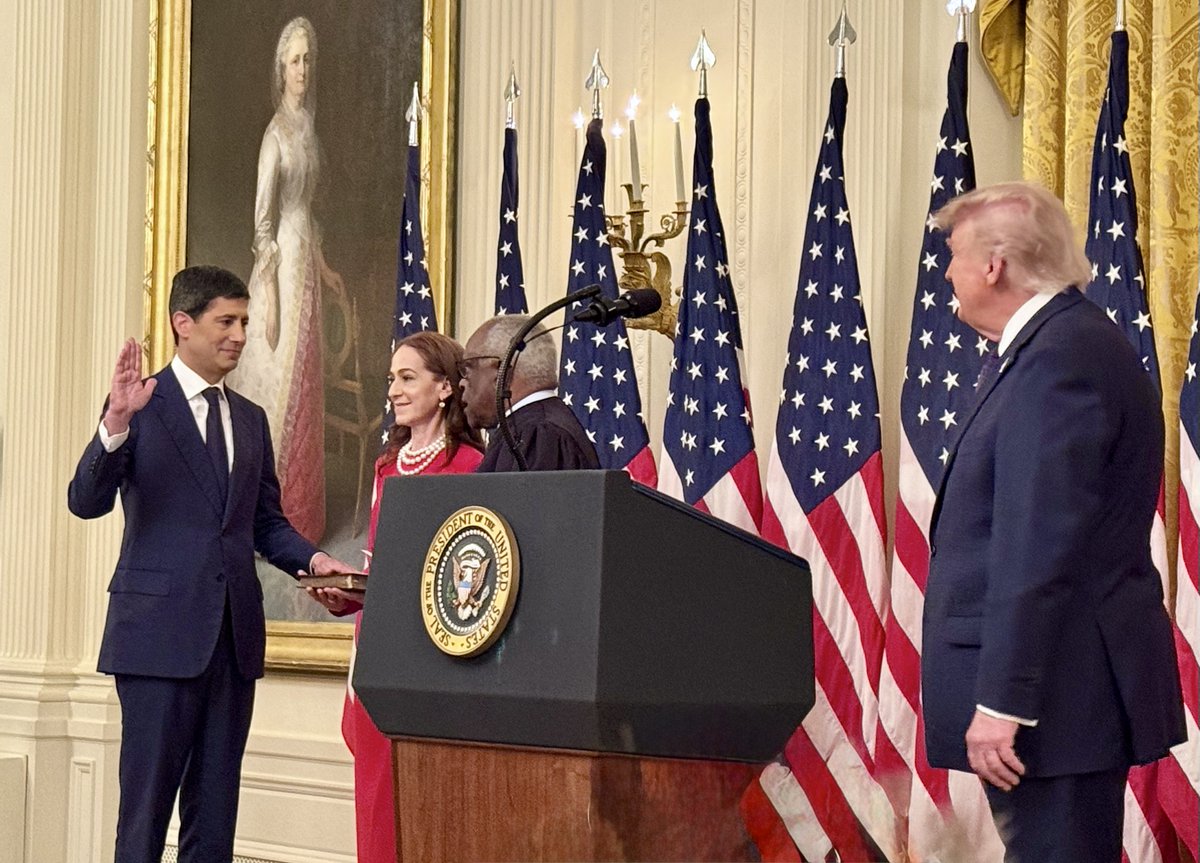
The Golden Age is indeed here! Kevin Warsh was an intern in the White House Counsel’s Office in 1991 and worked with me on Justice Clarence Thomas’s epic confirmation battle. Today, Justice Thomas swore in Kevin as Chairman of the Federal Reserve. Thank you President Trump for making this exceptional appointment. Congratulations, Chairman Warsh!