🐍 From Deadly Toxins to Life-Saving Medicines. The Ultimate UNO Reverse! 🔄
I’m thrilled to announce that Venomics AI (@venomicsai), a biotechnology startup spun out of the Indian Institute of Science (@iiscbangalore), has raised US$2.7 million in pre-seed funding! 🚀
This is a particularly special moment for me.
Many years ago, when I started my PhD, I was fascinated by a rather intriguing evolutionary question: How did evolution transform completely harmless proteins, performing everyday functions in our body, into some of the most potent toxins known to science?
I spent years studying how animal venoms evolved over millions of years, tracing the remarkable evolutionary journeys of these proteins as they acquired their deadly functions.
And now, years later, I find myself trying to do almost the exact opposite!
What if we could take these very same toxins and transform them into life-saving medicines?
It’s almost like playing the ultimate UNO reverse card on evolution! 🔄🐍
What evolution transformed into weapons, we want to transform into medicines to fight some of humanity’s greatest health challenges.
That is the vision behind Venomics AI.
Nature has spent millions of years evolving an extraordinary diversity of biologically active molecules. Yet, despite their immense therapeutic potential, the vast majority of animal venoms remain largely unexplored, especially in India.
At Venomics AI, we’re combining cutting-edge experimental science with artificial intelligence to systematically explore this untapped molecular diversity and accelerate the discovery of next-generation therapeutics.
Our pre-seed round was led by Speciale Invest (@SpecialeInvest) and South Park Commons (@spc), with participation from Operators Studio (@OperatorStudios). We are incubated at ARTPARK (@artparkindia).
I’m incredibly grateful to our investors for believing in this vision, and to my co-founder, Vinay Prabhu (@vinayprabhu), Chief Scientific Officer, Purba Sarkar, for joining me on this exciting journey.
We’re proud to be building this company in India, leveraging our scientific expertise and extraordinary biodiversity to develop medicines for the world.
From studying how nature makes toxins to discovering how we can turn them into medicines. Life really does come full circle sometimes.
And we’re just getting started! 🚀
#VenomicsAI #DrugDiscovery #Biotechnology #ArtificialIntelligence #DeepTech #MakeInIndia #VenomResearch
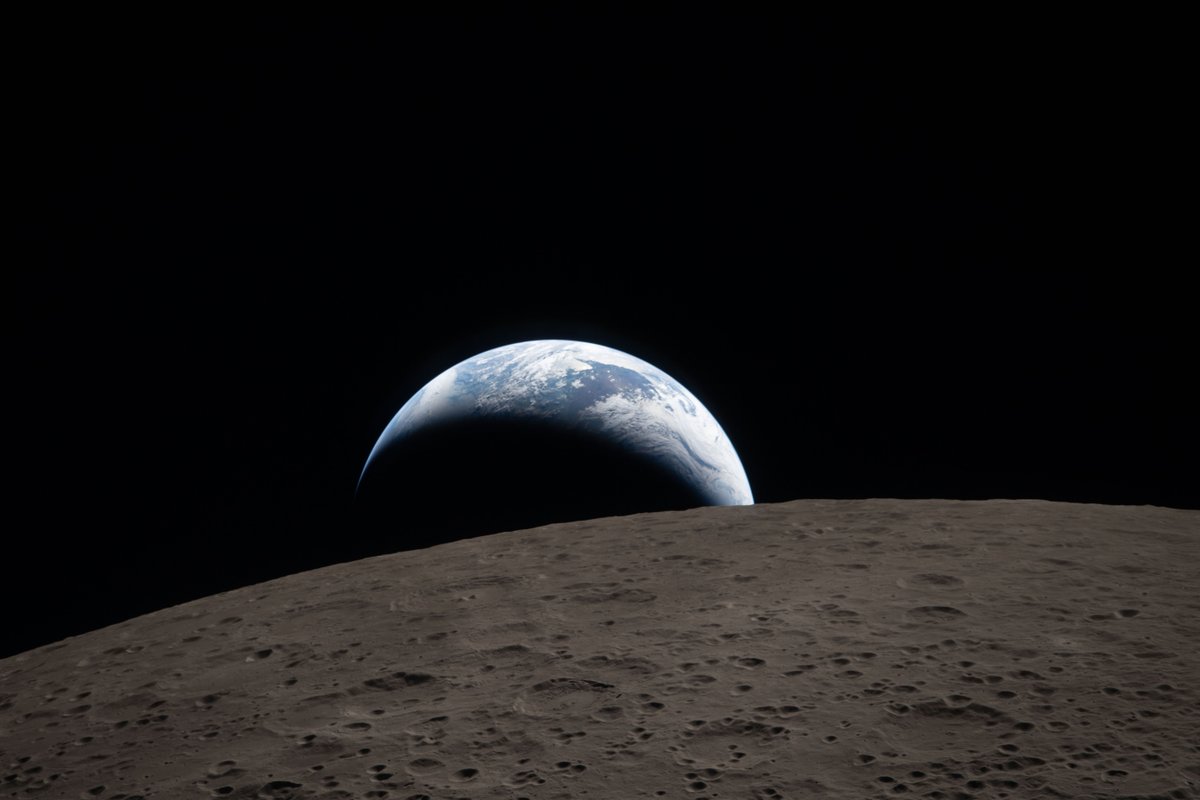
Earthset.
The Artemis II crew captured this view of an Earthset on April 6, 2026, as they flew around the Moon. The image is reminiscent of the iconic Earthrise image taken by astronaut Bill Anders 58 years earlier as the Apollo 8 crew flew around the Moon.
Good morning, world! 🌎
We have spectacular new high-resolution images of our home planet, all of us looking back through the Orion capsule window at our Artemis II astronauts as they continue their journey to the Moon.
That's us! 🌍
The Artemis II crew captured beautiful, high-resolution images of our home planet during their journey to the Moon. As @Astro_Christina put it: "You guys look great."
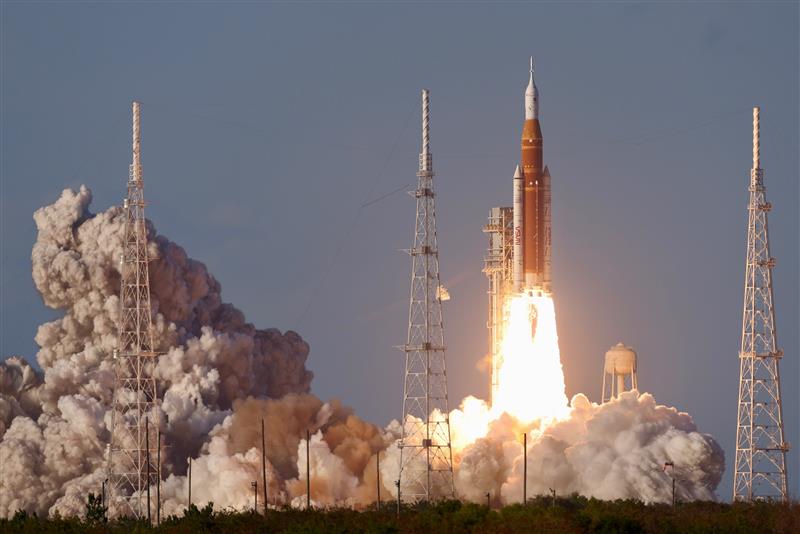
For the first time in over 50 years, humans are Moonbound.
At 6:35 p.m. EDT (2235 UTC) NASA’s Space Launch System rocket and the Orion spacecraft lifted off from the agency’s Kennedy Space Center in Florida, sending four astronauts on a planned test flight around the Moon and back. https://t.co/0Q9ZB4IWVI
Albert Einstein, born on this day, met fellow Nobel Prize laureate Rabindranath Tagore at his home in Germany on 14 July 1930. The two minds explored the concepts of science, religion and philosophy.
Read an excerpt from their conversation: https://t.co/UXtpxRrV7l
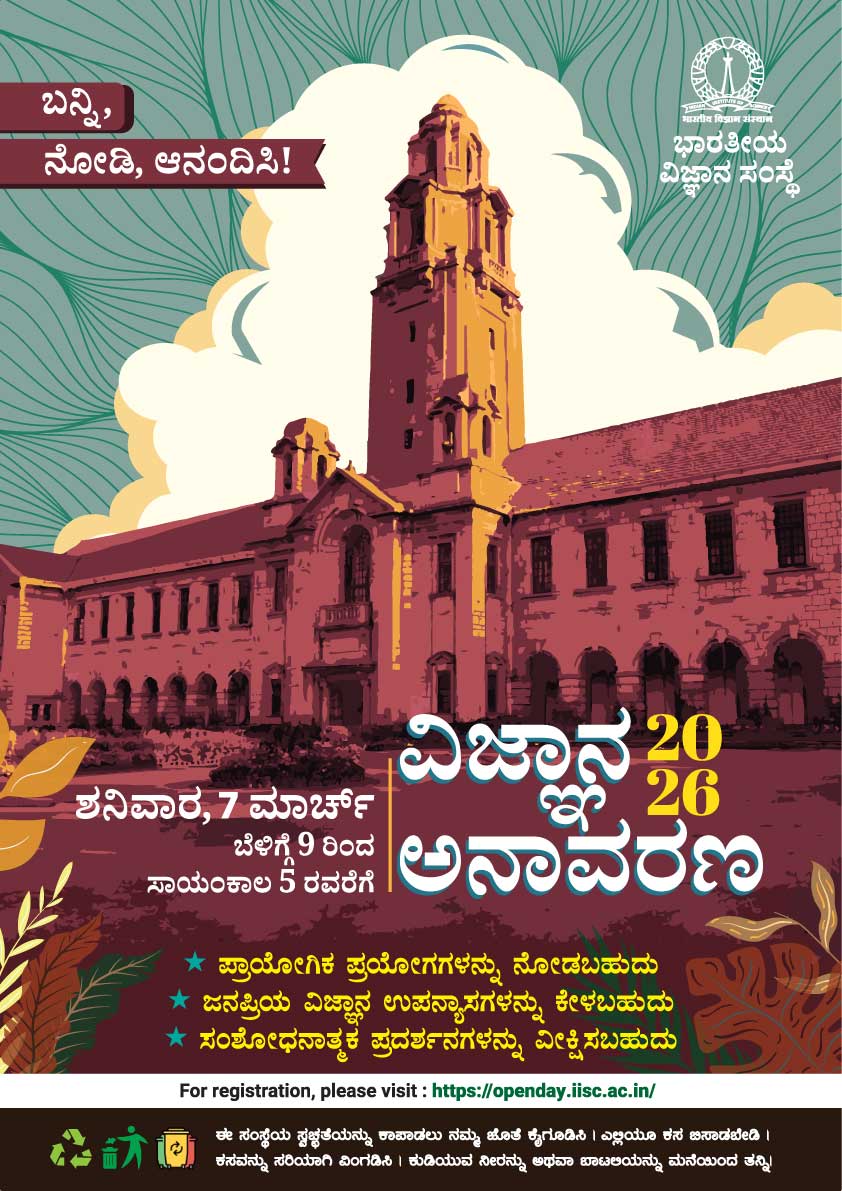
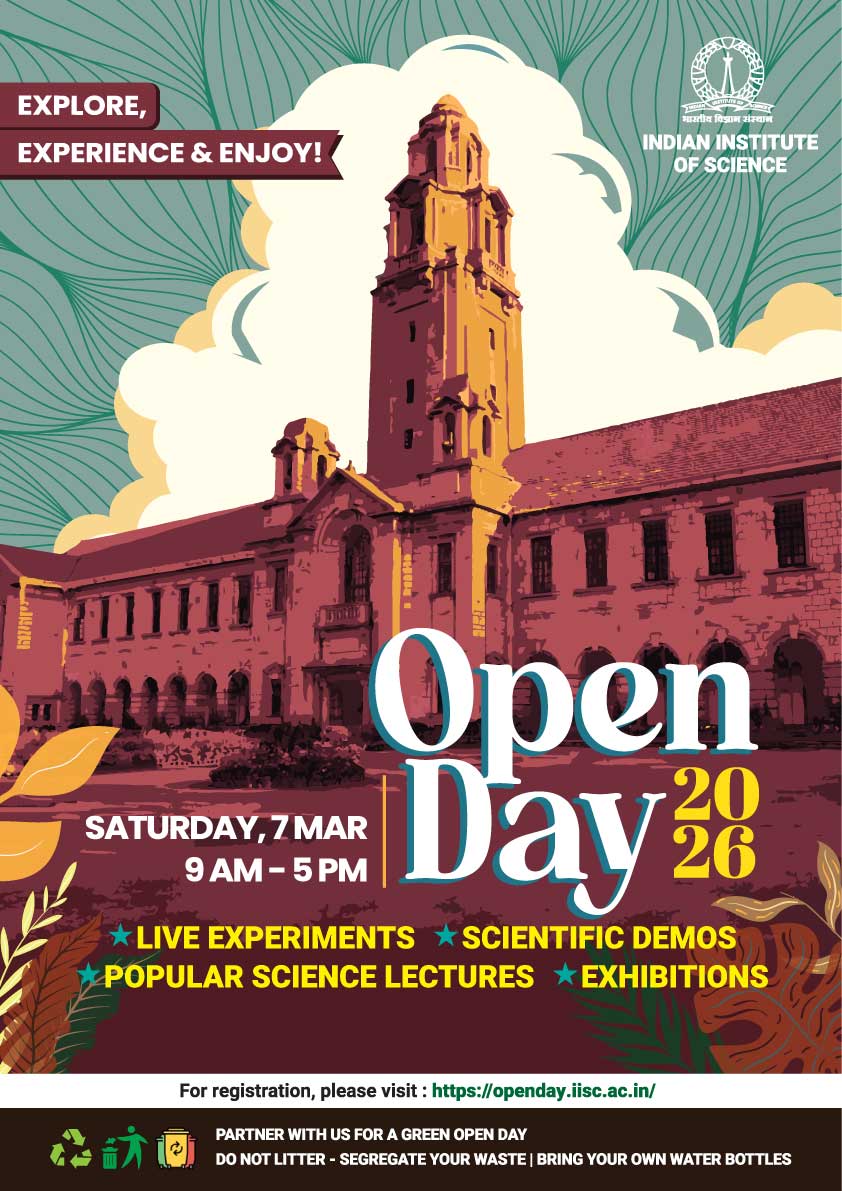
We are excited to announce Open Day 2026! 📷
Visit our campus on March 7th between 9 am and 5 pm. Explore the exciting research demos, displays, exhibits and experiments!
Use the hashtag #IIScOpenDay2026 to share what you see!
Details: https://t.co/wSVFMp3Io4
Applications for @iiscbangalore admissions 2026 are open!
The Molecular Biophysics Unit @MBU_IISc at IISc invites applications for our Ph.D. program. Come join our vibrant research community exploring the fundamental principles that drive living systems.
Deadline: Mar 23, 2026
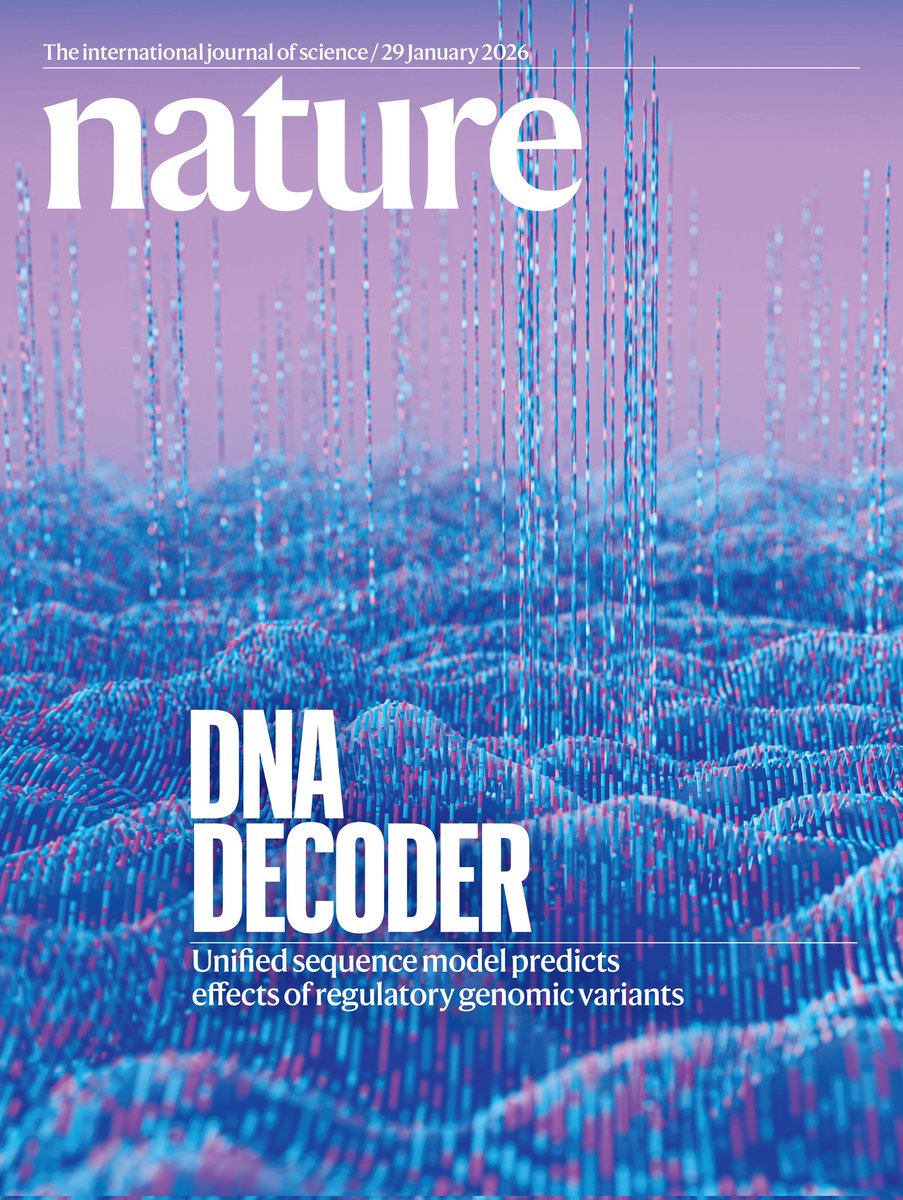
AlphaGenome is out in @nature today along with model weights! 🧬
📄 Paper: https://t.co/1fHzSPiY1x
💻 Weights: https://t.co/z6JWLT4Mpv
Getting here wasn’t a straight path. We sat down @googledeepmind to discuss the story behind the model, paper & API: https://t.co/cT8CiXfnxQ
Madhav Gadgil, the pre-eminent ecologist, has just passed away. He was a top-notch academic scientist, a tireless field researcher, a pioneering institution-builder, a great communicator, a firm believer in people’s networks and movements, and friend, philosopher, guide, and mentor to many for over five decades. Trained at the very best universities in modern science, he was at the same time a champion of traditional knowledge systems - especially in biodiversity conservation.
His influence on public policy has been profound going back to his crucial role in the Save Silent Valley Movement in the late 70s and early 1980s. His intervention to protect forests in Bastar was crucial in the mid -80s. Later, he gave shape to a new direction to the Botanical Survey of India and the Zoological Survey of India. During 2009-2011, he chaired the Western Ghats Ecology Expert Panel and wrote its report in a most sensitive and democratic manner that remains unmatched in both substance and style.
He had studied biology at Harvard under E. O. Wilson, who had been hailed as Darwin’s Heir. Although inspired by Wilson, Madhav Gadgil - unlike most others who went to study abroad - came back to India to build its own research capacities and capabilities, guide students, engage with local communities, and make a difference to policy. In all of these he succeeded more than admirably. Luckily three years back he was able to bring out his delightful memoir, which is at once educative, entertaining, and enlightening.
Madhav Gadgil’s life was devoted to scholarship in the noblest sense of the term. He will remain an iconic and inspirational figure.
Speaking on a personal note, in the twenty-six months I was Environment Minister during May 2009- July 2011, I turned to him every other day for guidance and advice. And our conversations were not confined to matters related to ecology. We spoke often of his father Dhananjay Gadgil, one of India’s greatest economists and author of that classic The Industrial Evolution of India in Recent Times, first published in 1924. We would also speak of the intricacies of the Indian monsoon, since his wife Sulochana was an authority on the subject.
Nation builders come in different forms and varieties. Madhav Gadgil was definitely one of them. Above all he had the hallmark of a true scholar— he was gentle, unassuming, and exuded empathy and humility behind which was a vast ocean of knowledge and learning.
The Infosys Prize 2025 in Life Sciences is awarded to Dr. Anjana Badrinarayanan, Associate Professor at the National Centre for Biological Sciences, Bangalore.
Her research on genome maintenance and DNA repair explains how cells protect and recover their genetic material.
Dr. Badrinarayanan’s studies help us understand the essential processes that keep living systems stable and healthy.
@anjbadri @NCBS_Bangalore
#infosysprize #infosyssciencefoundation #lifesciences #genomeresearch #DNArepair #NCBS #scientificinnovation #biology
Most transcription factors were historically considered undruggable. But some innovative biotechs are changing all that & big pharma is starting to pay attention. Out now in @NatureBiotech
https://t.co/Pol58Y17vj
Ivws w/: Flare Tx, Quantro Tx, Genentech, Sapience Tx & Ten63 Tx
Remembering today on his birth anniversary GN Ramachandran, the genius who should have got not one or two but three Nobel prizes - for Collagen; ΦΨ plot; and Tomography. Forget Nobel or Bharatratna, he wasn't even awarded a Padma - any Padma.
A Forgotten Hero of Indian Science.
BREAKING NEWS
The 2025 #NobelPrize in Physiology or Medicine has been awarded to Mary E. Brunkow, Fred Ramsdell and Shimon Sakaguchi “for their discoveries concerning peripheral immune tolerance.”
Happy to inform you that our ‘Dietary Profile and Associated Metabolic Risk Factors in India from the ICMR-INDIAB study (INDIAB-12)’ was just published today in NATURE MEDICINE. Heartiest congratulations to all the co-authors and to all the PIs of the ICMR-INDIAB study.
Big thank you to ICMR and Department of Health Research (DHR), Government of India for funding this important study. Special thanks to DG ICMR, Dr. Rajiv Bahl, Dr. Tanvir Kaur and Dr. R S Dhaliwal for their support.
🔗 Read the full article here: https://t.co/M2wgAHJdiT
#Research #NatureMedicine #MDRF #ICMRINDIAB #DietAndHealth #ProudMoment #DiabetesResearch
@ICMRDELHI@ICMRNIN@icmr_nie@MoHFW_INDIA@WHO@EASDnews