Principal Investigator of the ESCAPADE NASA twin satellite Mars mission. Planetary physicist and Associate Director at the UC Berkeley Space Sciences Lab.
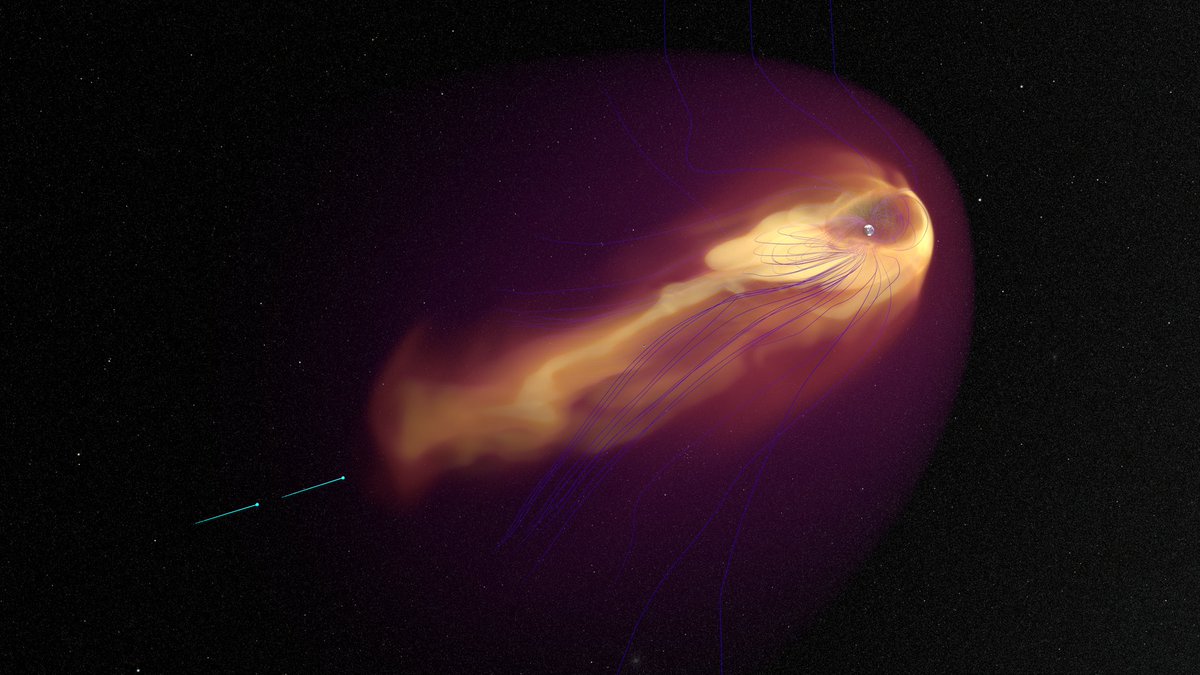
Thrilled to announce that our twin ESCAPADE spacecraft are now fully commissioned, with instruments deployed, collecting science data in the Earth's distant magnetotail >2 million km away, a previously unexplored region of space. Image credit: NASA SVS & Yusuke Ebihara.
Status set to: Interplanetary Cruise 😎
Our twin spacecraft for @NASA and @ucbssl's ESCAPADE mission have completed their engine burns and are now cruising near Earth–Sun L2 Lagrange point. Blue and Gold will hang tight here until November when they’ll begin their cruise to Mars orbit to begin their science mission studying the Martian magnetosphere.
🎥 Watch what’s ahead
🌕 @gru_space is building durable space habitats so humans can one day live on the Moon and Mars.
Its first missions will mine lunar regolith to construct a long-term pressurized habitat on the Moon for commercial space tourism — a hotel on the Moon.
Congrats on the launch @skyler_chan_!
https://t.co/27i8r8ed5U
2025 recap:
>started @gru_space at 21
>raised from the people who backed SpaceX, Anduril, and more
>got into YC, youngest space solo founder
>graduated year early from Berkeley EECS
>published at the world’s largest space conf
>moved into my first office & dream hardware lab
>building my life’s work
2026:
>coming soon
While we are excitedly waiting for a new NASA Administrator in @rookisaacman , I want to direct people's attention to this "boring table." Specific rows in this table represents a large portfolio of NASA science instrument funding. What does this table represent that is so important? Why would we like to see more rows filled in with dates and a promise of funding through open competition?
https://t.co/k9vJGRdAmF
First: With rideshare and more rocket competition slowly finding its way to the market, the cost curve of getting to space is coming down. Ideally, the cost drops off a cliff a few years after Starship comes online.
Second: We have a ton of spacecraft bus competition coming on to the market, above and beyond the incumbents. Many of these companies are focusing on production and non-bespoke spacecraft to bring the bus and operations costs way down.
So if the cost to get to space falls, and the cost of operating in space falls, then the question becomes: How can the US then increase cutting edge science, as per decadal surveys, faster and better? How do we keep America and NASA at the tip of the spear of space science? The answer is to let the best scientists and instrument developers in our country COOK and compete. To cook they need some money to get their instruments developed and flight ready. This table represents the lifeblood of many U.S. space scientists. To be clear, there are already a lot of instruments ready that are heritage designs we can build to print and re-use for immediate science gains. We don't need to wait for that. But NASA should also be investing in instruments that are better and cheaper than exist now.
"Science as a Service" is a great idea to pursue. Non-bespoke commercial satellite busses need to be outfitted with instruments designed to be easily mated and integrated in to such busses. U.S. scientists are ready for that challenge as soon as the announcements of opportunity come out, and this table gets populated with dates.
Commercial is doing its part with launch and spacecraft. NASA can truly focus on creating an environment for robust competition in producing the best science payloads.
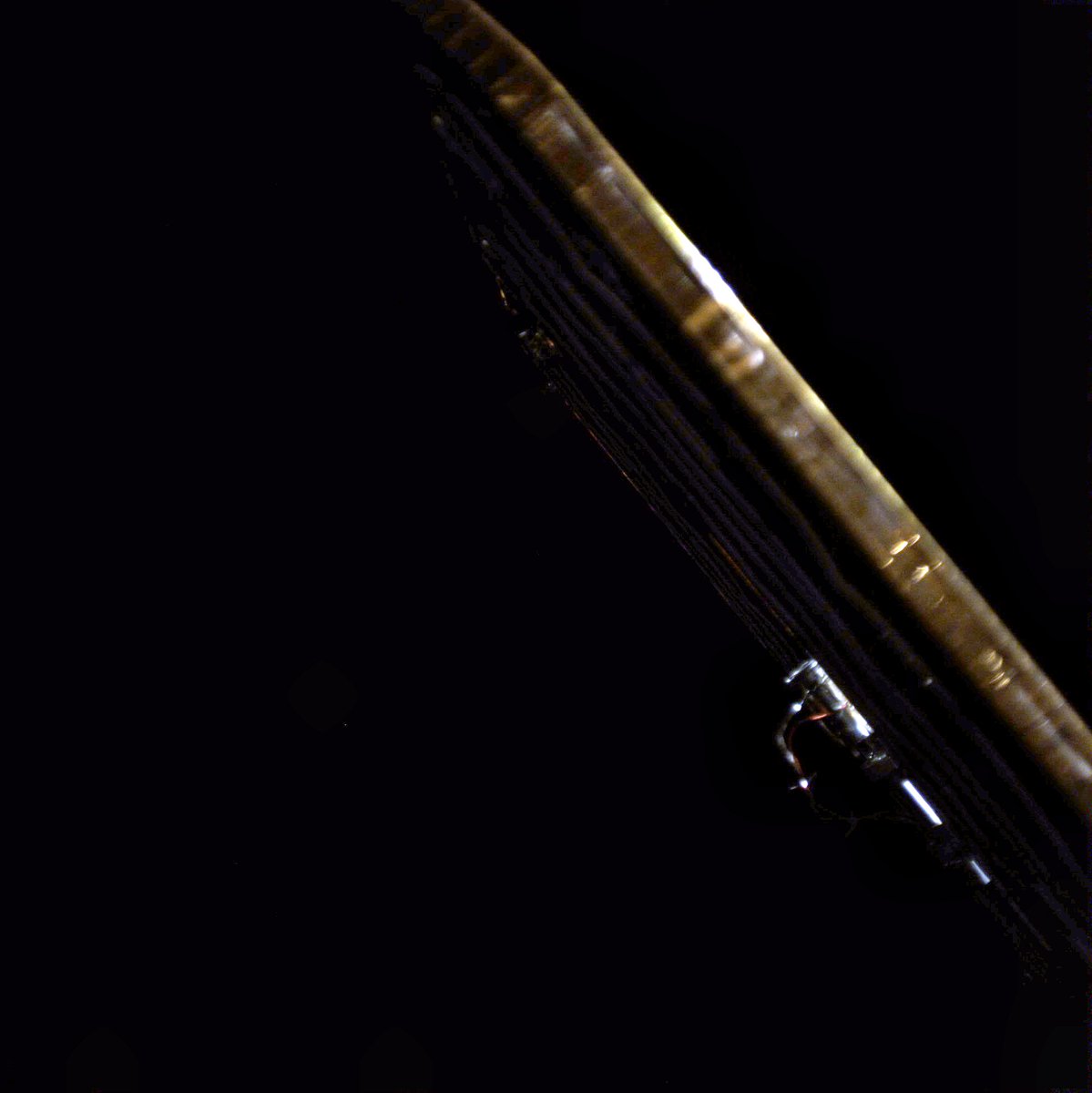
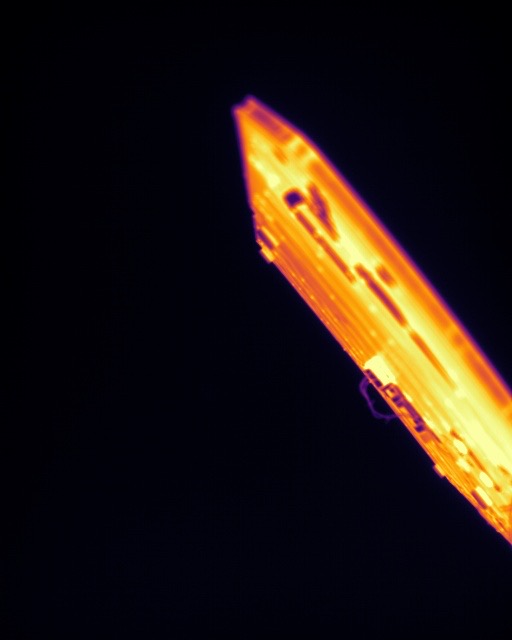
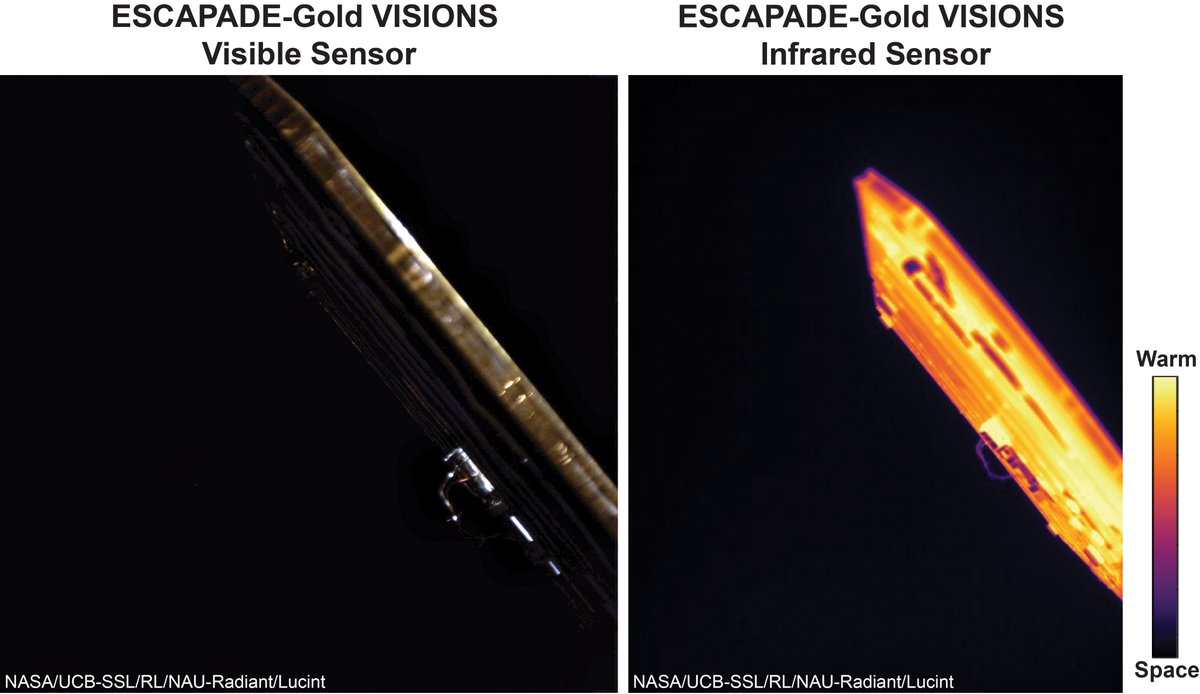
Commissioning of @NASA's twin ESCAPADE spacecraft, currently operated by @UCBerkeley and @RocketLab, is proceeding smoothly. ESCAPADE snapped this selfie in visible and infrared light. 👇
https://t.co/hn7cSLcrEd
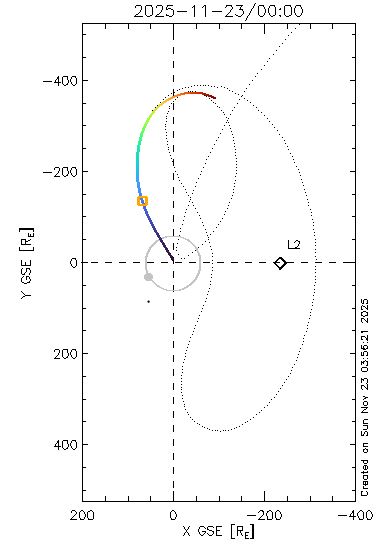
Where are the ESCAPADE twins? Here! Our Blue and Gold spacecraft have started their 12-month kidney bean-shaped journey around the L2 Lagrange point😎🛰️
Blue and Gold, the satellites we built for @NASA and @ucbssl, are now more than a million kilometers from Earth 🛰️🛰️
Follow their journey to Mars on @NASA Eyes.
https://t.co/TZGkkiorCC
In March 1982, humanity received its last direct visual postcard from the surface of Venus. It wasn’t a scenic view or a testament to life but a haunting, alien panorama of a world unlike any other, a true inferno captured by indomitable Soviet Venera 13 spacecraft...
On March 1, 1982, Soviet Venera 13 probe survived a descent into one of the most hostile environments in solar system and accomplished something no other mission has since been able to repeat. After punching through Venus’s dense, toxic cloud layers, it touched down on the planet’s blistering surface and operated for 127 astonishing minutes.
This remarkable image, a segment of the historic panoramic view, shows a landscape that appears both desolate and strangely familiar, yet utterly hostile.
The foreground reveals a part of the Venera lander itself. Beyond it stretches a cracked, dark terrain, a volcanic vista of rough, reddish-brown rock, and compacted sediment. Above, a thick, perpetually yellow sky looms, a murky filter caused by an atmosphere dense with carbon dioxide and sulfuric acid. It’s a view that instantly conveys the suffocating pressure and searing heat of Earth’s “sister” planet.
Venus, often shrouded in its thick, reflective clouds, is a world of superlatives in planetary hostility. With surface temperatures soaring over 465°C (869°F)—hot enough to melt lead and an atmospheric pressure 92 times stronger than Earth’s, landing there is akin to dropping a submarine into a superheated oven. Yet, the Soviet Union’s Venera program achieved this impossible feat multiple times.
Venera 13, in particular, was an engineering marvel. During that brief window, Venera 13 transmitted the clearest and most detailed images humanity has ever seen from the ground of Venus. Its cameras revealed fractured slabs of basalt, a flat and desolate plain, and a thick, yellow-tinted sky shaped by sulfuric haze. On March 1, 1982, it punched through the crushing atmosphere, deployed its shock-absorbing landing gear, and settled onto the scorching surface. For an astonishing 127 minutes—more than two hours in an environment designed to obliterate electronics in mere minutes, it meticulously worked. It deployed a drill to analyze soil samples, took sound recordings of what would have been a profoundly silent, wind-swept world, and, most famously, transmitted a series of incredible color images back to Earth. These images, alongside those from its twin, Venera 14, remain our clearest, most direct window into this hellish realm.
The thick, toxic clouds of sulfuric acid that perpetually cloak Venus hide a runaway greenhouse effect gone wild. This perpetual shroud not only makes direct observation difficult but also traps heat with unimaginable efficiency, creating the hottest planetary surface in our solar system, surpassing even Mercury, which is far closer to the sun. The extreme conditions explain why, since 1982, no lander has successfully sent back images from Venus’s surface. Engineering challenges are simply staggering, demanding materials and technologies that can withstand a combination of heat and pressure almost beyond comprehension.
More than forty years later, these photographs remain the only true, firsthand views ever captured from the surface of Venus, a world so extreme that even our best modern technology has yet to return.
Venera 13 didn’t just take pictures, it also became the first probe to record sound on another planet. Its microphone captured the eerie, low-frequency vibrations of Venusian winds, a haunting reminder of a world we still know mostly through imagination.
#archaeohistories
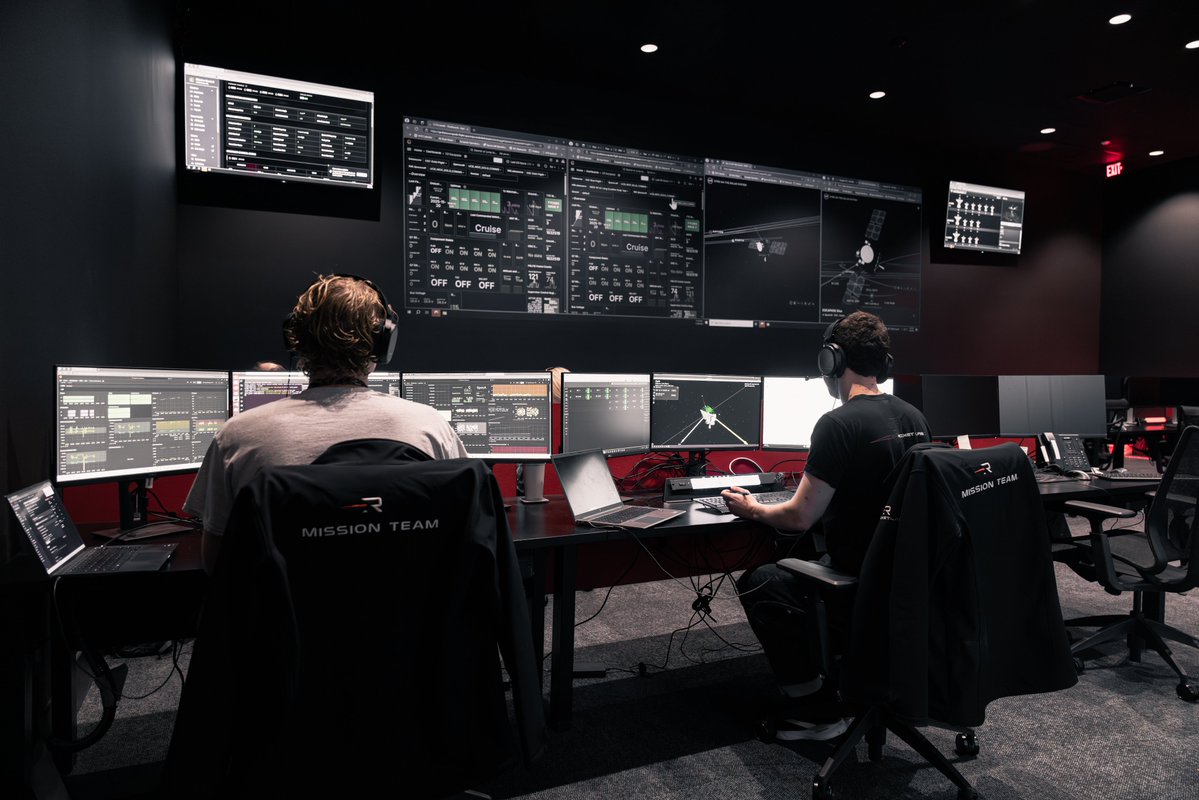
Team Effort! As PI of ESCAPADE, I'm grateful to @blueorigin for a near-perfect launch and @RocketLab and @ucbssl's tireless joint operations team for finding and starting to check out our twins Blue and Gold!
🛰️🛰️ The twins are talking!
We have successfully established contact with both ESCAPADE spacecraft, 💙 Blue and 💛 Gold.
We're on our way to Mars to enable @NASA and @ucbssl to study the Martian magnetosphere!
@rookisaacman@SpaceAbhi@ucbssl Thank you Jared. Myself and the whole ESCAPADE team appreciate your support and look forward, under your leadership, to demonstrating that high-quality science CAN be cost-effective. Onward to Mars, ad Ares!
Our Day of Action is on! 🚀 Today, more than 200 advocates and 20 organizations from across the country have come together to meet with their congressional representatives and senators to help Save NASA Science!
An update on NG-2: ESCAPADE is at Astrotech and GS1 is headed to LC-36 in early October. Next up is the vehicle hotfire mid-month with launch soon thereafter.