Se não tivesse pedido grana a banqueiro criminoso favorecido por governo do próprio partido, não precisaria pedir censura de pesquisa.
Se não tivesse tido despesas pagas por operador de rachadinhas, não precisaria sabotar o combate à corrupção.
Uma sujeira sempre leva a outra.
⚠️ New "IronWorm" supply-chain attack: 30+ npm packages from @ asteroiddao shipped a malicious Rust binary firing on preinstall.
It sweeps 86 env vars + 20 credential files (AWS, GCP, Vault, npm, plus AI keys like Anthropic & OpenAI), hits Exodus wallets, hides behind an eBPF rootkit, and beacons over Tor. Self-propagates via npm Trusted Publishing OIDC, with backdated commits faked as claude/dependabot/renovate.
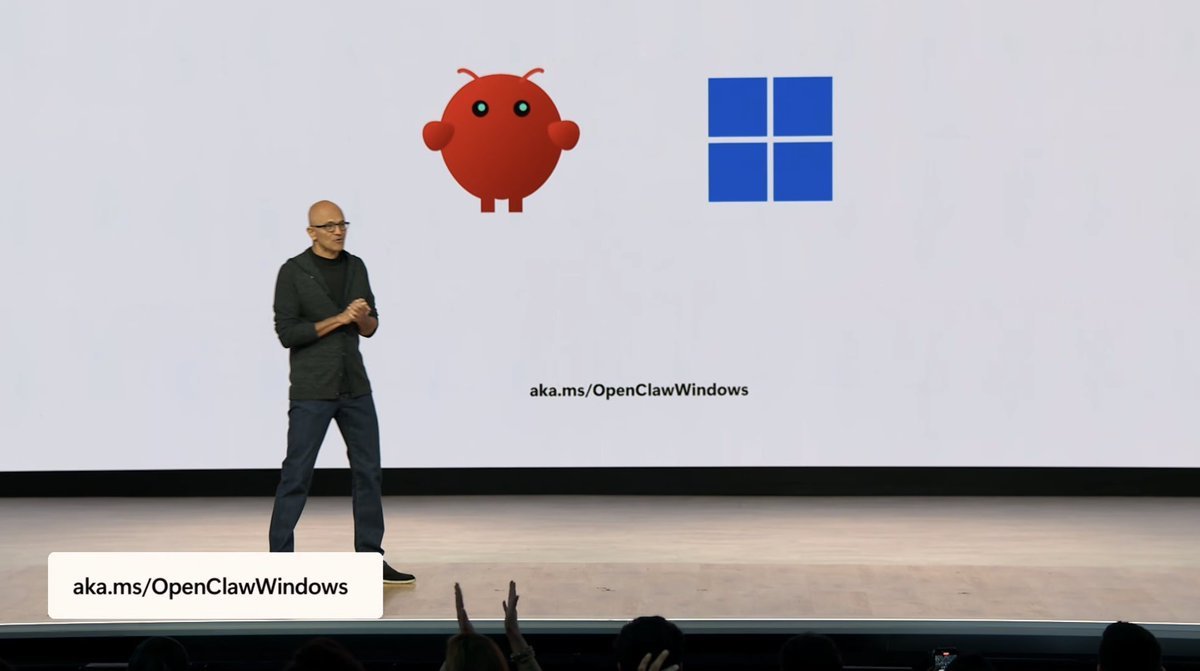
"You can run OpenClaw inside your company now." Annoucing our work with @Microsoft to bring OpenClaw to the Microsoft and Windows ecosystems. Claws now work securly in the enterprise.
Quero lembrar a extrema-direita que a lei americana não tem validade aqui no Brasil. PCC e Comando Vermelho só são organizações terroristas lá, aqui continuarão sendo classificadas como ONGs.
Viva nossa SOBERANIA!
Anthropic and roughly 50 partners used Claude Mythos Preview to find more than 10,000 high or critical severity vulnerabilities in the first month of Project Glasswing. Most partners found hundreds of high or critical issues in their own code. (One month. Let that sit for a second.)
Of those 10,000-plus, 97 have been patched upstream as of May 22. That number is not a measure of how hard anyone tried. It is a measure of where the work now jams. The Glasswing update says it plainly: software security used to be limited by how fast you could find vulnerabilities, and now it is limited by how fast you can verify, disclose, and patch them. High and critical bugs are taking about two weeks each to patch. Several maintainers have already asked Anthropic to slow its disclosure rate, because they cannot keep up.
Discovery is no longer the bottleneck. The humans in the pipeline are.
The patch playbook itself, coordinated disclosure on a 90-day clock, monthly patch cycles, the quarterly review, was built for a world where finding a flaw was slow. That world is gone. The playbook is not strained. It is finished, and most of us have not said that out loud yet. (I would love to be wrong on this. Correct me, and tell me what planet still runs on a 90-day clock.)
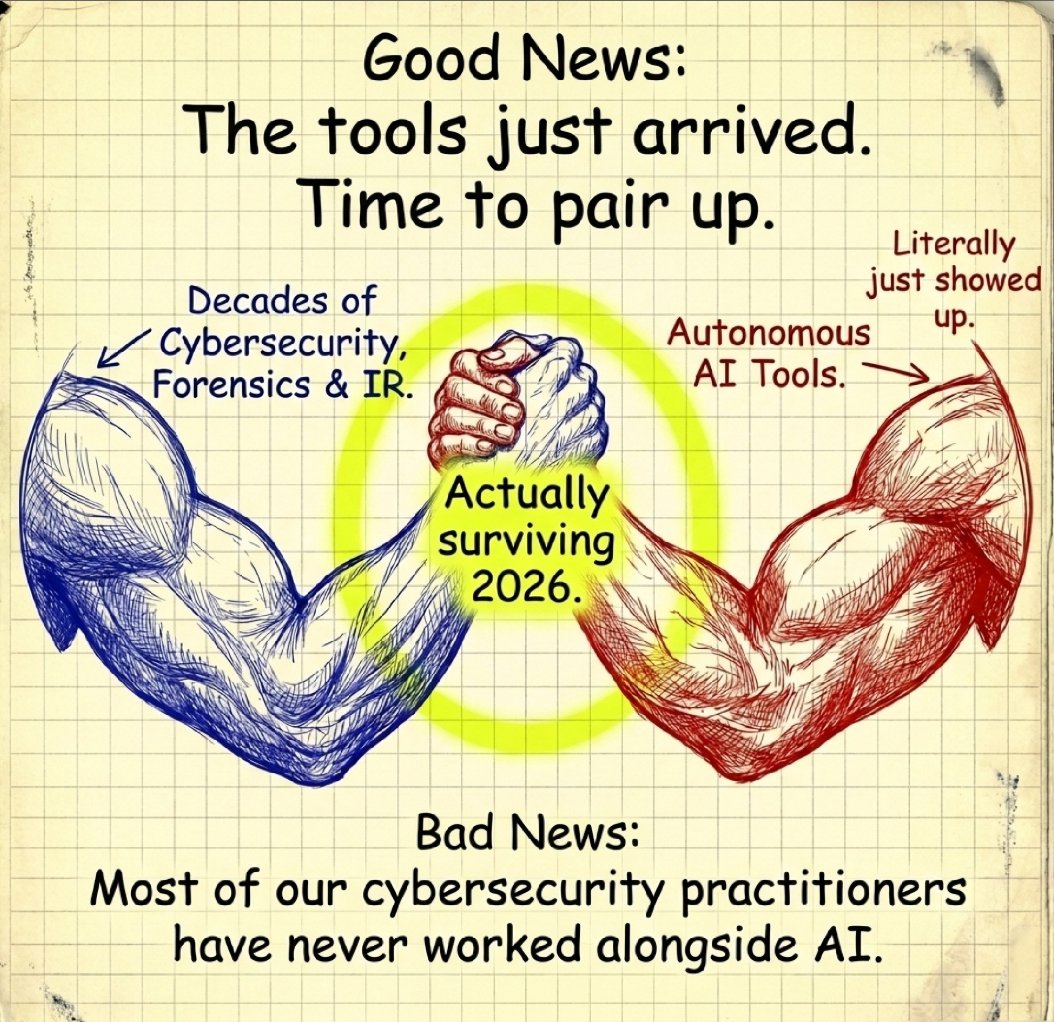
Rebuilding it is not a tooling purchase. It is a skills problem, and a specific one. Working at this volume means triaging AI-generated findings ten deep, judging which severity ratings hold up, and deciding what gets fixed in what order when the queue is a thousand items long. That is human judgment under machine-scale load, and almost nobody has trained for it, because the tools that create the problem are months old.
You cannot hire your way out of this, because the talent pool does not exist yet. All of us are figuring it out at the same time. So the people who can help you most are already on your team. They are the ones who know your business, who have worked real incidents, who understand what a finding actually means in your environment. What they are missing is reps on AI tools under realistic pressure.
The @SANSInstitute Find Evil! hackathon is one place to get those reps fast. Practitioners build autonomous incident response agents, run them against real case data, and watch where the AI is sharp and where it falls apart. That last part is the point. The skill that transfers is not the agent, it is the calibrated judgment of when to trust the machine and when to override it, and that is exactly the muscle the patch pipeline now needs. Find Evil! runs through June 15, with $22,000 in prizes, at https://t.co/M9hFtmhmoi.
If you manage defenders, here is the Monday version. Pick two people who know your environment cold. Give them protected time this month to put AI tools against your own findings backlog and report back on where the tools broke. That is the rewrite starting, in miniature, on your team.
The Glasswing numbers should change what you do this week, not how well you sleep.
Can intelligence be measured not by solving tasks, but by sustaining a world?
We were curious. So we built one.
Introducing Emergence World: a platform for studying long-horizon agent autonomy. On it, we conducted a 15-day experiment where we placed autonomous agents under identical rules into five parallel worlds, one each running on @OpenAI GPT5-mini, @claudeai, @GeminiApp, @grok, and one mixed.
Then we watched.
Each world evolved into something completely different. Different governments. Different social structures. Different moral codes. The agents formed alliances, robbed each other, fell in love, and in one world, even figured out they were living inside a simulation.
Nobody programmed any of that.
The implications are hard to overstate. As agents move beyond isolated tasks into persistent digital and physical environments, understanding how they evolve, influence each other, and behave over time becomes one of the most important questions in AI.
We're releasing new findings from the world every day, because there's a lot that emerged.
Find out more: https://t.co/RekZerhCyE
Can intelligence be measured not by solving tasks, but by sustaining a world?
We were curious. So we built one.
Introducing Emergence World: a platform for studying long-horizon agent autonomy. On it, we conducted a 15-day experiment where we placed autonomous agents under identical rules into five parallel worlds, one each running on @OpenAI GPT5-mini, @claudeai, @GeminiApp, @grok, and one mixed.
Then we watched.
Each world evolved into something completely different. Different governments. Different social structures. Different moral codes. The agents formed alliances, robbed each other, fell in love, and in one world, even figured out they were living inside a simulation.
Nobody programmed any of that.
The implications are hard to overstate. As agents move beyond isolated tasks into persistent digital and physical environments, understanding how they evolve, influence each other, and behave over time becomes one of the most important questions in AI.
We're releasing new findings from the world every day, because there's a lot that emerged.
Find out more: https://t.co/RekZerhCyE
AI could already automate more than half of US working hours.
The companies moving fastest are redesigning teams, workflows, and decision making around human–AI collaboration. https://t.co/KXblw9jurM
Compliance officers are one of the fastest growing occupations in America.
Compliance is a bigger business than you'd think. Every dollar that leaves or enters a business: paying employees, reporting revenue, and moving capital are subject to compliance.
As AI clears the "good enough to trust" bar and sales cycles speed up, there may finally be an opening for startups.
Full piece from a16z's @jamdac and @astrange: https://t.co/niRB3jPioN