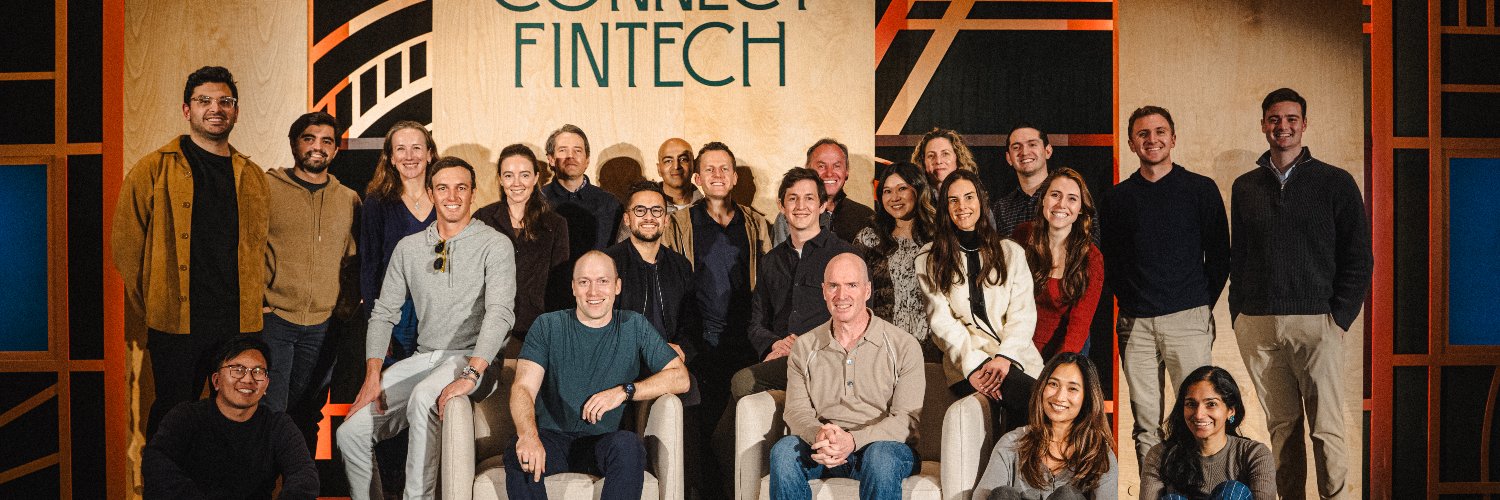
We’re thrilled to lead Town’s $55M Series A.
Town is a personal AI assistant that works across the tools you already use - email, calendar, Slack, docs, WhatsApp, desktop, web. It learns how you work and starts proactively pitching in.
People are already leaning on Town for the kind of work that’s personal and operationally messy: running recruiting pipelines, juggling school logistics, processing handwritten grant requests, prepping summaries, drafting follow-ups, catching the stuff that would otherwise slip.
The longer you use it, the more it picks up: your voice, your relationships, your preferences, your routines, what you actually care about.
Jean-Denis Greze and Tony Vincent are the right team for something this hard. JDG was CTO at Plaid and an engineering leader at Dropbox. Tony led product and AI at Google and design at Dropbox.
Welcome, JDG, Tony, and the Town team, to the a16z family.I
By @arampell and @venturetwins
i ran a social experiment this weekend
put a laptop in the kitchen which transcribes everything my son says and dispenses rewards and punishment in the form of screen time
came home after a few hours and found a video of him saying “I love you” on repeat beside the mic 😂
Marc Rowan has quietly built Apollo from a distressed-focused private equity firm into one of the most important financial institutions in the world, now managing over $1T in assets and becoming the largest provider of retirement income globally.
In this fantastic conversation we covered lessons at Drexel from Michael Milken, Apollo’s origin story from a cold call from France, why AI could outgrow venture equity, and Apollo’s “play to win” culture.
We also connected over our shared belief that “Opportunities live between fields of expertise.”
This was really fun, hope you enjoy! cc @apolloglobal
Compliance is painful, bureaucratic, and often paper-based, so it has long persisted as being manual and human intensive.
That friction has historically made compliance a graveyard for startups.
But AI may finally go from "good enough to pilot" to "good enough to trust".
In legal, broad model choice and consistently high accuracy gave teams the confidence to finally embrace AI. Many LLMs now score 80-100% on LegalBench’s 162 legal reasoning tasks.
This matters directly for compliance, because compliance is essentially applied legal reasoning under operational constraints, built on the same core tasks: reading regulatory text, applying rules to fact patterns, identifying exceptions, and flagging ambiguities.
Full piece from a16z's @jamdac and @astrange: https://t.co/niRB3jPioN
In legal, broad model choice and consistently high accuracy gave teams the confidence to finally embrace AI. Top frontier LLMs now score 85%+ on most of LegalBench's 162 legal reasoning tasks, at or above human expert performance.
This matters directly for compliance, because compliance is essentially applied legal reasoning under business/operational constraints, built on the same core tasks: reading regulatory text, applying rules to fact patterns, identifying exceptions, and flagging ambiguities.
AI’s next generational company might come from its least sexy market: compliance!
The US spends $40B+ on compliance labor. And yet the system still doesn’t work. "Compliance officer" has been the 5th fastest-growing occupation over the past two decades, with 400,000+ employed in the US alone.
Every dollar that moves through a company triggers compliance somewhere: payroll, taxes, payments, KYC, AML, audits, reporting. The old answer was hire more people. The new answers are much better 👇
New post by @jamdac & me + great companies to watch. What else should we be thinking of?
The boring work is where the leverage is.
As AI pushes more decisions, handoffs, and workflows into software, companies need a better way to prove what happened and why.
Compliance becomes less about paperwork and more about operational trust.
That’s the Emberlink thesis.
These are also not very obvious opportunities as software is still new to these realms
Case in point Vanta took years to establish their GRC category and in general once established they can be large markets
@jamdac does a great job explaining how one can find non obvious opportunities
Earlier in my career, RegTech was the ultimate startup graveyard: mission-critical products with near-impossible sales cycles. Compliance was treated as a pure cost center, so enterprises responded to rising complexity the only way they knew how: ballooning teams (despite decreasing labor availability), growing backlogs, and more manual pain.
It's amazing how fast AI is flipping competitive dynamics, whereby “boring” operational layers of a company have become genuine points of differentiation. Faster KYC/B means faster revenue. Better AML means fewer good customers lost.
Enterprises are quickly realizing the bottleneck to true AI deployment is whether the system is explainable, auditable, and controllable enough for regulated environments. To keep up, this era requires moving from compliance systems built pre-cloud to those that codify years of institutional logic and keep current all internal and external data sources and partners, even as they rapidly change.
Great read by @jamdac and @astrange on a category getting more of the attention it deserves.
especially true in fintech
be too conservative and competitors will crush you on speed
underinvest in compliance and you won't have a business for long
excellent compliance is hard to build, but it's also very hard to compete against
Factor Labs (@maxvwolff) sits on top of legacy systems rather than replacing them. Its computer use agents automate chargeback dispute handling for banks and payment companies. Each agent task follows a “playbook”, essentially step-by-step instructions tailored to each merchant and complying with the card networks’ processes. The agent mimics what a human analyst would do: logging into company systems (Outlook, Excel, anti-fraud platforms like CyberSource), pulling evidence, compiling it into a formatted Word document with the client’s letterhead, and sending the final PDF back to the client.
Rip & replace legacy systems
@sardine (fraud & transaction monitoring) is replacing NICE Actimize. Sardine is cloud based and can perform both inline real time fraud as well as run complex post-facto AML scenarios. Agents sit on top of Sardine’s live data to improve compliance reviews up to 30x. For example, the SAR (Suspicious Activity Report) summarizer agent fully automates filling out 60-100 different fields per entity (pulled from multiple systems) thereby reducing the amount of time taken per SAR submission from 30+ minutes to <1 minute.