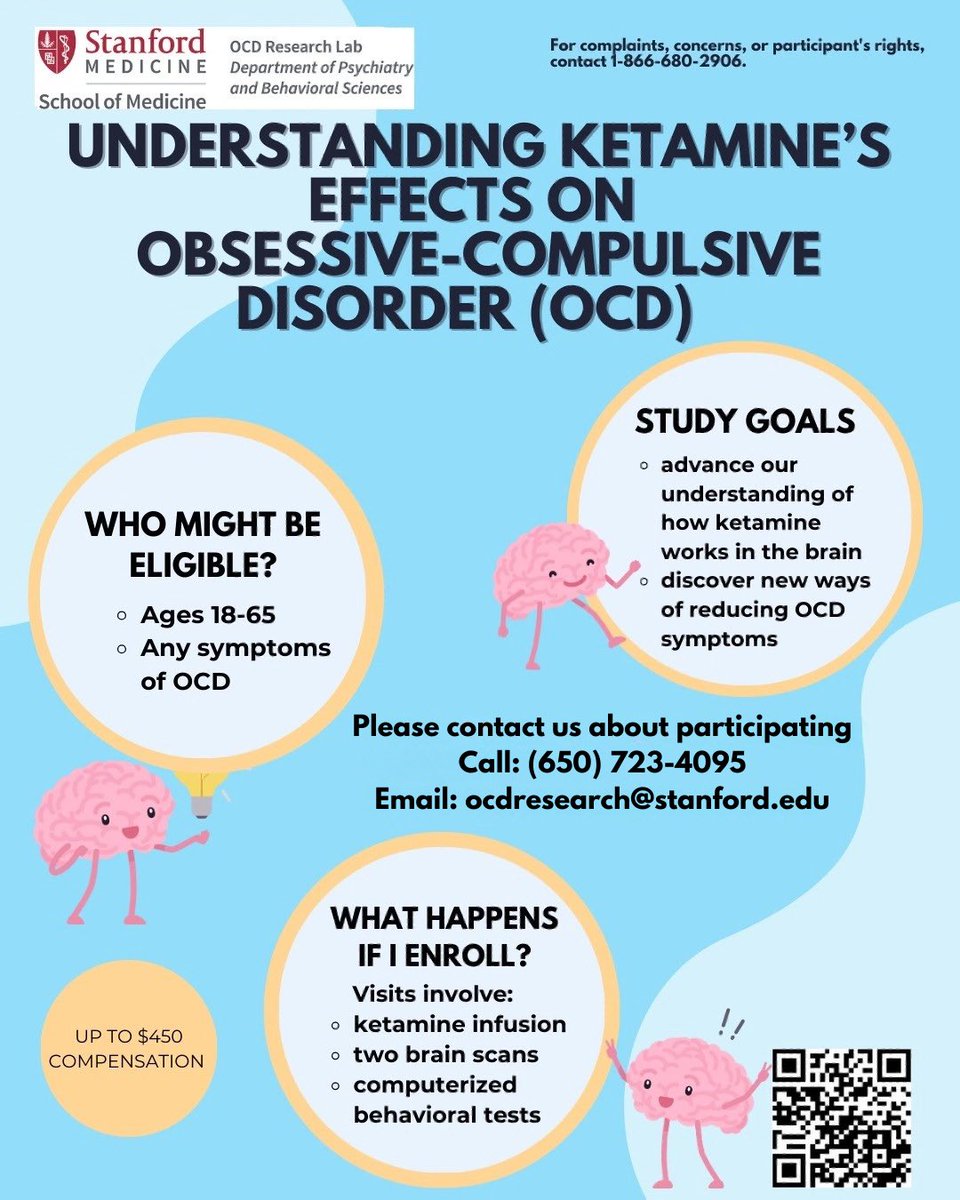
Recruiting for #OCDresearch at Stanford
Stanford Medicine is enrolling adults ages 18–65 with #OCD for a research study examining ketamine’s effects on the brain.
💰 Up to $450 compensation
📍 Stanford University
📧 [email protected]
🔗 https://t.co/Jvuxdf3uSw
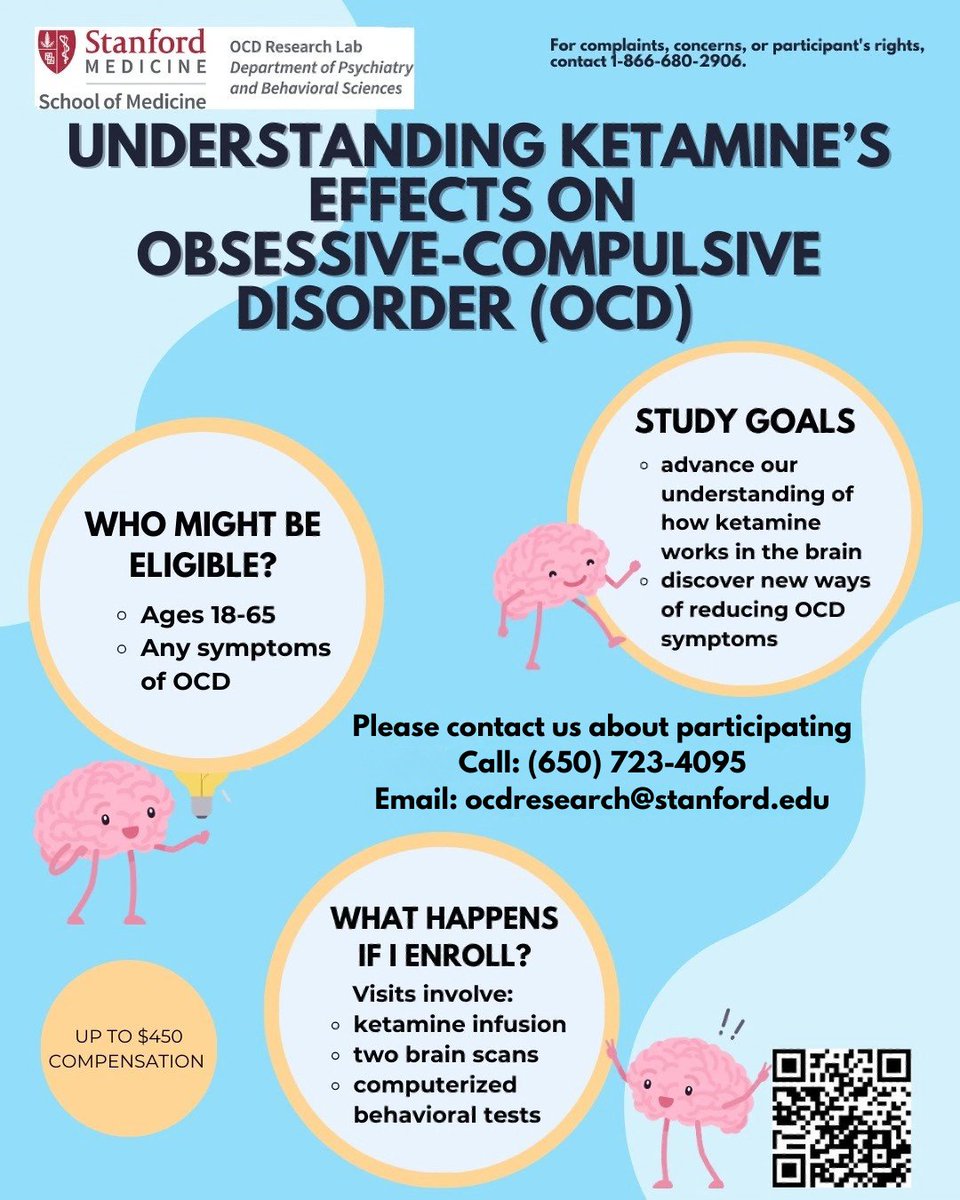
Recruiting for #OCDresearch at Stanford Medicine
Stanford Medicine is enrolling adults ages 18–65 with #OCD for a research study examining ketamine’s effects on the brain.
💰 Up to $450 compensation
📍 Stanford University
📧 [email protected]
🔗 https://t.co/posjH0YD5o
Thank you to Dr. Colleen Hanlon and Dr. Jovana Lubarda for inviting me to "Hear from Her: The Women in Healthcare Leadership" podcast series to talk about "The Brain's Electric Circuitry: Harnessing Neuromodulation to Transform Mental Health"
Listen here: https://t.co/kjZ7xeatEF
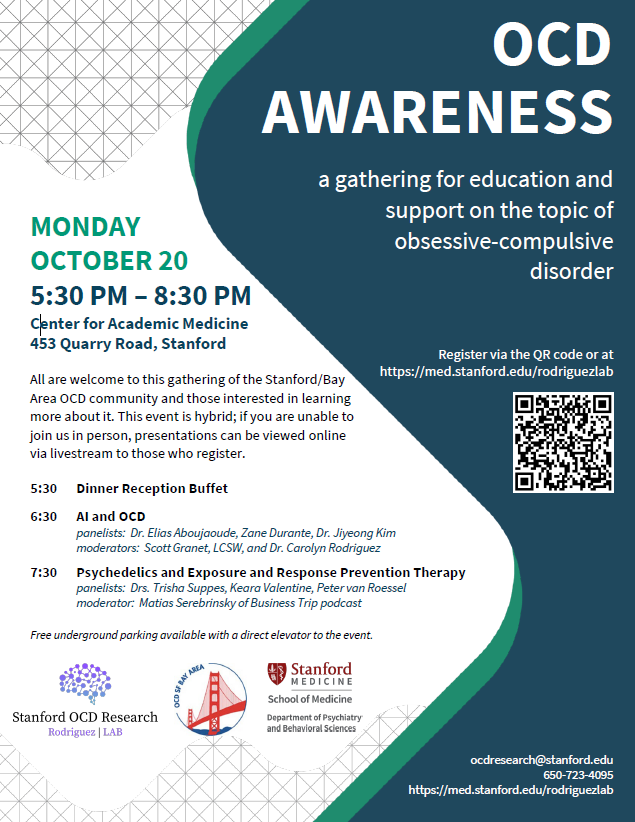
For #OCDweek we are excited to host our annual FREE OCD Awareness event (AI, psychedelics, & ERP) @Stanford Center for Academic Medicine on Monday, October 20th 5:30-8:30pm!! (Hybrid)
Co-hosted w/ @IOCDF affiliate SF Bay Area and Dept of Psych & @RodriguezLabSU
Register today👇
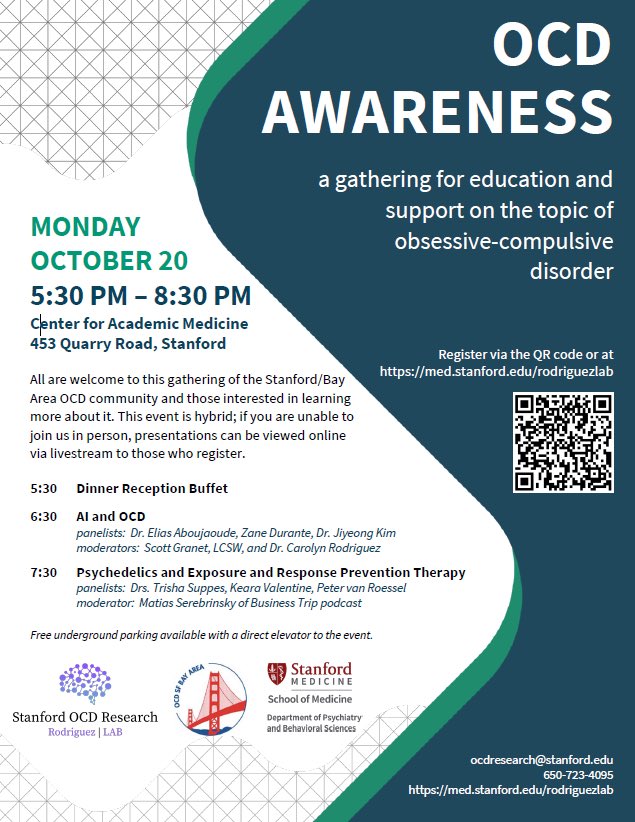
For #OCDweek we are excited to host our annual FREE OCD Awareness event (AI, psychedelics, & ERP)
@Stanford Center for Academic Medicine on Monday, October 20th 5:30-8:30pm!! (Hybrid)
Co-hosted w/ @IOCDF affiliate #OCD SF Bay Area and Dept of Psych
Join us and register today👇
It's OCD Awareness Week!!!
We're so excited to kick off #OCDWeek, a worldwide event that serves to dispel myths about obsessive compulsive disorder, break the stigma around mental illness, and provide education about the disorder and how to support those affected.
This #OCDweek, whether you share facts, tell your own story, or otherwise support OCD Awareness, YOU are making a powerful difference.
Join us in ensuring that no one affected by OCD and related disorders suffers alone.
It's OCD Awareness Week!!!
We're so excited to kick off #OCDWeek, a worldwide event that serves to dispel myths about obsessive compulsive disorder, break the stigma around mental illness, and provide education about the disorder and how to support those affected.
This #OCDweek, whether you share facts, tell your own story, or otherwise support OCD Awareness, YOU are making a powerful difference.
Join us in ensuring that no one affected by OCD and related disorders suffers alone.
Thank you @PBS Emmy-nominated public TV program "Healthy Minds" for highlighting hoarding disorder on (new) Season 10 Episode 7⭐️Great questions from host & executive producer Dr. Jeff Borenstein; "with help there is hope" @BBRFoundation Find help @IOCDF
https://t.co/B2NwsuKFSp
Congratulations🌟Dr.🌟 Paula Munoz Rodriguez!! Thank you to my wonderful colleague @LMWilliams_PhD for co-mentoring Paula's neuroscience PhD w/ me & @pineurosci@warmxue@Stanford_PMHW Appreciate Paula's committee chair @AGoldPie members Drs. Knutson, Hosseini, Moya🙌& classmates
I’m excited to share our new publication: “Artificial Intelligence in OCD: A Systematic Review” ▶️ https://t.co/5OVQ9wbnB1. I feel honored to have had the opportunity to contribute to advancing mental health tech alongside such an amazing team! Thanks @CRodriguezMDPhD@JKim_1003!
Congratulations @JKim_1003 on new paper "Artificial Intelligence in #OCD: A Systematic Review." Big thank you to co-authors @StanfordMed OCD clinic @AshleighGolde10 & Stanford AI4MH @eadeli For more on OCD: @IOCDF#OCDCon
Open access click to learn more: https://t.co/iUmzev0OWD
BIG thank you to Russ Altman @Rbaltman for having me on to @StanfordEng The Future of Everything podcast to talk about Hoarding Disorder.
For those with loved ones who struggle with hoarding disorder, there is hope and help, including CBT therapy. @IOCDF
https://t.co/k07gA0Pn2D
💥Emotions are central to the human experience 😠😳😃☺️😔😕😮🙂
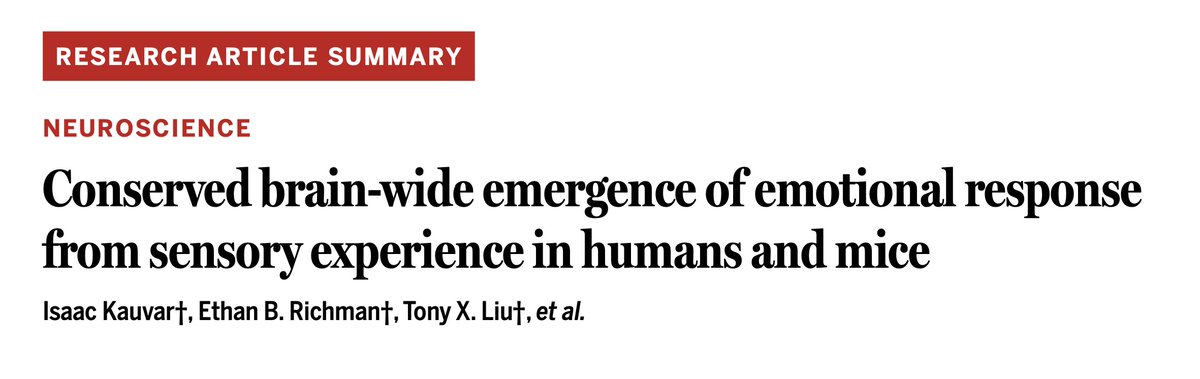
Our Human Neural Circuitry team just took a step towards understanding how they arise–using brain-wide electrical ⚡recordings in humans and mice @ScienceMagazine
Read on for more… 1/n
Emotions are core to the human experience 😆😮🙂😊☹️😠😳😑. But how do they arise? Our brain-wide ⚡recordings in humans and mice reveal some answers @ScienceMagazine. A big team effort and debut paper from @Stanford's new Human Neural Circuitry program. https://t.co/FbbJIjky2c
Incredibly appreciative of @KarlDeisseroth pioneering vision & honored to work alongside the amazing Human Neural Circuitry (HNC) team. Excited to share our first HNC paper @ScienceMagazine illuminating conserved brain-wide emergence of emotional response from sensory experience
We don’t always understand our emotions—but we can’t live without them. Stanford Medicine researchers have mapped how the brain processes emotions triggered by mild discomfort, offering insights into the roots of neuropsychiatric disorders.
https://t.co/mFD9AoeNl1