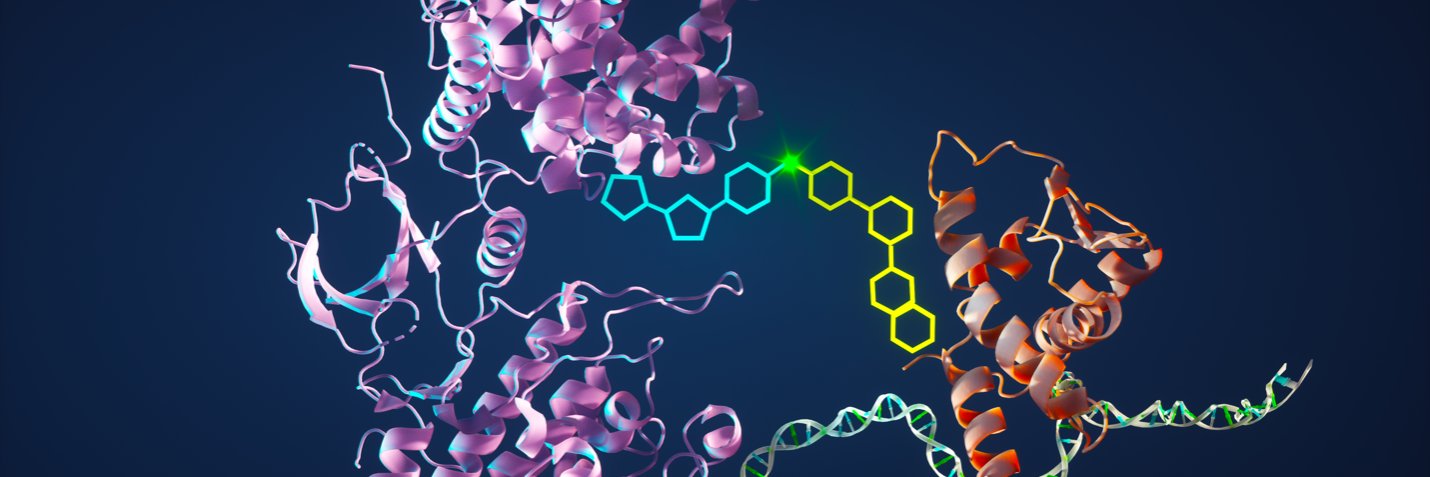
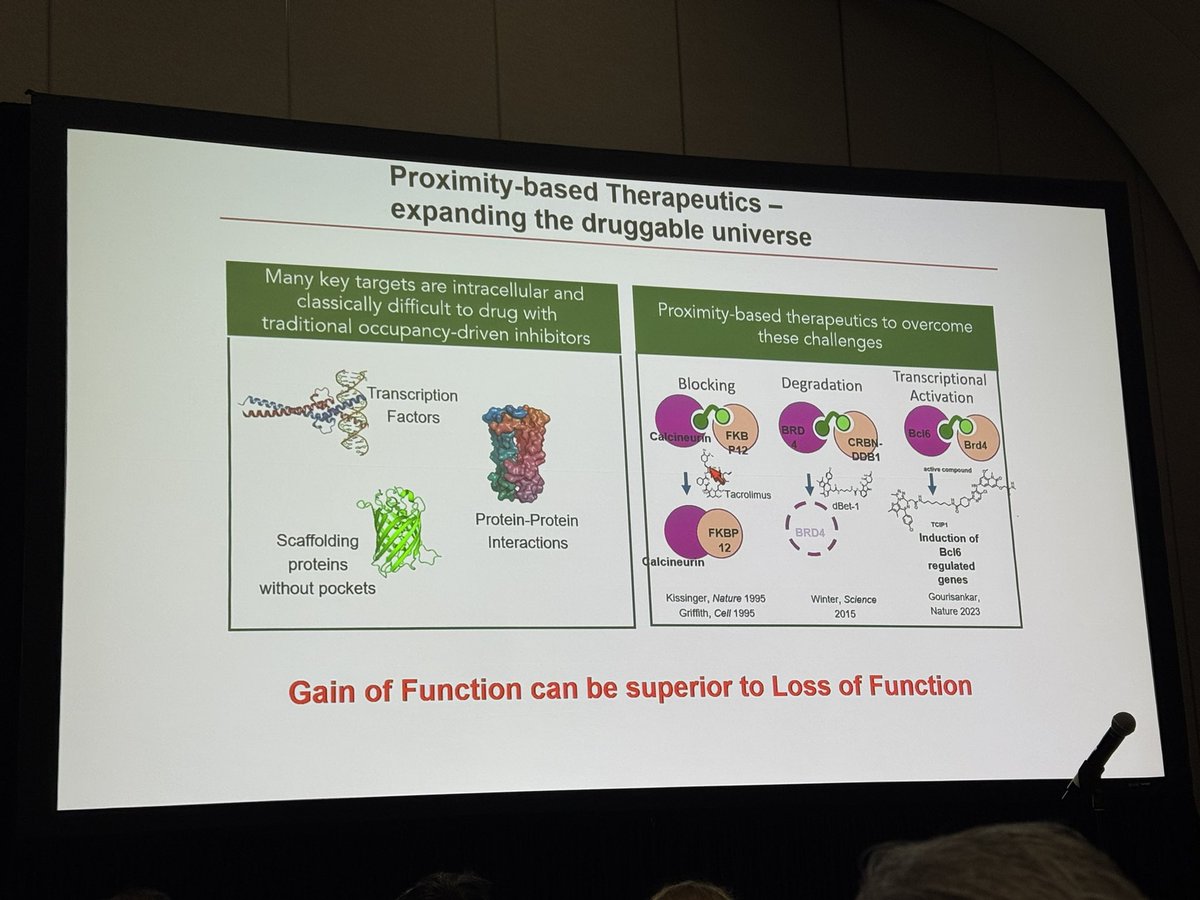
Nathanael Gray @StanfordUChem about bifunctional proximity-inducing molecules which allow to rewire transcription #AACR26. TCIPs hijacking BCL6, BRD4, CDK9, p300 and p53 Y220C as “synthetic hybride TFs” leading to transcriptional hyperactivation & gain-of-function pharmacology.
🚀 Great news!
With support of the Dieter Schwarz Foundation, the #MaxPlanckSchools will keep growing. The funding boosts top-tier research & training—#ShapingTheFuture of science! Read more at https://t.co/UxEiJKmxgq
@maxplanckpress@HRK_aktuell
Happy to announce my next career step - I’ve launched my independent research lab at Dana Farber!
If you are a trainee interested in ambitious projects at the intersection of chemical biology and cancer biology, please reach out!
https://t.co/HeBrFiAzM8
🎊🎉Exciting news: @RomanSarott will join us in January as a new Research Group Leader and will establish the group “Chemically Induced Proximity”. We look forward to seeing you again in January, dear Roman! 🤩👏https://t.co/Zmigtft0XB
🎊🎉Exciting news: @RomanSarott will join us in January as a new Research Group Leader and will establish the group “Chemically Induced Proximity”. We look forward to seeing you again in January, dear Roman! 🤩👏https://t.co/Zmigtft0XB
Multicomponent reactions for molecular glue discovery,
Congrats @HRazumkov and @ZzzxJiang !
Discovery of CRBN-Dependent WEE1 Molecular Glue Degraders from a Multicomponent Combinatorial Library | Journal of the American Chemical Society https://t.co/aZ1DPS4nz2
We can now activate p53 Y220C by recruiting BRD4 to it with small molecule TRAP-1. This was a great collaboration with Gray lab and Attardi Lab @Stanford lead from @UniBonn@UniklinikBonn by @dpienkowska9 & @JanGerhartz.
https://t.co/kvAr0vHno8
New work from Nat Gray lab...
Discovery of a small molecule chemical inducer of proximity that activates mutant p53 by linking to BRD4. Highlights how chemically induced proximity can be used to restore the functions of tumor suppressor proteins.
https://t.co/CBQTjpRhpW
Really nice new cancer drug modality: Chemical induction of proximity to hijack the activity of a cancer driver!
From @RomanSarott@saigourisankar@baselakarim in the Gray & Crabtree labs @Stanford