(1/10) Excited to share a new blog post on the wave of trade in programs in China and what they tell us about Beijing's efforts to boost consumption.
https://t.co/EgeBsJrAoO
Long thread for those interested!
For those who are interested in Japan's recent economic history, and what that may tell us about other economies that copied its growth model, it is worth noting that in Japan, the term “excess competition” (過当競争, katō kyōsō) emerged, mostly in the 1960s, to express what was seen at the time as an urgent problem.
Japanese officials used it to mean competition so intense that it wiped out profitability, discouraged private investment, and created instability in key industries. It also led to financial fragility because of the associated dependence of Japanese companies on unlimited access to easy credit to stay alive.
JUST OUT! Over the past few decades, China’s high-tech drive has made enormous yet uneven progress, both in general and within specific industries. These advances have directly translated into enhanced international power and influence for China. Here's my quick analysis in 10 charts.
https://t.co/lMYcUuS7sj
A starting gun was fired for Chinese EV firms when Mark Carney announced that Canada would lower tariffs on Chinese EVs and invite Chinese EV investment.
Now BYD, Leapmotor, Geely, and likely others are rushing to enter the Canadian auto market and even produce EVs in Canada.
In a new video, CSIS experts @mazzocco_ilaria and @Ryanfeath discuss what the war in Iran means for China's energy security.
Watch the video from @CSISCBE here: https://t.co/vdesZFuwjT
The below article would lead you to believe that production capacity means independent supply chains. China still controls all the component synthesis.
Not quite true. Don't have access to this article but I did compile all members of every CPC central committee back to the 1940s and the median age is remarkably stable (though the IQR has compressed)
🚨 The CSIS Trustee Chair is offering research internship opportunities for Summer 2026! This is a fantastic opportunity to learn more about China's economic trajectory, industrial policy, and U.S.-China relations.
We are #hiring part-time paid Research Interns to support our program's analysis. To apply, visit the link here: https://t.co/CW7tn3Xd86
How to Apply: Submit your resume, cover letter, writing sample, academic transcript, and a list of 3 references in one PDF. Applications will be reviewed on a rolling basis.
Whatever new policies are announced at the Two Sessions, China will have to do less with less, due to the long, unaddressed decay of its financial and fiscal system:
https://t.co/d5mkReaKJW
@HistorianZhang I think Japanese teas are nice for the office, things like sencha, bancha, genmaicha are pretty cheap and get the job done. But yeah, hard to beat the OG.
Where did China's record exports go last year and how are U.S. supply chains adjusting?
For these questions and more watch the latest iteration of our new video series, China Pulse, where @Mazzocco_Ilaria and @RyanFeath break down China's trade in 2025.
Watch here: https://t.co/0yU8NB0A1L
@ZeyiYang I agree with the poster's point that Confucianism is closer in substance to philosophical traditions in the Classical West which tended to approach problems in a similar way and were less dogmatic than Christianity.
Just throwing the Penn World Tables to Claude and giving it a smidgen of context about my interests and desires and getting this back. It's never felt so good to be a wordcel
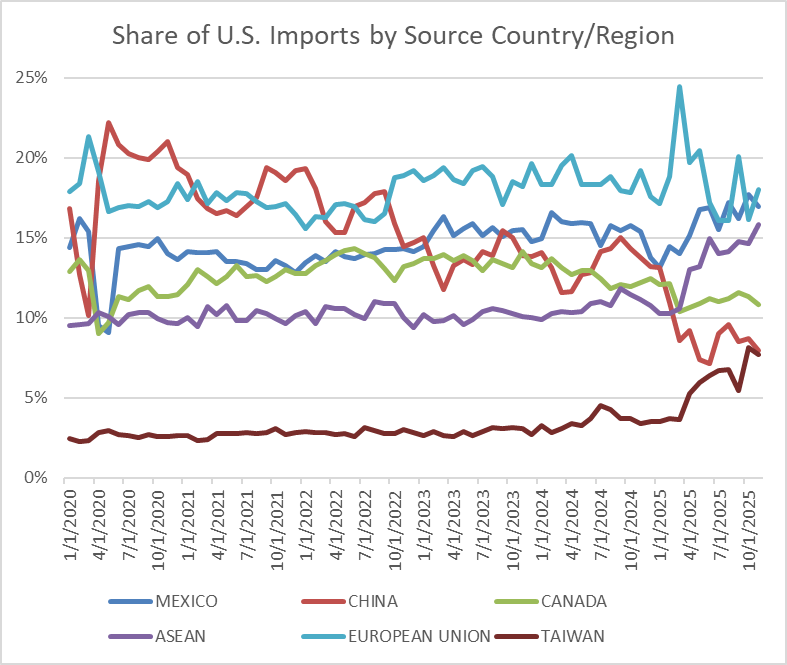
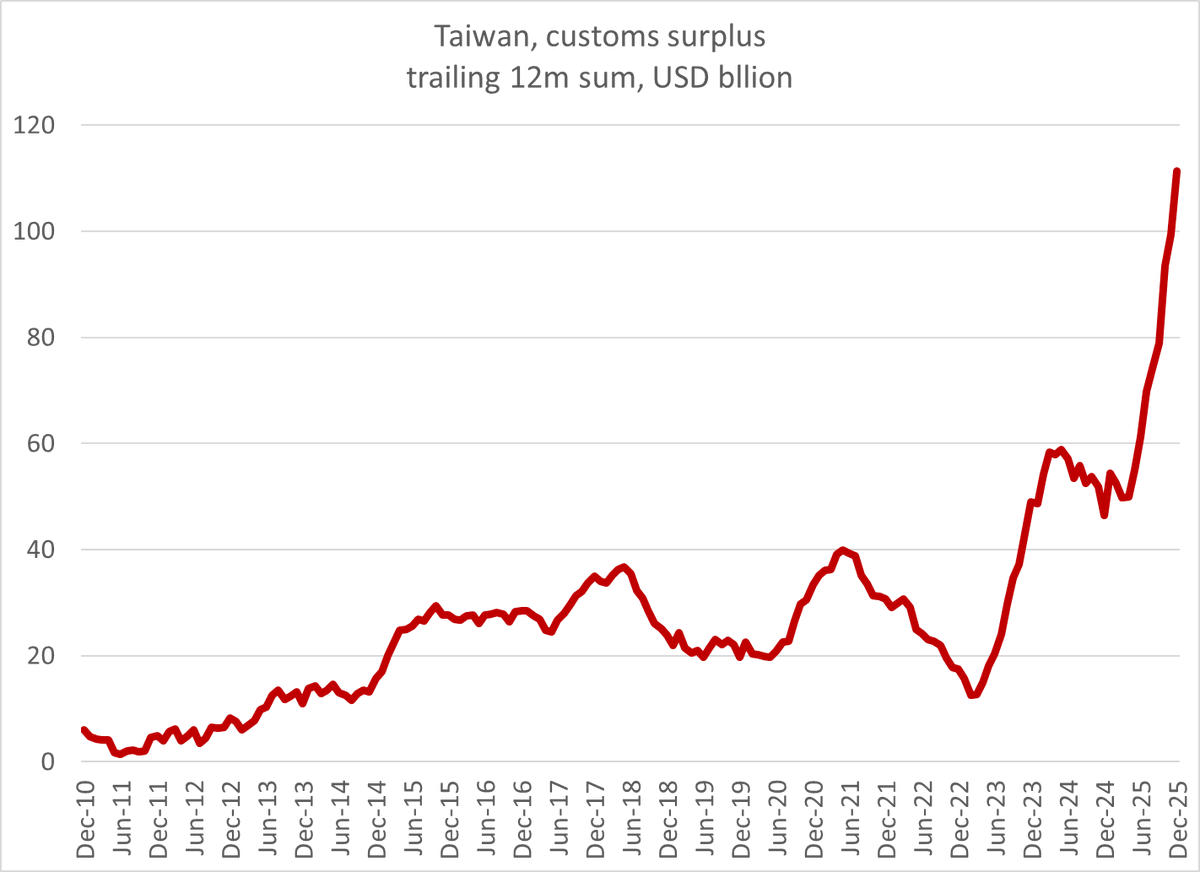
Yes, it's pretty remarkable how Taiwan's share of U.S. imports in value terms is actually now remarkably close to China (partially because of a big decline in China's share)