Cancer is not only driven by genes but also by physics. Researchers show that tissue mechanics can determine whether mutated cells are eliminated or spread. These early physical cues may shape cancer in ways biology alone cannot explain.
Read: https://t.co/3z87b7ZhzO
2 billion people face micronutrient deficiencies; yet proven solutions exist.
At #WHA79, governments & global partners share how they are scaling food fortification & micronutrient supplementation during pregnancy to transform maternal & child health.
Join the movement for nutrition equity. May 21, 1-2:20 pm. Palais des Nations. 🌍
#GlobalHealth #MaternalNutrition #SDG3 #LSFF #MMS
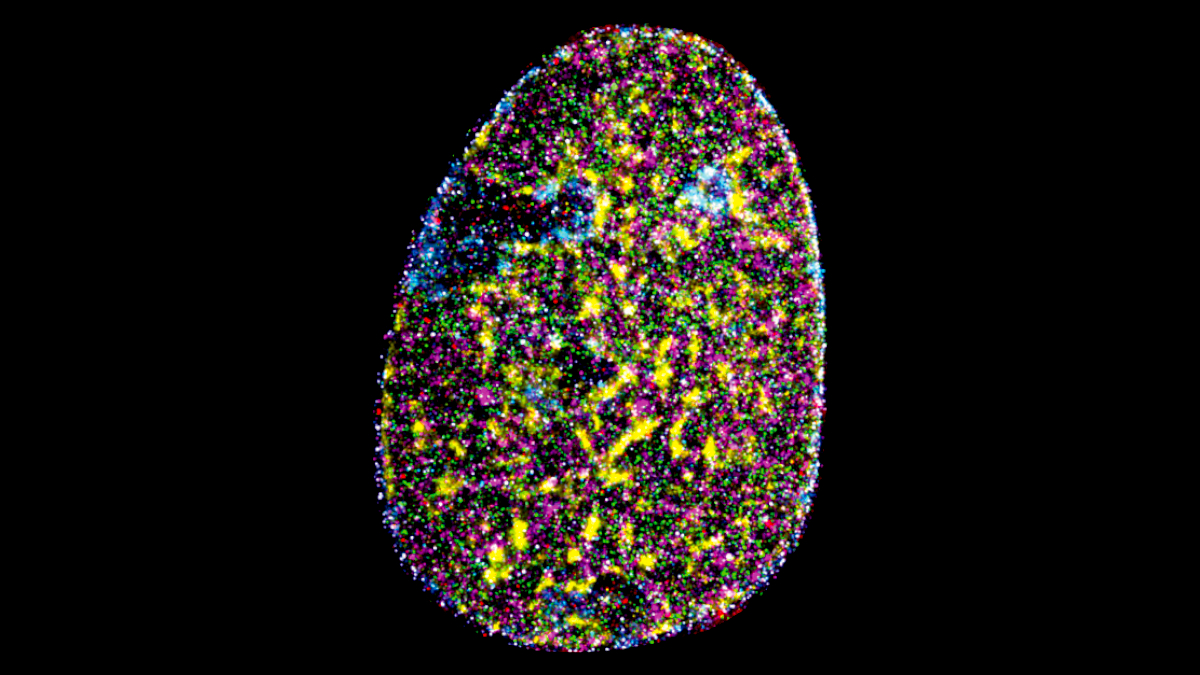
Researchers at IISc offer a peek into the different biomolecules inside the nucleus of a cancer cell at incredibly high resolution!
Implementing an advanced microscopy technique, they offer one of the first detailed maps of nuclear organisation.
Read: https://t.co/DIZgxCHQEj
That's right. Inflammation is the big miss for getting ahead of coronary artery disease
https://t.co/KIs1AFxflE
My review of this big shift
https://t.co/foSaaTYUD4
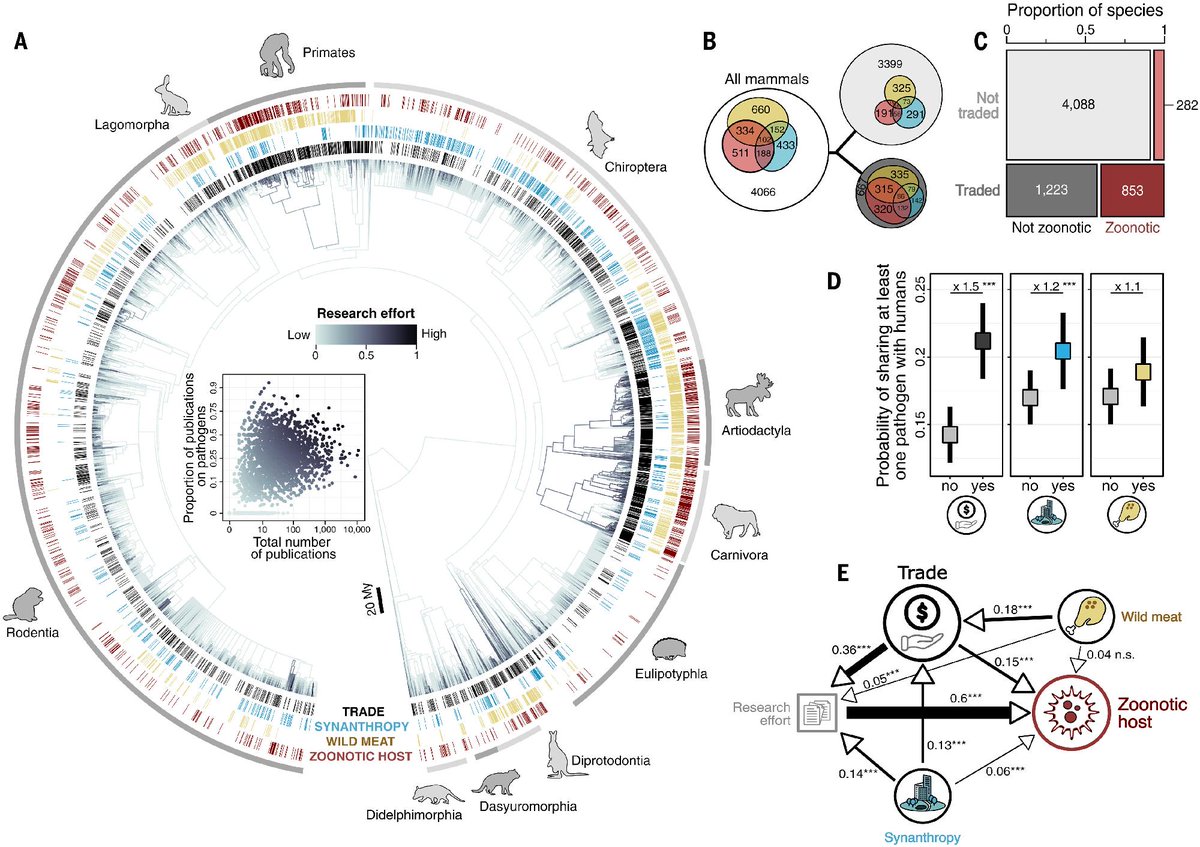
The global wildlife trade—especially in illegal and live-animal markets—is fueling the spread of diseases from animals to humans, according to a new study in Science.
The findings show that traded mammals are more than 40% more likely to harbor human-infecting pathogens, with species accumulating more shared pathogens the longer they remain in the trade.
Learn more: https://t.co/9GsERoW0We
A new feature @ScienceMagazine on the clusters of cells that enhance the spread of cancer, and what can be done to break them up @ScienceVisuals
https://t.co/xNAOF834mU
My latest publication on the feasibility and scope of using salivary biomarkers to assess #nutrition and #inflammation highlights key research gaps and methodological challenges in using #saliva as a matrix for #primarycare and for #biomedical research.
https://t.co/oGjzB5ij5G
Eating a high-quality plant-rich diet that includes whole grains, vegetables and fruits may prevent cognitive impairment — even when people start that diet in their late 50s and 60s, according to a new study. https://t.co/8UHQaD3e3y
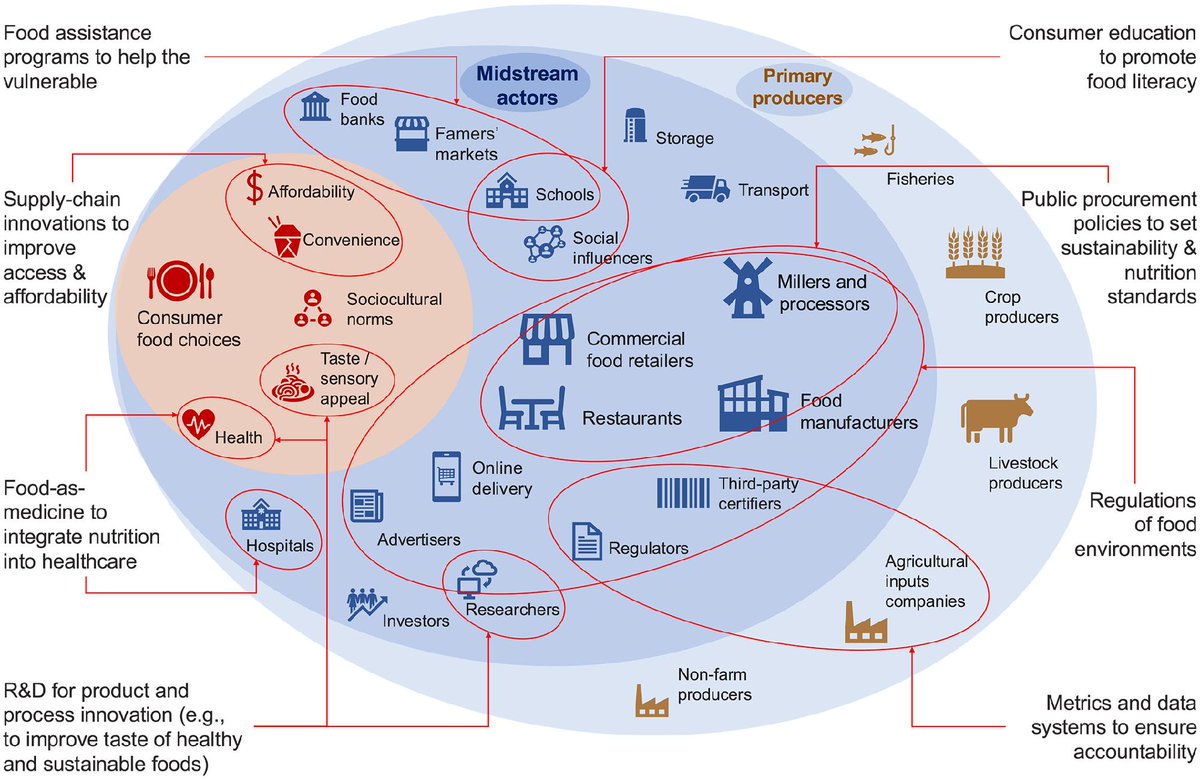
Global food systems pose increasing harms to human health and the environment, so how can we shift toward healthier, sustainable, and more equitable systems for the world’s 8 billion people?
In a new #ScienceReview, researchers examine the evidence for how global diets have changed and strategies that could transition food systems toward a healthier future.
Learn more: https://t.co/kCuDwFjSbR
Brain health is the next frontier of healthcare, and we don’t have to wait for a miracle drug. The breakthrough at our fingertips, which is scalable and available to everyone, is applying what we already know: that daily behaviors can improve our brain health, and making small daily changes can transform what’s possible for our brain now and decades from now.
Here’s what the science makes clear:
Food: The brain is the hungriest, thirstiest organ in the body. It makes up just 2% of body weight, but requires 20% of your body’s primary fuel.
Movement: Exercise — even low-intensity movement — is a powerful counterbalance for slowing cognitive decline.
Sleep: Sleep functions as a kind of cleaning cycle for the brain, filtering out harmful proteins connected to Alzheimer's.
Stress management: Over the long term, cortisol can kill neurons and shrink brain regions, especially those connected to learning, memory and decision-making.
Connection: The human brain rewards us for connection and punishes us for isolation.
I write about this in my latest piece for @TIME: https://t.co/VQxp7egjUP
What can we do to quiet our brains?
Neuroscientists Anne-Laure Le Cunff shares 5 strategies to make reading a restorative antidote to our fragmented attention landscape. @neuranne
Read the full article: https://t.co/AaYOW33qYL
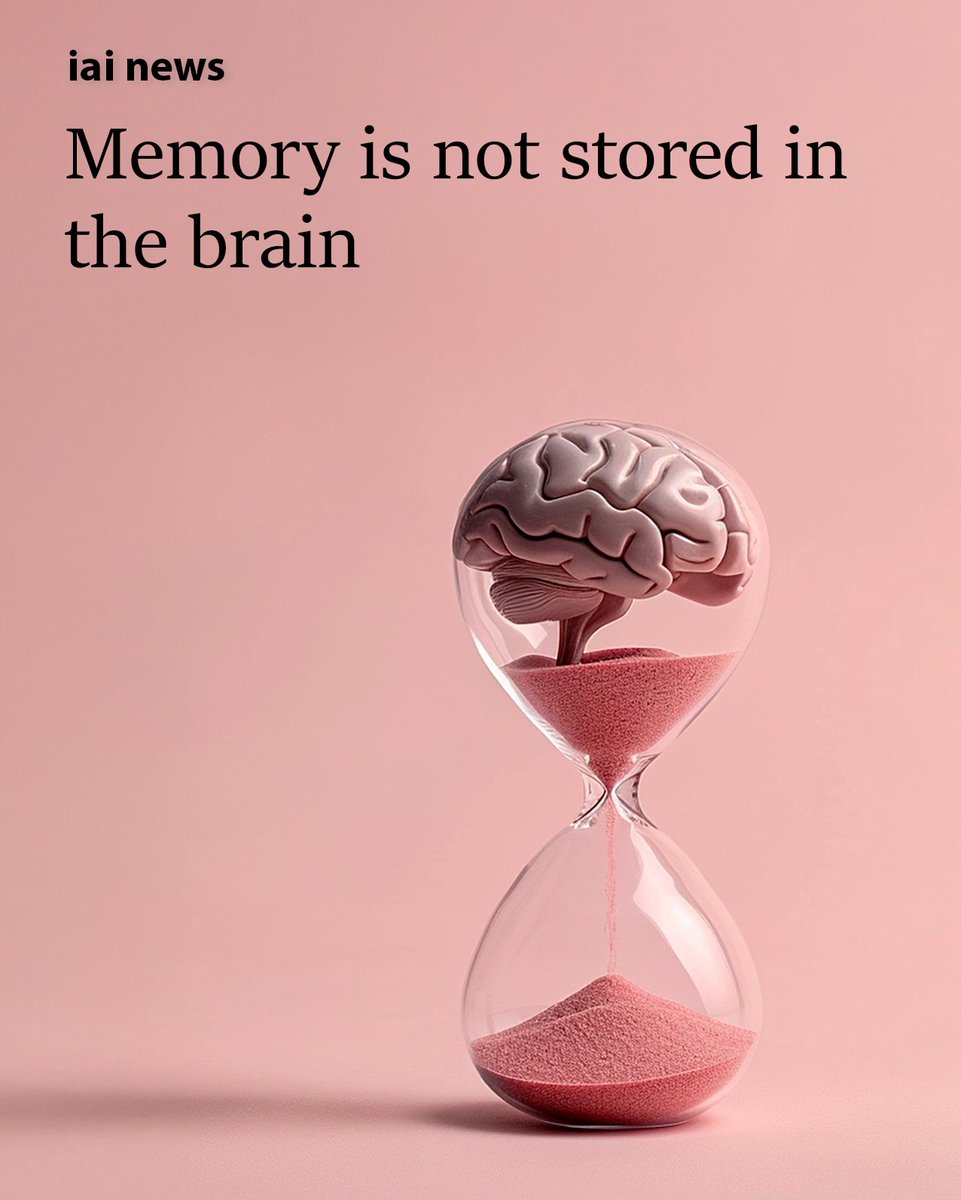
“When neuroscientists locate memory “in” the brain, what they’re really finding is that certain brain regions are active during remembering.” | https://t.co/JPOT41QIym
The leading theories of memory describe it as being stored in the brain, similar to the way a computer stores memory.
But this assumption relies on materialist assumptions and problematically bypasses the hard problem of consciousness.
Memory is not stored in space, but in time, argues philosopher Victoria Trumbull.
Music helps to understand the mind and the brain. Throughout the history of science, metaphors have shaped how we understand complex phenomena. The brain-as-computer metaphor has guided decades of theories and research. We propose music as a scientific metaphor for understanding the mind and brain via triplicate interfaces (listener, performer, composer) and a compound set of predictions. Multiple domains of music can be mapped onto different neural, cognitive and intersubjective processes such as network coordination, prediction, emotion and meaning. Neurocognition is not static but a dynamic, embodied, and time-sensitive system, much like a self-organized orchestra in which multiple processes interact simultaneously. Drawing on synergetics, predictive processing, and embodied cognition, we outline musical principles illuminating cognitive and action integration across time, offering new conceptual frameworks and testable predictions for future research. I enjoyed writing this piece with these stellar authors: @Kaiameye, @acolverson1, Christopher Bailey, @brucemillerucsf, @dafneduron90, Nicholas Johnson, Olga Castaner, @PierLuigiSacco, Eoin Cotter and Lucia Melloni. Science, like music, advances through new ways of listening to complex systems: https://t.co/W3pJRyXJOH
Consul General @binaysrikant76 met Dr. Michael I. Kotlikoff, President of @Cornell University, and Dr. Kavita Bala, Provost of Cornell, during his visit to the Ithaca campus. Discussions focused on strengthening India–Cornell collaboration in research, innovation, academic exchanges and global partnerships, reflecting the growing depth of India–US educational ties.
@IndiainNewYork@MEAIndia@PMOIndia@IndianDiplomacy@EduMinOfIndia@mygovindia
Consul General @binaysrikant76 engaged with distinguished faculty members across diverse disciplines at @Cornell University, exchanging views on research collaboration, innovation and expanding academic partnerships between India and Cornell.
@IndiainNewYork@MEAIndia@IndianDiplomacy
Major preprint just out!
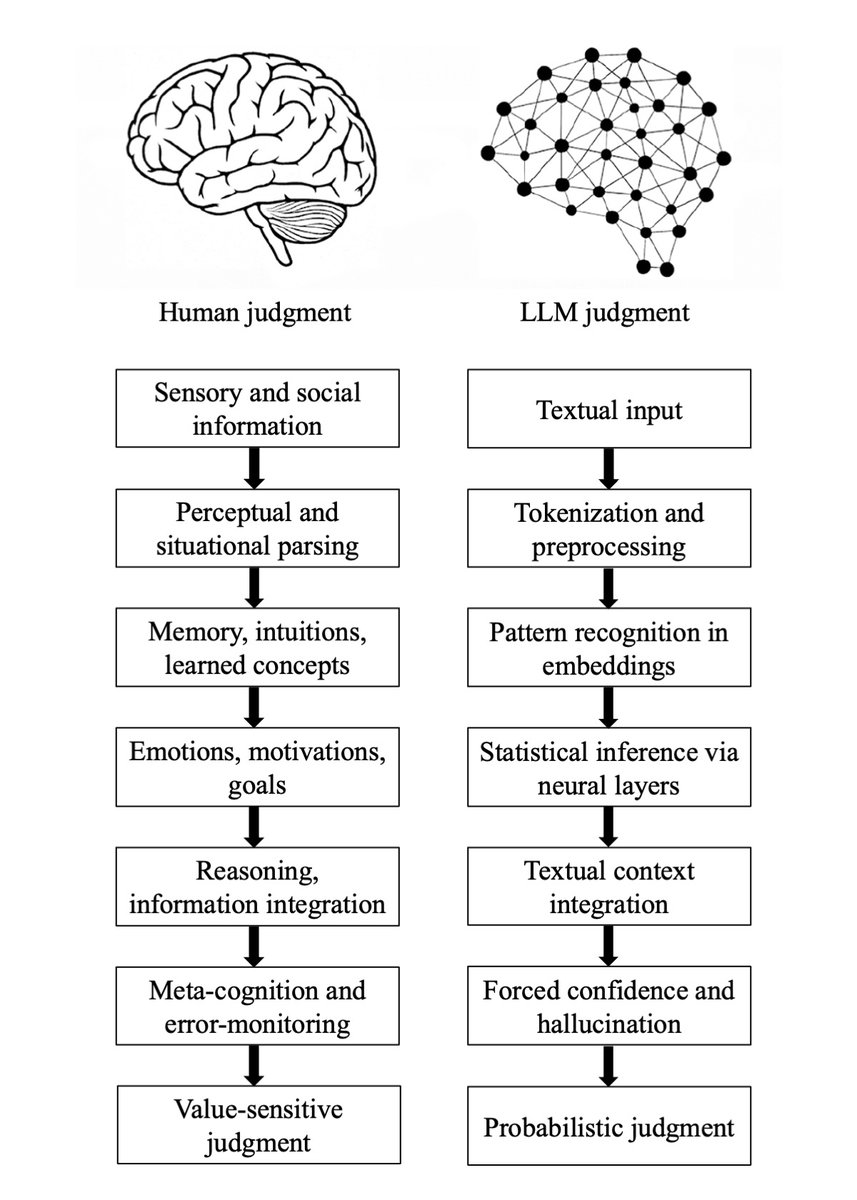
We compare how humans and LLMs form judgments across seven epistemological stages.
We highlight seven fault lines, points at which humans and LLMs fundamentally diverge:
The Grounding fault: Humans anchor judgment in perceptual, embodied, and social experience, whereas LLMs begin from text alone, reconstructing meaning indirectly from symbols.
The Parsing fault: Humans parse situations through integrated perceptual and conceptual processes; LLMs perform mechanical tokenization that yields a structurally convenient but semantically thin representation.
The Experience fault: Humans rely on episodic memory, intuitive physics and psychology, and learned concepts; LLMs rely solely on statistical associations encoded in embeddings.
The Motivation fault: Human judgment is guided by emotions, goals, values, and evolutionarily shaped motivations; LLMs have no intrinsic preferences, aims, or affective significance.
The Causality fault: Humans reason using causal models, counterfactuals, and principled evaluation; LLMs integrate textual context without constructing causal explanations, depending instead on surface correlations.
The Metacognitive fault: Humans monitor uncertainty, detect errors, and can suspend judgment; LLMs lack metacognition and must always produce an output, making hallucinations structurally unavoidable.
The Value fault: Human judgments reflect identity, morality, and real-world stakes; LLM "judgments" are probabilistic next-token predictions without intrinsic valuation or accountability.
Despite these fault lines, humans systematically over-believe LLM outputs, because fluent and confident language produce a credibility bias.
We argue that this creates a structural condition, Epistemia:
linguistic plausibility substitutes for epistemic evaluation, producing the feeling of knowing without actually knowing.
To address Epistemia, we propose three complementary strategies: epistemic evaluation, epistemic governance, and epistemic literacy.
Full paper in the first reply.
Joint with @Walter4C & @matjazperc
This year, I had the pleasure of guest editing a special issue of @BioMedCentral Gastroenterology focused on Environmental Factors and Digestive Health. I'm excited to share that the issue is now out. Read more here:
https://t.co/XQXVxbuRlw