Discovery of a T cell enzyme that uncouples organ and immune system aging, and when deficient slows the aging of multiple organs @ImmunityCP work in the mouse model https://t.co/wC5clg0N25
The first human volunteers have officially received Moderna's experimental mRNA cancer prevention vaccine. Speaking with the Financial Times this week, Moderna CEO Stéphane Bancel described cancer prevention as the company's ultimate objective, confirming that its initial human trial is already underway.
Designated as mRNA-4194, the investigational vaccine is being evaluated at the University of Oxford in individuals with Lynch syndrome, an inherited genetic disorder that carries up to an 80% lifetime risk of developing malignancies such as bowel and womb cancer. The vaccine works by training the immune system to identify harmless fragments of abnormal proteins present in precancerous cells, enabling the body to eliminate them before they develop into full-grown tumors. The study's first participant, 53-year-old Sarah Ewart, received her initial injection in August.
Nearly all existing cancer treatments are administered only after a tumor has already formed. Developing a vaccine capable of instructing the immune system to clear out abnormal cells at their earliest stages completely reverses that paradigm, beginning with populations facing the highest genetic risk. This initiative builds directly upon Moderna's previous mRNA research in melanoma, where a personalized therapeutic vaccine administered post-surgery lowered the risk of cancer recurrence or death by 42% in a major clinical trial.
Nevertheless, this preventive trial remains in its earliest stages. The opening phase of the study, enrolling up to 30 participants, is focused strictly on assessing safety, optimal dosing, and immune response, with clinical efficacy data not yet available. If these initial evaluations prove successful, the University of Oxford and Moderna plan to expand the trial to additional clinical centers across the United Kingdom in 2027, marking a significant step toward vaccines capable of stopping cancer before it ever begins.
Warren Buffett: “There’s no need to panic even if a stock falls 50%.”
Investor: “If a stock drops 50%, what should I do?”
Buffett: “First, you need to understand what a stock is.”
Investor: “What do you mean?”
Buffett: “If you buy stocks, you must be prepared for the possibility that they could fall more than 50%.”
Investor: “But my wealth would be cut in half.”
Buffett: “That’s right.”
Investor: “Wouldn’t that normally scare you and make you want to sell?”
Buffett: “In fact, Berkshire shares have also fallen around 50% on three occasions in the past.”
Investor: “Even Buffett’s own company?”
Buffett: “Yes.”
Investor: “And was the company still well managed during those periods?”
Buffett: “There was nothing wrong with the business itself.”
Investor: “Then why did the stock price collapse?”
Buffett: “Because a stock’s price and the value of the business don’t always move together.”
Investor: “Still, those declines are frightening.”
Buffett: “That’s why you shouldn’t buy stocks with borrowed money.”
Investor: “Why?”
Buffett: “Because when the price falls, you won’t be able to withstand it.”
Investor: “Then when should you buy?”
Buffett: “Nobody can pinpoint the exact bottom. Nobody.”
Investor: “So buying today doesn’t guarantee it’s the right decision either?”
Buffett: “Of course.”
Investor: “And you still invest?”
Buffett: “Because I think long term, over 20 or 30 years.”
This is something every investor should consider at least once.
Of course, it doesn’t mean you should hold every stock no matter what.
If a company’s results or prospects deteriorate, you should consider selling.
However, many people sell hastily simply because the price has fallen.
The hardest part of investing isn’t buying at the bottom or selling at the top.
It’s being able to calmly evaluate the business you’ve put your trust in, even when the market is turbulent.
I believe it’s precisely during a market crash that an investor’s true mindset is put to the test.
Moving on to preventing cancer with vaccines
With today's @NEJM publication of the melanoma treatment vaccine success https://t.co/zXMF7IMuLA
The editorial notes the remarkable potential for vaccines to prevent cancer:
https://t.co/zXMF7IMuLA
"a vaccine against 25 recurrent mutational hotspots
in genes such as KRAS, BRAF, and PIK3CA could
target mutations found in more than 70% of
colorectal, pancreatic, uterine, and melanoma
skin cancers."
And @moderna_tx declares it's the future with an ongoing trial to prevent Lynch syndrome and more to come
https://t.co/7FlDrDmDJK,
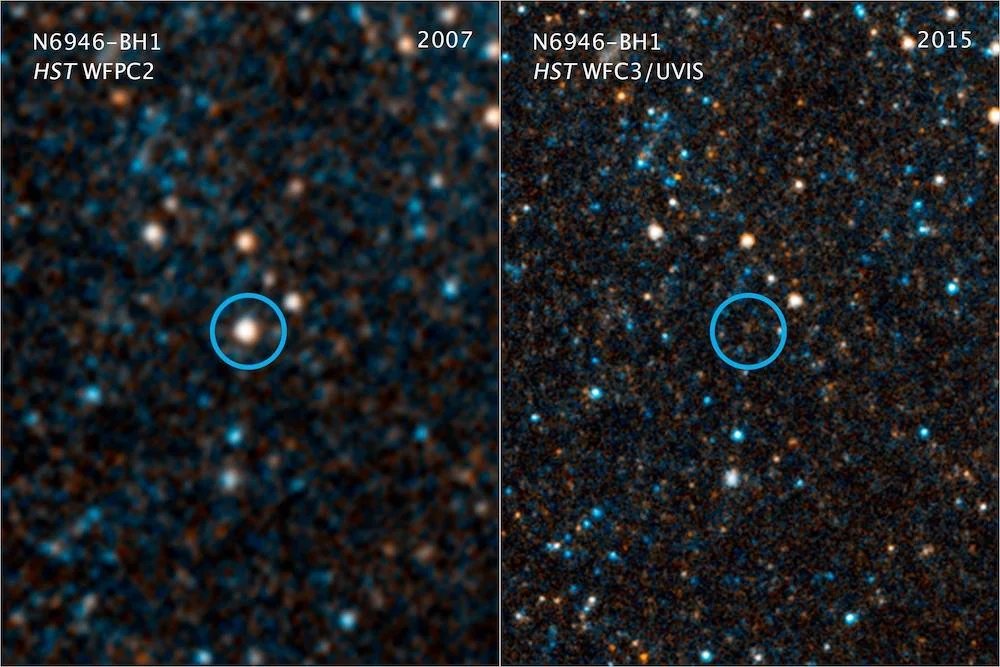
Hubble saw a star collapse directly into a black hole, no supernova.
When the most massive stars in the universe die, they often detonate in fiery supernovae, dramatically blasting most of their matter into space. The remaining stellar cores collapse into neutron stars and, sometimes, black holes.
However, theories suggest that some massive stars might die without a bang, instead directly collapsing inward to become neutron stars or black holes.
[Credit: NASA/ESA/C. Kochanek (OSU)]
ukrainian casualties since launch of russia’s full-scale invasion: 525k-625k (~125k fatalities)
russian casualties over the same period: ~1.4 million (400k-450k fatalities)
deadliest war for russians since ww2. a sacrifice putin is willing to have others make
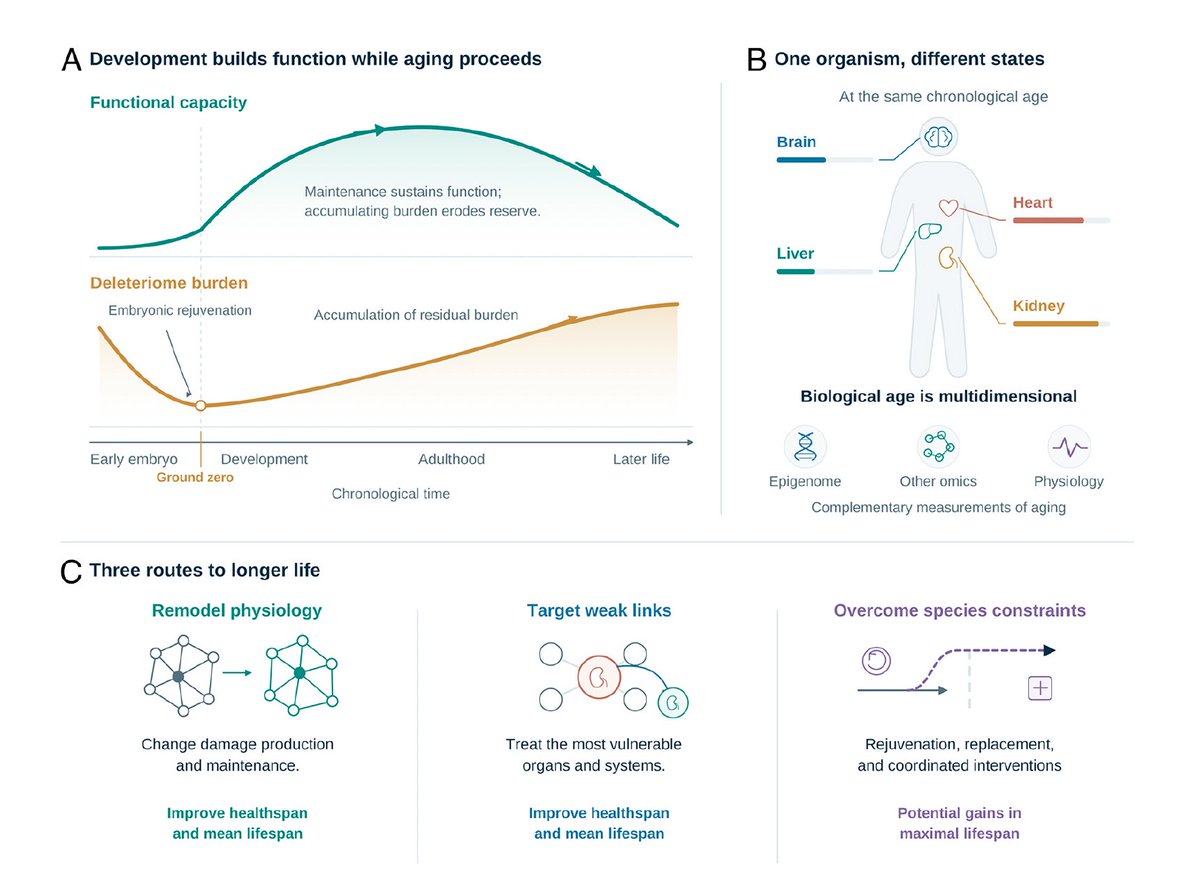
"Simply Aging"
A brilliant perspective on the complex (anything but simple) biology of human aging, by @VadimGladyshev@gladyshev_lab open-access @PNASNews https://t.co/wDaNy7YvhL
We’re probably living in the galactic boondocks — and even if aliens have already built a “galactic internet,” we almost certainly can’t join it.
Japanese astrophysicist Koji Tsumura from Tohoku University decided to test one of the boldest ideas out there: what if other civilizations in the Milky Way don’t just exist, but have already been searching for each other and built a shared communication network? How realistic is it for our civilization to connect to that network?
The answer is pretty grim: almost impossible.
Why almost no one can hear us
There are billions of Sun-like stars in the Galaxy, and millions of them should have planets in the habitable zone. The classic Drake equation suggests there ought to be a lot of intelligent civilizations. But then we run into the famous Fermi paradox: “So where is everybody?”
Tsumura started from the most optimistic scenario — civilizations exist, they’re active, and they’ve already built a galaxy-wide network. Even then, everything depends on location. The galactic habitable zone isn’t the entire Galaxy; it’s a relatively narrow band where three things line up:
- enough heavy elements to form planets,
- stars that live long enough,
- and not too many nearby supernovae sterilizing everything around them.
Modeling showed that the most densely populated part of the Galaxy is probably about 3,000 light-years closer to the center than the Solar System. We’re sitting roughly 26,000 light-years from the center — on the rather distant periphery. Out in these “suburbs,” the chances of plugging into a shared network are essentially zero. Either there are simply too few civilizations for a network to exist at all.
Can we at least detect anyone?
Detecting even one extraterrestrial civilization is theoretically possible, but only if it:
- exists at the same time as we do,
- is deliberately beaming a signal toward the Sun,
- and is doing so in a way we can actually notice.
According to Tsumura’s calculations, the fact that we still haven’t heard anyone means there’s a 35–38% chance that there really is nobody within about 6,000 light-years of us. But there’s a 61–65% chance that civilizations do exist — we just can’t detect them for some reason.
In other words: our cosmic loneliness is not yet proof that the Milky Way is empty. We might simply be sitting in a quiet neighborhood where signals either don’t reach us or arrive too weakly to notice.
The study is available on arXiv (arxiv org/abs/2610.20475).
Two new randomized trials of the potent GLP-1 drug retatrutide (aka "reta") showed marked relief of knee osteoarthritis. Prior work demonstrated that some of the GLP-1 benefit for knee osteoarthritis is independent of weight loss.
#AHA26@NEJM
https://t.co/PTS9WuTnQg
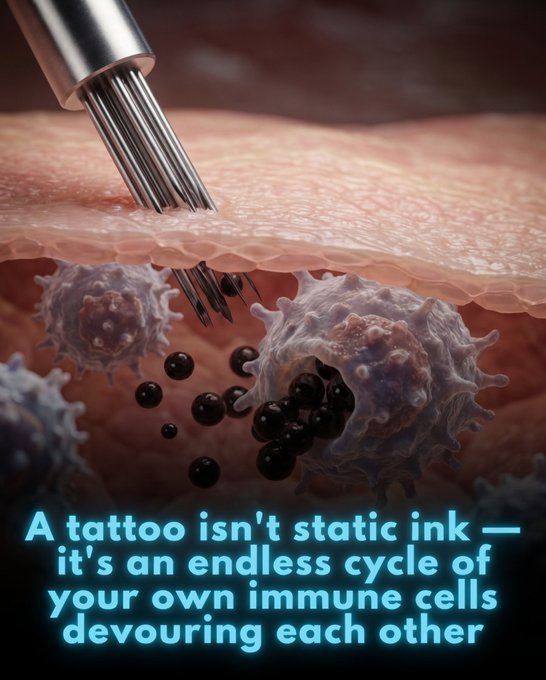
Your tattoo isn’t just decorative ink: it’s a permanent trigger that keeps your immune system locked in a lifelong cycle of chronic inflammation.
As soon as the ink is injected into your skin, your body recognizes the pigment particles as foreign invaders. Immune cells called macrophages immediately swarm the area and attempt to swallow them up. But because they can’t actually break down the ink, the macrophages eventually die, releasing the pigment back into the surrounding tissue, only for a new wave of macrophages to arrive and repeat the process.
This endless cycle is what keeps the tattoo permanently visible, while also maintaining a state of ongoing, low-level inflammation in the skin.
Over time, some of these ink particles migrate through the lymphatic system and accumulate in the lymph nodes, placing constant stress on the body’s defense mechanisms. Emerging research suggests this internal ink buildup may interfere with normal immune function, potentially reducing the effectiveness of certain vaccines, including mRNA types. Additionally, many tattoo inks contain heavy metals like nickel and cobalt. Combined with the chronic inflammation, this has been linked to a modestly elevated risk of lymphoma and skin cancer.
While tattoos remain a powerful form of self-expression, they represent a complex, decades-long biological conflict between your immune system and foreign substances embedded in your skin.
[Nielsen, C., Jerkeman, M., & Jöud, A. S. (2024). Tattoos as a risk factor for systemic lymphoma: A population-based case-control study. eClinicalMedicine]
Excited to be on Lipfendra, the first oral PCSK9 inhibitor to prevent arterial plaque buildup
Dramatic reductions seen in LDL, ApoB and Lp(a)
So, what's it cost? How does it work? Is it worth it?
We are at the beginning of a new and exciting era to be able to program our immune system in the body (in vivo). This new review @SciImmunology nails it https://t.co/ibUYVxGWjl
Voyager 1 is about to reach a milestone: one light-day from Earth, after nearly 50 years of travel.
On November 18, 2026, it is expected to become the first human-made object to be one light-day from Earth, roughly 16.1 billion miles (25.9 billion kilometers) away. Yet the distance matters mostly because of what the spacecraft discovered along the way.
When Voyager 1 launched in 1977, its destination was the outer planets. At Jupiter, it revealed active volcanoes erupting on Io, the first ever seen beyond Earth. A moon once known only as a distant point of light turned out to be a world with a changing surface.
At Saturn, it studied the intricate rings and the thick atmosphere surrounding Titan. That encounter bent its path upward, out of the plane where most planets orbit, and sent it toward the space between the stars.
The planetary visits ended, but the journey did not.
For decades, Voyager traveled through the vast region dominated by the solar wind, the stream of charged particles that flows outward from the Sun. In 2012, its instruments detected a transition: particles from the Sun dropped off, while particles arriving from beyond the solar system increased. Plasma measurements helped confirm that Voyager had entered interstellar space.
It had crossed the heliopause, the outer boundary of the solar wind's influence, and begun sampling an environment that no spacecraft had ever reached.
That is why its journey is more than a distance record. Voyager carried instruments into places we had only studied from afar, then sent back evidence of what is actually out there.
Today, every message must travel across almost a full day of space at the speed of light, so a command and its reply take roughly two days.
The spacecraft that showed us erupting moons and Saturn's rings is still teaching us about the space beyond the Sun's protective bubble.
Biohacking bros chasing longevity may be overlooking a simple method with a long track record: castration.
Today's biohackers spend thousands of dollars on unproven anti-aging tech, yet centuries of biological data point to a far simpler way to slow aging. Studies show that removing the testes lowers age-specific mortality risk and changes the hormone-signaling pathways involved in cellular aging. A new study now suggests that castration extends lifespan in unexpected ways, which could pave the way for future longevity drugs that mimic these effects without invasive surgery.
Surgical castration has long been linked to longer life across a range of animal models. The latest findings show how specific hormonal signals released by the testes dynamically shape male survival throughout life. Rather than promoting surgery for humans, scientists are using these findings to search for "castration mimetics," which are therapeutic compounds designed to reproduce the lifespan-boosting cellular pathways without affecting reproductive health.
By pinpointing the exact biological mechanisms that testicular hormones act on during aging, researchers hope to develop drugs that can reduce male mortality, strengthen physiological resilience, and extend healthy human lifespan.
Very informative technical explanation of why small wings leave little margin of error when you hit bad weather
I don't think I've seen a plane with a smaller wing-to-body size ratio than the Learjet 60, except maybe the F-104 and well you can look up the nickname for that one
Watch as two orbiting supermassive black holes twist light and reshape our view of space. The larger contains 200 million solar masses, while the blue one weighs 100 million Suns.
(Credit: NASA Goddard / Jeremy Schnittman / Brian P. Powell / Lars Leonhard)
Meteorological models are tracking a highly anomalous atmospheric event as November begins. The strong, high-altitude winds that wrap around the Arctic region are slowing down drastically, with several predictive models indicating they could completely reverse direction. If these projections materialize, it will mark the earliest major Sudden Stratospheric Warming (SSW) recorded since tracking records began.
The polar vortex consists of a massive, circulating pool of freezing air bounded by high-velocity winds within the stratosphere, sitting well above normal cloud layers. Under typical seasonal conditions, this system intensifies throughout autumn as the loss of solar radiation rapidly chills the polar atmosphere, forcing the surrounding wind fields to accelerate.
This season, an unusual surge of atmospheric wave energy migrating upward from lower levels is projected to severely disrupt this structure. An intensifying high-pressure ridge is forecast to tear the core apart, dividing it into two distinct low-pressure centers positioned over Siberia and North America. At an altitude of roughly 19 miles (30 kilometers), localized stratospheric temperatures are expected to spike up to 40°F (22°C) higher than typical baselines, though this intense warming remains confined to the upper atmosphere.
When the polar vortex fragments, it frequently forces the lower-altitude jet stream to buckle. These subsequent shifts can unlock dense Arctic air masses, allowing them to drift into mid-latitude regions over the following weeks. However, a stratospheric split does not guarantee severe winter weather at the surface. Forecasters note that northern Canada currently lacks the dense reservoir of extreme cold necessary to push a deep Arctic blast into the United States. While parts of Europe and the eastern United States may experience a cool down, localized weather outcomes remain highly uncertain.
The defining characteristic of this setup is its unprecedented timing, occurring right when the high-altitude winter circulation should be gaining strength. For now, the structural split and wind reversal remain tentative computer model solutions rather than a confirmed atmospheric reality.