Our @DanaFarber_GU and @LabSignoretti are looking for a junior pathologist/resident (at least 1 year of residency training) to join our group and lead one of our translational efforts in kidney cancer. Training in general pathology is ok as long as it is 6-12 months. Please contact us if you know someone who is interested and willing to spend at least 2 years in the lab. DM me or @LabSignoretti 😀
Hi #MedTwitter! I’m Samer Salem, an #IMG from Lebanon researching Kidney Cancer at @BrighamWomens and applying for Internal Medicine residency. So excited to pursue my dream specialty! #Match2025#InternalMedicine
AAMC ID: 14538528
#12Oct2023
🔥 Top News: #HighImpact paper release! 📰
New paper by Wilson, N et al. in International journal of cancer (https://t.co/3m7wYTlFzM)
Title: Advances in non-clear cell renal cell carcinoma management: From heterogeneous biology to treatment options.
PMID: 3782318…
@fouad_boulos As you mentioned, stages are used for practicality. As humans, oncologists need to follow guidelines based on categorical variables for treatment decisions.
Maybe in the future, treatment will be guided by machine learning models that use continuous variables instead.
Happy Thursday X-folks!
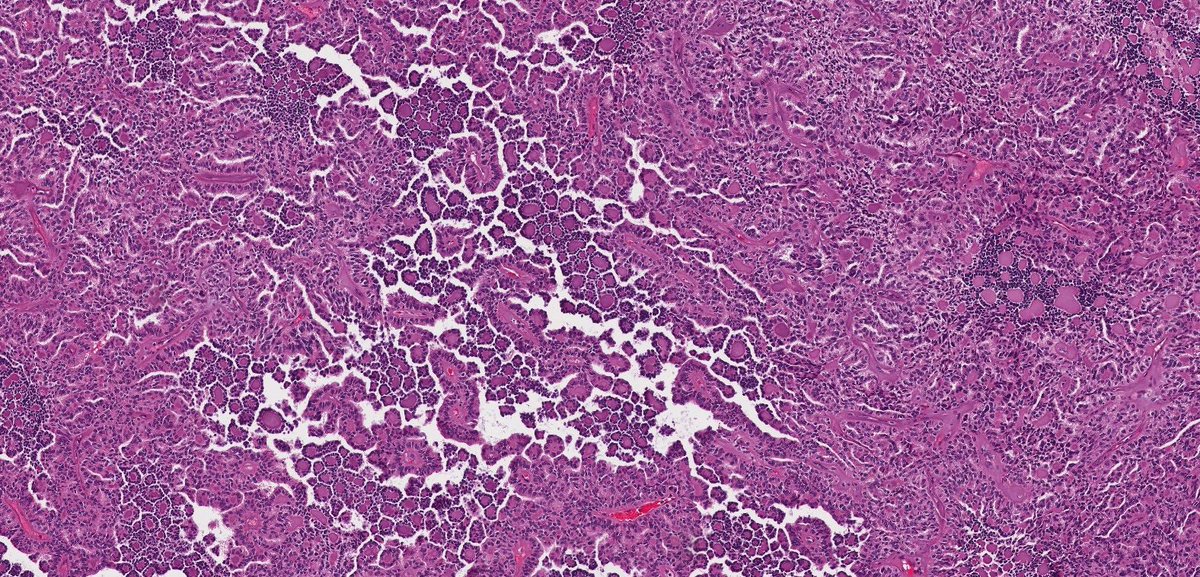
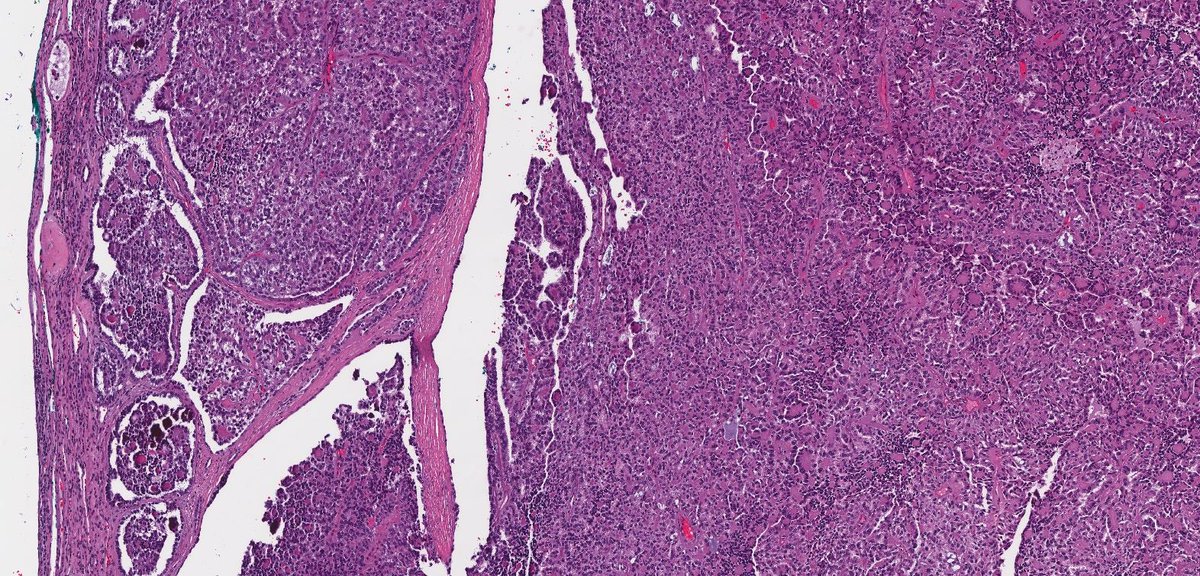
Yesterday's funky tumor is an invasive solid papillary carcinoma with mucin production. These tumors are some of the hardest to understand. Here's why.
They look like slightly irregular DCIS with fibrovascular cores, they are characteristically neuroendocrine, they can spindle, they often produce mucin, they are either invasive or noninvasive, they can have complete, attenuated, or lost myoepithelial cells even if noninvasive, invasion is determined by histology and it can either be IDC NST or invasive SPC with a solid pattern, they can metastasize while looking noninvasive, they are called solid but they can be cribriform, they are described as low grade but can be quite high grade. You get the gist.
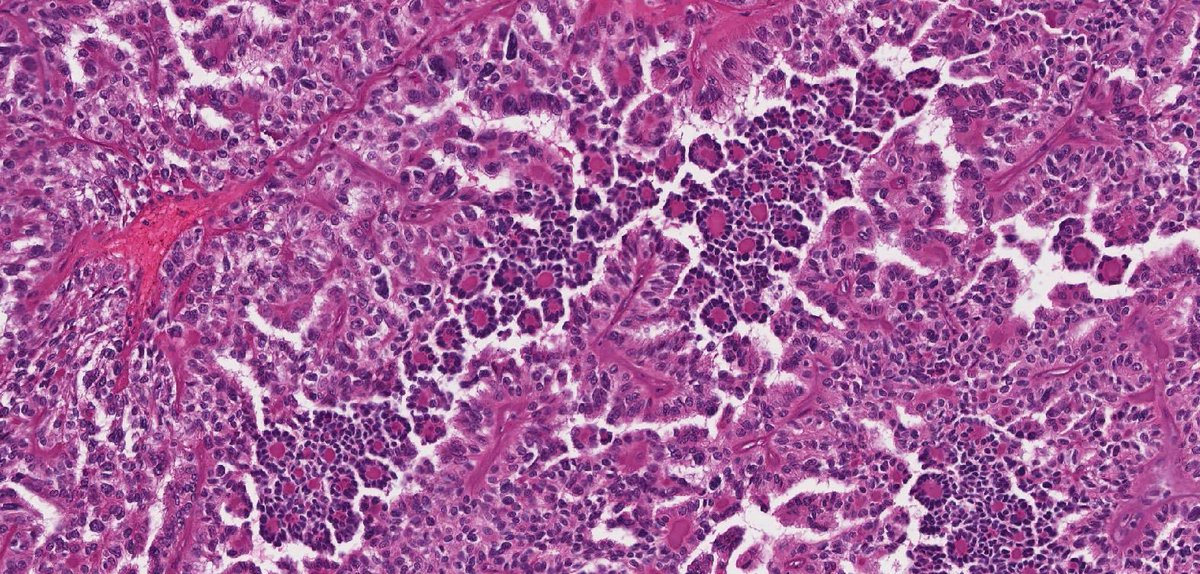
The case from yesterday is eye-catching because it combines neuroendocrine/plasmacytoid cells, cells with cytoplasmic mucin, AND flattened cells around the tumor nests reminiscent of sustentacular cells in other neuroendocrine tumors, most notoriously paraganglioma, a finding I notice for the first time.
Voila. Hope you keep finding wonder in every little thing.
- Image 1 shows sustentacular-like cells with arrows pointing at them. Image 2 shows noninvasive solid papillary carcinoma from the same case.
@wusm_pathology @washupathedu #breastpath #breastcancer #PathTwitter #PathX #pathology