🚨What if we could reliably program macrophage polarization state?🚨
https://t.co/6qGxuHptQq
Macrophages are highly plastic immune cells that perform critical functions by polarizing into distinct cellular states. The polarization state of macrophages can substantially influences the progression of cancers, infections, and autoimmunity. (1/11)
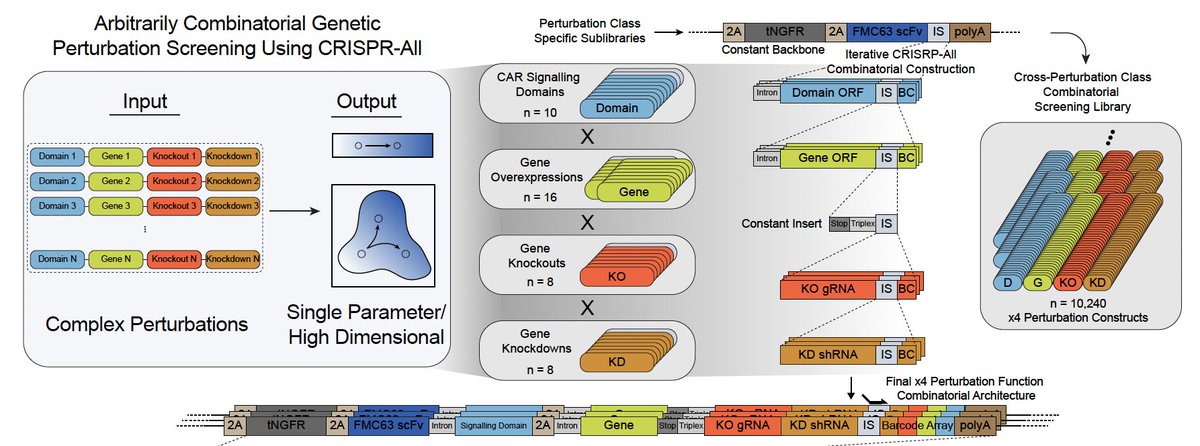
Excited to introduce CRISPR-All! – a flexible, high-throughput framework that combines virtually any perturbation modality (CRISPRko, CRISPRi, CRISPRa, shRNA, knock-in, base/prime editing, etc.) in the same cell, at scale.
Paired with single-cell RNA-seq @10xGenomics and rich phenotypic readouts, it unlocks massively combinatorial genetic screens and new cell states previously out of reach.
Outstanding work led by @Roth_Lab@AustinMHartman
https://t.co/hU3OKDfMSd
Congrats to @mcrotiroti on her recent paper published in Nature Cancer now with an accompanying Research Briefing published today: https://t.co/8oxXLaijLU... Mari utilized insights into T cell proximal signaling to overcome antigen-low escape. I have been overdue to write a 🧵!
🚨Today, in @NatureCancer, we show that CAR-T cells and CAR-NK cells contain the seeds of their own self-destruction. Disruption of a FAS-L/FAS circuit enhances CAR potency against liquid and solid cancers. https://t.co/afS9vRG4Ok @MSKCancerCenter@parkerici@MSK_DeptOfMed
🚨New paper alert! 🚨 Our latest work in @ImmunityCP shows that Ark313, an evolved AAV variant enables in vivo genetic engineering of murine T cells! 🧵👇
https://t.co/CkHpDdPy7I
In an analysis of long term safety events in 783 patients treated with #Tcell therapy in 38 trials, 2.3% of patients developed second primary malignancies, and vector integration analyses revealed no pathological insertions
https://t.co/ph8DH0tFdx
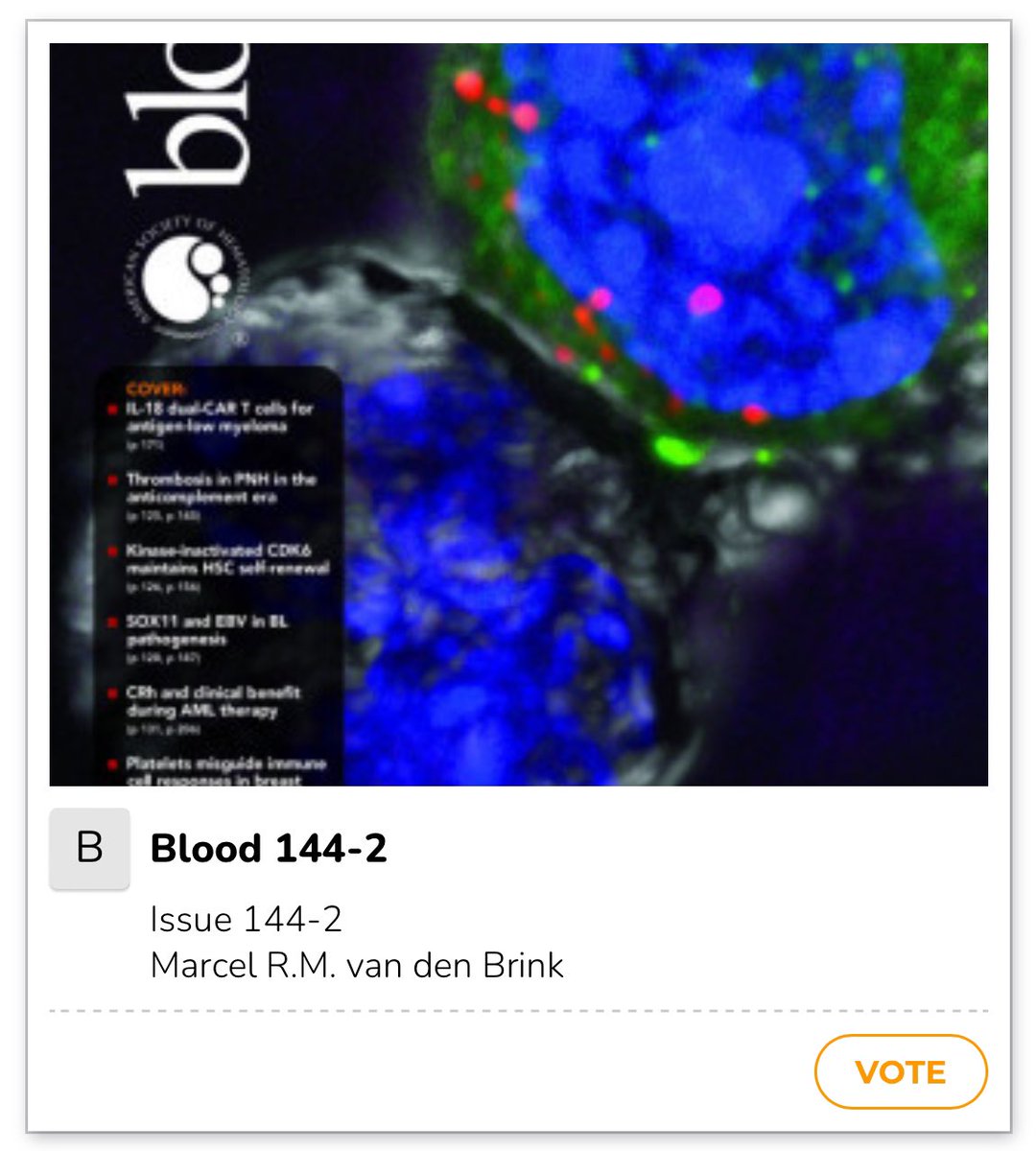
The cover for our @BloodJournal article “IL-18-secreting multiantigen targeting CAR T cells eliminate antigen-low myeloma in an immunocompetent mouse model” was selected as a finalist in the 2024 Blood Cover Contest! Please vote for us at https://t.co/fDYXD4JqW7 !
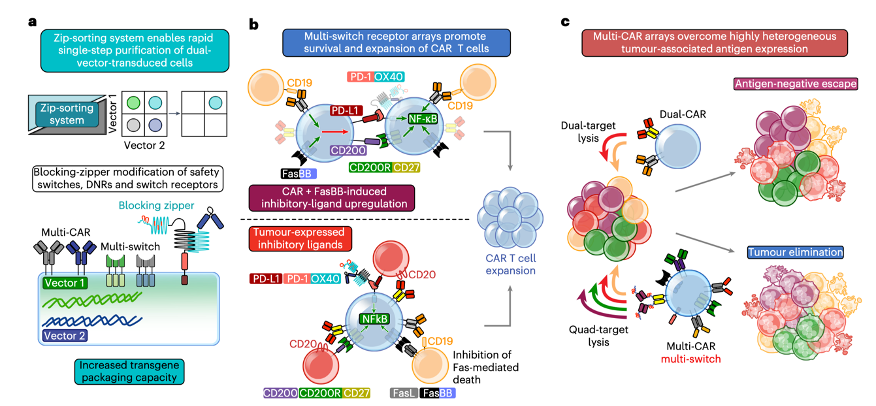
In summary, our proof of principle study demonstrates that Zip-sorted T cells co-expressing multiple CARs and switch receptors can eliminate tumor populations with high target antigen diversity while resisting exhaustion and inhibitory ligand-mediated suppression. 14/