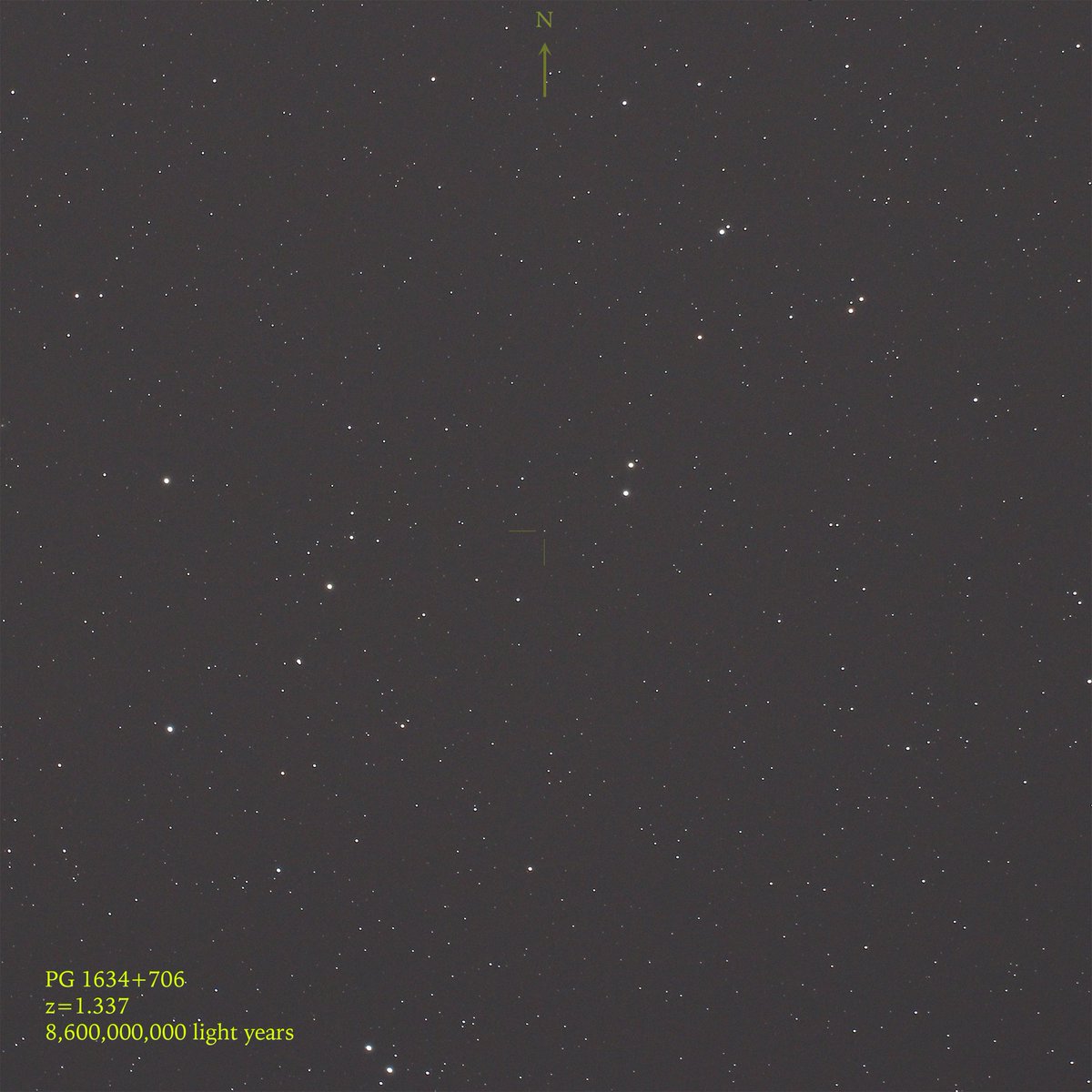
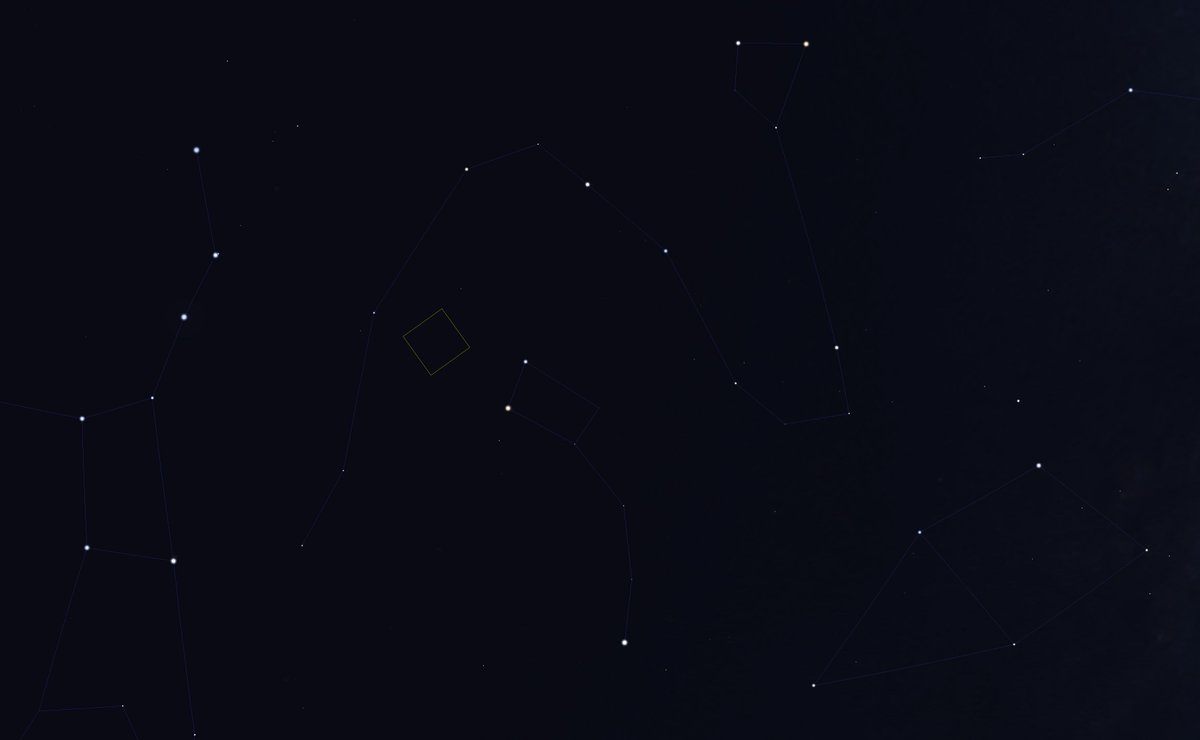
The most distant object I've ever observed: PG 1634+706, a quasar located 8.6 billion light-years away in the constellation Draco (near the bowl of the Little Dipper), imaged with 80mm refractor at f/4.8 with unmodified Canon SLR, stack of 11 30s exposures at ISO2000.
Map of all active & planned Solar System missions and their destinations as of June 1st 2026. Moon Base is the new Commercial Lunar Payload Services(CLPS). #keepExploring
The last things Roman will "see" on Earth are the faces of some of the countless people who created it. ✨
The observatory’s primary mirror has passed its last inspection as it nears its final days @NASAGoddard before heading down to @NASAKennedy.
https://t.co/BtK8CqrDz3
💫 The June 2026 edition of The Evening Sky Map (PDF) is now available for download at https://t.co/a75xBxMPnJ. The PDF features easy-to-use sky maps for the northern & southern hemispheres and equatorial regions. Please share and enjoy exploring the Universe! 🔭
#stargazing
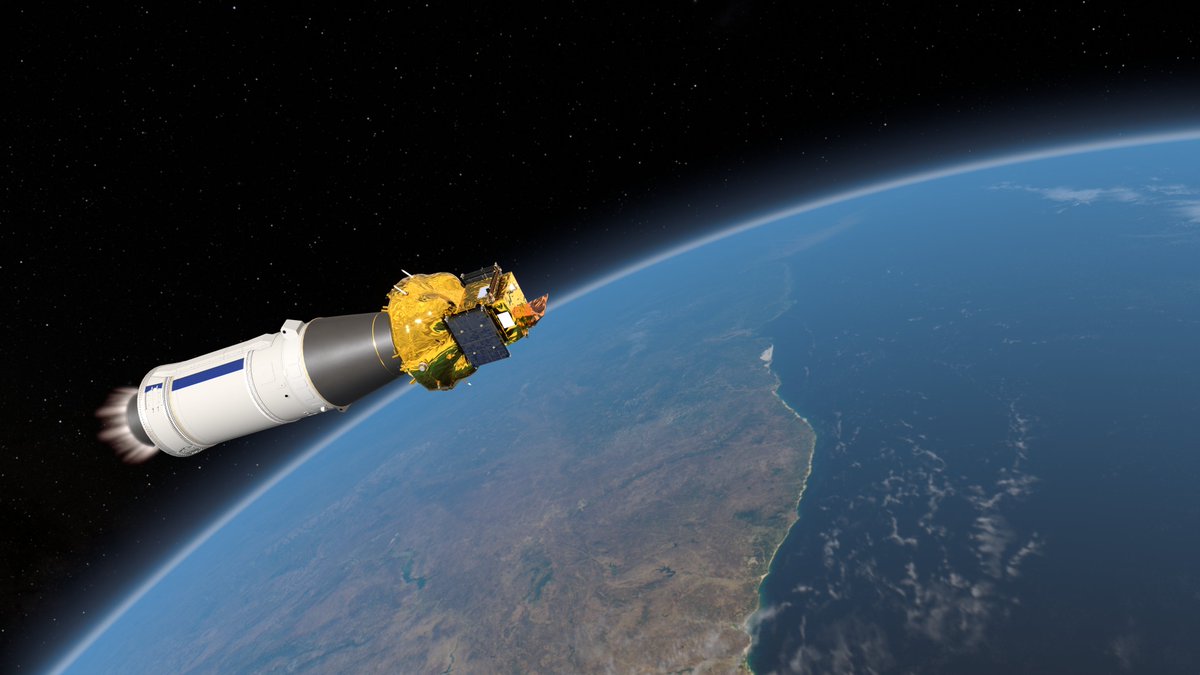
T-1️⃣ 'til launch day. Set your watch for an early rise tomorrow, 19 May! ⏰
Join our live broadcast starting at 04:30 BST / 05:30 CEST on ESA Web TV 👉 https://t.co/aiFFYYGtwD or on YouTube 👉 https://t.co/RXpUMZhmqQ
Newly discovered asteroid 2026 JH2, monitored by ESA's Planetary Defence team, makes a notably close approach to Earth this evening (but with zero chance of impact!)
@erfmufn I'm getting old - I recognized the tune by the 2nd note, but just couldn't think of the name.
What's your favorite object in the winter sky that barely makes it above your horizon?
🌊 Get ready to "shell-ebrate", Quahog Week returns for its 10th year next week!
From May 17-23, restaurants, markets & seafood businesses across RI are showcasing our state’s favorite local clam and the hardworking fishers who harvest them.
Learn more: https://t.co/dvYfFNRXpB
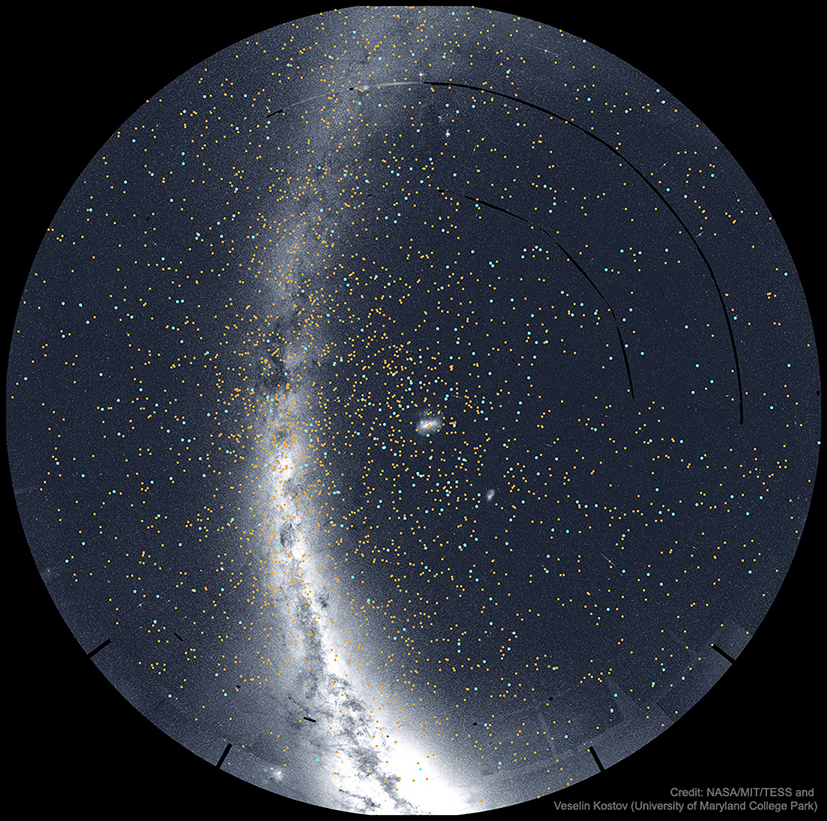
Our TESS telescope has released its most complete view of the starry sky yet! All those dots? They're confirmed and candidate planets! Since launching in April 2018, TESS has been scanning wide swaths of the sky to build up this mosaic. https://t.co/JieX9DLkaU
NASA’s #MissionToPsyche – on its way to explore a rare, metal-rich asteroid – is about to get a speed boost from Mars. 🚀🏁
On May 15, spacecraft will harness the Red Planet’s gravitational pull as a slingshot to increase its speed and adjust its trajectory. 1/2
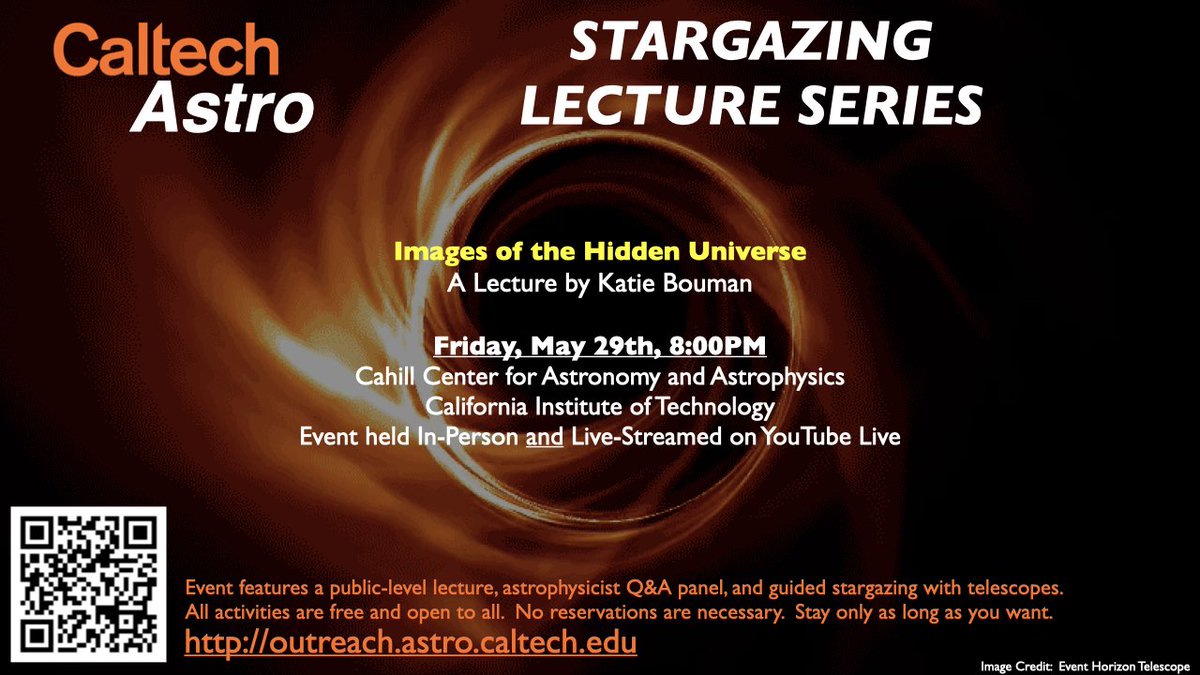
How do scientists use AI, physics, and telescope observations to "photograph" black holes and dark matter? Join us for a lecture by Professor Katie Bouman, who helped take the first picture of a black hole.
https://t.co/eFnXpeomRW
Mizar is probably the best known member of the Ursa Major group; the first double star to be discovered, by Riccioli in 1650. For over 3 centuries it has remained one of the most celebrated doubles, often the first example of that object to be observed by many a modern amateur.
@astro_reid When the recovery team first opened Integrity's hatch, the first thing I thought of was how amazing it must have been to smell the ocean for the first time after being away for ten days. Enjoy your reflection time.
Well, isn’t this a sight for sore eyes! 😍 Our beloved Hubble appears in this amazing image from one of Vantor's WorldView Legion satellites. It was 36 years ago today that Hubble was launched in the bay of the Space Shuttle Discovery from NASA’s Kennedy Space Center.
BREAKING: The largest 3D map of the Universe is now complete 🌌
Last night @desisurvey, mounted on the Nicholas U/ Mayall 4 meter telescope at @KittPeakNatObs, finished its 5-year survey of the cosmos, mapping 47M+ galaxies and quasars.
🔗https://t.co/ypVX7edRqW
Welcome home Artemis II.
Thanks @astro_reid@AstroVicGlover@Astro_Christina@Astro_Jeremy, all the teams at @NASA, and everyone who made this mission a success. I can finally no longer say "no one has been to the Moon in my lifetime."
https://t.co/yXxzINJmGg
Welcome home Reid, Victor, Christina, and Jeremy! 🫶
The Artemis II astronauts have splashed down at 8:07pm ET (0007 UTC April 11), bringing their historic 10-day mission around the Moon to an end.