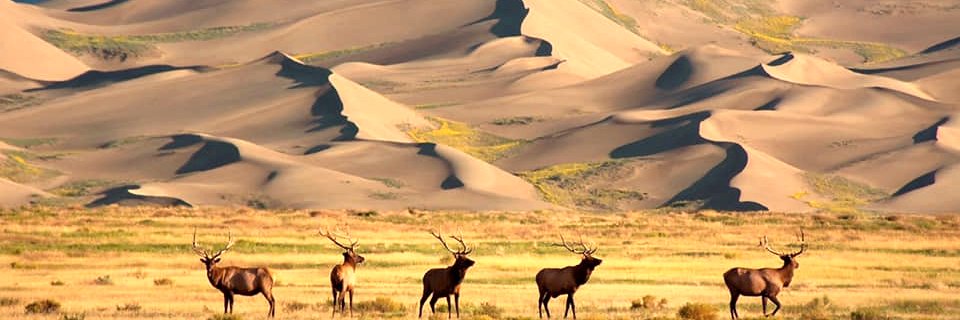
Fun fact: this microbe has Deinococcus radiodurans DNA in it and has been evolved over a trillion total cell divisions in Mars nutrients. Now it can grow and make lots of bioplastics from 100% Mars atoms!
Today, Pioneer Labs is announcing our first step towards terraforming Mars. 🚀🌼
With equipment that fits in just a single rocket launch, we can convert Martian dirt, water, and air into enough building materials to construct a small city on Mars.
To do it, we made the first microbe for Mars. We found the best microbe on Earth and used evolution to teach it how to source all of its nutrients directly from Martian materials.
The first astronauts will be greeted with safe shelter already filled with water, oxygen, and rocket fuel for the return journey.
This is the first step toward using biology to make Mars a friendly place for life. It lets us live off the land and helps us build the next great frontier.
It's the first of five organisms we need to green Mars ⬇️
@jtbooth1021 Weirdly in the middle! You'd need some kind of force-retention layer to keep your lungs from exploding, but the higher the pressure, the less demanding that layer would be.
What would a habitable Mars look like?🔴🌱
We ran the first 3-D climate model simulations of a warm, oxygen-rich Mars.
🌲At 5× today’s pressure you could have lichen and moss growing on Mars. At 10× today’s pressure you could have forests in Hellas (1/2)
https://t.co/OTJMSKB2Fi
@girllich1 I just specced out and bought one of these a few months ago from https://t.co/Chmajw8q8N. Good experience, arrived (much) faster than quoted.
I wanted to show why long stays on Mars matter, so I mapped Mars/Earth transit windows through 2037.
Staying 11-18 months instead of 30 days cuts round-trip Δv from ~14 to 2.7 km/s! Going on the office wall.
Thanks to @CJHandmer for the original https://t.co/zVeDuGti0x
@hsalis@srikosuri@OmicsOmicsBlog@jrkelly I'm going to write a blog post soon on how to properly calibrate library size, bottlenecks & sequencing depth for barcode assays to meet specific noise thresholds. I've seen one too many "big data library screens" turn into hit-picking.
@ATinyGreenCell Yeah, it's tricky. If you're completely honest about every caveat, nobody will ever pay attention. It takes a lot of work to polish your science into a digestible, exciting nugget that is still substantively accurate.
But it's necessary and important work.
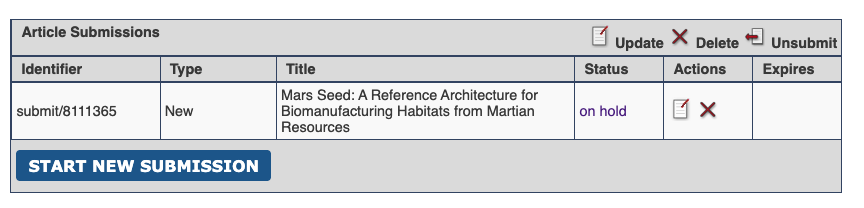
I know @arxiv is backed up, but it it taking >3 weeks for anyone else?
We have a paper that has been "on hold" since September 21 - more than three weeks - with no emails.
It's odd because our last paper got a DOI in like ~3 days, and it was only the week before this one.
Come help me make a planet 🙃🚀🌎
We're hiring two scientists to do experiments that nobody has ever tried before.
APPLY: https://t.co/zC9yqNuLOA
Priority deadline October 31 🎃
TELL YOUR FRIENDS
This for sure. You will always need researchers at the cutting edge to develop a new assay and eyeball it/smack it/duct tape it. When things are understood well enough to be automated, they become a different kind of science.
We all want more measurements with faster turnaround, but there is a drawback to automating labs that is not often discussed: it will stymie innovation.
Here’s why: … /1
I make a certain disgruntled noise when I realize I need to use Opus 4.8 for a project instead of 5.5 because it's too biological.
I yearn for intelligence. On many fronts.
Early in my career, I was an aging scientist. I ran a standard assay and could have used it to claim almost anything.
So I quit aging research. The field might have a replication crisis.
https://t.co/izNEwgB8Yw
@EdwardGe Venus is an exciting target, but it's got two big problems I see. 1. Basically zero water, and tiny amounts of hydrogen in general. 2. Any fixed carbon that falls to the surface gets re-oxidized to CO2. Even diamond.
@tszzl All you need for planet-wide photosynthesis is to heat the place up about 35°C. Greenhouse effect, mirrors. Then you wait for a 150 mbar O2 atmosphere, which is breathable. No need for stupendous delta V. https://t.co/ztzkF3CAKD
@CM512733336315 @erika_alden_d We don't think you need it - atmosphere loss happens incredibly slowly and a thicker atmosphere would block most of the radiation. For more see: https://t.co/lUBfqHISsz
@UFOtechnician@erika_alden_d We've thought a lot about how to make this safe - there are already plans to change planetary protection to allow sending humans to Mars, and our microbe would be very dead on the Martian surface. Read more here: https://t.co/D1nFFBQPRG
@arnehalleraker We did the math on that! About 50 kg/day purified bioplastic, or ~575 kg/day extruded regolith/plastic composite, for as long as the equipment lasts. Details: https://t.co/9UUUGmVQZr
Fun fact: this microbe has Deinococcus radiodurans DNA in it and has been evolved over a trillion total cell divisions in Mars nutrients. Now it can grow and make lots of bioplastics from 100% Mars atoms!
Today, Pioneer Labs is announcing our first step towards terraforming Mars. 🚀🌼
With equipment that fits in just a single rocket launch, we can convert Martian dirt, water, and air into enough building materials to construct a small city on Mars.
To do it, we made the first microbe for Mars. We found the best microbe on Earth and used evolution to teach it how to source all of its nutrients directly from Martian materials.
The first astronauts will be greeted with safe shelter already filled with water, oxygen, and rocket fuel for the return journey.
This is the first step toward using biology to make Mars a friendly place for life. It lets us live off the land and helps us build the next great frontier.
It's the first of five organisms we need to green Mars ⬇️
@Michael41739926@erika_alden_d Long term, we don't think you need a magnetic field; atmospheric loss is geologically slow, and a breathable atmosphere would protect you from radiation! https://t.co/lUBfqHISsz