Original Article: Daraxonrasib in Previously Treated Advanced RAS-Mutated Pancreatic Cancer https://t.co/9y7xLrCuYV
Science behind the Study: Advances in RAS Therapeutics for Pancreatic Cancer https://t.co/mz3fgnCNUi
#Oncology#Gastroenterology
"Medicine was not something I did between 9 AM and 5 PM. It was not something that sat on one side of a scale opposite of 'life.' Medicine was woven through every aspect of my life."
In #APieceofMyMind, a retired family physician reflects on the boxes of paper left behind by a medical career—and the enduring relationships, lessons, and identity they represent.
https://t.co/xlTCHkMzbQ
Amivantamab in mCRC, hot off the presses
3rd line + chemo-refractory mCRC
Terrible disease, great signal
OrigAMI-1 (phase 1/2):
• RAS/BRAF WT, HER2–
• 2–3 prior lines
• n=94
Efficacy:
• ORR:
– 29% (EGFR-naive, left)
– 19% (post–EGFR, left)
– 22% (right-sided)
• PFS: ~3.7–5.7 mo
• DoR: ~6–10 mo
Signal holds across:
• prior EGFR exposure
• sidedness
Rechallenge signal:
• longer interval from prior EGFR → higher ORR (~32%)
Toxicity:
• Rash / dermatitis (expected)
• Infusion reactions common
• Low discontinuation
Phase 1 always overestimates.
But…
These response rates are not typical for this setting.
If PFS holds in phase 3, this changes practice quickly.
And yes, I’m already filling out compassionate use forms on my patient’s behalf.
Full Article:
https://t.co/QjEhBneTZI
@OncoAlert@TheGutOncLab@Onco_Nexus
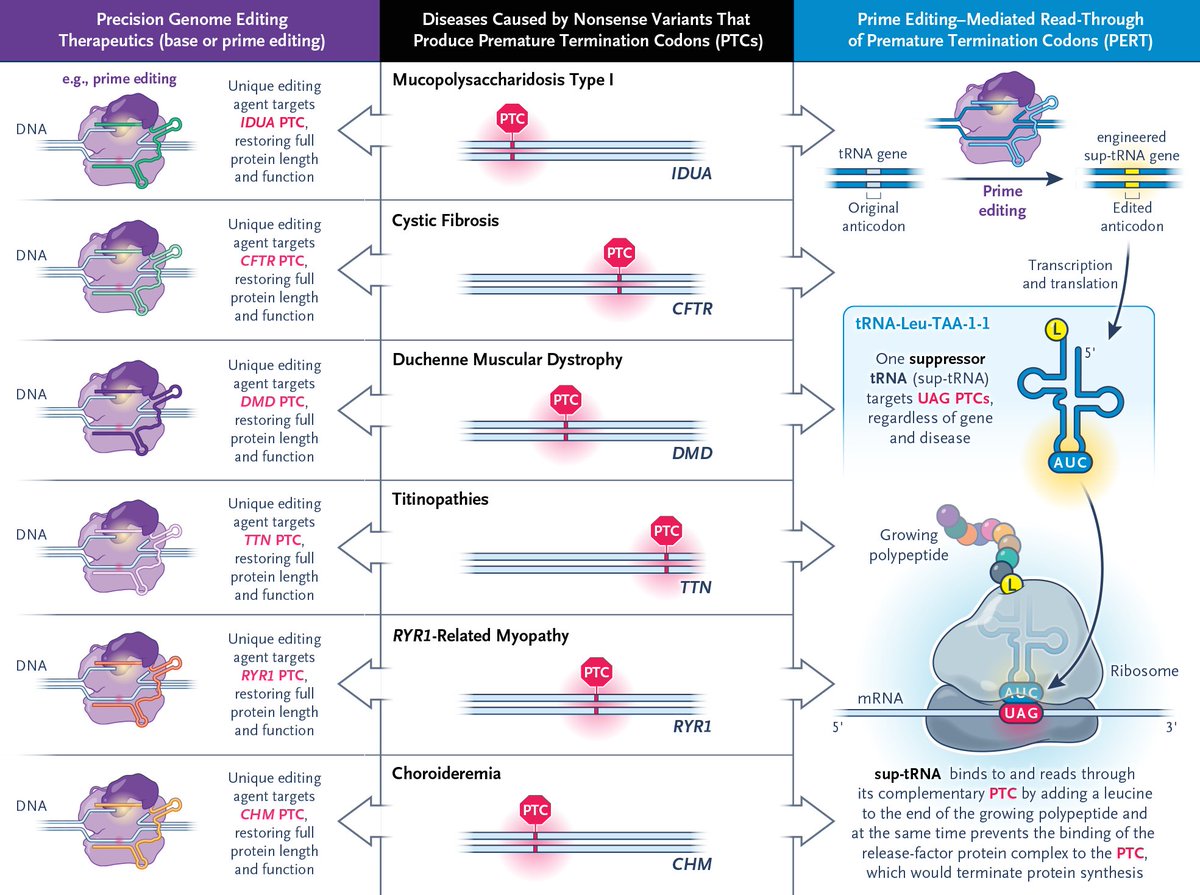
A recent study provides proof of principle that a single genetic edit can overcome the effect of nonsense variants in different genes, akin to a one-size-fits-many model.
Learn more in the Clinical Implications of Basic Research article “Editing tRNA Genes to Broaden Nonsense Therapeutics” by John D. Lueck, PhD (@littlelueck), from the University of Rochester School of Medicine and Dentistry (@URochester_SMD): https://t.co/FiBIN9jn57
A MUST-READ!
This is probably one of my most important papers where I try to teach how to fish rather than offer fish.
How I Read a Clinical Trial Report?
BG’s primer for Busy Clinicians.
Thank you @JCOOP_ASCO@EthicsdoctorP for the kind invitation. I hope the readers will find this useful.
https://t.co/HJhZlsBpU2
For decades, biology textbooks have enshrined a simple rule: DNA is made by copying a template. After one enzyme unzips a DNA double helix into separate strands, another called a polymerase builds a complementary sequence, base by base, for each strand. Presto: two copies of the original DNA.
But new research into how bacteria defend themselves from viruses now shows this synthesis rule isn’t absolute.
Now, a team describes a bacterial enzyme that synthesizes DNA without a nucleic acid template, using its own structure as a guide.
Learn more: https://t.co/TeUWvyO0OD @NewsfromScience
🚨 Up to 40% of rectal cancer patients may not need surgery.
In dMMR disease (with proper testing)
Immunotherapy → ~90-100% CR
In MSS
TNT: ~1 in 3 achieve cCR
With watch-and-wait:
~85% keep their rectum
>95% remain metastasis-free
Local regrowth ~15%, mostly detected early and successfully salvaged
It’s smarter upfront intensification then personalized decisions.
But this isn’t a simple algorithm.
It requires clinical judgment, proper testing, careful selection and intensive surveillance.
What once seemed unthinkable is now part of evolving clinical practice; the state of the art care
https://t.co/qM4gjtik8v
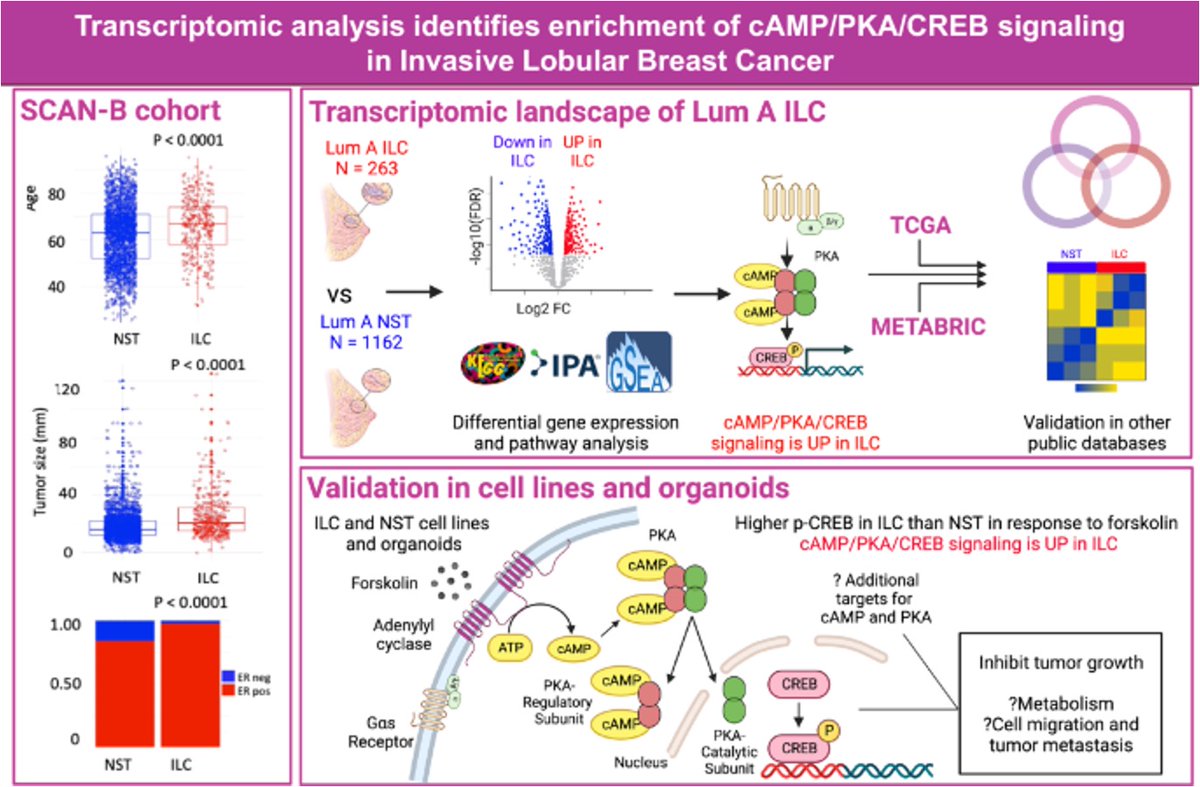
Just out, our study examining gene expression differences between ILC and IDC/NST breast cancers showing consistent increases in cAMP/PKA/CREB signaling, potential for targeting?
https://t.co/UL8C57bW2z
@UPMCHillmanCC@MageeWomens@BCRFcure@SusanGKomen#lobular
Presented at #ASCO24:
Among patients with EGFR-mutated lung cancer after chemoradiotherapy, 65% of patients who received osimertinib were alive without progression at 2 years, as compared with 13% of those who received placebo. Full LAURA trial results: https://t.co/NvZXToy84j
You won't want to miss the next #TIPS Seminar on February 7 when we hear about #WUPhysicianScientist Dr. Susrutha Narayanan's interesting patient! Zoom link here: https://t.co/WiWOE9cMYm
Early stage NSCLC has been evolving in real time over the past few years, w/ multiple key trials of neoadjuvant &/or adjuvant therapy trials incorporating targeted therapy or immunotherapy; this review summarizes data & recs for current clinical practice. https://t.co/LEUshnfQpL
JAMA Internal Medicine introduces a new series, the Guide to Statistics and Methods, to be accessible to clinicians and researchers contextualizing and interpreting statistical methods applied in studies published in JAMA Internal Medicine. https://t.co/7e8TKCbKOQ