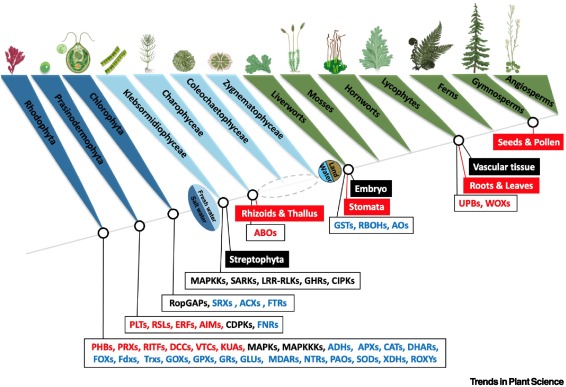
Ten years of our lab's work integrated in a paper on the fungal economics spectrum.
Huge congratulations to Tessa for leading this amazing effort, and all co-authors, lab members past and present. 🥳
#fungi#ecology
Paper just accepted:
AI personal assistants and sustainability: risks and opportunities
Will share open-access link asap
#genAI#Sustainability@Dr_Atoosa
New manuscript just published in @Geoderma_Jrnl, led by @AndreaJilling: 'Wet-dry cycling influences the formation of mineral-associated organic matter and its sensitivity to simulated root exudates.'
With @sgrandysoil + Karen Morán-Rivera
https://t.co/ocQ4WHUtEY
One of the reasons I'm fired up about Bayesian Analysis for Business is because of MCMC (or Markov Chain Monte Carlo).
Here's what MCMC does + how to learn it with me.
Goal of Bayesian's are to estimate a posterior distribution.
From the posterior, the analyst can make predictions + confidence...
Keep in mind confidence is the key ingredient for analyzing risk (uncertainty), super important for business analysis.
Problem: We don't know the formula for the posterior.
Solution: Bayesians can use MCMC to sample from the distribution to obtain a posterior.
Pretty cool, right?
If you want to learn how to implement Bayesian Modeling for Marketing Mixed Media (MMM), I have a free workshop coming up!
I'll unleash the power of Bayesian on a Business Problem that helps us decide how to optimized Adspend (high demand area in this privacy-first era).
And, do me a favor. Let me know what questions you have about Bayesian so I can incorporate them into the Bayesian workshop.
👉 Register here (seats are limited): https://t.co/6JHxhFoDhD
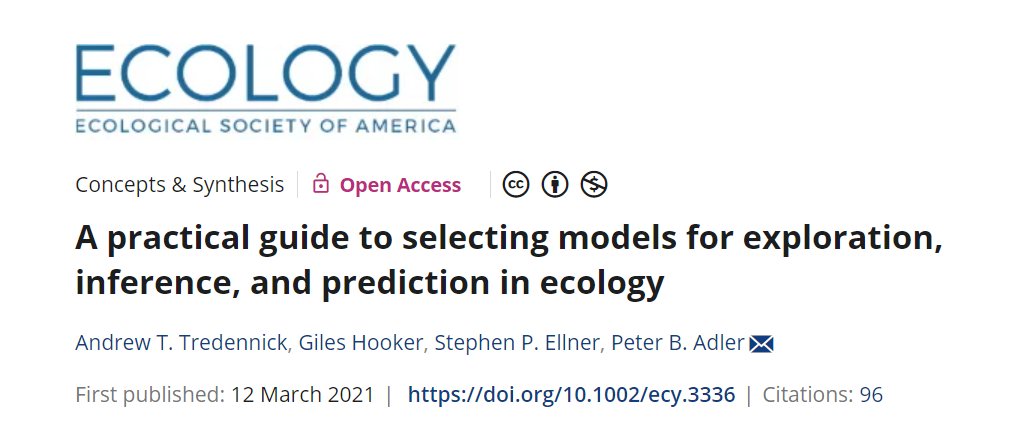
I've been sharing this paper over and over again with colleagues as I've found it to be a VERY helpful way to frame a research project to ensure your statistical models reflect project goals (e.g., inference vs. prediction). Definitely worth the read!
https://t.co/U6gxLDPx6y
@mrillig on the mycorrhizae webinar yesterday, I posed my question (see attached video clip) without realizing that you were a co-author of this article: https://t.co/7yyd4pSXLJ I read that article a few weeks ago, and found it really interesting esp in regards to AMF's ability to weather minerals for SOC stabilization as MAOC. Your article referenced @mzdsf Xiao, K-Q. et al 2023. "Introducing the soil mineral carbon pump" {MnCP] . The MnCP seems to explain this capacity.
So, does this MnCP increase mineral availability and thus alleviate potential MAOC saturation levels or increase (theoretical?) those MAOC saturation levels by providing more minerals for AMF necromass to bind to?
(In a rebuttal to Cotrufo et al 2019 (1), I know Begill & Poeplau's 2023 (2) questioned those MAOC limits so I appreciated your rebuttal of the prior person who responded to my question. But the concept of SOC, specifically MAOC, saturation is one that many adhere to no matter what).
Other articles looking just at the soil mineralogy without also looking at AMF, like @GeorgiouKat Georgiou, K et al 2022 (3), note that potential carbon sequestration is limited by the amount of minerals for SOC to associate with and form MAOC. Though this paper notes that especially sub-soil down to 1 meter on average is currently only 21% MAOC saturated.
============================
(1) Cotrufo, F et al 2019. Soil carbon storage informed by particulate and mineral-associated
organic matter.
(2) Begill, N., Don, A., & Poeplau, C. (2023). No detectable upper limit of mineral-associated
organic carbon in temperate agricultural soils.
(3) Georgiou, K et al 2022 Global stocks and capacity of mineral-associated soil organic carbon
Delighted to see this paper finally published! Thank you to @JCSvenning, the fantastic coauthor team, and to @ScienceMagazine. [1/14] 🧵
https://t.co/nKup5qqrE5
🎤Become a leading voice in the mycorrhizal field by sharing your expertise.
👀 Check out our website for further details and let your research resonate with the global mycorrhizal community.
Explore abstract topics 💡
https://t.co/u95Cyg0Qwc
The 10 types of clustering that all data scientists need to know. Let's dive in:
1. K-Means Clustering: This is a centroid-based algorithm, where the goal is to minimize the sum of distances between points and their respective cluster centroid.
2. Hierarchical Clustering: This method creates a tree of clusters. It is subdivided into Agglomerative (bottom-up approach) and Divisive (top-down approach).
3. DBSCAN (Density-Based Spatial Clustering of Applications with Noise): This algorithm defines clusters as areas of high density separated by areas of low density.
4. Mean Shift Clustering: It is a centroid-based algorithm, which updates candidates for centroids to be the mean of points within a given region.
5. Gaussian Mixture Models (GMM): This method uses a probabilistic model to represent the presence of subpopulations within an overall population without requiring to assign each data point to a cluster.
6. Spectral Clustering: It uses the eigenvalues of a similarity matrix to reduce dimensionality before applying a clustering algorithm, typically K-means.
7. OPTICS (Ordering Points To Identify the Clustering Structure): Similar to DBSCAN, but creates a reachability plot to determine clustering structure.
8. Affinity Propagation: It sends messages between pairs of samples until a set of exemplars and corresponding clusters gradually emerges.
9. BIRCH (Balanced Iterative Reducing and Clustering using Hierarchies): Designed for large datasets, it incrementally and dynamically clusters incoming multi-dimensional metric data points.
10. CURE (Clustering Using Representatives): It identifies clusters by shrinking each cluster to a certain number of representative points rather than the centroid.
===
There’s a lot more to learning Data Science for Business that learning clustering. I’d like to help.
I put together a free on-demand workshop that covers the 10 skills that helped me make the transition to Data Scientist: https://t.co/LR39RJ5XKB
And if you'd like to speed it up, I have a live workshop where I'll share how to use ChatGPT for Data Science: https://t.co/EaMpKrJiqX
If you like this post, please reshare ♻️ it so others can get value.