entrepreneur & VP/GM/NYC lead @ databricks ··· prior founder of Aster Data (distributed dbms) and ActionIQ (customer data platform) ··· stanford CS phd dropout
After months of intense building, I am super excited to launch CustomerLake today!
CustomerLake is Databricks' answer to how Customer Data & Marketing will evolve in the agentic world.
AdWeek sat down with @alighodsi and msyelf to dig into the details. Check it out below!
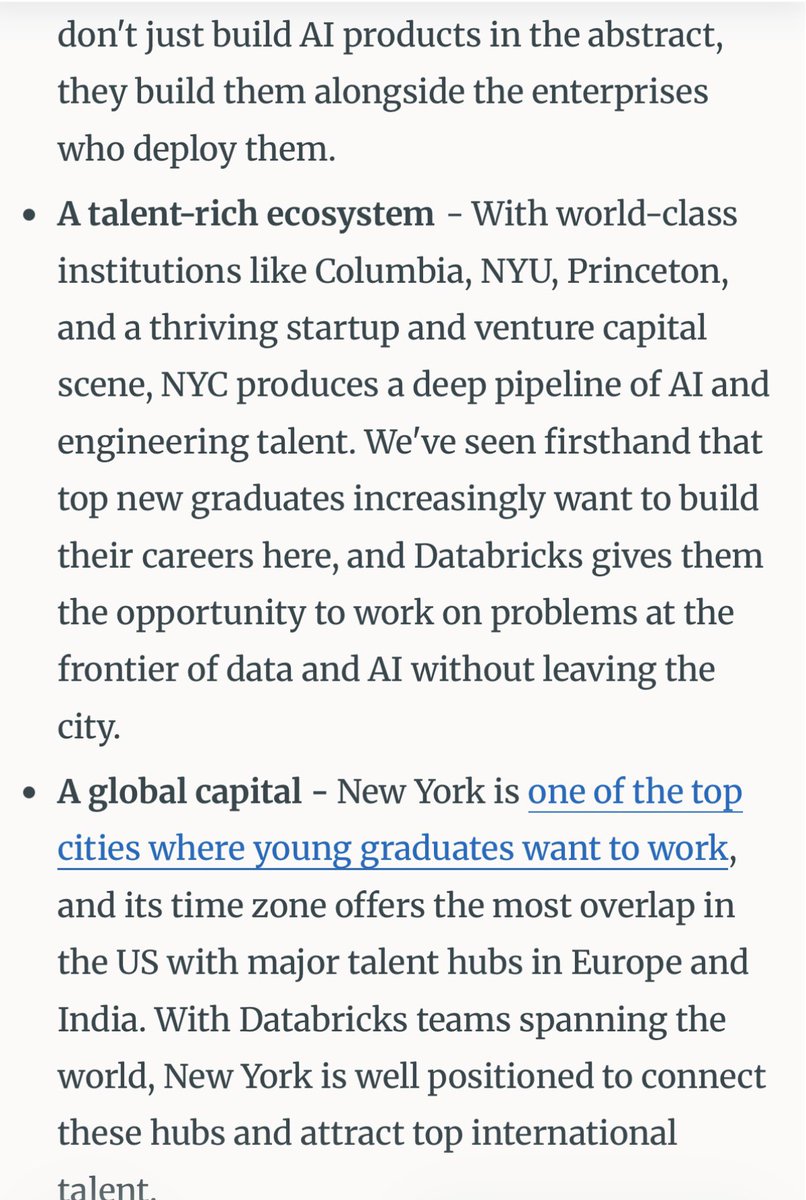
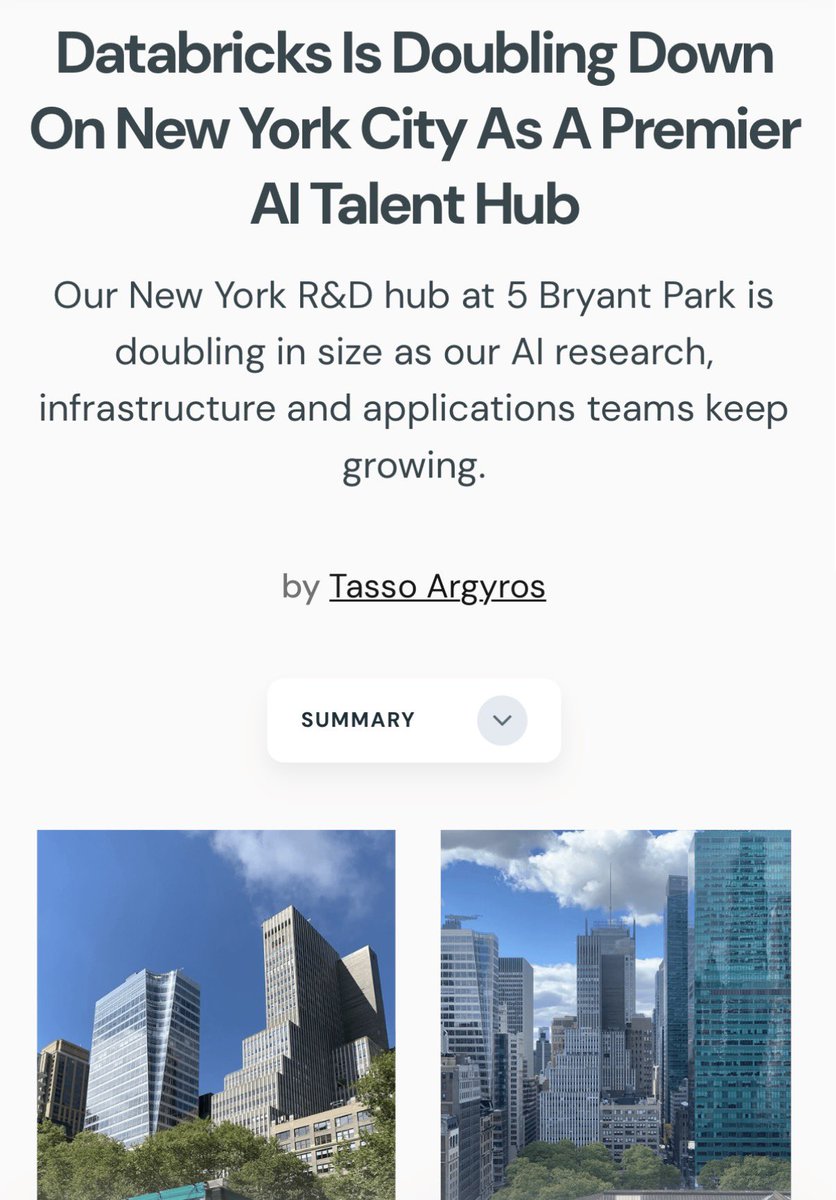
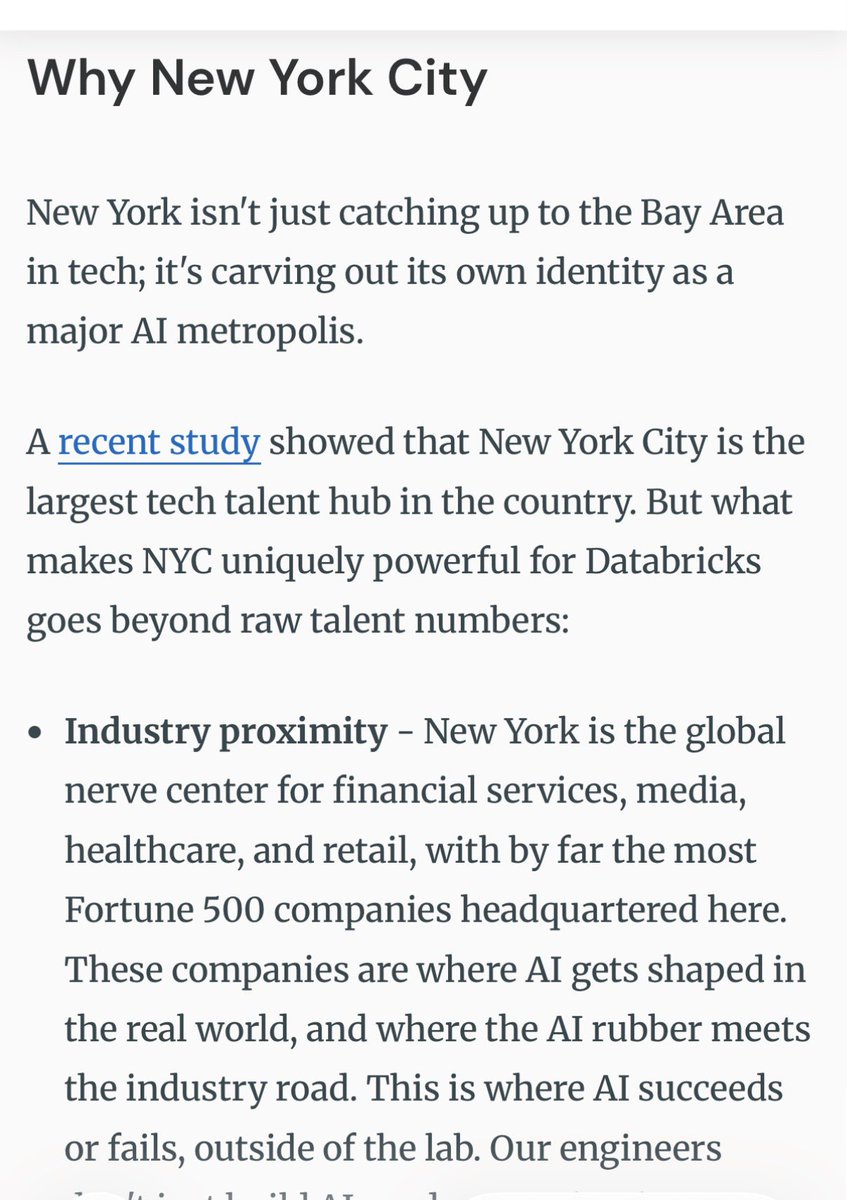
.@databricks, one of the world’s largest AI companies, is doubling the size of its R&D hub in Manhattan.
In an extraordinary blog post they explain why: “New York isn't just catching up to the Bay Area in tech; it's carving out its own identity as a major AI metropolis.”
@nikitabase Yes! We have seen platforms converging for many years now... we used to have disk vs in-memory, MPP vs SMP, columnar vs row, analytics vs cubes... It's now clear that you can build a single platform that does multiple things, FTW! This feels no different.
Not every marketer is familiar with Databricks today, but that's about to change!
Marketing agents simply do not work without real-time customer+business context. Databricks' CustomerLake is quickly becoming the cornerstone of the marketing stack of the future, providing just that.
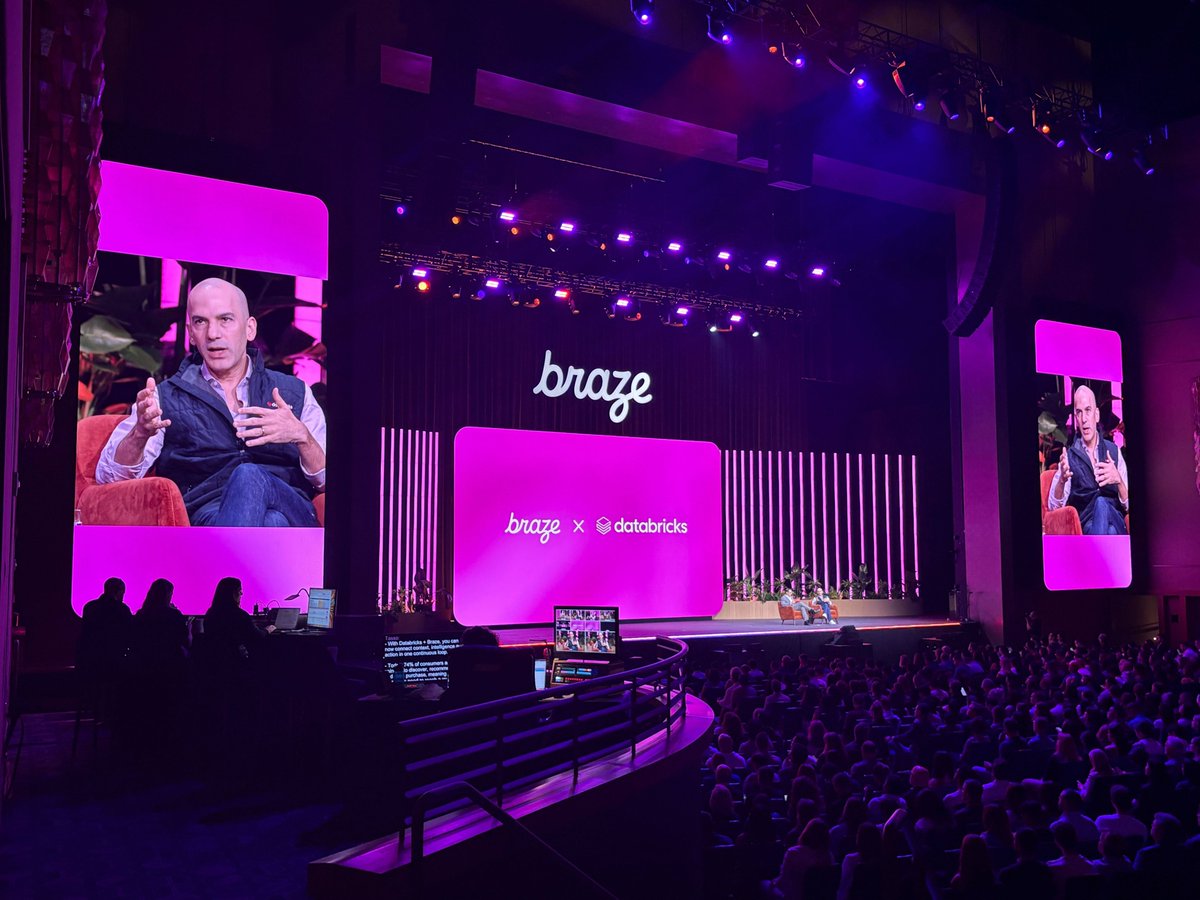
It was great discussing all of that on stage at Braze's Forge conference. Thank you for having me, @jon_hyman!
Lots of fun in the Hubspot Unbound 2026 keynote debating the future of agentic marketing with @adampc.
One interesting tidbit: context fragmentation is the kryptonite of agentic workflows. Centralize, standardize and open up your business context to agents as soon as possible!
It's been amazing watching Suchi up close as she overcame so many obstacles to bring her incredible technology to life!
AI is not just about more productivity and profits. This is a real, novel, and hugely impactful application of AI that we don't talk enough about.
An AI-powered system built by @HopkinsEngineer Suchi Saria and her team at Johns Hopkins now operates in over 40 hospitals nationwide, detecting sepsis before doctors may even suspect it. @CNN's @jaketapper featured the technology this week as part of the network's "AI Friend or Foe" series. #ResearchSavesLives
🔜 We’re heading to #VLDB2026 next week as a Gold Sponsor!
Databricks Co-Founder and Chief Architect @rxin will open the conference with a keynote on the “third golden age” of database engineering, including Lakebase and LTAP.
Our engineering and research teams will also be sharing work on:
- Lakebase and serverless Postgres
- Spark Structured Streaming
- Automatic Lakehouse optimization
- History-based query optimization
- Incremental materialized view maintenance
Stop by the Databricks booth to meet the team, talk through the papers, and see what we’re building for the agentic era.
https://t.co/4SU8NroiOf
@martin_casado is one of those rare people who combine deep technical depth with the ability to magically simplify complex concepts down to first principles.
I remember debating systems research with him back at Stanford, and he already had that gift back then. Pure talent.
FULL INTERVIEW: Martin Casado says AI is the first technology where you can put in $10 and reliably get something back. Everything before it was engineer, wait two years, cross your fingers.
@martin_casado is the @a16z GP behind the firm's investments in both Cursor and OpenRouter. Days after SpaceX closed the $60B Cursor deal and Stripe agreed to buy OpenRouter, he sat down with @theojaffee and @sophiadew to cover whether the labs win everything, when the subsidies stop, and why RSI is the wrong term:
02:24 whether decades of experience still matter in AI
03:48 what you would have done with a billion dollars ten years ago
04:56 20 people, $2 billion, one model
06:48 why more private capital grows the TAM rather than inflating it
07:35 the a16z conversation about going all-in on AI, seven years before GPT
08:39 why balance-sheet investors keep misreading these companies
10:36 the full case for the labs winning everything
12:12 why he thinks RSI is the wrong term, and what autocatalytic means
13:42 the full case against the labs winning everything
15:25 supply constraints easing in 2028, and his 80/60 split
17:12 why models turned out to be much stickier than anyone assumed
18:18 why real model routing is an AI-complete problem
21:13 what happens when the subsidies stop
21:36 how AI broke marketing, and why you can now buy users with a dollar
23:30 the Chinese operations arbitraging $200 subscription plans
25:43 the CMO is turning into a CFO
29:46 why Cursor iterated faster than anything he's seen outside an Elon company
32:21 what both deals say about strategic value versus business quality
34:10 why he doesn't think a VC's job is to know where to build
38:35 "as long as there's a hill for me to climb"
For years, the advice was to move to San Francisco if you wanted a career in tech. That advice is now wrong. New York has become the most exciting place in the world to build.
A few reasons why:
1. The AI labs are here. OpenAI, Anthropic, Google, and hundreds of others all run meaningful operations in NYC. You can now build a serious frontier-tech career here without giving up anything.
2. Every major industry lives here, and so does its AI counterpart. New York doesn't only have "tech," but finance, media, advertising, fashion, healthcare, real estate, law, and commerce too, with their applied-AI layer counterparts being built on top of each one.
3. The talent pool is unlike anywhere else. SF gives you engineers. New York gives you engineers, plus world-class designers, salespeople, bankers, marketers, operators, creatives, and media people, all at the top of their fields. Companies will need all of them.
4. People actually want to live here. New York is unlike any other city with its density of restaurants, art, nightlife, fashion, and media - and the people working across these sectors.
If you're building something and you're more than just tech, I'd argue there's only one city for you right now.
Seeing a lot of resumes like this these days. Every time I do, I feel like I just wasted 30 seconds of my life.
Sure, there's a small chance you get lucky. And a much, much bigger chance you destroy what could otherwise be an exceptional career.
Excited to share that we've acquired ElectricSQL, the team behind PGlite. Agents need super fast Postgres and this team built an amazing WASM (WebAssembly) implementation of postgres that runs in your browser, but can sync back with Postgres instances asynchronously. Exactly what blazing fast AI agents today need. Excited to supercharge our 𝐋𝐚𝐤𝐞𝐛𝐚𝐬𝐞 𝐏𝐨𝐬𝐭𝐠𝐫𝐞𝐬 offering with these capabilities.
https://t.co/tIww5fLekt
Today @databricks we're publishing a detailed analysis of techniques we used to drastically reduce our internal AI spend while aggressively growing adoption. Savings come from layering in several techniques, which combine to drive unit costs down as much as 90% in some scenarios. Tl;dr, the wins come from:
1. Shifting defaults to more efficient models, including OSS models such as GLM. Maximum intelligence models simply aren't needed for many coding tasks, and "good enough" models are quickly becoming very cheap. We shift traffic between models using Unity AI Gateway. Approximate savings: 50% or more.
2. Using smart routing to automate model selection. Routing can further squeeze efficiency by dynamically selecting the model or harness that can most efficiently execute a particular task. Our task-level routing leverages @omnigent_ai. Approximate savings: 30%.
3. Providing user visibility and adaptive budgeting. Every user can see how much they spend, and users receive hints on how to contain spend. Heavy spenders encounter progressive friction as they ratchet spend above certain levels. Approximate savings: 10%.
4. Managing context bloat by pruning tool call results and tuning harness settings. Extraneous context costs $$ and delivers no value. Tuning cache settings also help lower average token costs. Approximate savings: 10%.
Paying significantly above market makes things easy in the short run but creates huge medium/long term risk.
Screws up culture and can lead to a massive churn wave the minute the company hits a bump… because all the missionaries instantly abandon ship.
JUST IN: Anthropic CEO Dario Amodei has expressed concern about new talent coming to the firm for money rather than the mission via a source, per Axios.