All the cellular elements depicted in the cell below, are critical for normal cellular bioenergetics and all of them are significantly dysregulated in healthy sedentary individuals.
Our latest study https://t.co/FghwQtf3h6
This systematic review and meta-analysis finds that acute caffeine ingestion is likely to confer a moderate ergogenic benefit for swimming performance and a higher post-test blood lactate.
This one finds that multi-marathoners not only exhibit substantially higher V̇O2max values than population norms across all age groups, but they also show a more gradual age-associated pattern in V̇O2max and a 3.7% reduction in estimated all-cause mortality per 1 mL/kg/min increase in V̇O2max.
Resistance training is not “more is always better” for runners and endurance athletes.
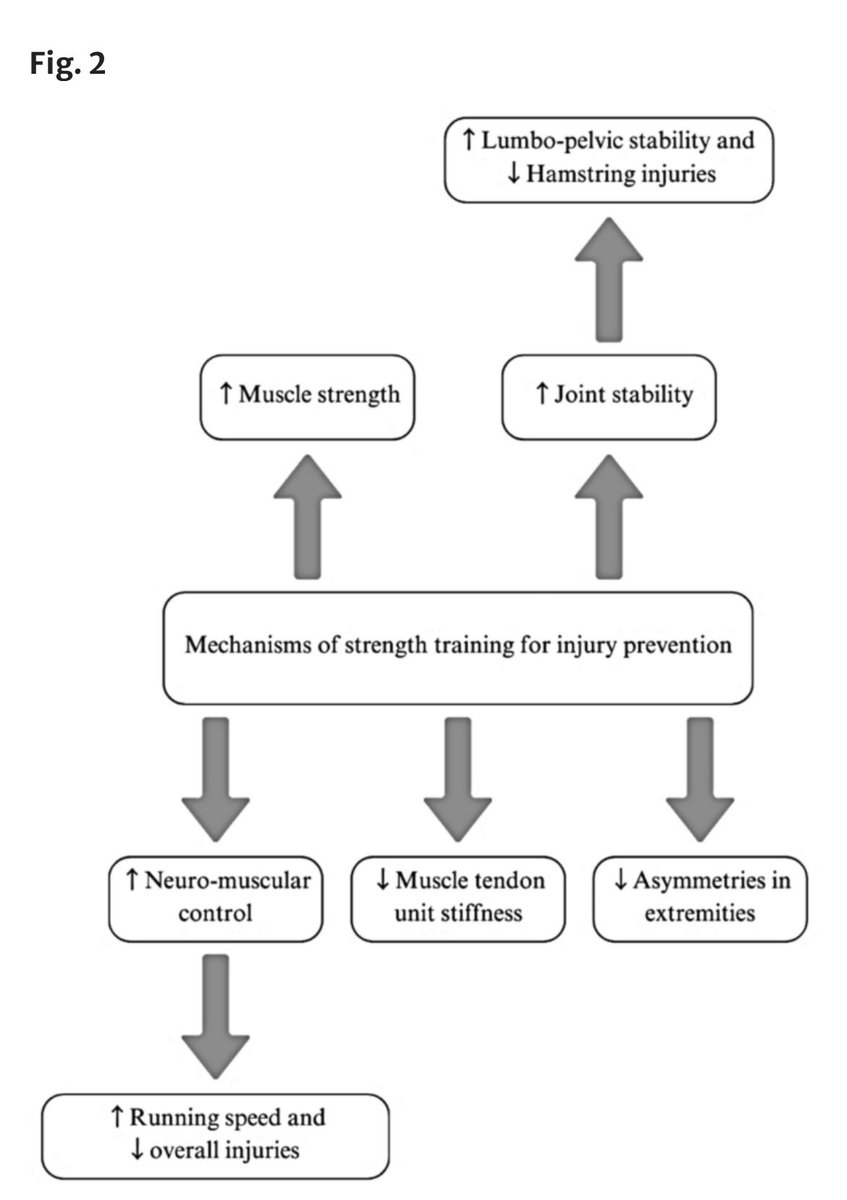
🏋️can improve strength, force production and injury resilience—but excessive hypertrophy may add mass, impair running economy and reduce speed/endurance efficiency.
https://t.co/vGJk1fpSce
Now available ahead or print: Understanding the Long Game: From Promising Youth to Olympic Champion, by Øyvind Sandbakk, Jacob Walther, and Silvana Bucher Sandbakk.
https://t.co/WHKU7SbF2T
Now available ahead of print: Effects of Intermittent Sequential Pneumatic Compression on Functional, Biochemical, and Perceptual Recovery Markers in Trained Cyclists: A Randomized Sham-Controlled Crossover Trial, by Filipe Maia and colleagues. https://t.co/tofCEnPqiE
Challenging the notion that physiological training responsiveness is a stable, trait-like characteristic reproducible within individuals, this one finds that individual physiological adaptations to a repeated endurance training program are largely non-reproducible across multiple physiological and performance outcomes.
Mechanical tension appears to be the primary driver of muscle hypertrophy.
📚current evidence suggests that high tension within muscle fibers is the key stimulus triggering growth.
Train for progression, not soreness
https://t.co/0uiCPwAhTL
This is a really good paper because it shows that threshold work is more biologically distinct than we sometimes make it sound in coaching conversation.
Trevisol et al. looked at trained rowers working at maximal lactate steady state, or MLSS, and then only 5% above it. In simple terms, MLSS is the hardest workload where the body can still keep lactate relatively stable. Once the rowers went just slightly above that line, lactate rose more, heart rate was higher, oxygen use was higher, and the working muscle showed greater oxygen extraction demand.
From a coaching standpoint, I have always liked practical methods for estimating threshold, especially in running. For example, using a 5K based race pace or thinking of it as the maximum even pace someone can sustain for about 20 minutes can be useful field language. Both can help coaches and athletes organize intensity. But this paper is a good reminder that MLSS is not just a pace description. It is a physiological state, and if you are outside that bucket, there are consequences.
That is why workload and modality matter. Running, rowing, cycling, and other endurance modes do not all behave the same way. The best approach is to determine threshold as specifically as possible to the task being trained, then respect the purpose of the session. A small miss in intensity may not look like much on the watch or monitor, but internally it can change the entire training stimulus.
Size principle in practice:
📈 motor units are recruited from small to large as force demands rise.
💪For hypertrophy, sets should be performed close to failure—especially with lighter loads—to recruit high-threshold fibers.
➡️Train hard, not sloppy
https://t.co/268eBtg57v
The journal reports on a study examining blood lactate recovery after high-intensity exercise in trained youth. It highlights age and sex differences in lactate exchange and removal capacities during growth.
https://t.co/Wc27ByxsnR
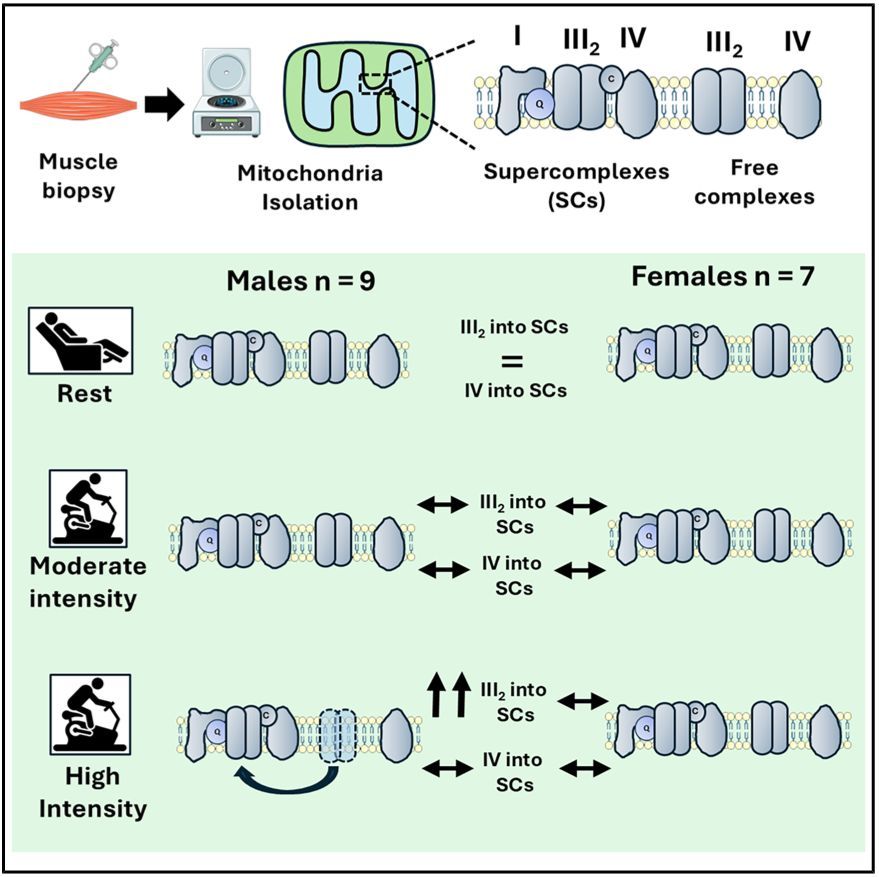
New study suggests that exercise induces sex-specific assembly of mitochondrial supercomplexes https://t.co/SpumlVYRuL
It would be cool to see if this still occurs in ♂ & ♀ matched for training volume.
Our latest review explores the key physiological factors limiting VO₂max and endurance performance 🚴♀️🏃
From oxygen delivery to muscle metabolism, we unpack what sets the upper limits of human performance 🚴♀️🏃
Read more:
https://t.co/hLteWTkWNI
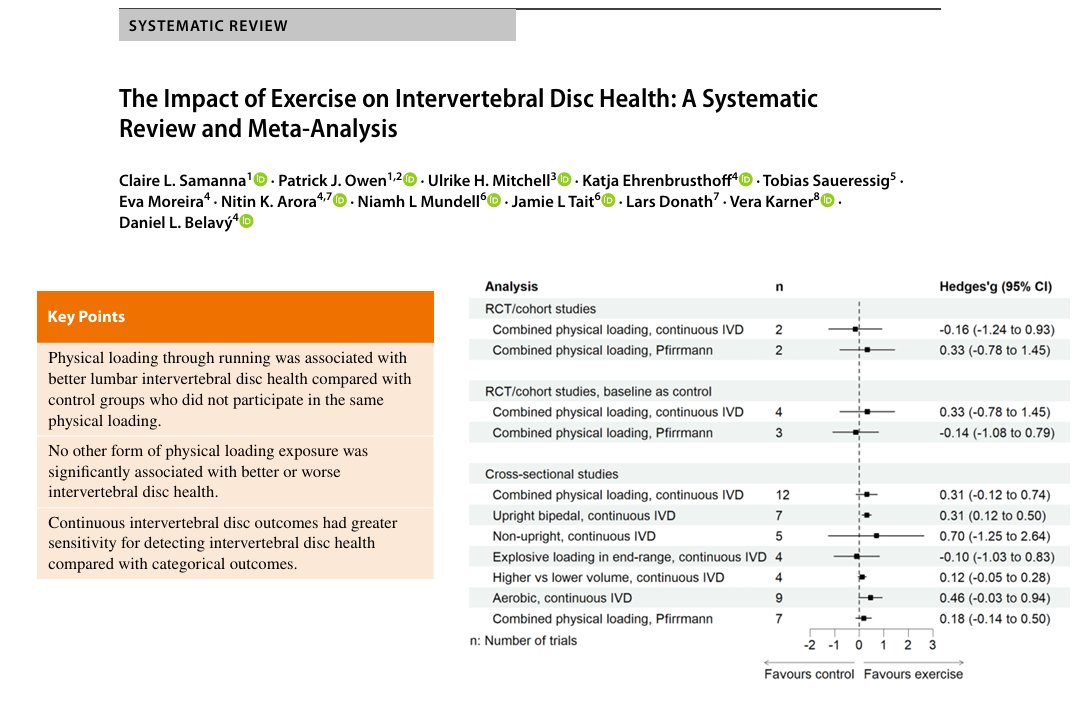
This systematic review and meta-analysis finds that running is the only physical loading exposure that is likely to be concomitant with better intervertebral disc health.
New study just did something incredible
They measured glucose level in real time in truly elite athletes
Real Madrid players during a Champions´ League game (!)
The results did not disappoint. They´re as interesting as you´d expect 😃
🏋️Heavy squats before HIIT may not raise VO2peak, but in trained athletes they may increase time spent at very high intensity and extend total work duration—especially with cluster sets.
👉potentiate, don’t annihilate. Heavy first, but low fatigue
https://t.co/hBfcVN8dm7