Cell biologist and Associate Professor @utoledo studies the role of actin cytoskeleton and calcium signaling during cytokinesis. Alumnus of @UTAustin @PKU1898
Join the Membrane Structure & Function Subgroup on Tuesday, September 15 from 11:00 am- 12:00 pm EST for their virtual program, "Lipids Feeling the World" where we will explore cutting edge work on lipid-biomembrane interations.
Register Now!
https://t.co/x65xQfgSTD
From MBoC
Optogenetic activation of RhoA reveals a direct mechanism for local septin recruitment. The findings show that RhoA signaling—not myosin contractility—drives septin remodeling in interphase cells.
https://t.co/IVCMDAeMXk
Ani Michaud, @GoryachevAndrew, von Dassow, @BementLab et al. identify a versatile cortical pattern-forming circuit based on #Rho, F-#actin, Ect2, and RGA-3/4: https://t.co/Etaz43VlAM
📕 Part of “Collective Behaviors and Self-Organization in Cells”: https://t.co/rGIVL2bL0c
Spotlight: Williams et al. (https://t.co/gxNEUUspOG) show that chromosome segregation is independent of separase-mediated feedback and that synchrony is affected by a small number of stochastic effects. Boland @Biologie_UNIGE discusses the findings: https://t.co/xoXqXyObR7
🔬 Cell-type-specific GCaMP6 miniscope imaging of a freely-behaving mouse brain. ~1,200 excitatory CA1 hippocampal neurons were imaged during active behavior over months.
Courtesy of the Schnitzer Lab, Stanford.
#MicroscopyMonday#Neuroscience#Lifescience
Protocol to identify mechanosensitive nuclear proteins using tunable actomyosin contractility and proximity biotinylation in mammalian cells @StarProtocols#bps2026 https://t.co/rZpfYRZtJZ
Step-by-step protocol and reproducibility
Generate iPSC-derived 3D neurospheres for neuron–glia studies.
Date: March 25 | Time: 12:00 pm ET
Free
Register: https://t.co/RRAB9ObkuD
Cell Bio 2026 is built by scientists, for scientists—and it starts with your ideas.
Submit a scientific session proposal and help shape the program.
🗓 Deadline: February 22, 2026
Submit Now: https://t.co/kqoBZWGrej
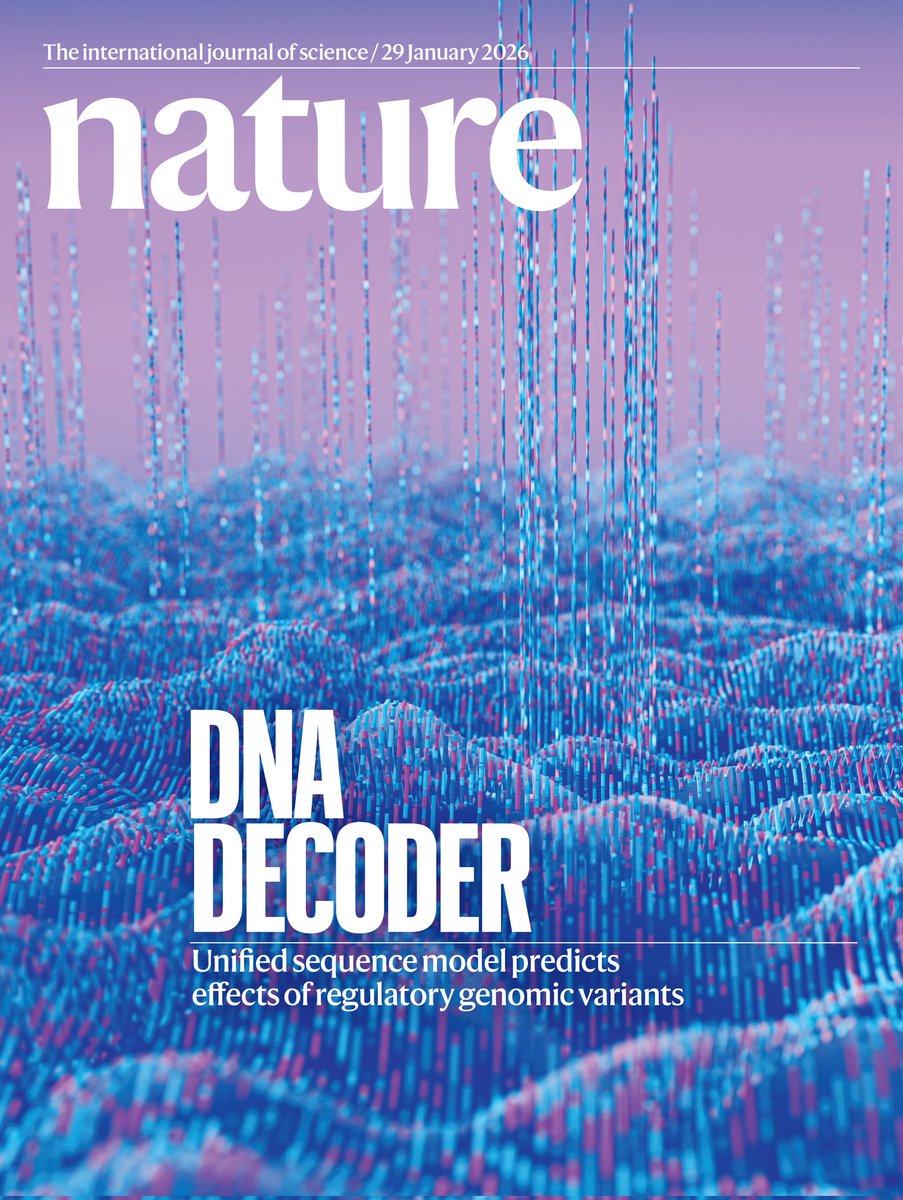
AlphaGenome is out in @nature today along with model weights! 🧬
📄 Paper: https://t.co/1fHzSPiY1x
💻 Weights: https://t.co/z6JWLT4Mpv
Getting here wasn’t a straight path. We sat down @googledeepmind to discuss the story behind the model, paper & API: https://t.co/cT8CiXfnxQ
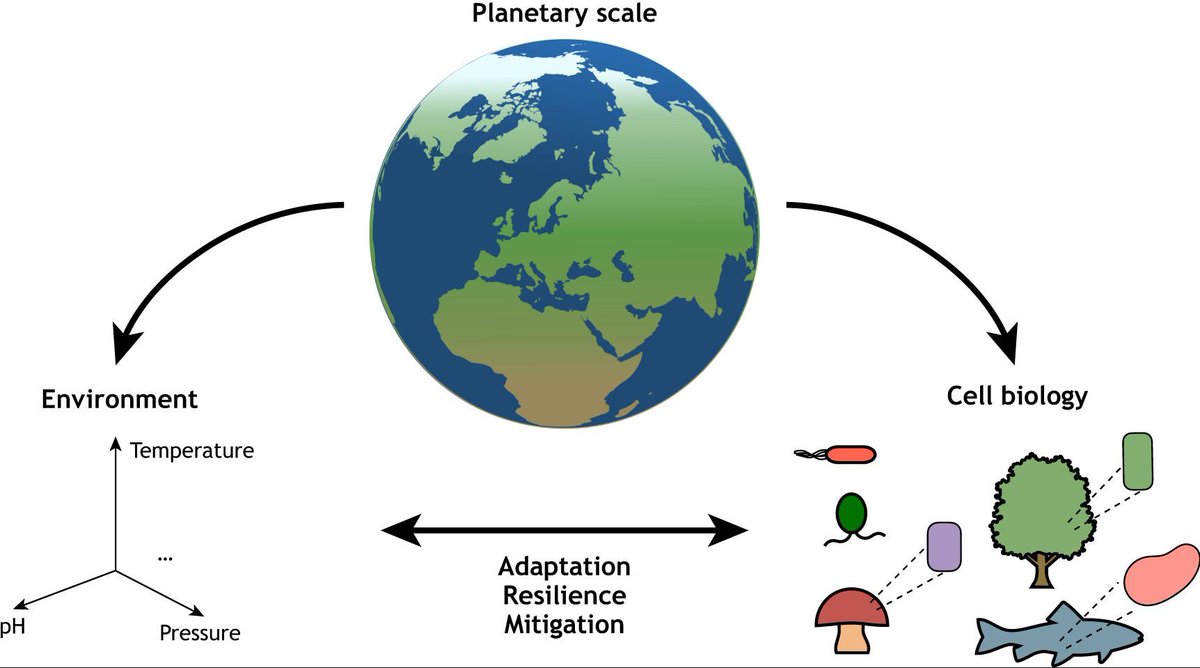
Cell biology for a sustainable future – a call to action from Camila Costa, Eliott Flaum, Delfina Hlashwayo @DHlashwayo, Marie Jacobovitz, Guillermina Kubaczka, Samuel Lovat, Eliya Milshtein, Hanna Szafranska @HannaSzafransk1 and Soraya Zwahlen.
https://t.co/baHaZniznh
Review: Siqi Deng, Zhiqiang Yan et al. @hkust summarize the physiological functions and structural basis of OSCA/TMEM63 proteins, positioning them within a mechanosensitive ion channel superfamily. https://t.co/qvVywapHBL
#Physiology#Neuroscience#Mechanobiology#IonChannels
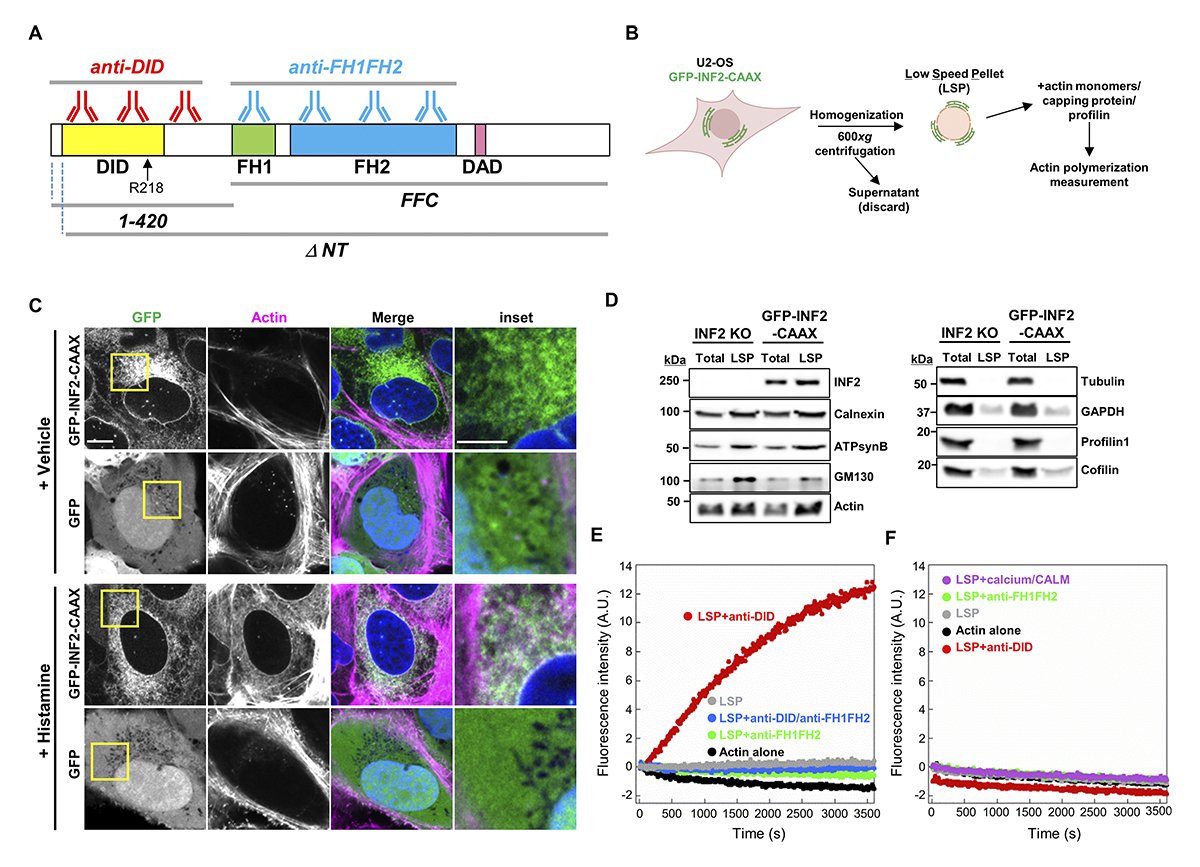
New research from Lee, Higgs et al. @GeiselMed shows how #INF2, a key #actin regulator, is activated by calcium-calmodulin and free actin monomers. Actin-binding proteins like profilin and thymosin aren't just helpers - they directly tune INF2 activity. https://t.co/ZYPcpXmC4S
This study presents new tools for measuring the intracellular calcium concentration close to transmitter release sites, which may be relevant for synaptic vesicle fusion and replenishment.
https://t.co/8fuhu8b9hz
@NIH has launched the nation’s first dedicated Organoid Development Center to accelerate human-based research and to complement animal models. The center will support new 3D tissue models to study disease, drug response, and human biology.
https://t.co/UWONUA5rC3
Spotlight: Ivan Radin discusses new work from Ryken et al. (https://t.co/vBv4LCdtIl) which shows how localization and function of autoinhibitory calcium ATPases maintains the strength of the tip-focus Ca2²⁺ gradient during polarized plant growth. https://t.co/Sl88p6JjJ3