SV-GWAS is highly accessible now! Our new paper in @NatureGenet shows how HiFi long-read assemblies let us repurpose SNP-based GWAS data to impute structural variants (SVs) to interrogate their role in human complex traits and diseases. @WeiyangBai https://t.co/zSB90E3at0
Very excited about this preprint that we just posted! It introduces the Genomic-Relatedness Matched Association (GRMA) study. It’s an extension to family-based GWAS that uses extended relatives beyond only siblings in diverse-ancestry data with very little bias.
Family-GWAS results were critical in testing the robustness of inferences of natural selection in the recent Akbari/Reich paper.
We're releasing family-GWAS sumstats on 28 phenotypes on https://t.co/cwUax5KT69 data portal, using the powerful method we developed in Guan et al.
New from David's Reich's lab: "In the past ten millennia [in Europe], we find that many hundreds of alleles have been affected by strong directional selection," including those influencing human intelligence.
https://t.co/GRv4rBOnF4
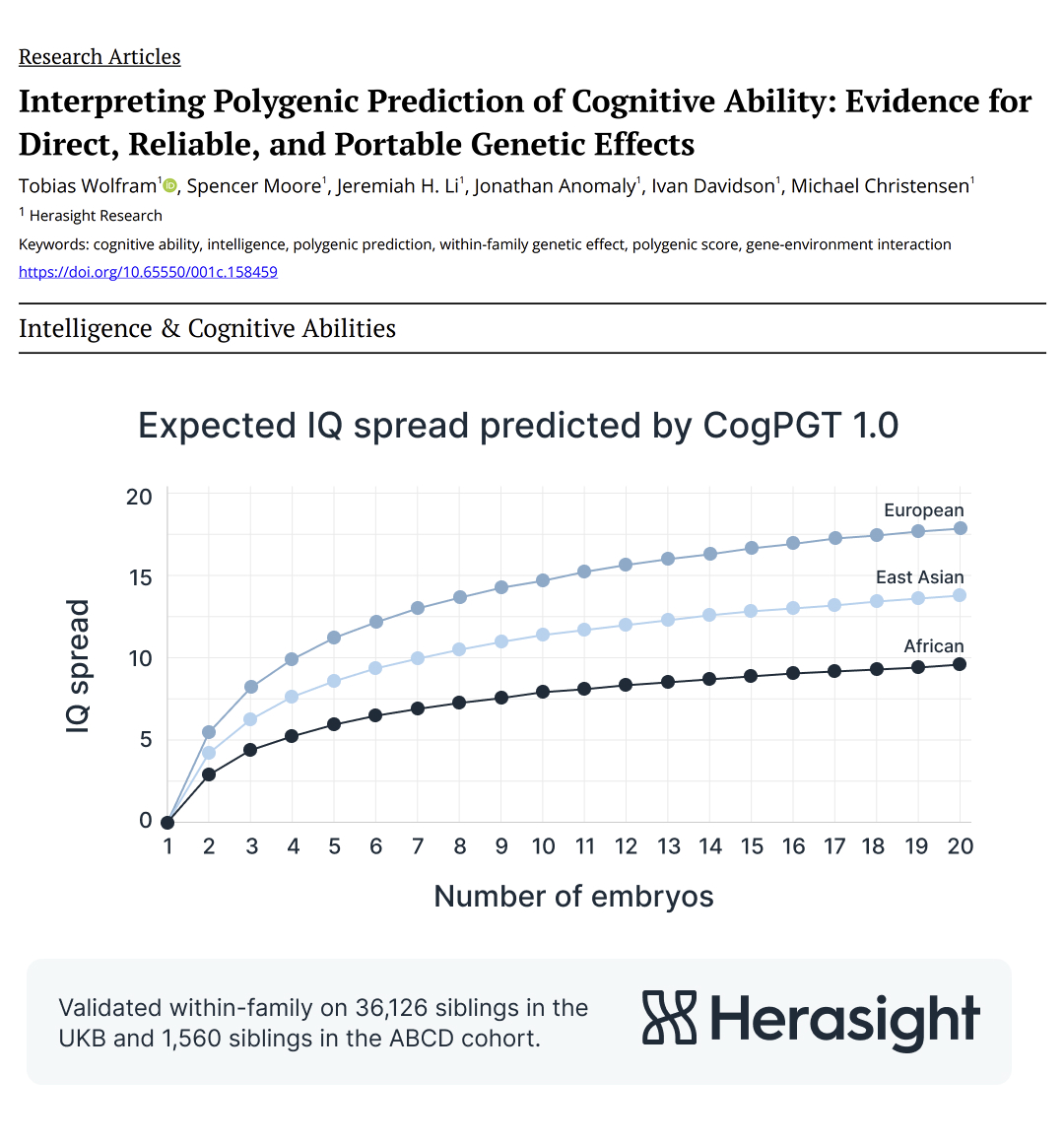
Today the worlds most powerful genetic predictor of IQ, CogPGT, has been published in the peer reviewed journal Intelligence and Cognitive Abilities.
When used for embryo screening, it can substantially boost expected IQ of future offspring.
Read on for the scientific details!
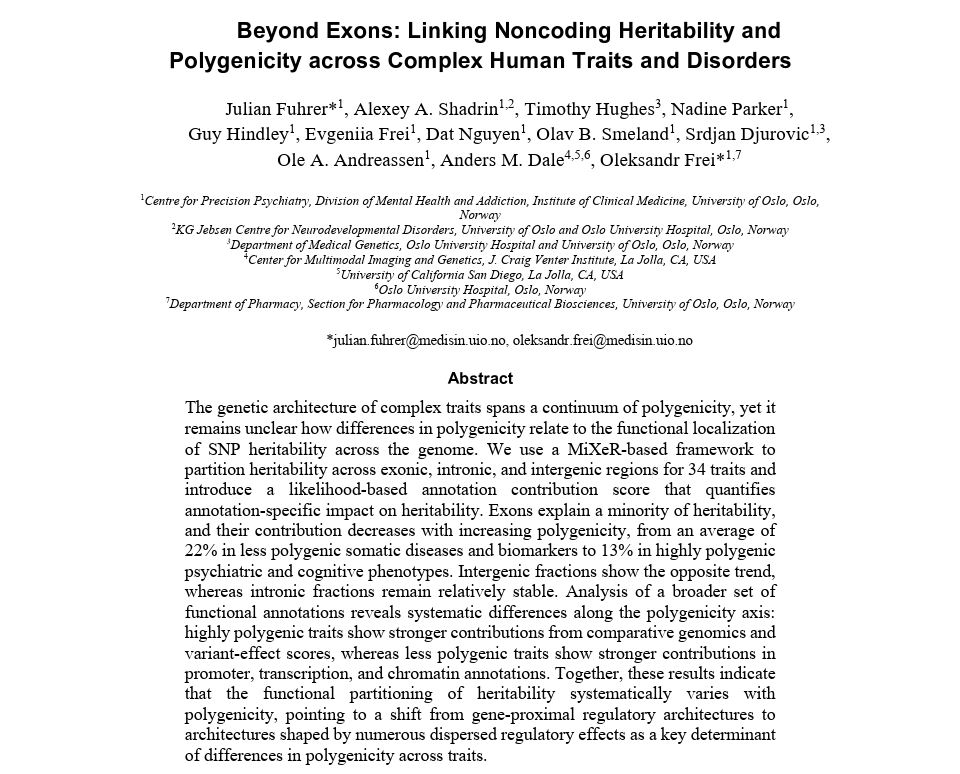
i mean, this should be pretty self-explanatory but still a good read.
(i.e., as traits become more polygenic, the relative contribution of localized, gene-proximal (especially exonic) effects decreases, while heritability becomes increasingly dominated by distributed, largely noncoding regulatory effects across the genome, with substantial and relatively stable contributions from intronic regions.)
StratGWAS is our new tool for more efficient GWAS of heterogeneous diseases. Instead of treating cases equal, it weights them based on relevant phenotypic information such as medication use, age of onset or recruitment strategy. Full details on MedrXIv https://t.co/J6ANjdmztL.
Here's the longer version of our Nature piece.
Our argument is simple: statistical approximation is not the same thing as intelligence.
Strong benchmark scores often say very little about how LLMs behave under novelty, uncertainty, or shifting goals.
Even more importantly, similar behaviors can arise from fundamentally different processes. In another paper, we identified seven epistemological fault lines between humans and LLMs.
For example, LLMs have no internal representation of what is true. They often generate confident contradictions, especially in longer interactions, because they do not track what is actually true.
Another example. Yes, LLMs have solved some open mathematical problems, but these cases typically involve applying known methods to well-defined problems. LLMs cannot invent anything that is truly new and true at the same time, because they lack the epistemic machinery to determine what is true.
None of this means LLMs are useless. Quite the opposite: they are extraordinarily useful.
But we should be careful about what they are and what they are not.
Producing plausible text is not the same as understanding.
Statistical prediction is not the same as intelligence.
So despite the hype from the usual suspects, AGI has not been achieved.
*
paper in the first reply
Joint with @Walter4C and @GaryMarcus
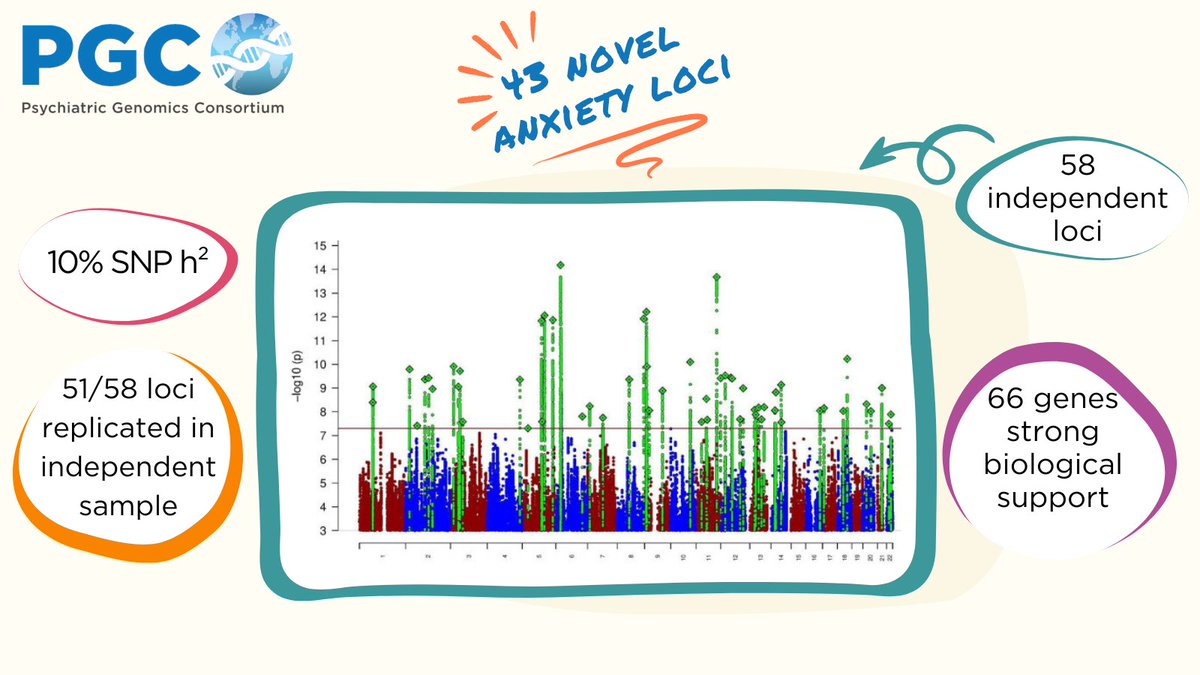
🧵 New publication from the PGC Anxiety Working Group. Our GWAS meta-analysis of anxiety disorders is now published in @NatureGenet! 🔗: https://t.co/fb3yGDEURn
Excited to share our preprint introducing COXMM! COXMM is a Cox proportional hazard mixed model for estimating the heritability of time-to-event (TTE)/longitudinal traits. 🧵1/10
Work with @SashaGusevPosts and @sr_sankararaman.
https://t.co/3aJOOVe8Uf
Pretty nice obituary for James Watson
https://t.co/6uZGsxxqlY
The most significant scientific discovery of that time — perhaps any time in the life sciences — was his and Francis Crick’s: the double helical structure of DNA, and the base pairing it contained, the feature that answered the two great mysteries of life — how genetic material can both copy itself and also carry the code that defines the characteristics of living organisms.
…arguably the most influential scientist of the second half of the 20th century, his impact felt through his scientific discoveries, his game-changing books, and his rare talent for institution building and administration.
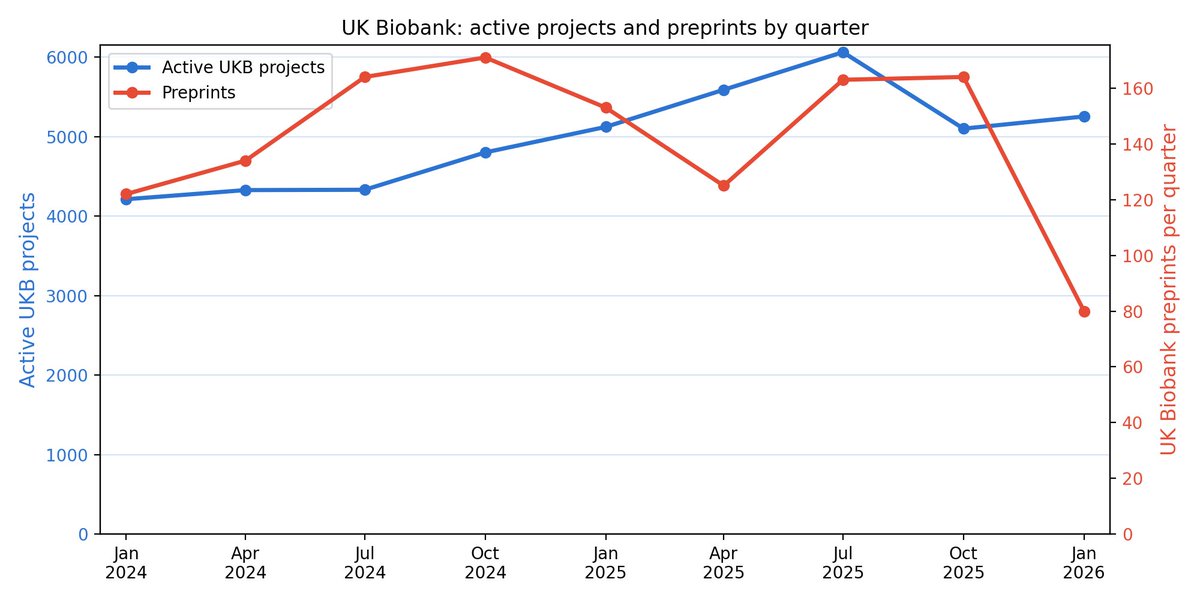
Over the course of 2025, UKB researchers were forced to move all of their data analysis to the cloud rather than working with local copies. What was the effect of this move on scientific output? Here is a simple first pass at answering that question.
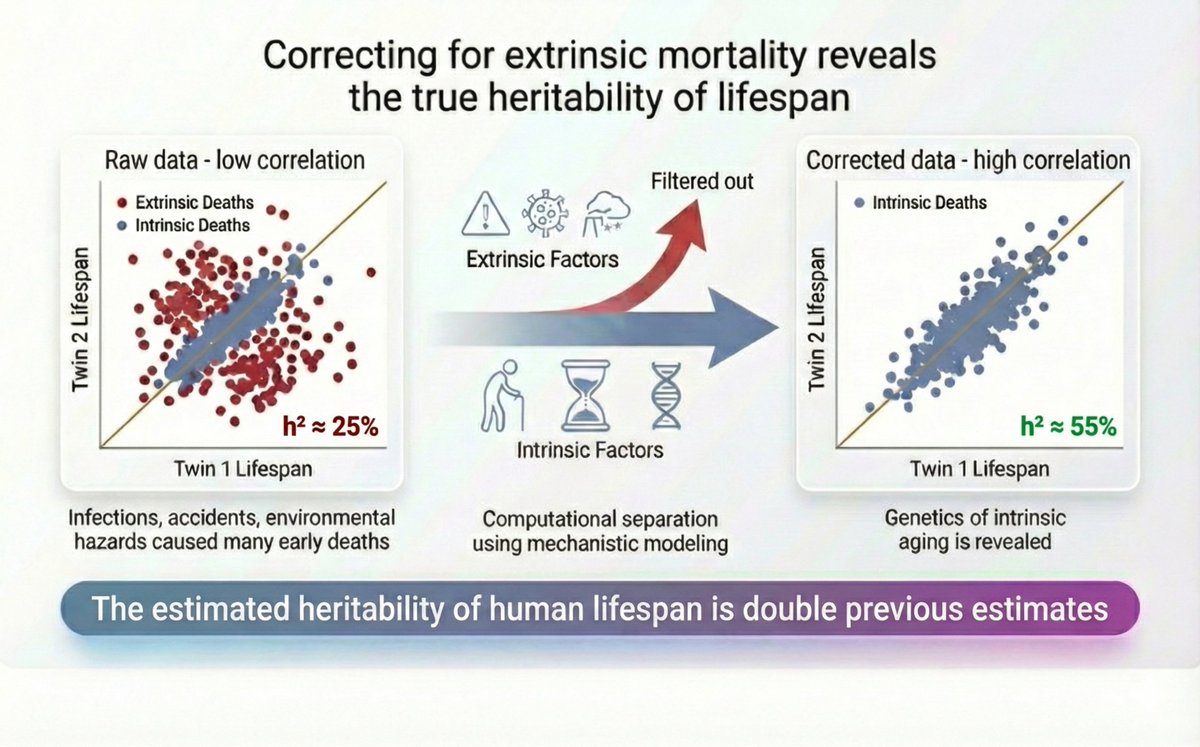
Our new paper on reassessing the heritability of human lifespan is out in @ScienceMagazine! 🧬
For decades, the consensus has been that genetics explains just 20–25% of lifespan differences. We found that after accounting for extrinsic mortality, that number jumps to ~50%.
A 🧵
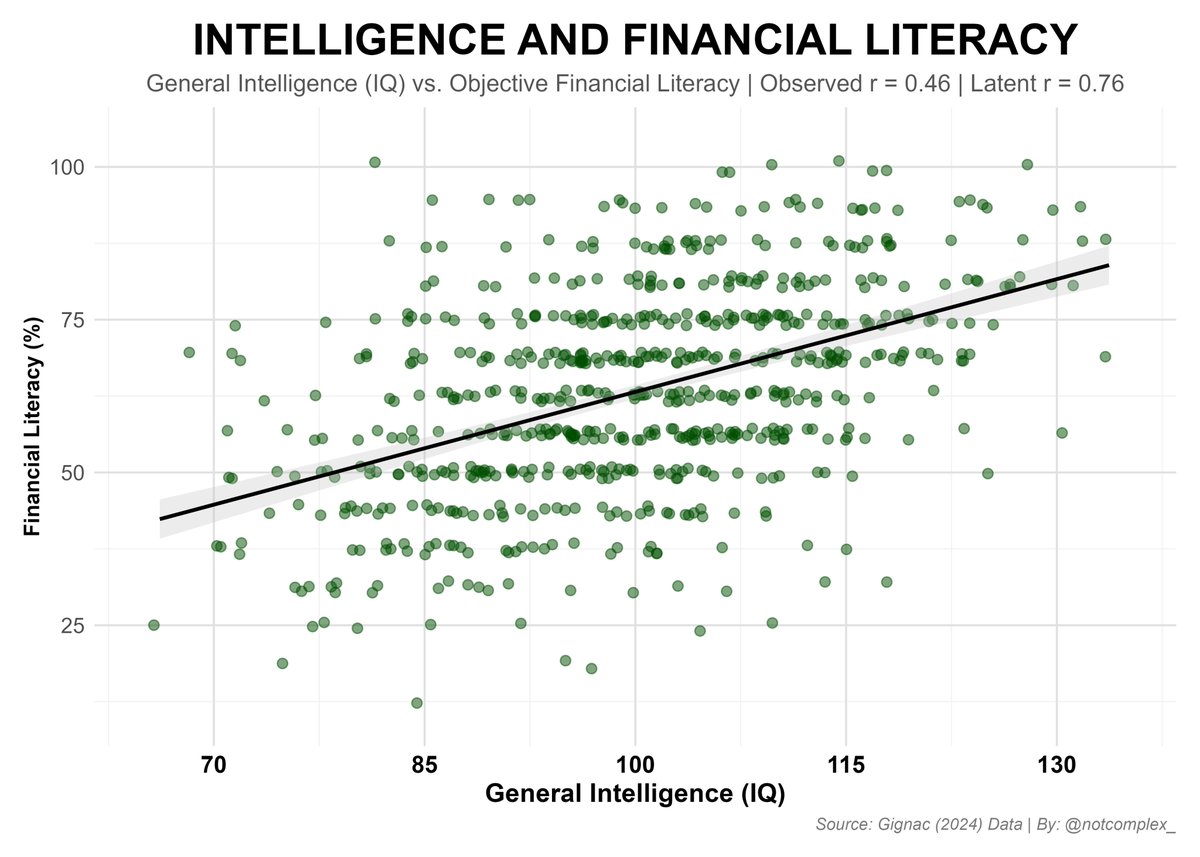
A recent study found a latent correlation between IQ and Financial Literacy of r=0.76
This is "real life as an IQ test"; unfortunately, many have poor finances due to their intelligence.
A few example questions and the IQ they test for🧵
An interesting preprint from Alkes Price's lab shows that GWAS effect sizes' relationship with minor allele frequency (MAF) is better explained by African MAF than European MAF.
We know that rare variants have larger effect sizes, which is a reflection of negative selection. Disease-causing deleterious variants are kept at lower frequencies by natural selection.
However, allele frequency of a variant is influenced not only by natural selection, but also by other factors like genetic drift caused bottleneck events.
MAFs of all non-African populations are influenced by out-of-Africa bottleneck effects. Such frequency changes reflect drift, not disease biology.
In this work, Rossen et al. empirically show that in fact African MAF estimates better explain GWAS effect sizes than European MAF, even when the GWAS is performed in European populations.
These results suggest that many downstream GWAS analyses—such as heritability estimation, fine-mapping, and polygenic risk prediction—may be systematically misspecified when relying solely on European-derived MAFs. Incorporating African MAFs is likely to yield more accurate effect-size modeling, even for GWAS performed entirely in European populations.
Rossen et al. medRxiv 2026
https://t.co/pHyVYqHK0p
🚨 The paper from my postdoc in @GraeffJohannes 's lab at @EPFL is out! we show that memories can be switched on and off by simply changing the “packaging” of DNA in neurons through epigenetic editing. 🧬🧠🐭 https://t.co/xVfHU0K0qm