I like talking about livable places. And utility and social and kid cycling. And places for all ages and abilities. The revolution will not be single file.
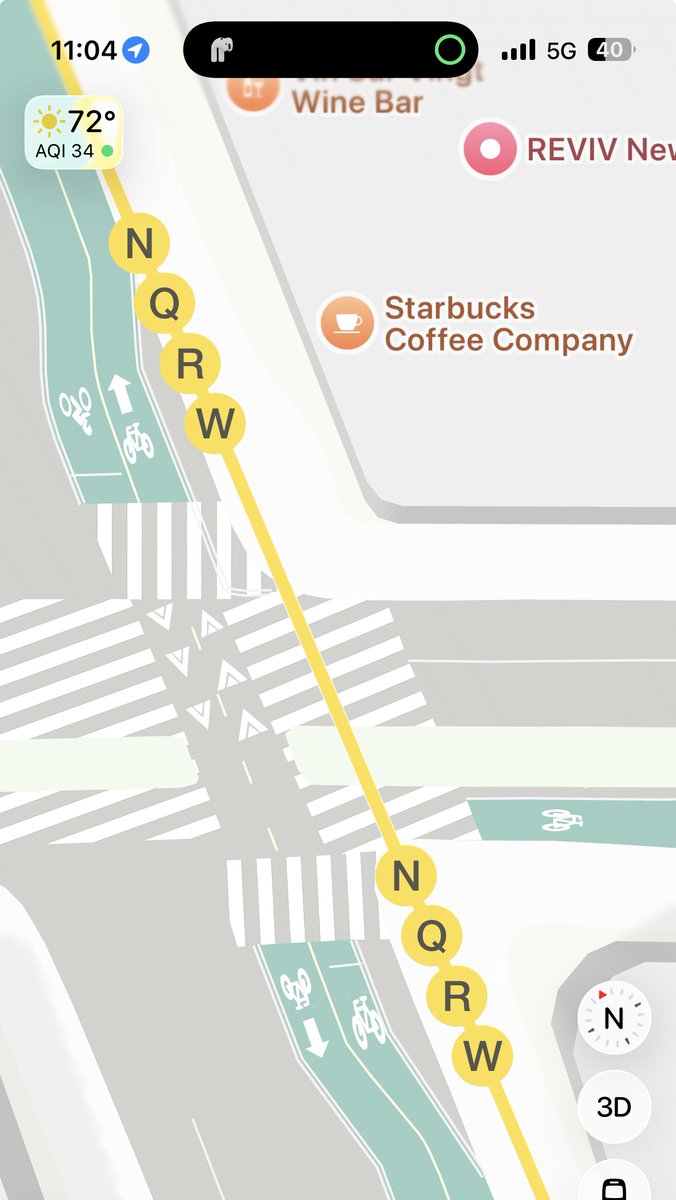
What blows this old guy away (turning 60, 37 years in NYC) is how much maps now show the great changes on our streets. BUS ONLY red lanes, #bikenyc green lanes & pedestrian plazas.
Seeing this for me feels dreamy every time. You youngsters don't know how good you have it. I recall in late 1990s taking a road atlas on #bikenyc rides and circling in pen any good routes that felt safe to tell friends/advocates. Mostly word of mouth is what we had.
It's been a long haul. But the city is really starting to change. A personal thank you to @StreetsblogNYC@OpenPlans@NYCMayor@NYC_DOT@TransAlt@bikenewyork and all those advocating. I feel like my retirement in a few years will see us closer to Paris, The Netherlands and London. (Expecting some cranks to comment of course.)
@KittDennis@the_transit_guy@pitdesi Government took on huge debt to kick start all that in 1987. Also, the high visibility rail service people cite in Japan is on the densely populated routes. The more rural routes are government supported.
@BobaCyclist Exactly. Have @NYC_DOT show up within hours with the big stones and create traffic calming. No design, no engagement process. Just narrow the intersection with huge rocks. Every time. Safe streets. Quiet streets.
This. There are many oversimplifications out there. Government is always involved, there is no pure free market anywhere. Government assumed huge debt in 1987 as part of the Japanese rail transformation.
I worked on one stage of the JR privatization and this is greatly oversimplifies what actually happened and ignores some important realities.
First, three of the seven JR companies (Hokkaido, Shikoku, Cargo) are still 100% government owned, and were probably never expected to be viable as public enterprises. I was surprised that JR Kyushu was successfully privatized completely - and got Shinkansen - because at the time I was involved (in another company) the conventional wisdom was that only the Honshu companies could succeed as private enterprises.
Second, the privatization also involved parking a large chunk of liabilities in a special entity that was NOT privatized. In fact the part of the privatization I worked on was delayed because the government unilaterally decided the new JR companies had not taken enough of the JNR pension liabilities on their books and added some more. Probably one of the most significant aspects of the privatization was the public service workforce reduction it entailed but that was a problem for the government, not the JR companies.
Third, the JR companies became private (but first government-owned) companies with valuable assets (the commuter and HSR rail networks) build with public funds as well as a portfolio of highly desirable real estate (high traffic train stations) in choice locations.
Fourth, as far as I know any new HSR train lines built since the privatization were publicly funded, since new JR company could afford to build them on a commercially viable basis otherwise.
Fifth, train fares are still regulated, and JR East only recently increased fares for the first time in decades…
Thus, rather than a simplistic public > private transformation, the whole exercise involved a rebalancing of assets, liabilities and risks between the public and private sector, but both remain important to the whole construct. In any case there was serious planning and government decisions around what was necessary to have at least three commercially-viable JR companies (East, West and Tokai) as a result.
So probably more an example of a successfully executed privatization with continuing government involvement, rather than a “private enterprise good, government bad” story.
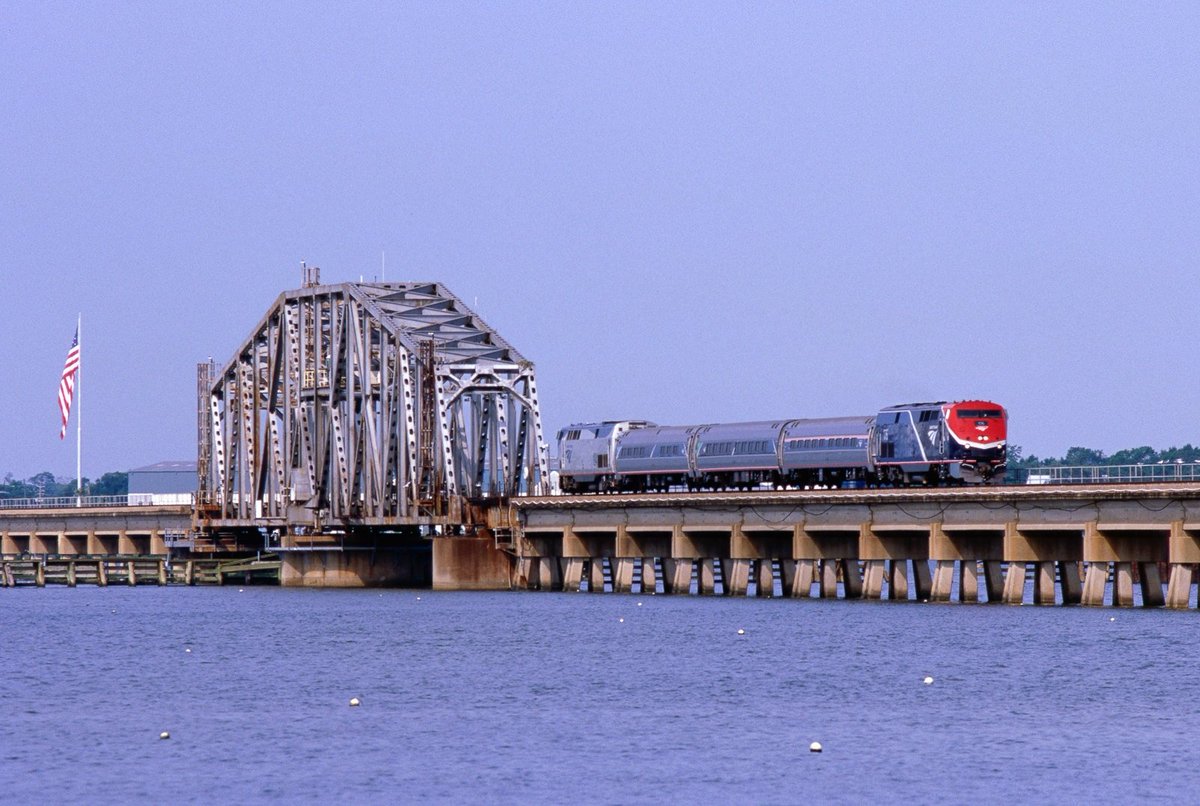
Amtrak Borealis projected annual ridership: 125k
Actual ridership: 215k
Amtrak Mardi Gras projected annual ridership: 52k
Ridership 8 months into service: 100k
Don't let people tell you we "Don't need trains, no one would ride them"
As someone who does run a system I can definitely say that’s just not true. Transit is by far the safest and more efficient way to move people at scale & it’s why our team works so hard to continually improve so the community gets that value.
@rocketrepreneur@Simberg_Space@big_pedestrian Good lord, where do you get your information? The transit industry is full of talented professionals who are trying to run good systems. Yes, they do take a salary. That doesn’t make it a jobs program.
@big_pedestrian This is the fucking dumbest thing I have ever read. Transit safety is always at the forefront of top level decisions that are made. Delete yourself.
@big_pedestrian We need politicians in this country who actually ride public transit, want it to be a useful and enjoyable experience, and who want to build tons of housing because more neighbors makes a place more fun and vibrant.
@big_pedestrian@walkabilityfan@wmataGM
Has answered this.
He took a moribund system from, "best we can we do," to a system that is a service of choice, not a system of last resort.