I’m excited to share our new publication: a story exploring how cortical parvalbumin (PV) interneurons modulate motor output in an age-dependent manner! https://t.co/JtlwWaH1Eb #mdpicimb via @CIMB_MDPI
I am serving as a Guest Editor for an exciting Special Issue on “Stroke and Brain Injury,��� and it is my great pleasure to invite you to contribute your work. We warmly welcome both original research articles and review papers!
https://t.co/CKgqHvgW81 #mdpicimb via @CIMB_MDPI
Journals: "We need you to work for us for free, but only under our conditions"
oh and please send the reviewed manuscript back in less than two weeks, we have a business to run
@wolfejosh@kevinweil Hi Josh, upload the paper that you generated to @qedScience to get feedback on your hypothesis (I assume you don't have any figures or results, but still i hope your claims will be scrutinized and it could be useful) https://t.co/XS5o6Wsf9F
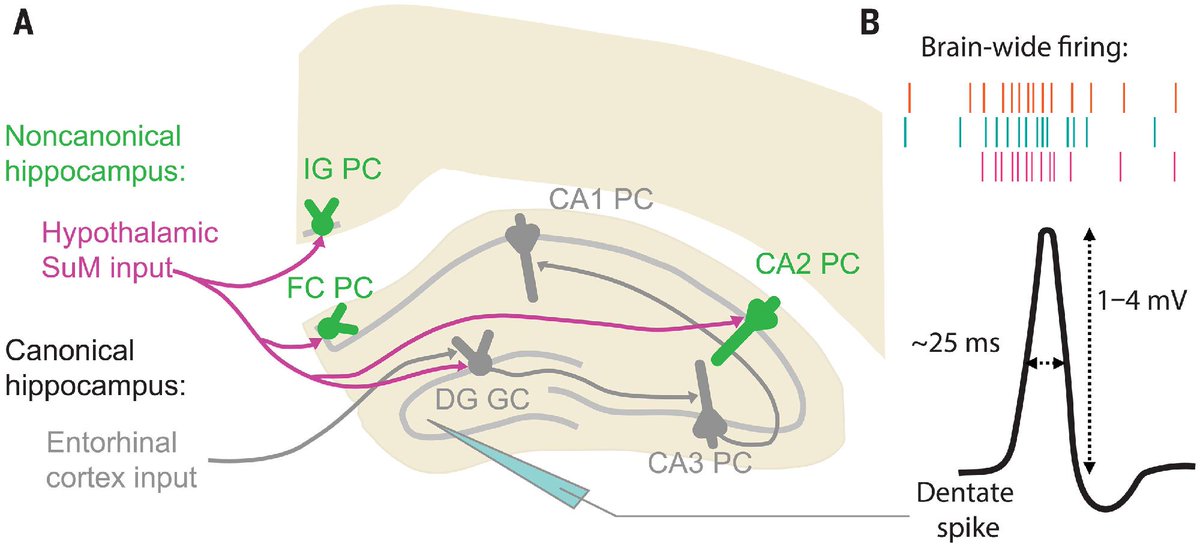
The hippocampus is one of the most studied brain areas because of its major role in fundamental brain functions including learning, memory, and spatial navigation.
In a new #ScienceReview, researchers focus on the role of overlooked areas and circuits within the hippocampus. https://t.co/e1q1sKavq8
Zach Helfand writes about fact checking at The New Yorker. “A joy of the job was that you became an expert for two weeks on some subject you’d never thought much about—rocket science, foreskin, sand.” https://t.co/foxFDEgyB8
When the Nazis came to power, a writer began collecting people’s dreams and uncovered the effects the regime had on the collective unconscious. https://t.co/FkRp917Aa8
Slow synaptic plasticity from the hippocampus underlies gradual mapping and fragmentation of novel spaces by grid cells https://t.co/0MnSsdjvly #biorxiv_neursci
New Drug Targets Brain Glial Cells to Reverse PTSD Symptoms
PTSD patients often struggle to forget traumatic memories, even when the danger has passed.
New research has uncovered that astrocytes, not neurons, are producing excessive GABA in the medial prefrontal cortex, impairing fear extinction.
This discovery shifts the focus from serotonin-based treatments to glial cell mechanisms.
Using the MAOB inhibitor KDS2010, researchers successfully reversed PTSD-like symptoms in mice.
The drug reduced GABA levels and restored normal blood flow and brain activity.
These findings could reshape PTSD treatment by targeting the cellular origins of fear memory persistence.
https://t.co/RgzJdwVV3H
A study in @NatureComms shows that jellyfish swimming can be guided and predicted using electrical stimulation and machine learning, illustrating how embodied intelligence shapes both spontaneous and stimulus-evoked behaviors. https://t.co/beCvveyCEa
Drugs that clear away brain plaques to treat Alzheimer’s disease are a welcome arrival, but researchers argue that targeting amyloid alone might not be enough to halt the disease. Read the @Nature Outlook article. https://t.co/yNejI65Pip
Happy to see this work led by Irene Onorato finally out in
@CellReports showing
"Distinct roles of PV and Sst interneurons in visually induced gamma oscillations"
https://t.co/DwPzYeDMz1
Groundbreaking work by Dr. Soohyun Lee from the National Institute of Mental Health at @NIH.
The brilliant young scientist faces termination. Science like this leads to discoveries that can revolutionize how we understand the brain.
https://t.co/ItWyPxPHsh
#neuroscience
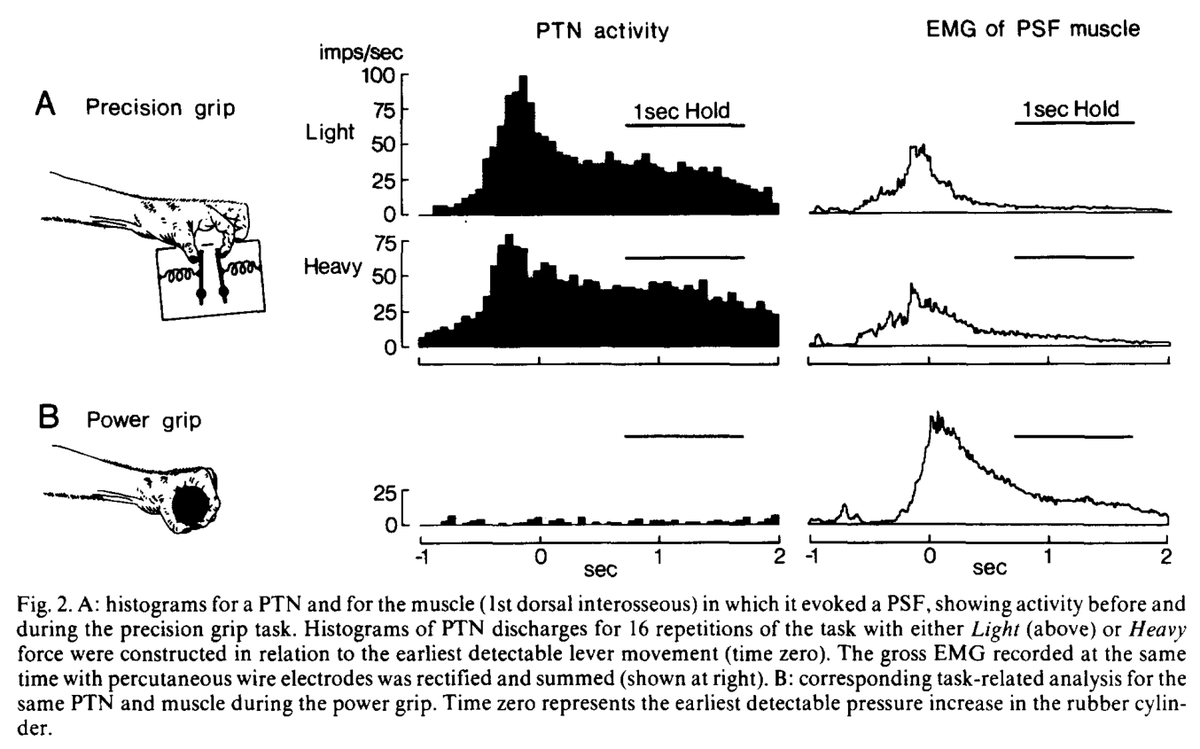
A striking example of how the relationship between motor cortical discharge and EMG can depend on the task (even for CM cells). Might be interesting to test how the identification of output-potent / null subspaces with current methods generalizes across tasks.
(Muir & Lemon, '83)