Seeking help from a broader community: If you know anyone working at the intersection of biology (preferably bioinformatics or neuroscience) and philosophy (preferably philosophy of science/biology), please let me know. Any information would be greatly appreciated. Thank you!
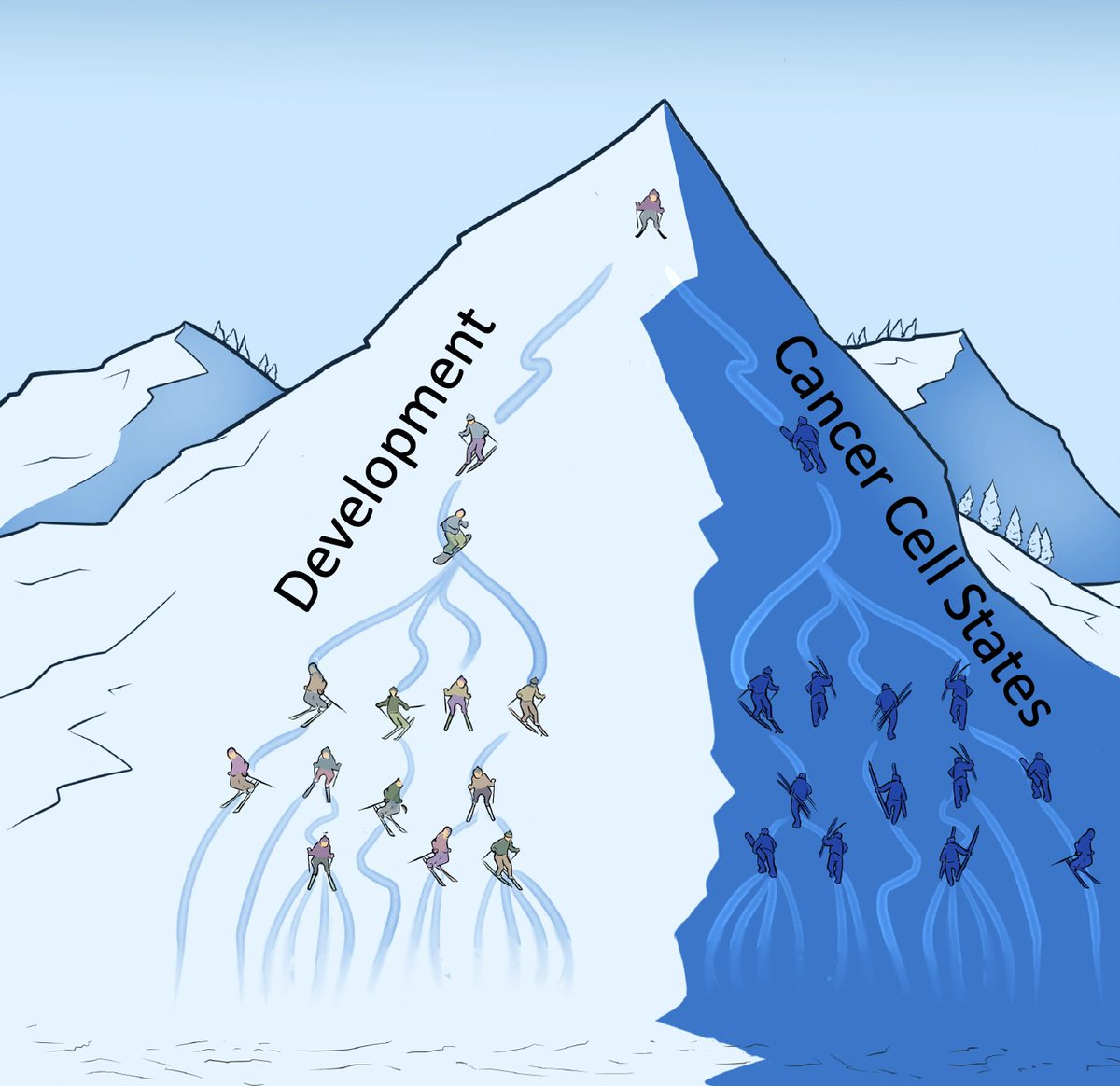
In today's Cell, we propose a “developmental constraint” model whereby cancer cell state plasticity is restricted by the organism’s developmental map to access progenitor-like states and differentiated-like states of adjacent lineages.🧵⬇️
https://t.co/1HM7fYQJO4 @AyushiPatel3994
"THE BLIND SPOT makes a rich and complex philosophical argument, but it also has major practical implications, both for how we should do science and for how it should be presented to the public." -- Times Higher Education
https://t.co/8W1XQIxeGB
Excited to announce the submission of the second major study from my postdoctoral work with @HuangLabDuke. A big shout-out to @jessemaurica and other talented collaborators @WilliamGalbavy@borshuen! https://t.co/gyxPpkWjIL
Just posted a preprint on our new spatial genomic recording system, baseMEMOIR.
https://t.co/ef5i8FnIOw
Motivation: Cells divide, differentiate, and migrate to form exquisitely organized tissues. Reconstructing the dynamic histories of individual cells, including their lineage relationships and ancestral states, is essential for understanding how intrinsic and extrinsic signals generate tissues during development and in regenerative medicine.
Engineered genomic recording systems can reconstruct cell lineage histories from endpoint measurements. However, existing methods either require sequencing (disrupting spatial organization) or have been limited in memory size and scalability.
To address this need, @ChadlyDuncan, Kirsten Frieda, and others in the lab created a high memory capacity image-readable recording system termed baseMEMOIR.
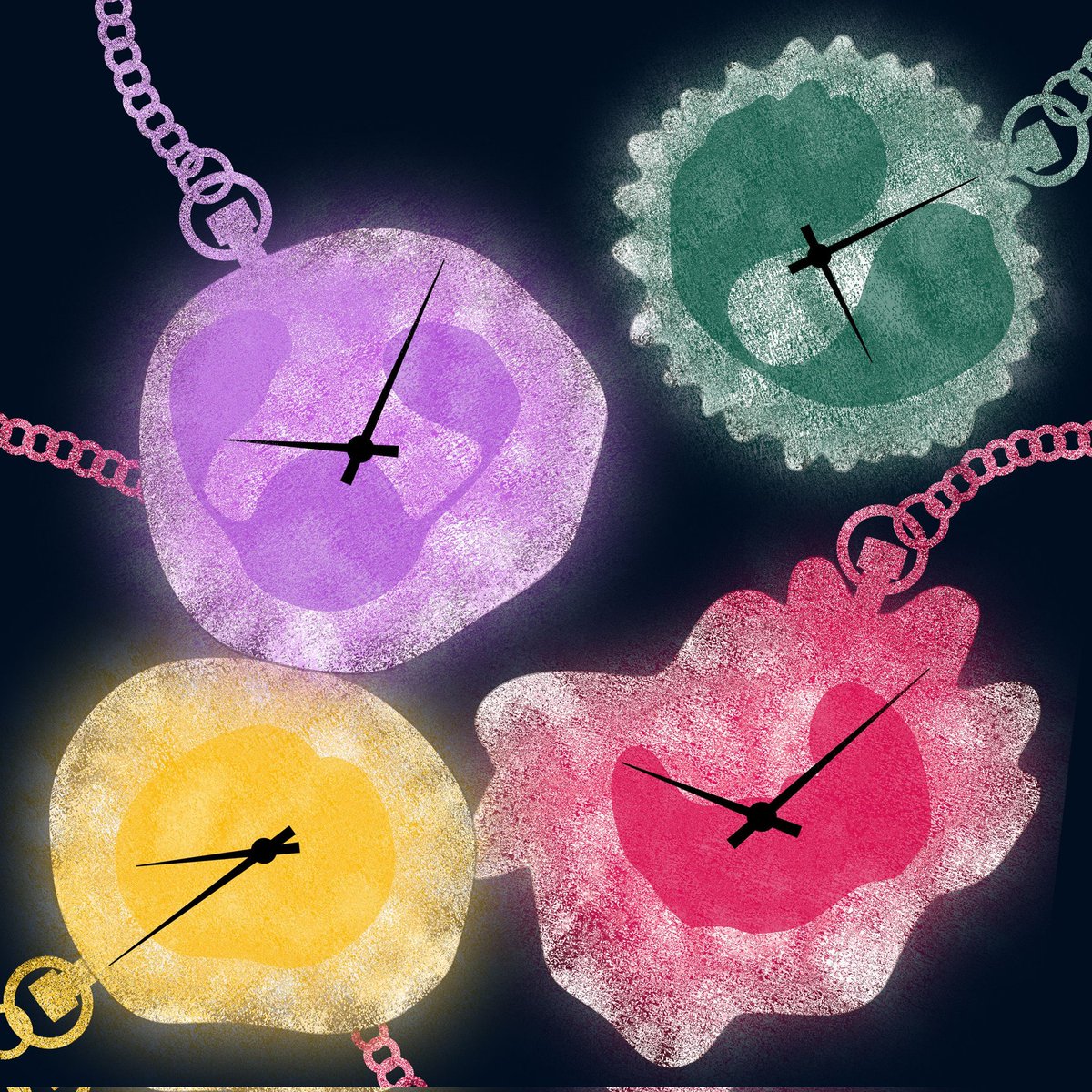
We are very excited to present the development of Zman-seq (“Zman”, Hebrew for “time”), the 1st technology that measures single-cell transcriptomes and physical time in vivo, led by @D_Birschenkaum, @CuriousKX, @FlorianIngelfi1, @AssafWeiner
https://t.co/pDk6ackAtV. (1/19)
Spatial single-cell transcriptomics technologies are exciting but realizing their promise requires data sharing. In https://t.co/EwymfVHvmT Kayla Jackson provides a sharing model for primary & metadata needed to reproduce analyses and facilitate computational methods development.
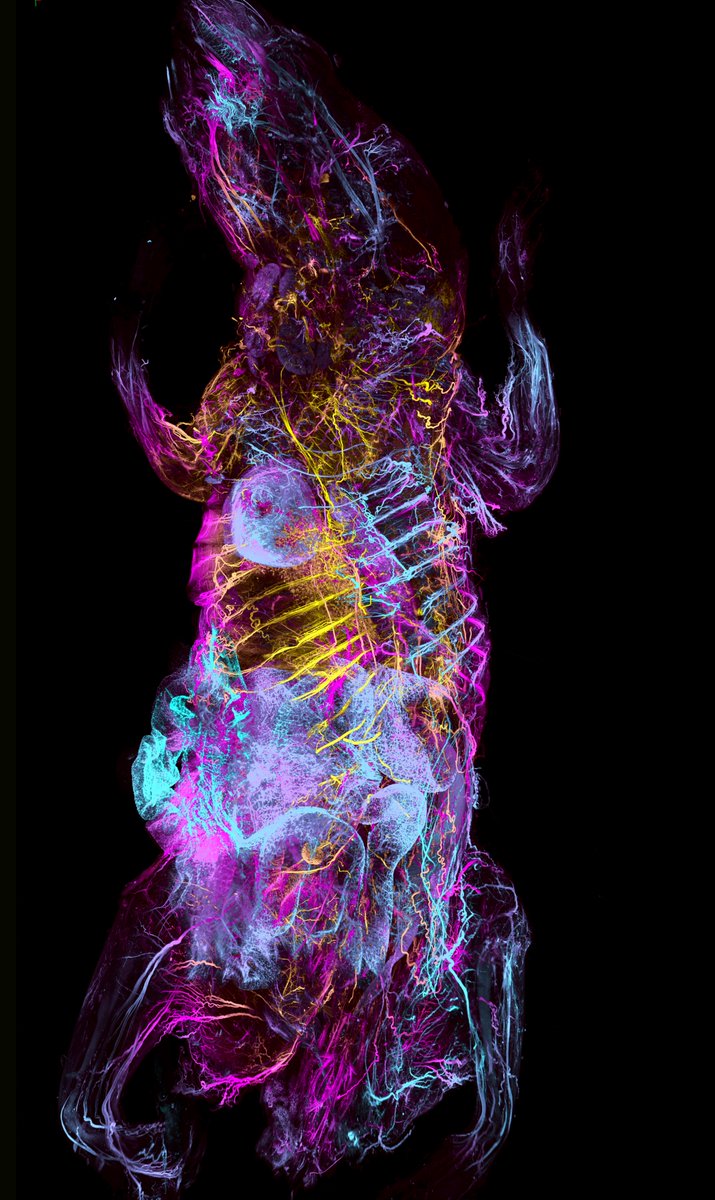
Our new study is now published at @NatureBiotech as open access. What is in it? Online Whole-Body Mouse Atlases, tertiary lymphatic structures (TLS) in the whole mouse along cancer, and more. Meet wildDISCO, thread 👇🏼
https://t.co/544CH1IIRw
Ribo-ITP enables ribosome occupancy measurements from single cells. Our first application revealed insights into allele-specific ribosome engagement in early development (https://t.co/BA27Bc5ZGh). #RiboITP#singlecell
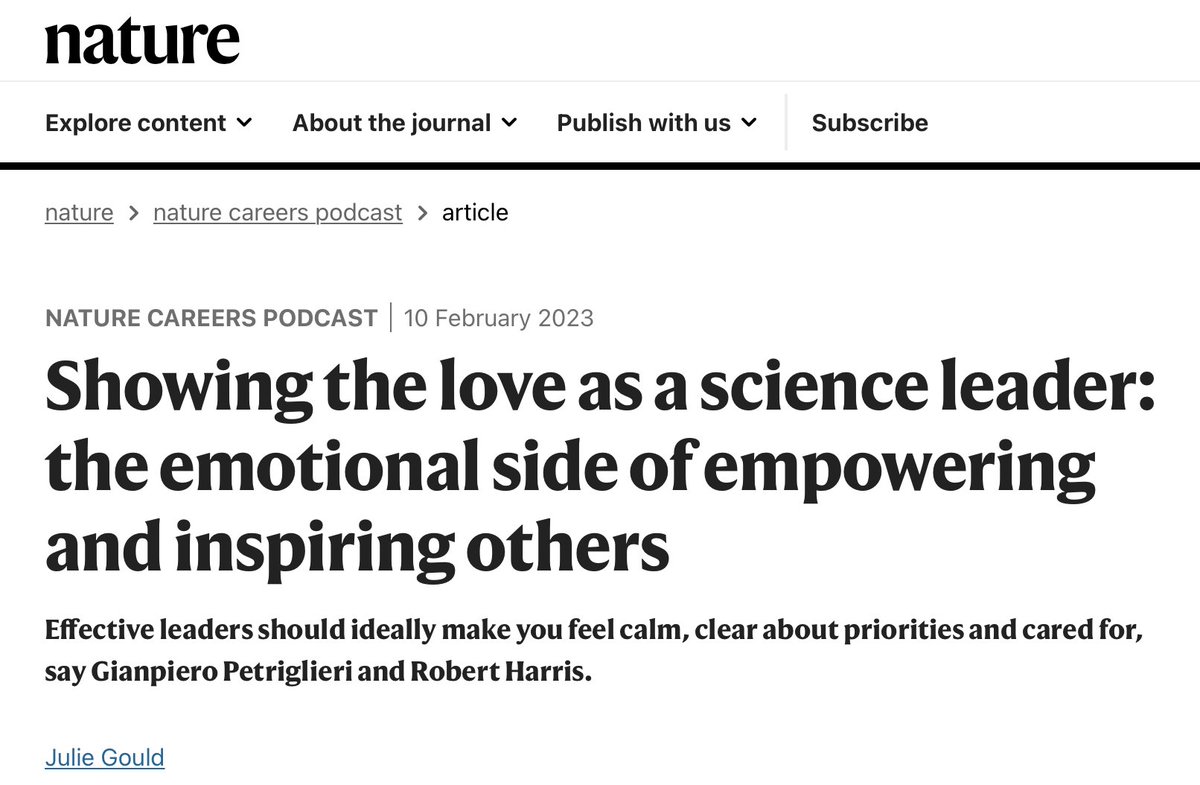
As a professor, pursue the careers of your PhD students and postdocs instead of pursuing your own.
I know it may sound strange and even provocative. But in fact it is how it’s supposed to be.
Unfortunately, a personal gain is the biggest motivation for many professors. More publications, more awards, more invited talks…
Why? In addition to personal recognition, it can result in more funding and higher salaries (especially in the U.S.).
Many PIs say that their personal growth also helps their students get a better visibility. Plus, more funding brings in more students, which is (kind of) “great” for those students.
Others will say that their “tenure requirements are too demanding” and if they stop focusing on personal gain, they will be denied tenure.
In either case, I want you to think about the following:
1. When we focus on personal achievements, we lose track of the wellbeing and personal preferences of team members. Although it often feels like we still track it, in fact we become far less efficient at it. Students' progress and personal development are impeded. Their career opportunities become less diverse or even missed.
2. Concentrating too much funding in one big lab is NOT a good idea because it leads to PhD students receiving far less mentorship and research advising (than in smaller labs).
3. Tenure requirements often look intimidating to young professors. However, in reality, very few professors are denied tenure. Why? First, because any university invest big resources into TT professors and don’t want get rid of them without a big reason. Second, because departments often exaggerate the tenure challenges to ensure their young hires are “hard-working faculties”.
Many PIs think I am too idealistic and propose unrealistic ideas. And a lot of people will never agree with this post. Even myself, I can easily come up with bitter criticism over it.
However, idealism is among the biggest driving forces. It can drive you through challenging times and help improve.
In either case, I want you to think about the following:
1. When we focus on personal achievements, we lose track of the wellbeing and personal preferences of team members. Although it often feels like we still track it, in fact we become far less efficient at it. Students' progress and personal development are impeded. Their career opportunities become less diverse or even missed.
2. Concentrating too much funding in one big lab is NOT a good idea because it leads to PhD students receiving far less mentorship and research advising (than in smaller labs).
3. Tenure requirements often look intimidating to young professors. However, in reality, very few professors are denied tenure. Why? First, because any university invest big resources into TT professors and don’t want get rid of them without a big reason. Second, because departments often exaggerate the tenure challenges to ensure their young hires are “hard-working faculties”.
My message is:
If we all pursue the careers of your students/postdocs in the first place, this shift in priorities will make academia a much better world to live in.
I see an increasing number of faculties trying to genuinely care for their team members, in all countries and academic environments. It is all possible. Just do it. Make science better.
Oh, and don’t forget:
Growth of your team members = Growth of yourself.
#AcademicTwitter #research #phdlife
Big News🚨: #CZCellxGene Discover Census launched today! https://t.co/GRjBDnKWS5
Built from >500 datasets, Census gives you efficient access to the largest aggregation of #SingleCell RNA data that’s immediately ready for analysis with harmonized labels for cell and gene metadata
Here is a long list of things that can, directly or indirectly, make statements on the performance of computational methods (in statistics, machine learning, bioinformatics, etc.) more reliable in the long run:
2/n
Need to design gene panels for targeted spatial transcriptomics technologies? Read our new pre-print “Gene panel selection for targeted spatial transcriptomics” https://t.co/dwVbbVjgqm. In this work, we developed a computational method, gpsFISH, to perform such gene panel design.
gpsFISH is now available on GitHub with walkthrough tutorials. If you are planning to design gene panels for targeted spatial transcriptomics technologies, please give it a try!
https://t.co/ldPjcLNOzj