Our paper "Highly attenuated dendritic propagation of isolated synaptic potentials in vivo", demonstrating that individual synaptic potentials in vivo do not reach the soma, is published in Science Advances: https://t.co/8w0Bz8cUEb
#eNeuro: Durieux et al. used rats to explore how the brain adapts to repeated stressful experiences. Adapting to repeated stress was linked to specific neural activity reflecting recovery from responses to an initial stressful experience. https://t.co/zgVBdHzabF
Cerebellar rhythms: mechanisms, functions and translational opportunities — a Review by Danny Adrian Spampinato, Annibale Antonioni, Egidio D’Angelo & Giacomo Koch
https://t.co/61EBFzOJEw
Why can traumatic stress increase aggression? This study identifies an orbitofrontal–amygdala pathway that is activated by stress and required for persistent, maladaptive aggression following trauma, highlighting a potential therapeutic target
https://t.co/HIvUHMiDui
The brain uses a fixed set of building blocks and flexibly recombines them, allowing adapting to new tasks.
Learning stabilizes temporal activity but not neuronal selectivity in prefrontal cortex
https://t.co/PRqQkGE27v
#neuroscience
Fall in love with some activity, and do it! Nobody ever figures out what life is all about, and it doesn't matter. Explore the world. Nearly everything is really interesting if you go into it deeply enough. Work as hard and as much as you want to on the things you like to do the best. Don't think about what you want to be, but what you want to do. Keep up some kind of a minimum with other things so that society doesn't stop you from doing anything at all.
-- R. Feynman
New review by @tugcettuna on the important role of the thalamic nucleus reuniens in prefrontal-hippocampal communication relevant to memory and emotion! https://t.co/6QYeixgPcW
Clever use of a complex behavioral task to show that BLA dopamine tracks emotional salience, not value or prediction error. Threat/Safety cues drive larger, sustained signals than reward/neutral cues. Dopamine in the BLA is very much different than in the striatum. great paper by @SaundersLab and a nice example that a neurotransmitter has no intrinsec function, it is a signal whose consequences are defined by the circuit that receives it. the function emerges. https://t.co/LTh5iIiRkI
How do beta and gamma rhythms impact synaptic integration in pyramidal neurons? Our latest paper that examines this question studied this using a biophysically detailed pyramidal neuron model. Here’s what we found. A 🧵below.
https://t.co/4GfLkokSOr
1/10
Nature Methods
Neuropixels Opto: combining high-resolution electrophysiology and optogenetics
This paper introduces Neuropixels Opto, a prototype neural probe that combines high-density extracellular electrophysiology with optogenetic stimulation in a single device. The probe has 960 recording sites and two sets of 14 light emitters on a 70-μm-wide, 1-cm-long shank, enabling spatially targeted stimulation with blue and red light while simultaneously recording neural activity.
In mouse cortex, Neuropixels Opto produced high-quality recordings and could selectively activate or silence neurons at different cortical depths. In the striatum and other deep brain regions, it enabled efficient optotagging and helped identify two cell types in parallel.
The main advance is that Neuropixels Opto allows researchers to record, identify, and manipulate neuronal populations with high spatial and temporal precision using one integrated probe. This makes it a powerful tool for studying causal relationships in neural circuits.
https://t.co/44PQYxHqfe
How is neuroscience in Mexico advancing brain research? 🇲🇽 Reflection #20 explores discoveries in neural mechanisms, behaviour, mental health, and Parkinson’s disease, building on the legacy of Ricardo Miledi 🔬
Read more: https://t.co/TV4f6rZzXR
#Neuroscience50@IBROorg
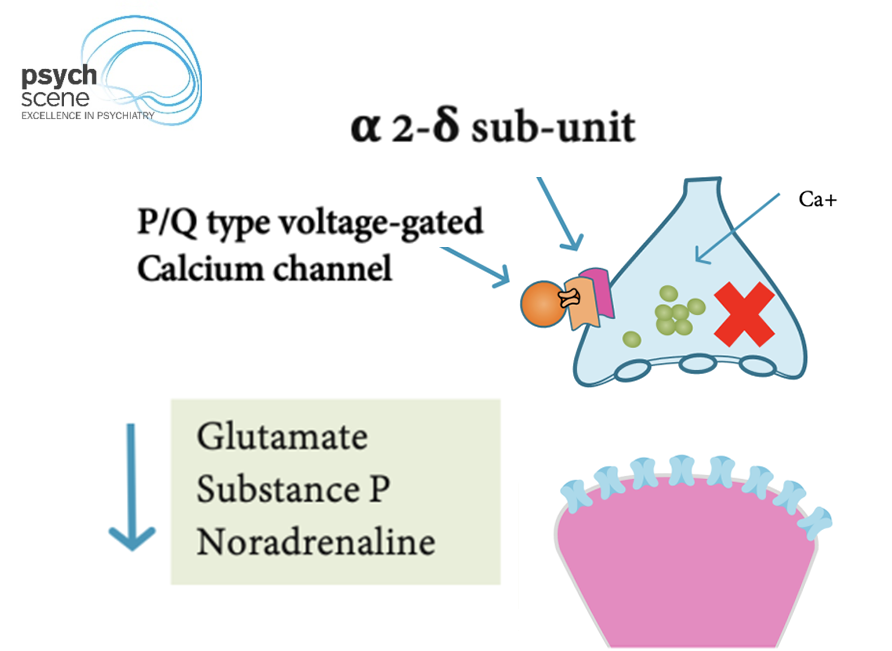
Gabapentin and pregabalin are often described as “GABA-like.”
But clinically, that can be misleading.
They do not act by binding to GABA receptors.
To understand their role in psychiatry, let's start with what gabapentinoids actually do. 🧵👇
What does neurodegeneration actually look like at the single-cell level? @dgsomucla researchers built a 3D map of 3,700+ individual brain cells, revealing that aging causes neurons to slowly shrink, while Huntington's disease damages specific cell types in distinct, location-dependent ways. This "dendritome mapping" approach could reshape how we study diseases like Parkinson's and Alzheimer's too. https://t.co/EvEHoPneUe
“Cuesta mucho educar a un niño, pero cuesta mucho más no hacerlo”, decía Don Jesús Reyes Heroles cuando estaba al frente de la @SEP_mx. Y lo decía un hombre que entendía algo fundamental: la educación no era un programa de gobierno, era el cimiento de la República. Reyes Heroles sabía que un país que abandona sus escuelas termina abandonando también su democracia, su justicia y su futuro.
Hoy esa frase retumba más fuerte que nunca en México. Mientras millones de niños tienen problemas graves de comprensión lectora y matemáticas, seguimos discutiendo la educación con visión política, burocrática y electoral. Escuelas sin condiciones dignas, maestros rebasados, abandono escolar, desaparición de mecanismos de evaluación y una generación entera creciendo en medio de pantallas, violencia y desigualdad. El costo ya lo estamos pagando.
Porque cuando un niño no aprende, no pierde sólo él. Perdemos todos. Perdemos ciudadanía, pensamiento crítico, movilidad social y capacidad de construir un país menos violento y más libre. Lo entendió Reyes Heroles hace décadas. Lo dramático es que México, en 2026, parece haberlo olvidado.