🚀 Excited to announce the launch of my lab at the Children’s Mercy Research Institute in Kansas City! We're engineering next-gen ionizable lipid nanoparticles to revolutionize nucleic acid delivery for pediatric cancer and genetic diseases. Check out our work and website: https://t.co/1coLzxrXqZ
mRNA cancer vaccines are not just a vaccine problem.
They are also an AI systems design problem.
For an mRNA cancer vaccine to work, we need to solve at least two brutal design problems:
1. Delivery
Can we get the mRNA into the right cells, at the right dose, with the right immune activation?
2. Design
Can we choose the right tumor antigens and encode them in a way that produces a real anti-tumor immune response?
This is where AI can change the game.
On the delivery side, lipid nanoparticles (LNPs) are not just packaging. They are programmable materials.
The mRNA has to survive, enter the right cells, escape the endosome, translate efficiently, and activate the immune system without overwhelming toxicity.
In our AGILE work, we used deep learning + combinatorial chemistry to accelerate ionizable lipid discovery for mRNA delivery, showing that LNPs can be tailored for different cell types rather than treated as one-size-fits-all carriers. (paper: https://t.co/1ApLpdnPQF)
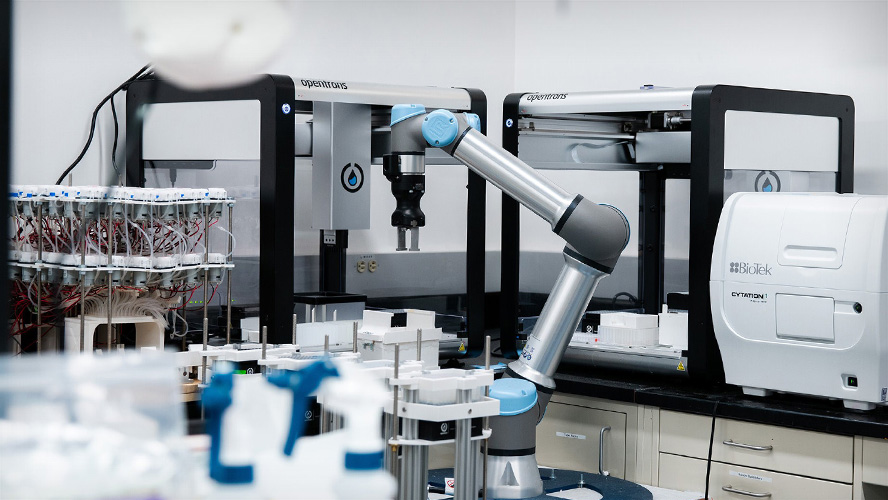
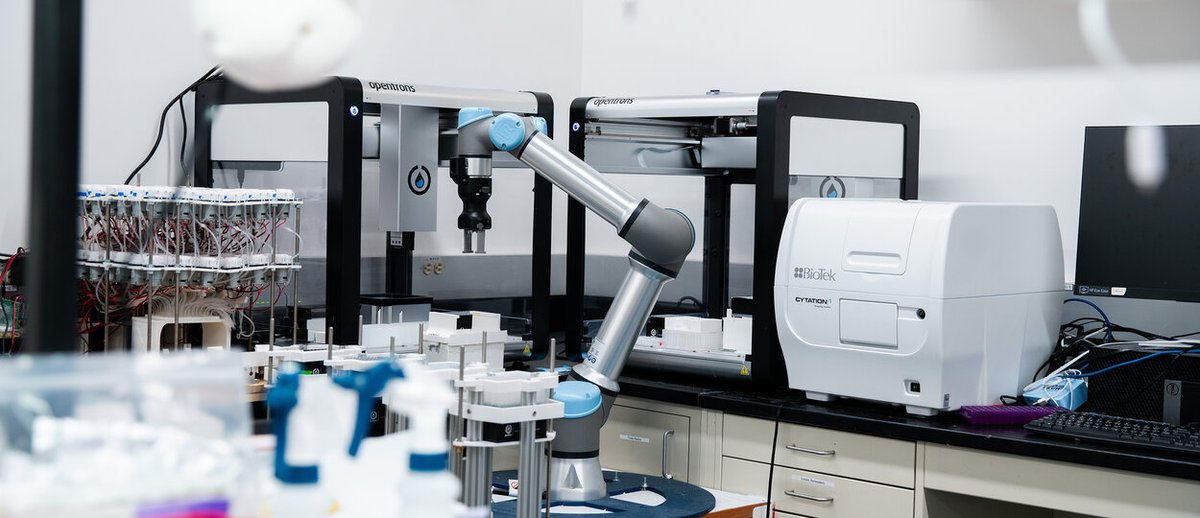
In our new LUMI-lab work, we pushed this further: a foundation model-driven self-driving lab that combines molecular pretraining, active learning, and robotics to autonomously discover ionizable lipids for mRNA delivery. The platform synthesized and screened >1,700 LNPs and found brominated lipids as an unexpected feature that improves mRNA delivery into human cells. (paper: https://t.co/GiDnnLs7HX)
This is the future of mRNA delivery:
design → synthesize → formulate → test → learn → redesign
But delivery is only half the story.
For cancer vaccines, the payload also has to be designed.
Which tumor mutations should become vaccine targets?
AI can help across the full stack:
--Neoantigen prediction
From tumor sequencing, models can predict which mutations generate peptides likely to be processed, presented by HLA, and recognized by T cells.
-- HLA binding + immunogenicity
Not every binder is immunogenic. Better models can learn from peptide–MHC structure, TCR recognition, antigen abundance, and tumor context.
-- mRNA construct optimization
AI can optimize codon usage, UTRs, RNA stability, translation efficiency, secondary structure, and manufacturability.
-- Tumor immune microenvironment modeling
A great antigen may fail if the tumor is immunologically cold. Multimodal models can integrate genomics, transcriptomics, pathology, and immune profiling to predict response.
-- Combination therapy design
AI can help identify when vaccines should be paired with checkpoint blockade, cytokines, targeted therapy, or innate immune agonists.
The future of personalized cancer vaccines is not just “sequence tumor → pick mutations → inject mRNA.”
It is an end-to-end learning system:
tumor genome → immune model → antigen ranking → RNA design → clinical response → model improvement
This is where AI can make mRNA cancer vaccines faster, more precise, and ultimately more effective.
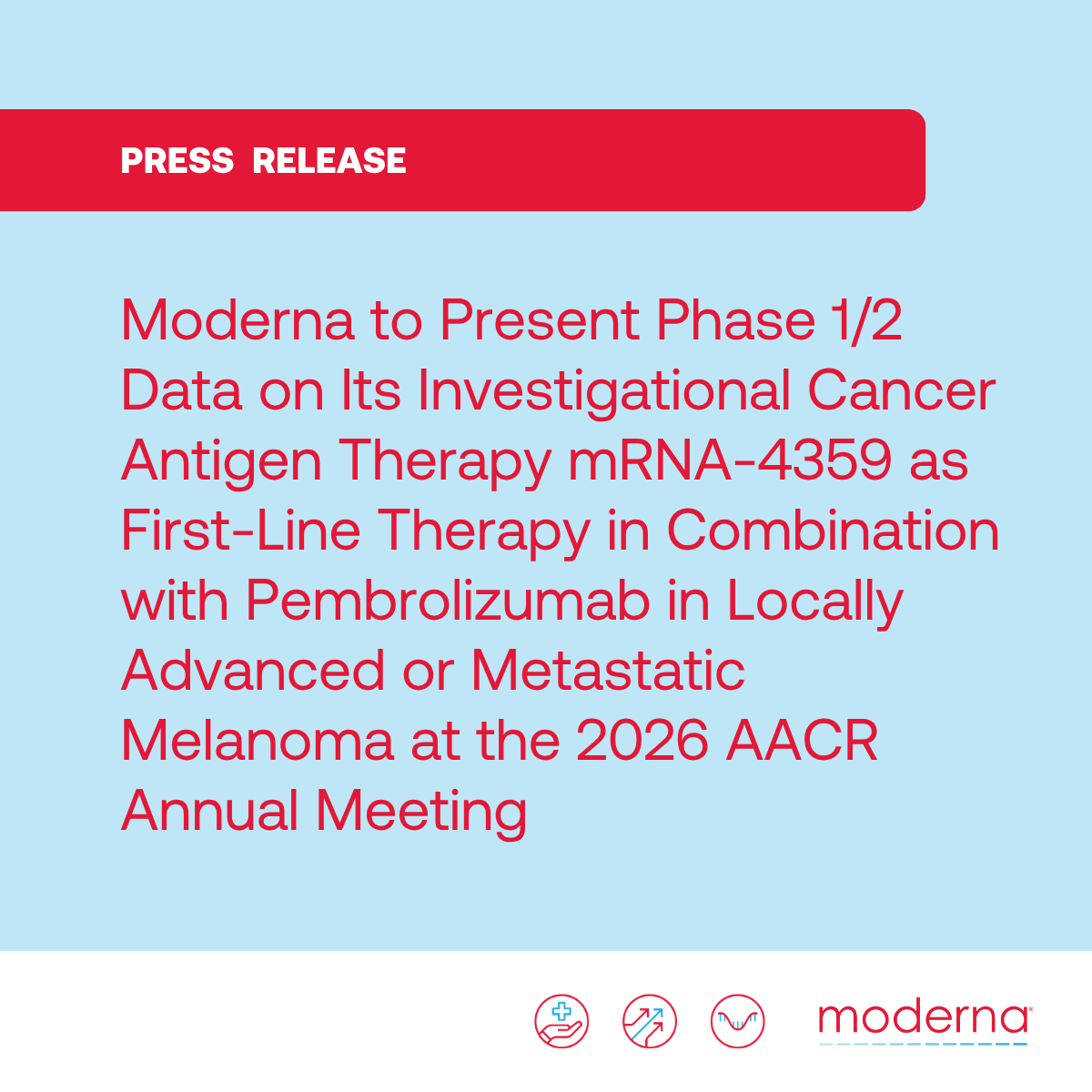
We announced today that we will present data from a Phase 1/2 study of mRNA-4359, an investigational cancer antigen therapy, at the American Association for Cancer Research (AACR) Annual Meeting in San Diego, CA, on April 17-22, 2026. The U.S. FDA has granted Fast Track designation for mRNA-4359 in combination with pembrolizumab for the treatment of checkpoint inhibitor refractory unresectable or metastatic melanoma with PD-L1+ (TPS≥1%).
Read more: https://t.co/W46C3269nA
New research from @PMResearch_UHN introduces LUMI‑lab—a self‑driving lab that uses #AI & #robotics to discover new molecules. The technology could accelerate gene editing, mRNA vaccines, & other therapies.
🔗 Read more: https://t.co/ADcW75G4I1
Everyone is talking about personalized mRNA cancer vaccines.
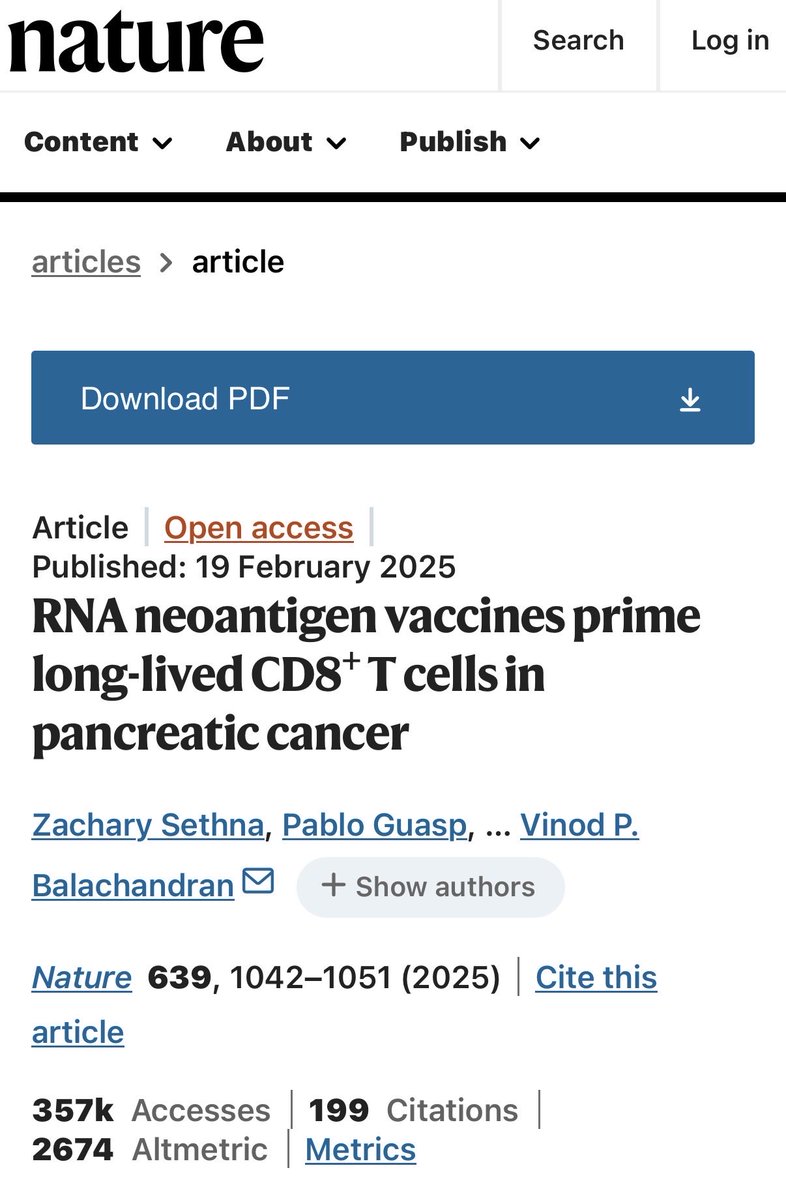
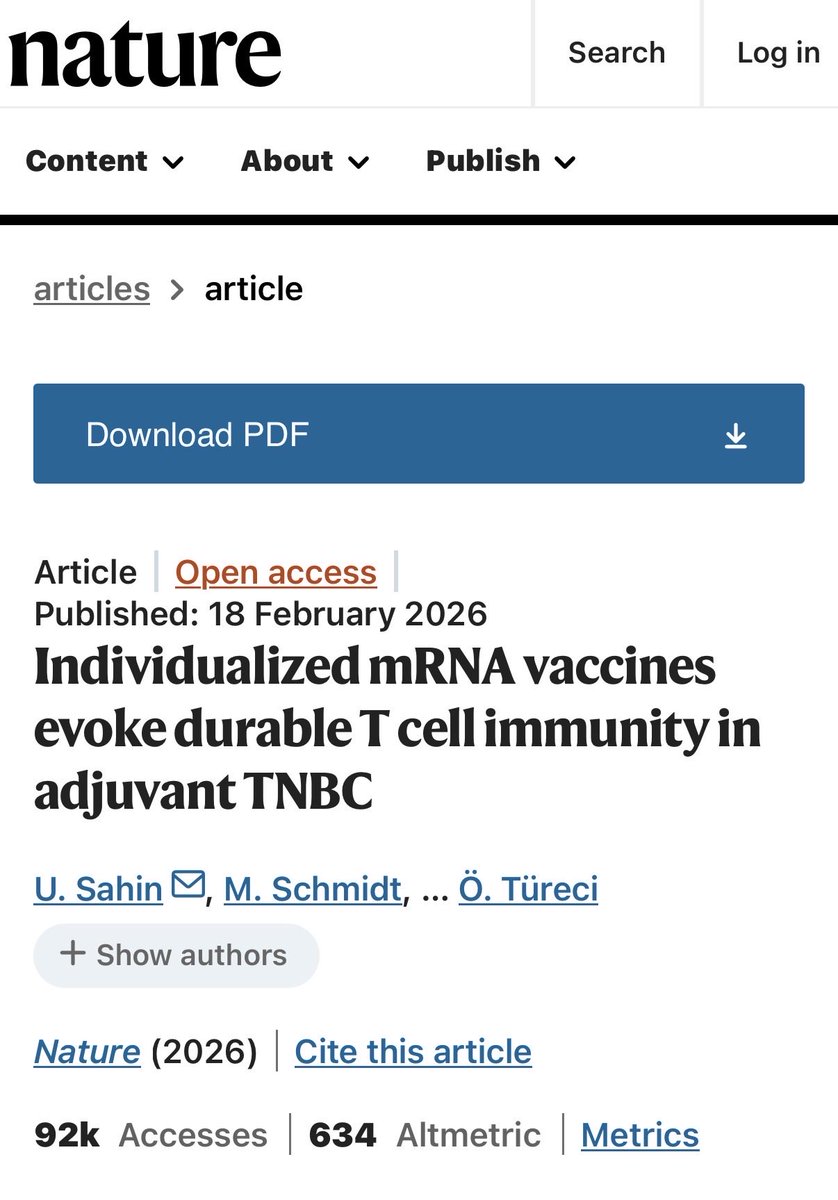
I want to share two recent Nature papers that cut through the excitement and reveal something the viral posts aren't telling you: the approach works — but only in patients whose immune system actually responds to the vaccine. In the PDAC trial, that was half.
Papers:
— TNBC-MERIT trial (Nature 2026): https://t.co/pCpKdgtWbw
— PDAC 3-year follow-up (Nature 2025): https://t.co/1oJxjJSPhS
Here's the exact number that explains why.
The PDAC trial: at 3.2 years median follow-up, vaccine responders had median recurrence-free survival that was never reached. Non-responders: 13.4 months. HR = 0.14. The T cell memory is real — some clones are projected to persist for over a decade.
The TNBC trial: 10 of 14 patients remained relapse-free at 5 years. One patient has been in remission for over 6 years, with neoantigen-specific T cells still circulating at ~2% of her CD8 repertoire.
So what separates responders from non-responders?
Across both trials: only 41 of 251 neoantigens actually triggered a T cell response. That's 16%.
Each vaccine encodes up to 20 neoantigens — the algorithm's best guess at which tumor mutations will be immunogenic. Most don't work. Half the PDAC patients didn't respond — not because they couldn't mount an immune response (they responded fine to concurrent COVID vaccines) — but because their selected neoantigens happened to miss.
This is the core unsolved problem: predicting, from sequence alone, which mutations will produce peptides that a specific patient's immune system will actually recognize.
It sounds like an MHC binding problem. It isn't. Tools like NetMHCpan handle binding affinity reasonably well. What they miss is the full causal chain:
1. Proteasomal processing — will the protein actually be cleaved into this exact peptide?
2. TAP transport — will it reach the ER for MHC loading?
3. HLA-peptide stability — across the patient's specific HLA alleles (10,000+ variants in the population)
4. T cell repertoire availability — has central tolerance already deleted the clones that would recognize it?
5. Tumor clonal architecture — is this mutation in every tumor cell, or just 30%? Targeting subclonal neoantigens leaves most of the tumor untouched.
Every step is a filter. Current prediction stops at step one.
Compounding everything: average manufacturing time in the TNBC trial was 69 days (range: 34–125) from sample to vaccine release. For pancreatic cancer, where non-responders recur at 13.4 months post-surgery, that's not a footnote. It's a window closing.
The good news: the T cell biology is sound. The mRNA platform works. The immunology is spectacular — when it works.
The bottleneck is the first step: choosing which 20 neoantigens go in the vaccine. Get that prediction right, and the responder rate moves.
This is where AI in cancer immunotherapy has to go next. Not mRNA design. Not LNP formulation. Immunogenicity prediction — integrating mutation calling, HLA typing, T cell repertoire sequencing, and single-cell tumor expression simultaneously, as a causal inference problem, not a binding affinity lookup.
We don't have a model that does this well. That's the gap.
Wet lab hasn't changed in 50 years - we are changing that. As written by legendary @denibechard on @sciam LabOS is powering agentic lab via smart glasses, multimodal AI, and collaborating robotics, real-time guiding human scientists and training junior scientists to expert-level in 1 week for complex gene-editing experiments. #ai4science in action!🔬 With LabOS and the sister project MedOS, we hope to turn every lab and clinic into AI-perceivable, AI-operable environment. Not to replace humans — to make us better!
https://t.co/ih2Nicef7g
Now online! LUMI-lab: A foundation model-driven autonomous platform enabling discovery of ionizable lipid designs for mRNA delivery https://t.co/AXWLtz40LJ
LUMI-lab is out today in @CellCellPress! 🚀We built a self-driving lab that closes the loop between an AI foundation model + robotics to accelerate lipid nanoparticle (LNP) discovery for mRNA delivery. Free access to the manuscript: https://t.co/HTAaQPrvSe
Code available on GitHub: https://t.co/OgLJ4OamGa
Check the video here: https://t.co/t3sffZw53i
LUMI-lab (Large-scale Unsupervised Modeling followed by Iterative experiments) is a self-driving laboratory that tightly closes the loop between an AI foundation model and automated robotics to accelerate LNP discovery for mRNA delivery.
To tackle data scarcity in emerging mRNA delivery domains, we pretrained the model on 28M+ molecular structures, then iteratively improved it with closed-loop experimental data. This is the kind of workflow we believe can meaningfully expand the accessible chemical space for next-generation RNA medicines.
In this work, across ten active-learning cycles, LUMI-lab synthesized and evaluated 1,700+ new LNPs and unexpectedly identified a new design feature for efficient delivery: brominated lipid tails. These brominated-tail ionizable lipids delivered mRNA into human lung cells more efficiently than approved benchmarks, despite representing only a small fraction of the initial chemical space explored.
Huge thanks to our team @YueXu1995, @HAOTIANCUI1, Kuan Pang, Reagan Li, and collaborator @BoWang87 at @UofT and @PMResearch_UHN, and to @acceleration_c@CIHR_IRSC@NSERC_CRSNG@InnovationCA@GSK for supporting this platform.
#mRNA #LNP #AI #SelfDrivingLab @bradwouters@EricTopol@elonmusk
LUMI-lab: A foundation model-driven autonomous platform enabling discovery of new ionizable lipid designs for mRNA delivery ;url=https://t.co/L4LXzKLag5;
How can generative AI and Robotics help advance drug discovery?
🚀 Excited to introduce LUMI-lab!
A foundation model-driven Self-Driving Lab (SDL) for autonomous ionizable lipid discovery in mRNA delivery 🤖🔍
🔬 What is LUMI-lab?
LUMI-lab integrates molecular foundation models with autonomous robotic experiments to efficiently explore new LNPs (lipid nanoparticles, mRNA delivery vehicles) with minimal wet-lab data.
🔥 Key Highlights:
- 🧠 Foundation model trained on 28M molecules using a three-step strategy:
- Unsupervised pretraining to capture broad molecular knowledge
- Continual pretraining to specialize in lipid-like molecules
- Active learning fine-tuning within a closed-loop experimental system
- 🤖 1,700+ new LNPs synthesized & tested across 10 iterative cycles
- 🧪 Brominated lipids autonomously identified as a novel structural feature that enhances mRNA transfection—an insight previously unrecognized in LNP design
- 🏆 20.3% in vivo CRISPR gene editing efficiency in lung epithelial cells—the highest reported for inhaled LNPs
🚀 Why it matters?
LNPs are the backbone of mRNA therapeutics, yet discovery has been slow due to data scarcity. LUMI-lab shows that AI-powered autonomous labs can accelerate mRNA delivery innovation🚀💡
🌐 Beyond mRNA drugs, LUMI-lab exemplifies a scalable framework for AI-driven molecular discovery, pushing boundaries in material science & drug delivery.
📜 Read the preprint: 🔗 https://t.co/bezIekapkn
💻 Code available on GitHub: 🔗 https://t.co/g1Cah59BuR
#AI #DrugDiscovery #mRNA #LNP #SyntheticBiology
🙏 A huge team effort behind this work, with special appreciation to @BowenLi_Lab for driving the project. Kudos to @HAOTIANCUI1, @YueXu1995, @KKuanPang, @Gen_Li_Reagan, and @GongFangli36418!
Thrilled to announce that our AGILE framework, an AI-guided LNP development for mRNA delivery, is now published in @NatureComms! 🎉 This is a collaborative work with @BowenLi_lab.
(Re-)Introducing the AGILE Platform: A Deep Learning-Powered Approach to Accelerate LNP Development for mRNA Delivery! This groundbreaking platform is revolutionizing mRNA therapy with #AI and combinatorial chemistry.
**Highlights:**
1. Synthesized a huge chemical diversity of ionizable lipids using the Ugi three-component reaction, enabling unprecedented molecular variety. ⚛️
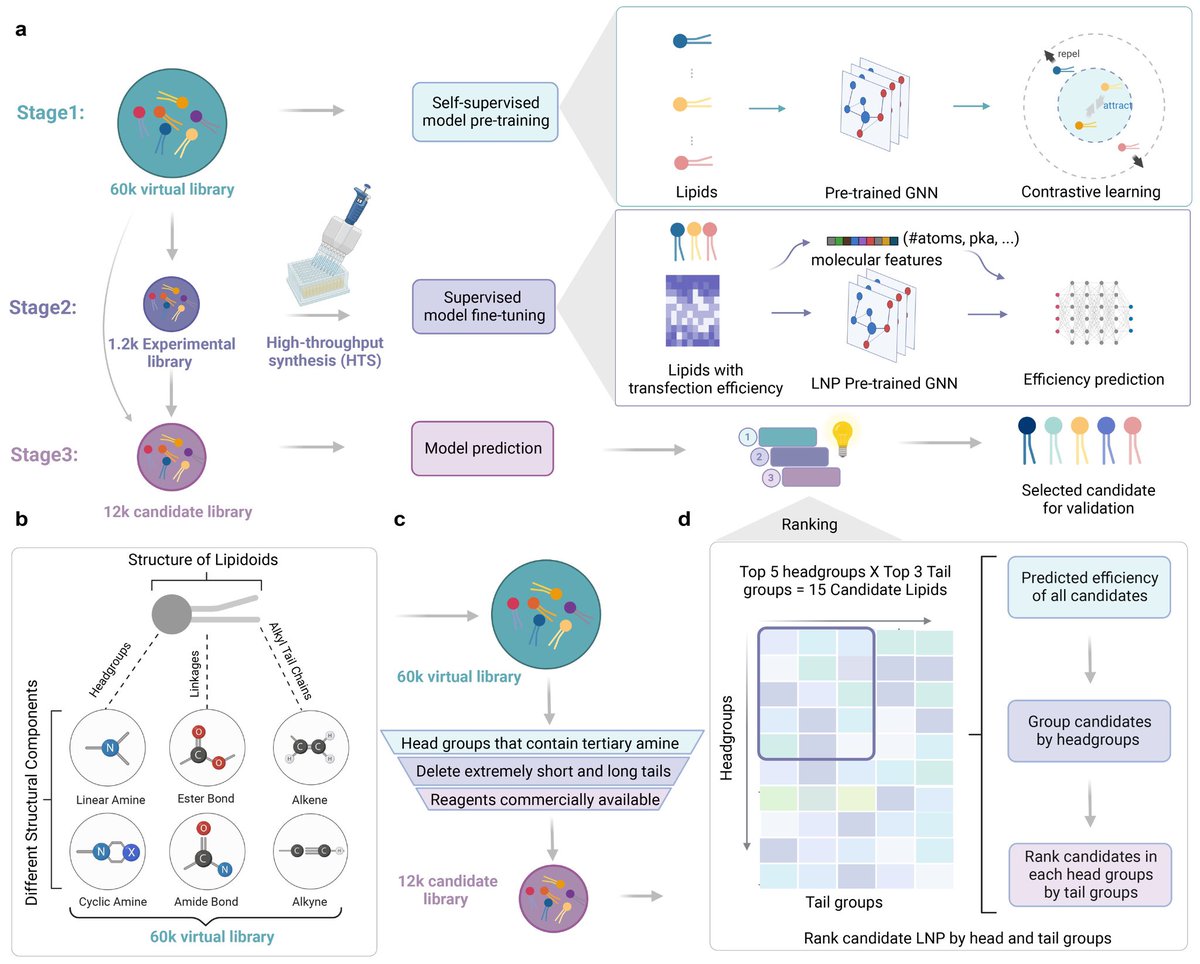
2. Utilized self-supervised learning on a vast virtual library of 60k lipids to equip the AGILE model with a broad understanding of lipid characteristics, followed by supervised fine-tuning on 1.2k experimental data points from @BowenLi_lab, refining the model's capability to pinpoint high-potential candidates. This approach combines the best of computational and experimental insights. 🧪
3. Performed comprehensive in silico lipid screening with the AGILE model, allowing for precise and efficient identification of optimal lipid candidates. 🧠
4. Adaptable to various cell lines, ensuring broad applicability across different therapeutic contexts. This versatility makes AGILE a powerful tool for a wide range of mRNA delivery applications. 🧬
AGILE dramatically accelerates the development process, reducing timelines from months or even years to mere weeks! ⏱️ This rapid advancement opens up new possibilities for mRNA-based therapies, potentially leading to quicker responses to emerging health challenges.
📚 Access the paper on Nature Comm: https://t.co/KJXodcBK7x
Code: https://t.co/JNtmE0MCTy
This breakthrough exemplifies the platform's potential to drive innovation and enhance the efficacy of mRNA delivery systems.
Shoutout to the three amazing students York (@YueXu1995), Rex (@RexMa9) and Haotian (@HAOTIANCUI1 ) who co-lead this project!🧑🎓
Join us in celebrating this leap forward in mRNA delivery technology! The future of medicine is here, and it’s powered by cutting-edge AI and pioneering scientific collaboration. #mRNA #LNP #AI #CombinatorialChemistry #Biotechnology
@UHN_Research @researchuoft @VectorInst@PMResearch_UHN@UHNAIHUB
mRNA medicine has changed the world. Wonder how #AI can help with mRNA therapy development? Thrilled to share our latest collaboration with @BowenLi_lab! Our paper, "AGILE Platform: A Deep Learning-Powered Approach to Accelerate LNP Development for mRNA Delivery," showcases how #AI and combinatorial chemistry can be a game-changer in mRNA therapy development.
Ionizable lipid nanoparticles (LNPs) are a type of nanoscale delivery system that is widely used for the delivery of nucleic acids, such as mRNA, into cells. AGILE is a powerful platform that streamlines the design and synthesis of LNPs. Here's what makes it stand out:
1. A combination of self-supervised learning (#SSL) on a large-scale virtual library and supervised fine-tuning on experimental data.
2. Efficient creation of diverse combinatorial lipid libraries. 🧪
3. Comprehensive in silico lipid screening using advanced deep neural networks. 🧠
4. Adaptability to a variety of cell lines. 🧬
And the best part? AGILE significantly speeds up the development process, reducing it from potential months or even years to just weeks! ⏱️ and it identified H9, a new LNP comparable to ALC-0315 from @pfizer , validated by in-vivo experiments.
paper: https://t.co/zslRhh5wJt
codebase: https://t.co/JNtmE0MCTy
Join us in shaping the future of mRNA therapy development! #mRNA #DeepLearning #AGILEPlatform @EricTopol@kkariko@ylecun@A_Aspuru_Guzik@davidrliu@drbarryrubin@peer_lab@vijaypande@manoliskellis@genophoria@s_batzoglou@gzheng74@hansenhe7@ChristineAllenW
Shoutout to the three amazing students York (@YueXu1995), Rex (@RexMa9) and Haotian (@HAOTIANCUI1 ) who co-lead this project! @VectorInst@UofT_TCAIREM@UofTCompSci@UofT_LMP @researchuoft @UHN_Research@UHNAIHUB@CIFAR_News@CIHRIGH