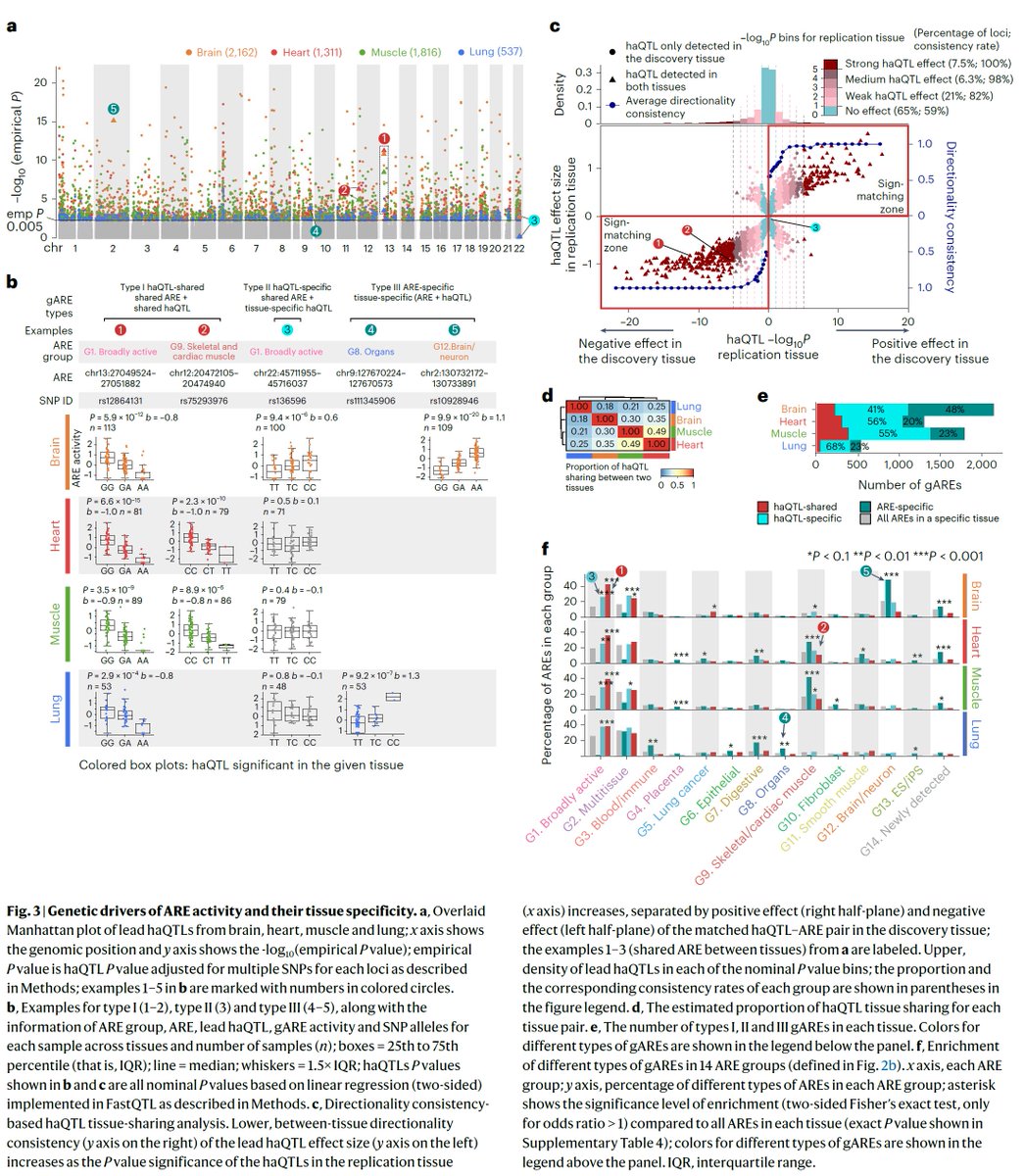
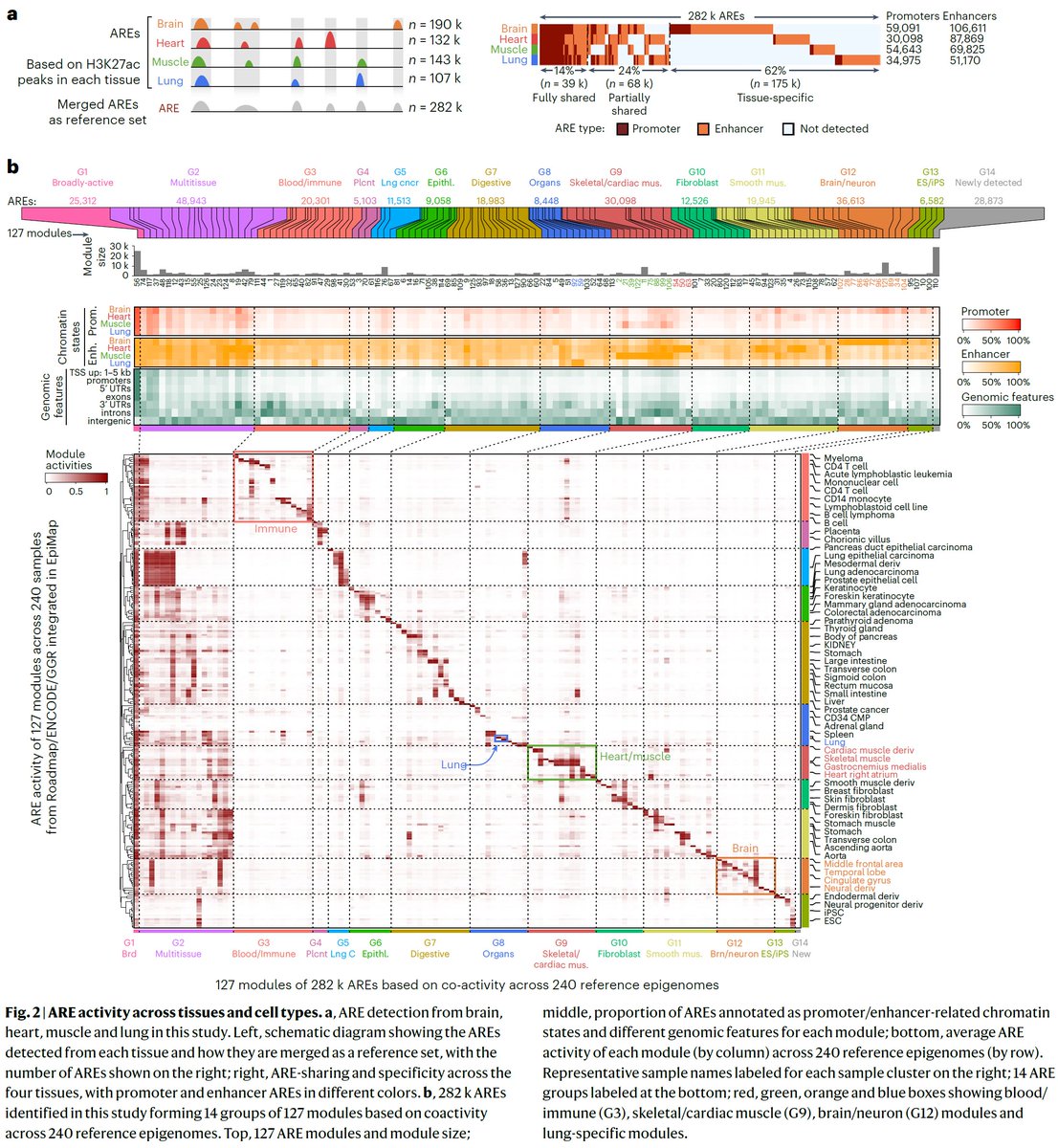
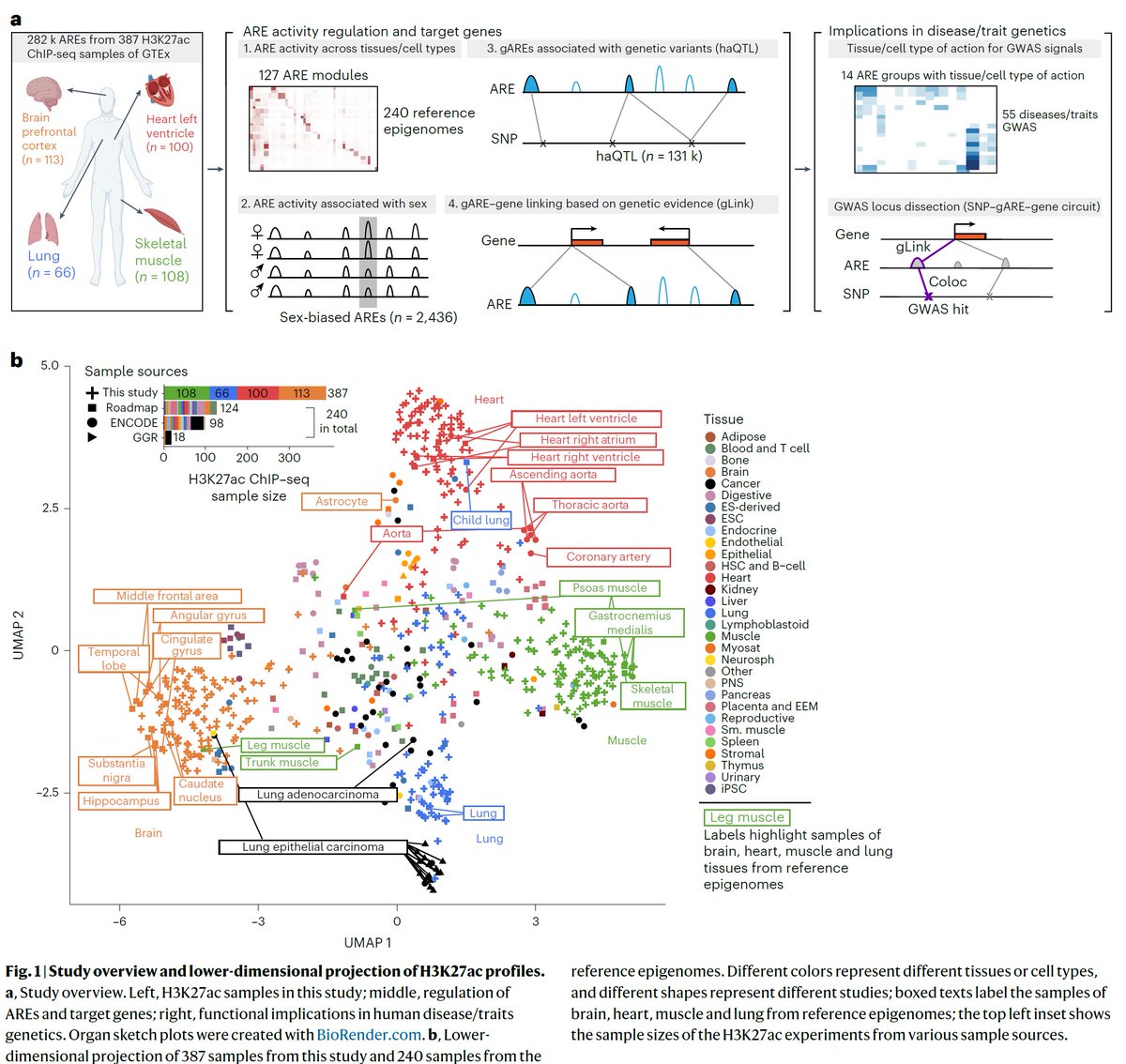
@epigenci Congrats on the great paper, very interesting! Can you post the edgeR/DESeq2 supplementary figure code to the GitHub as well? I’m wondering how the offsets differ from the default library size * norm factors or size factors. Thanks!
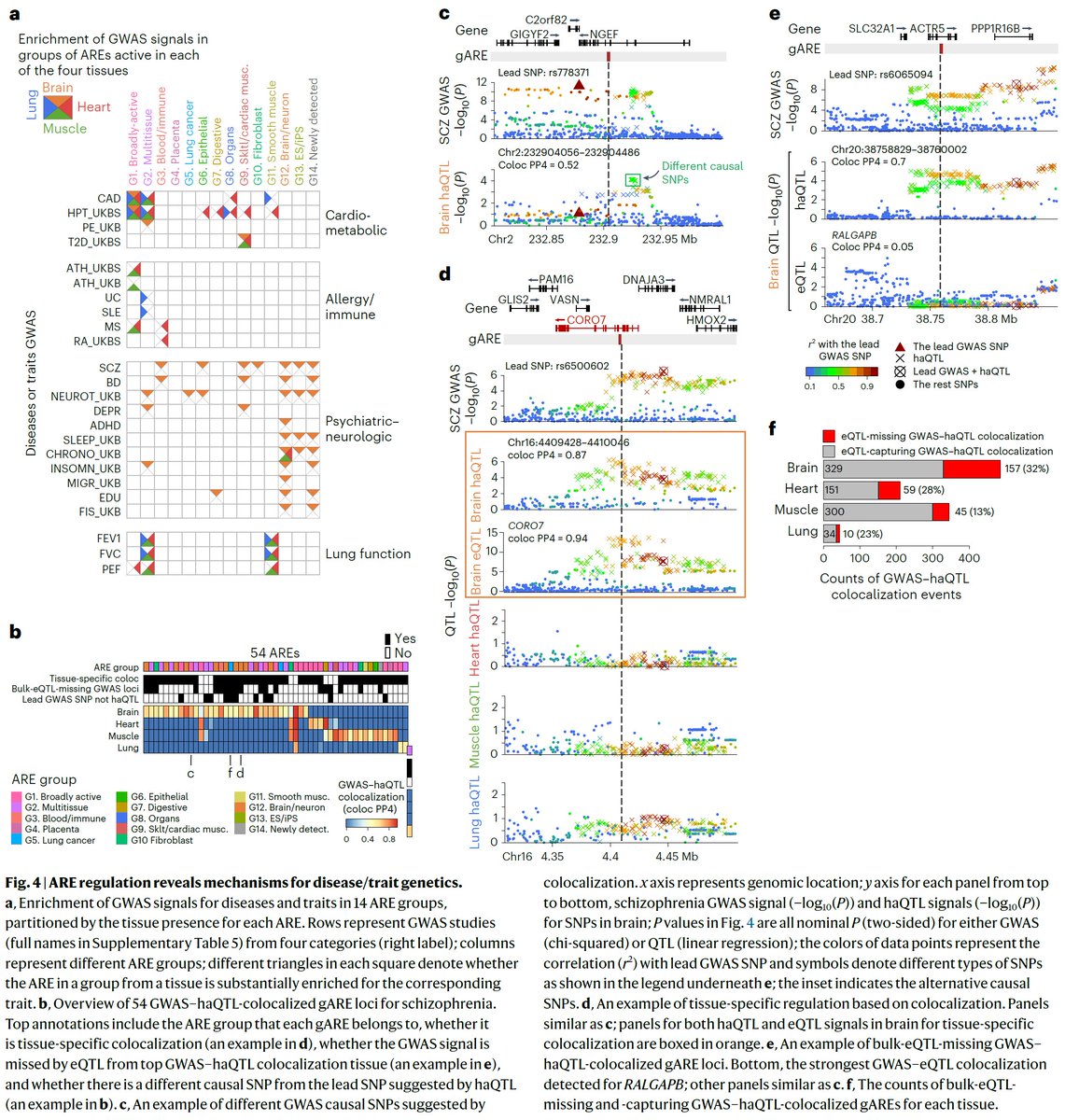
Exciting to see our work is out: Epigenomic regulation could reveal function of genetic variants with context information.
Very grateful to be in such a great team! @Xushen18@manoliskellis@broadinstitute
Pls check openings in my new lab (https://t.co/hJEdleU0Km) @BUMedicine
Decoding the complexity of Alzheimer’s disease: By analyzing epigenomic and gene expression changes that occur in Alzheimer’s disease, researchers identify cellular pathways that could become new drug targets. https://t.co/Ao1QPgjoCt
Excited to share our work, out today @CellCellPress.
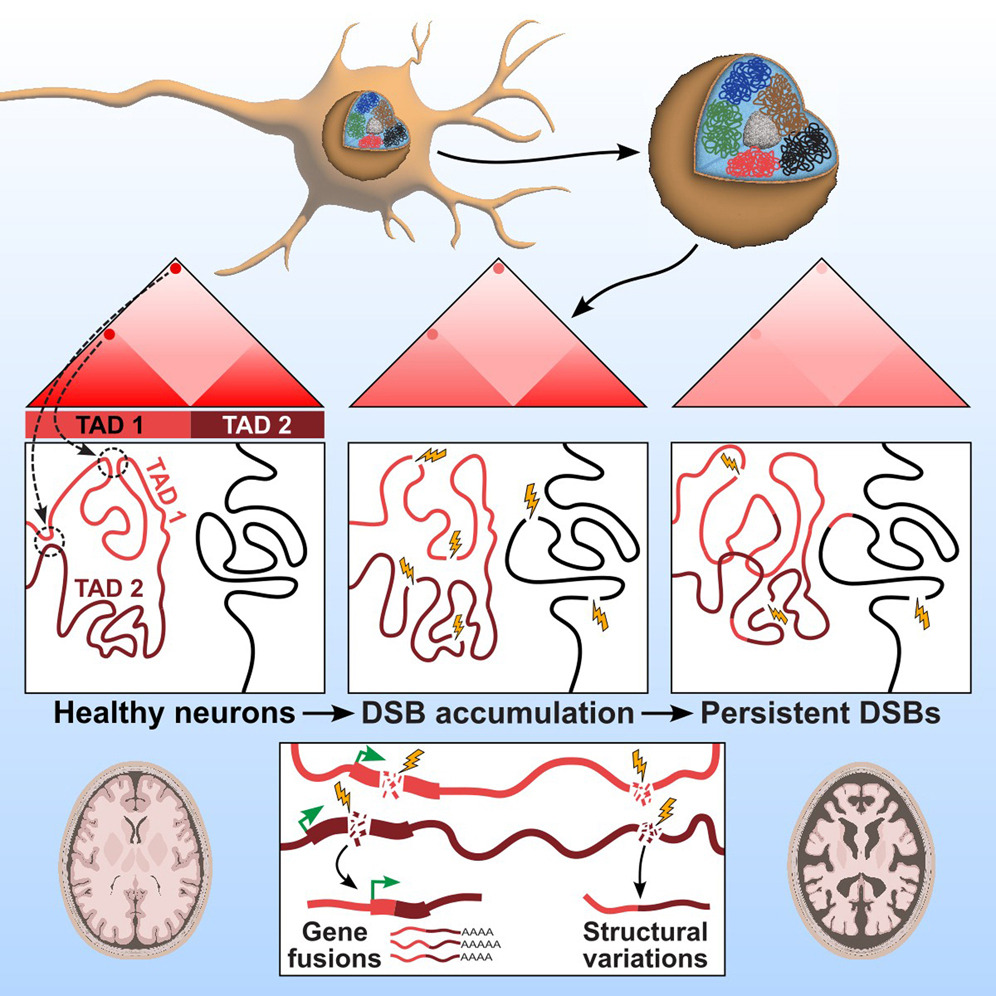
We show that DNA double-strand break accumulation leads to mosaic gene fusions and 3D genome disruption in human samples and mouse models with Alzheimer's disease pathology.
https://t.co/5rPlP6rlsj
Four (!) papers in Cell today co-led by the lab of @DrLiHueiTsai offer the most detailed picture yet of the genetic and molecular underpinnings of Alzheimer’s. https://t.co/etjAnULESl @ScienceMIT@mitbrainandcog#alzheimers#neuroscience
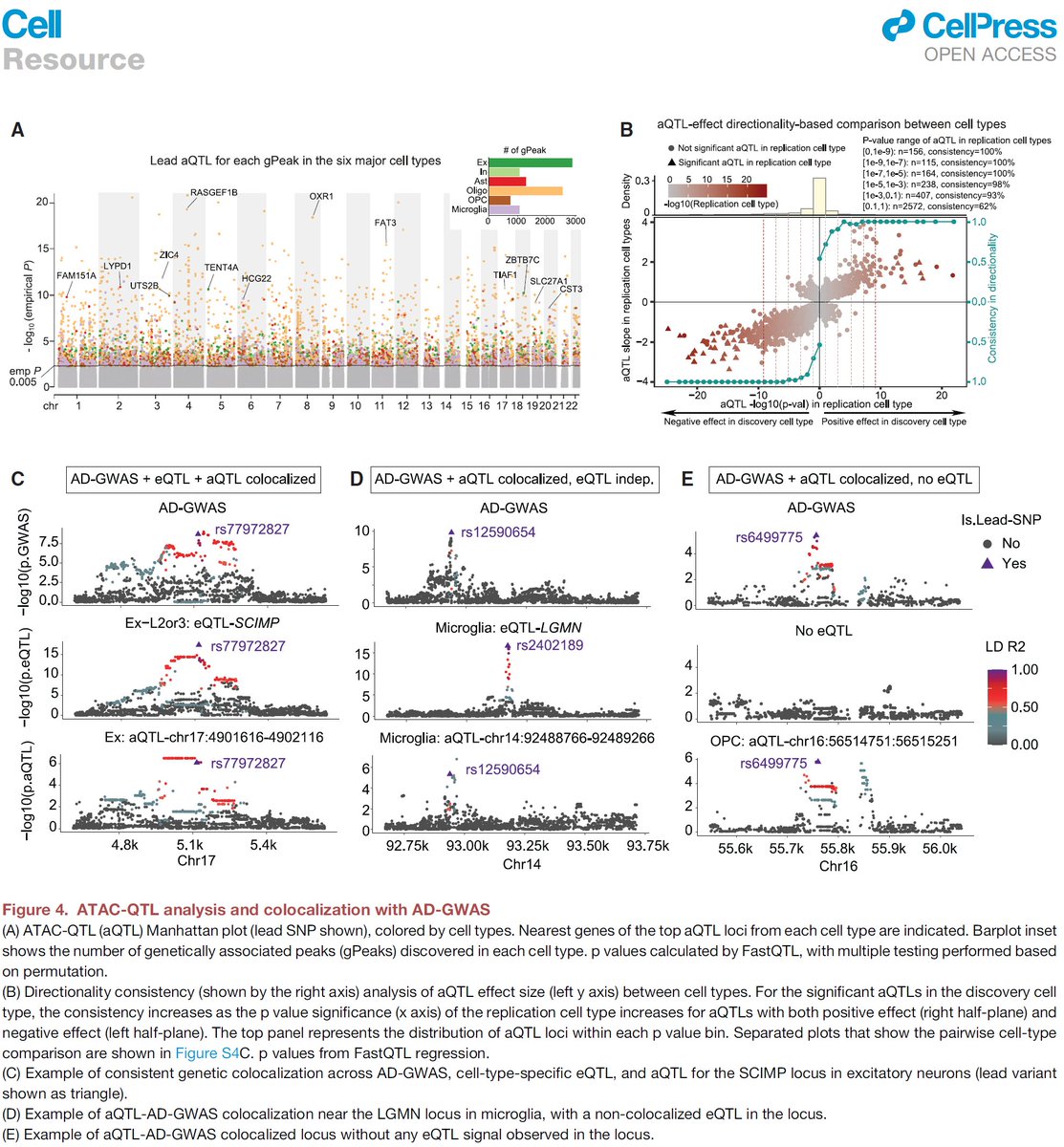
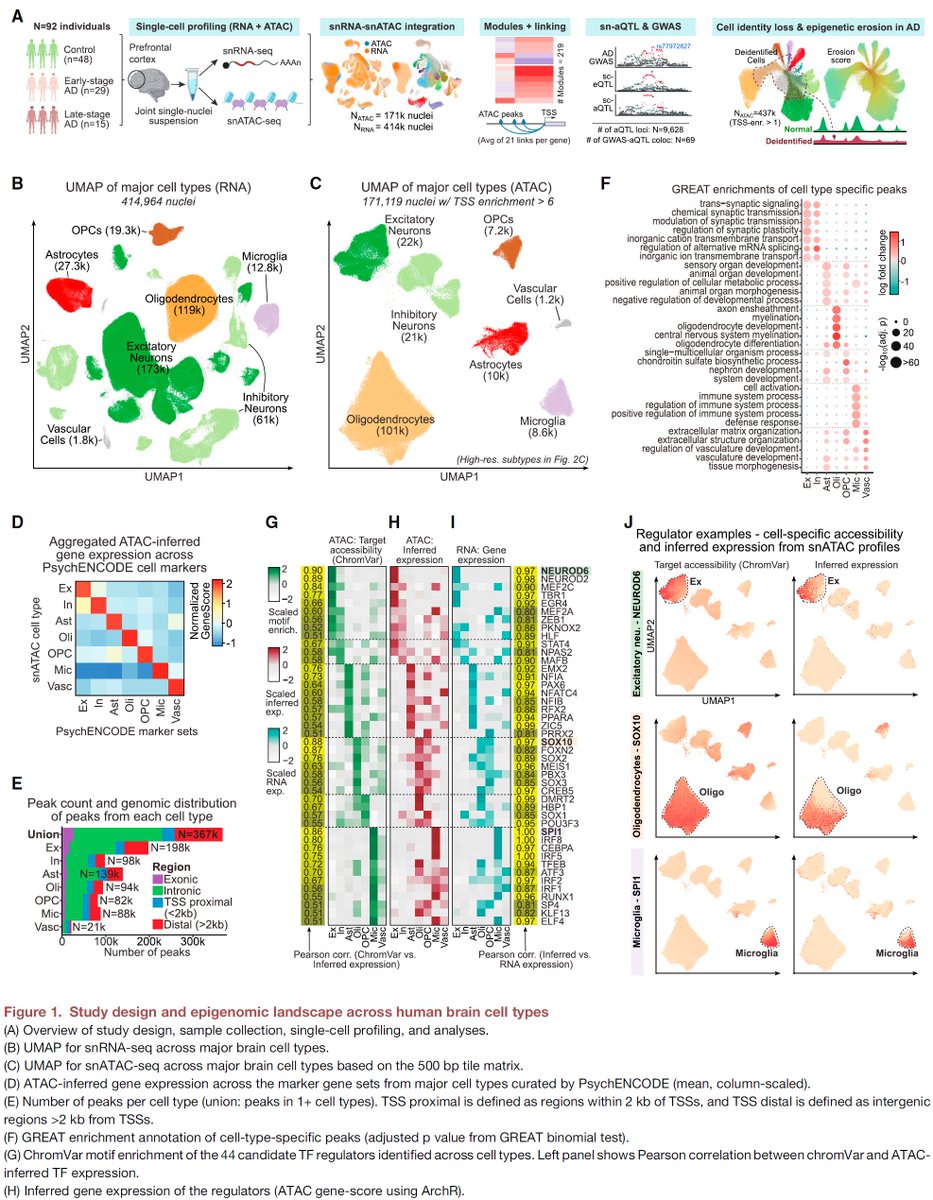
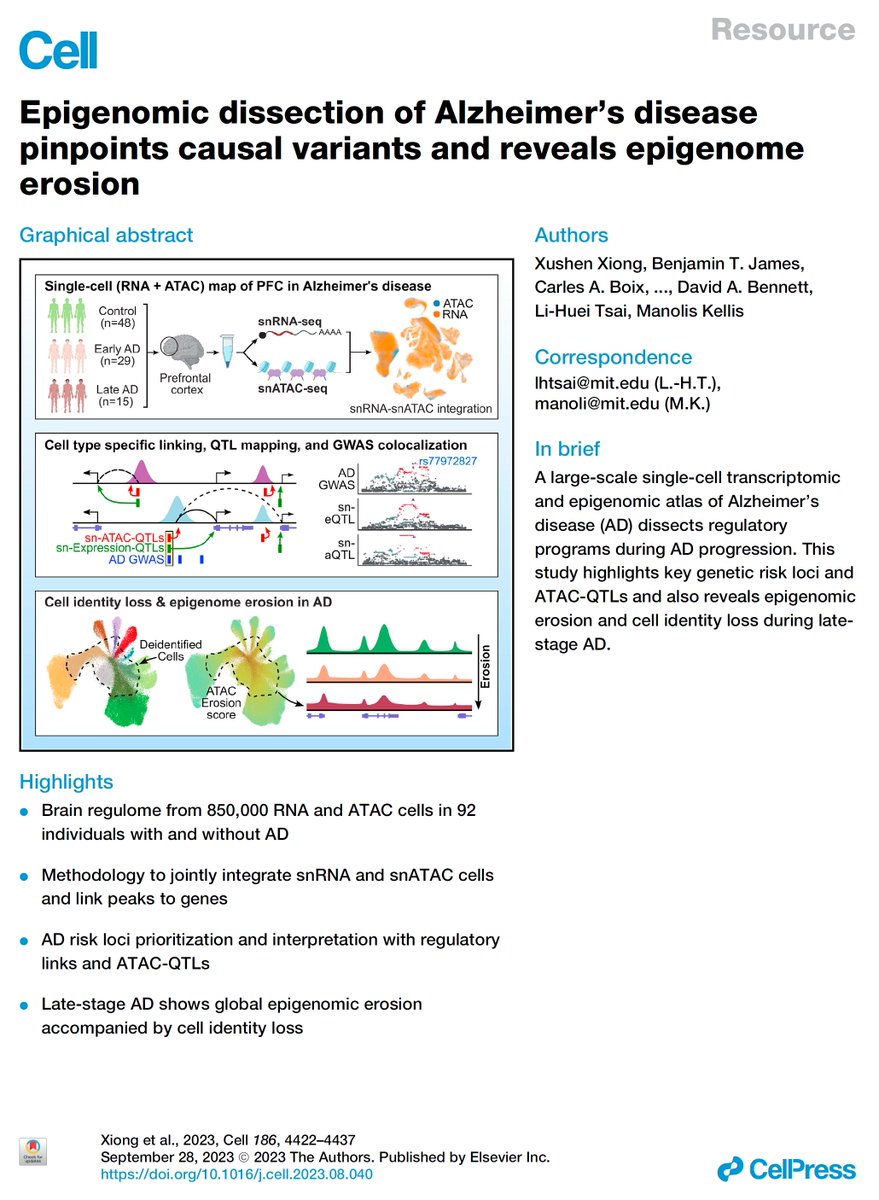
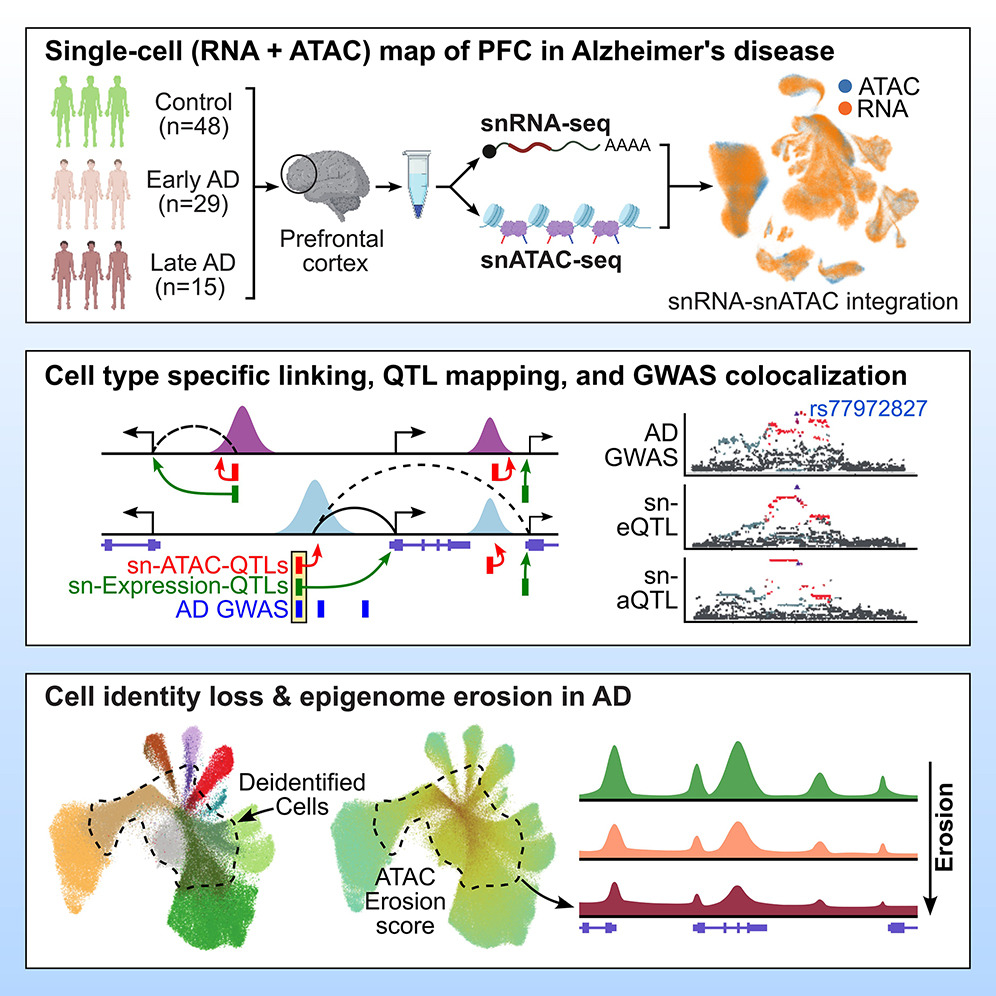
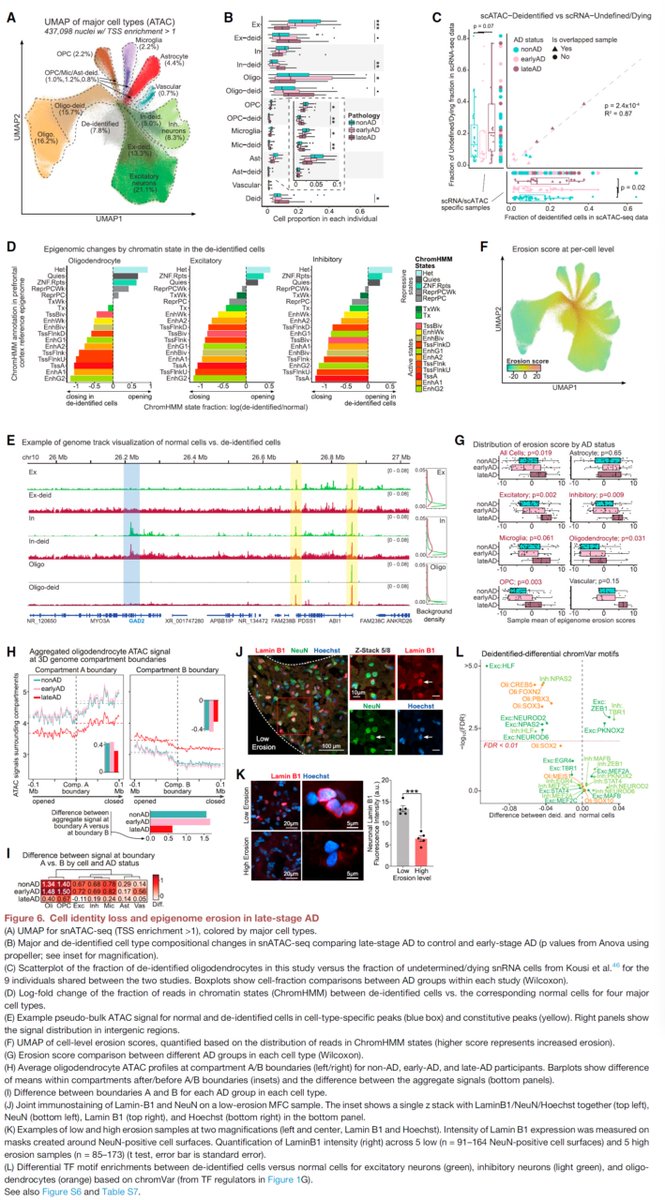
Paper 2 by @Xushen18@__ben_james__#CarlesBoix et al reports the largest #SingleCell#Epigenomic atlas of #Alhzeimers across 850k #scATAC cells and 92 post-mortem samples, enabling:
1. #RegulatoryGenomics of TF-Enhancer-TargetGene single-cell links by multi-omics integration and module analysis
2. #GWAS dissection of #AD #genetics loci in microglia and upstream TFs SPI1, ELF2, RUNX1
3. #scQTL analysis of ATAC-QTLs for AD variant circuitry and prioritization
4. #EpigenomeErosion in late-stage AD with global accessibility upheavals and cell identity loss
https://t.co/ztNJBEjrAO
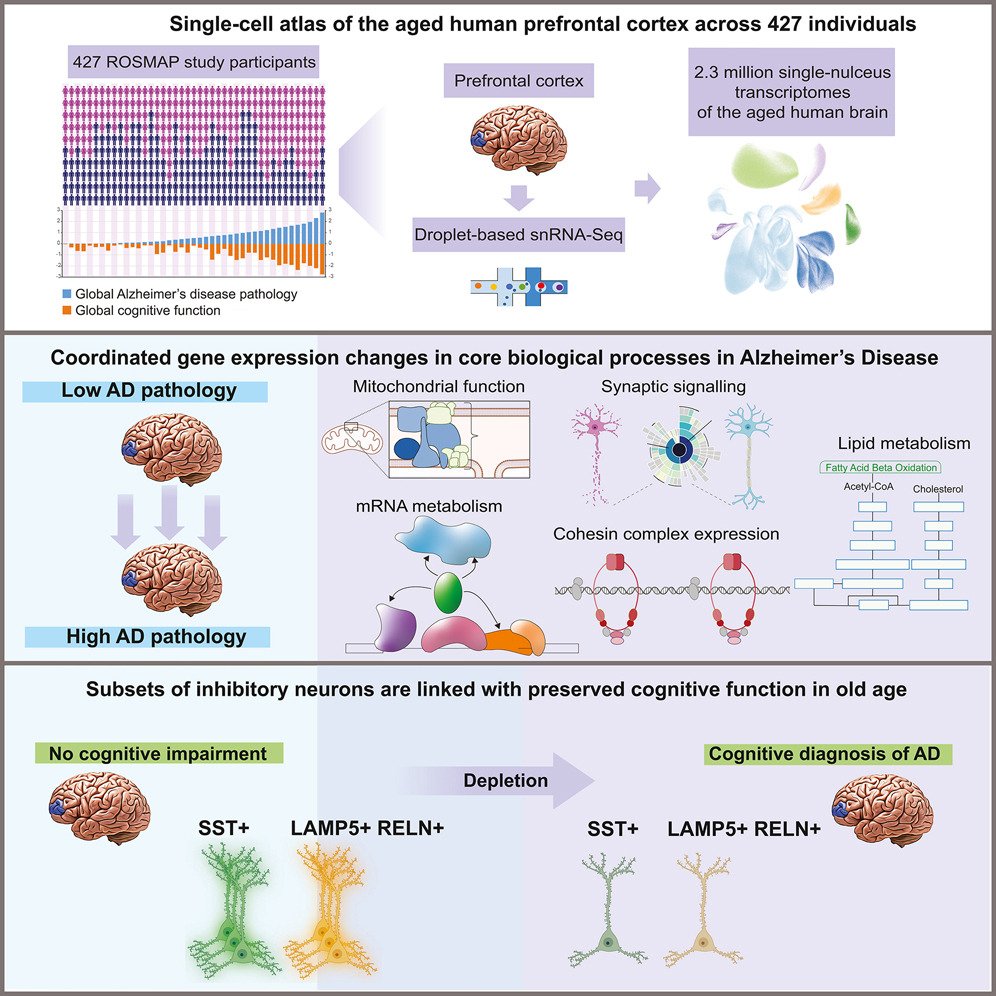
Immensely proud to share our four papers on #SingleCell dissection of #Alzheimers Disease coming out in @CellCellPress today, reporting 2.3M #scRNA profiles and 850k #scATAC profiles across 427 post-mortem human brain samples from AD and non-AD donors in a wonderful #interdisciplinary collaboration with @DrLiHueiTsai between @MIT@MIT_Picower@MIT_CSAIL@BroadInstitute@RushUniversity
Paper 1: scRNA + vulnerability + resilience https://t.co/I7cmizyj9C
Paper 2: scATAC + GWAS + Epigenome Erosion https://t.co/bdtlu9bWDr
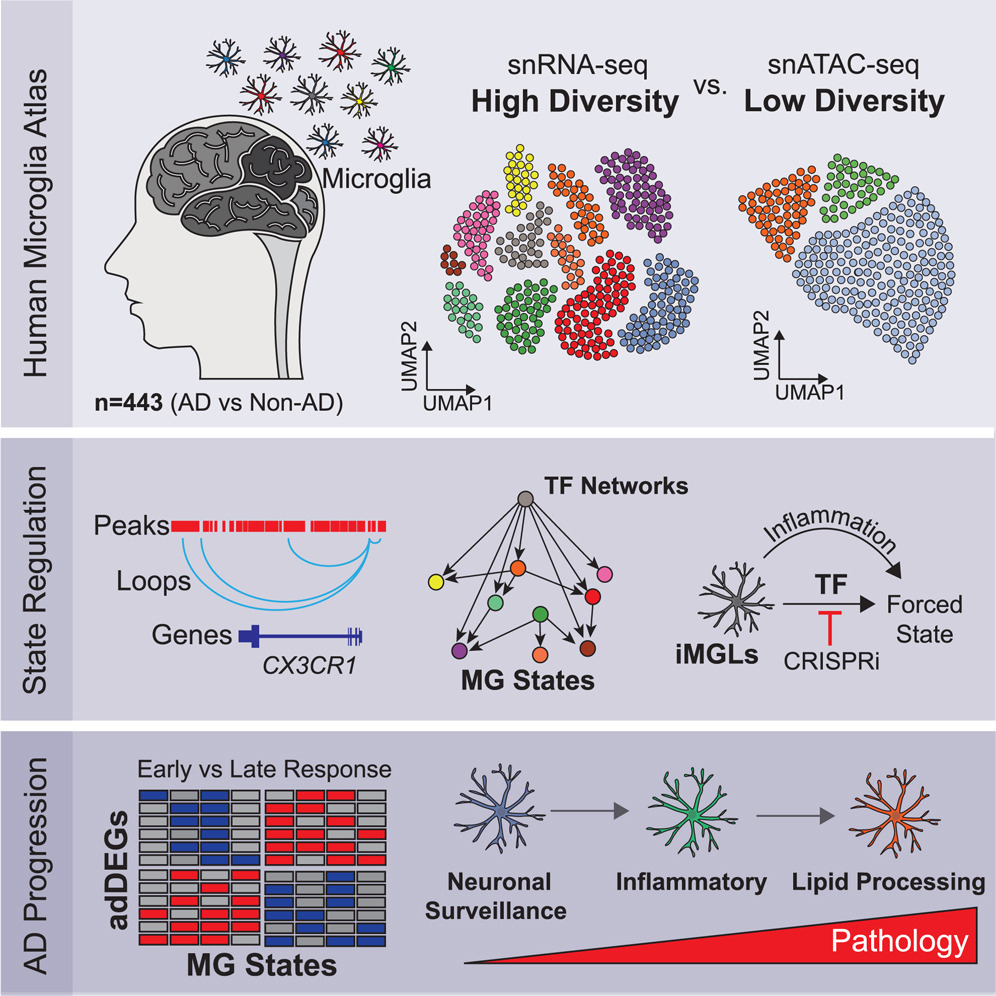
Paper 3: Microglia States + reprogramming https://t.co/NzEJF1wY3t
Paper 4: DNA damage + gene fusions https://t.co/hIY1tMMhLo
MIT News: https://t.co/oLDuBBb45S
Issue: https://t.co/Mup3orjhcl
News & Views: https://t.co/xQk5mepDqz
This issue of Cell comes with 3 other papers from collaborations across the labs of @DrLiHueiTsai @manoliskellis 🔥🔥🔥
Check out the cover art designed by our very own Carles Boix!
The new issue is out! Just in time for #WorldAlzheimersMonth, Cell features four articles that together demonstrate the genomic, epigenomic, and transcriptomic dysregulations underpinning Alzheimer's disease at single-cell resolution across cell types.
To read more click here👉https://t.co/DWf0VlDvUt
What do you do when you have 2.3 million single-cell transcriptomes from 427 human brains with varying degrees of AD pathology?
You spend 3 years exploring the microglia cluster obviously!!💁🏻♂️
Excited to share our work out today @CellCellPress !
https://t.co/Emu0mTPUKf
Please RT that the Yang Lab will be open on 1/1/24 @RutgersU and is seeking talented individuals for various positions!! @RutgersResearch@RutgersSAS
Postdoc | Ph.D. Student | Research Scientist | Lab Manager | Research Assistant More details: https://t.co/4Y5VIjrfHN
@ZunpengL@Faulkner_Lab@CellCellPress Important distinction that the LP WT hMPCs used for RNA-seq + WGBS analysis are pre-senescent which can be easily missed!