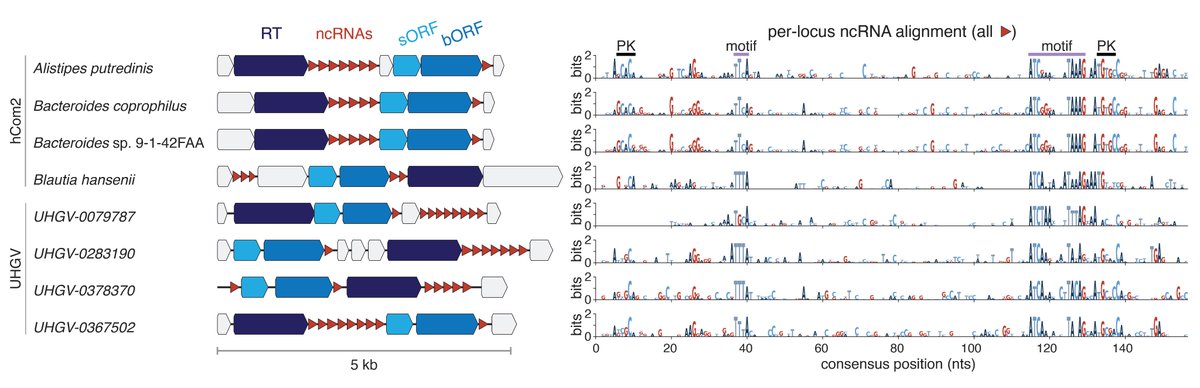
Excited to share Minerva, our approach using genome language models for biological discovery! Using Minerva, we find that UG27 reverse transcriptase systems encode variable arrays of diverse ncRNAs with a shared structure, each templating a short DNA hairpin. With @garykbrixi.
Last night my father George McClelland Whitesides passed away. He was at home and surrounded by family, and his young granddaughters had just said good night to him.
He was a brilliant scientist, teacher, and entrepreneur. An advocate for basic research, he also believed that science and technology should serve society.
He lived a great, full life, married to his wife Barbara for 57 years. Their two sons had 5 grandchildren, who gave him much joy in his later years.
We'll share more details with friends and colleagues for a rememberance once finalized.
Detaining a PhD student on her way back to Princeton from presenting scientific work at a conference is not how we get the best and brightest scientists in the world to want to come to the US. I hope this is resolved quickly! More details:
https://t.co/wNS0Oca0l0
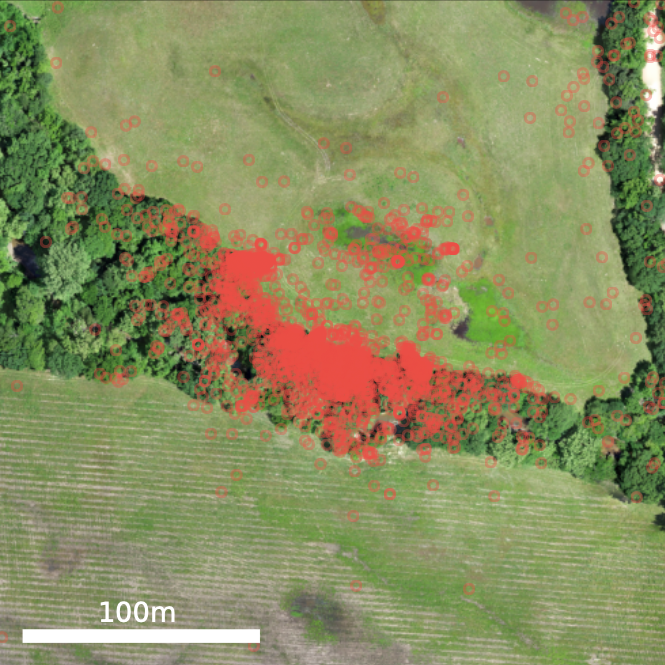
As part of my group's new focus on executing and analyzing the data from large-scale field experiments on biodiversity recovery, I have developed a method to use continuously operating field audio recorders to precisely localize vocalizing animals at massive scale - in the millions. And I want to introduce you to this work here.
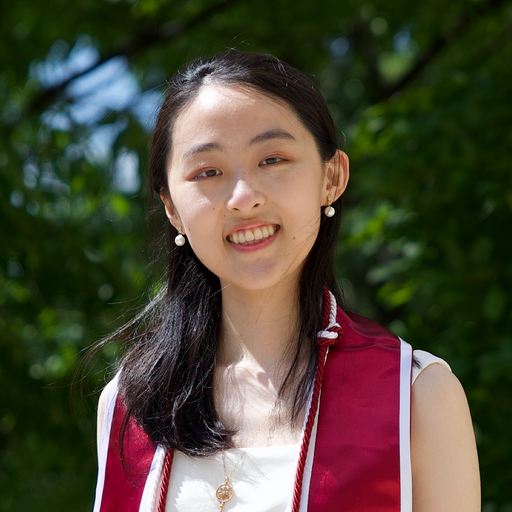
Our colleague Eva Yi Xie, a Princeton neuroscience PhD student, was detained by ICE at Reagan National Airport on her way home from SfN, where she’d just presented her poster. She’s being held in Chantilly, VA. Please help us bring her home. 📷
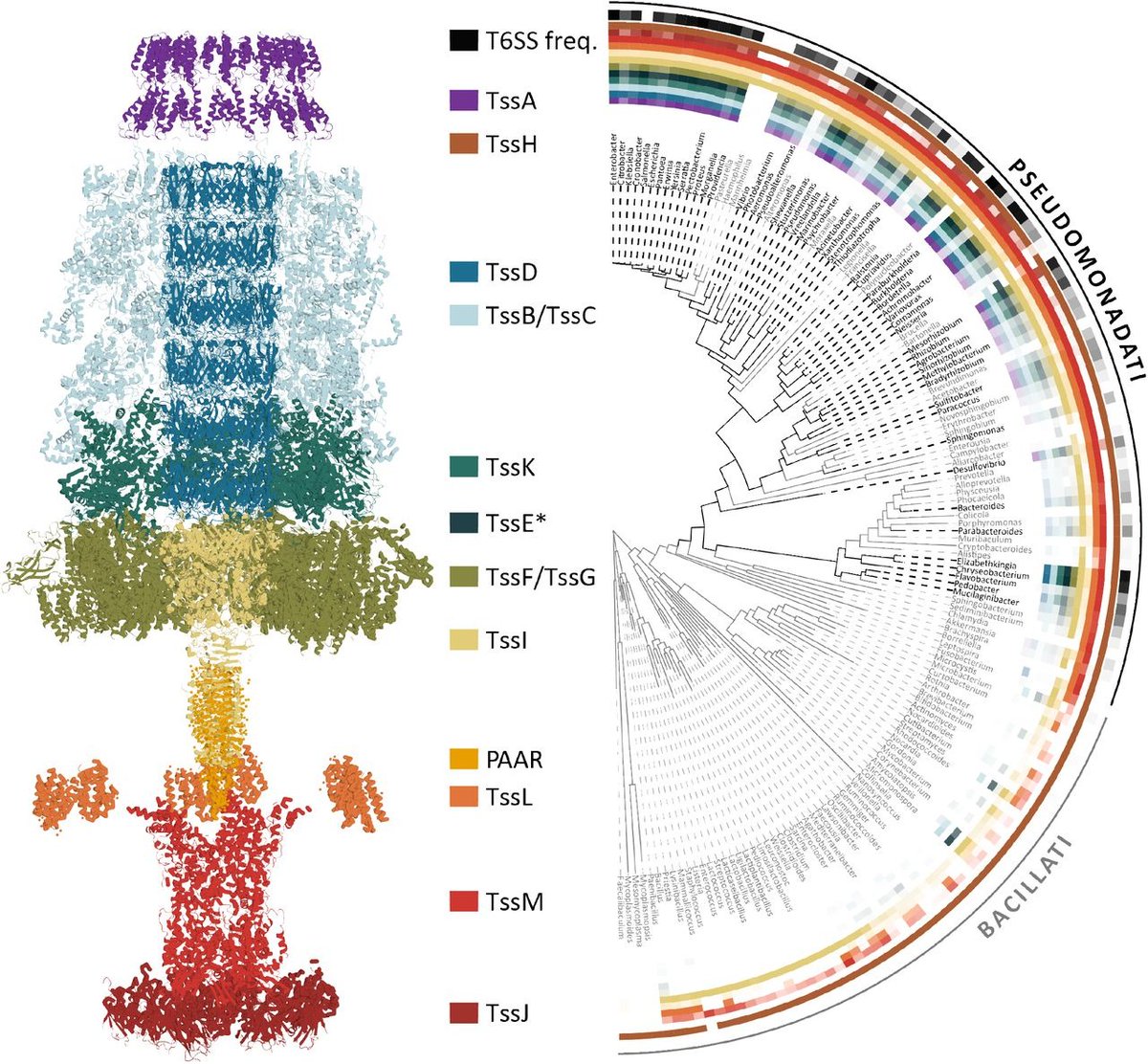
1/ How common is the type VI secretion system, the nanoweapon bacteria use on rivals? The go-to answer is ~25% of Gram-negative bacteria, from a 2008 survey of ~400 genomes.
New preprint led by Chris Zhang and Hayley Hassler, w/ Lauren Speare and Brian Hammer: it's way more!
Each word you say is planned by a small patch of brain above your left ear, about a quarter of a second before you say it. It sits in a temporal lobe region textbooks describe as only for listening. Our paper today in @ScienceMagazine: https://t.co/EXOgl3YsNI
@UCSF@NeurosurgUCSF
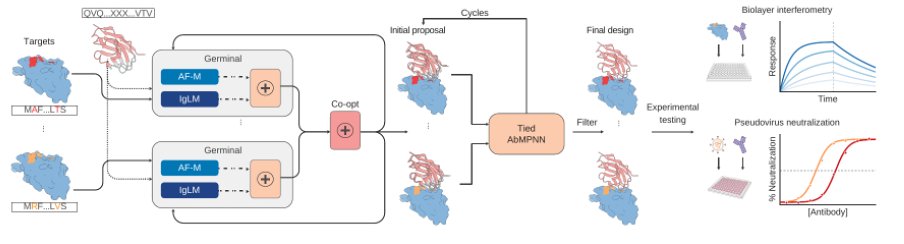
Excited to share Germinal Multi, a method to design single antibodies which recognize multiple antigenic variants! Building off our Germinal pipeline, we demonstrate de novo design and rescue across cancer evolution, historical viral evolution and prospective viral escape. (1/8)
Excited to share Germinal Multi, a framework for multi-target antibody design and rescue. We applied it to cancer resistance mutations, historical SARS-CoV-2 evolution, and paired with a viral evolutionary model, antiGen, to design against a forecasted escape variant! (1/8)
Today I’m excited to present antiGen, a framework for anticipating future evolutionary changes to viral proteins by learning from their evolutionary past. Key applications include vaccine and therapeutic design.
Paper: https://t.co/Kc1qS7d4wU
Excited to share the first paper I've contributed to during my PhD! IMO one of the coolest things about antiGen is that we can train across multiple viral protein phylogenies to forecast mutations more accurately than training only on the protein of interest.
About 90% of RNA molecules in our cells are tRNAs. To date, we have mostly been blind to their abundance and regulation in single-cell sequencing. Today, I’m excited to share a new manuscript from my MD/PhD work
https://t.co/pQqVF7tAZI
Excited to share the second piece of my postdoctoral work with @JShendure. We solved the last remaining "tangle" -- the nucleolar organizer region (NOR) -- in the telomere-to-telomere assembly of the human genome with gene editing. (1/n)
https://t.co/JMLJHR8d83
Can a person's T-cell repertoire from a blood draw diagnose disease? Many methods say yes, but each was developed on different cohorts, splits, and metrics.
Excited to present BenchRep-T, a benchmark comparing methods head-to-head, at #NeurIPS2026 Evaluations & Datasets 1/🧵
Behold: The full JUMP Cell Painting chemical dataset preprint!
Images + 1.53 billion single-cell profiles for 115,796 compounds in human cells, made across 12 labs. All freely available 🧵 https://t.co/cHc9FGkphD
Single-cell atlases continue to map the diversity of cell states, but how can we use them to interpret non-coding genetic variants?
Excited to share AlphaGenome 2, our model for predicting cell-type-specific regulatory activity and variant effects from DNA sequence.
https://t.co/Sc2srWbTIe
Our bodies are colonized by trillions of viruses that we live with in homeostasis. The most diverse and abundant of these viral families are anelloviruses. A new paper from us at @MSKCancerCenter explores what happens after we *all* have been infected
https://t.co/cNOsPCbazd 1/n
Out today in Science! With FIND each drug candidate gets its own experiment on a DNA nanoswitch—billions per tube—to find molecules that change how proteins interact, not just bind a target. Congrats to Clinton Hansen, Mark Lipstein & the rest of our team! https://t.co/iqBdqQKm2g