holy sh*t. Karpathy's second brain pattern runs on Grok Bot now: stop explaining your life to AI from zero every chat, keep a wiki that writes itself
three bots in one group chat, each with its own memory:
the reader takes every link, PDF and voice note you drop and never edits it
the librarian rewrites every wiki page that source touches, usually 10 to 15 of them
the checker wakes up on a nightly routine and hunts contradictions, stale claims and pages nothing links to
→ you ask a question: the answer gets filed back as a page, so the brain grows from use, not only from reading
→ a new source contradicts an old page: the checker tags you instead of quietly overwriting it
→ a page goes 30 days without a fresh source: it gets marked unconfirmed
a second brain can sound sure while remembering the wrong thing
Reader collects. Librarian writes. Checker doubts.
every page has to show:
> the claim
> the source it came from
> the date it was last confirmed
paste this into Grok Bot:
"Build me a second brain with three bots in one group chat. Keep my sources untouched in raw/, maintain wiki/ yourself, file good answers back as pages and run a nightly check for contradictions. Show me the structure first. Do not create anything until I confirm"
start with one topic you actually work on, not your whole life
full setup below
introducing muse wonder
our new frontier model. state-of-the-art at personal agents and professional agents.
our largest and most capable model yet—rivals the big bois
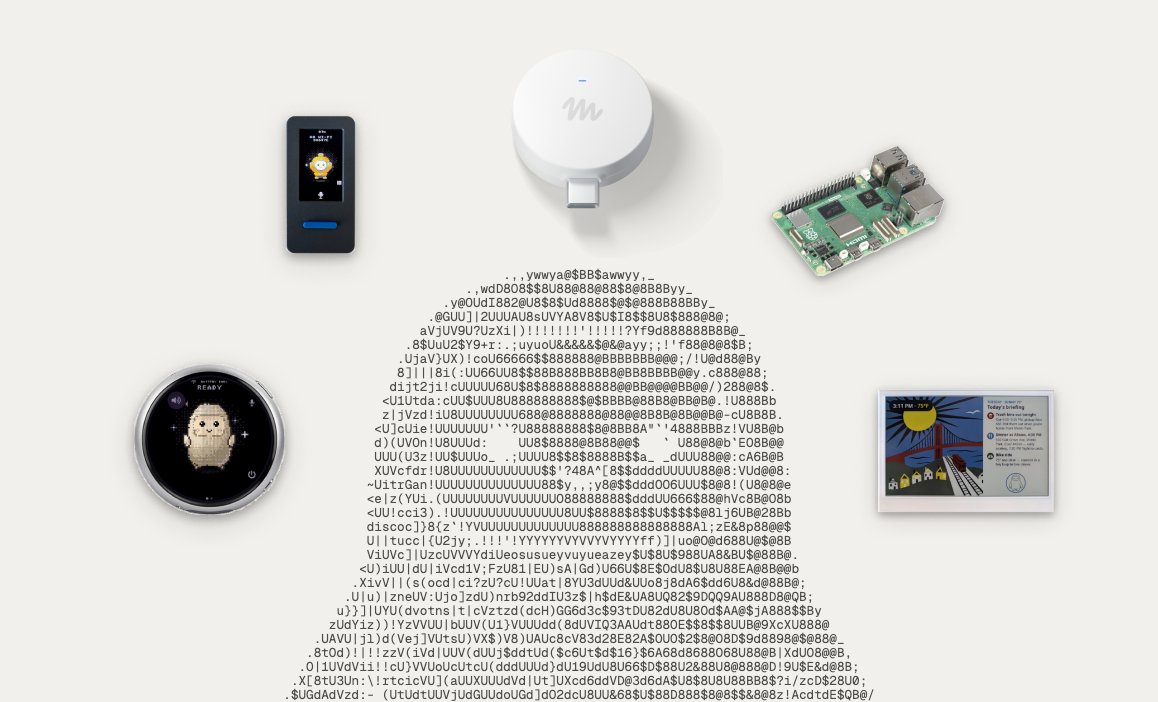
Introducing Interface, the primary hardware for the agent era.
Interface lets you control all your agents from your hand.
$99 for early adopters. Ships in January.
🚨NEW EXPERIMENT 🚨
Playground is an experimental gaming platform that lets you create your own games with zero coding experience. If you can think it, you can play it.
Go to https://t.co/fRUukpuoqM to learn more! Available to users 18+ in the US.
Amazon banning agents is the first opportunity I've seen since Amazon was founded for a startup to create an Amazon competitor. People will want agents to buy stuff for them. It will be one of the main use cases. And they won't want to use some Amazon-supplied agent to do it.
It was a matter of when, not if this Nobel would happen. Awesome to see it.
It is worth noting that @KarlDeisseroth lab shared optogenetic tools far and wide from the very beginning, and thereby facilitated so much discovery. Fun fact: Karl was the first guest ever on the HLP.
.@OpenRouter co-founder Alex Atallah, in his first podcast since Stripe acquired the company, joins @Replit co-founder Amjad Masad and a16z's Erik Torenberg on why the future of AI is independence and specialization.
In this conversation, Alex walks through how the Stripe deal unfolded, why he wasn't originally looking to sell, and why "payments and inference are going to blend together."
Pre-OpenRouter, the typical AI workflow had one model provider to choose from, and little pressure on that provider to lower prices. Now enterprises are diversifying across labs and open-weight models, and every board is asking about AI costs and benchmarks.
Amjad argues if your company depends on one AI lab, it can turn into your competitor. So Replit is building the layer that lets enterprises use any model and any cloud, without being locked into either.
Alex and Amjad are split on personal agents – Amjad runs one agent across his whole company and loves the cross-domain joins, while Alex says general agents cause you to sacrifice understanding, and argues 10 specialized chiefs of staff beats one superagent.
0:45 How the Stripe deal unfolded
5:05 Why mixing models beats one model
7:25 Forcing the labs to compete on price
8:50 Enterprises want open-weight models
10:30 Every board asks about AI every month
12:25 Why companies must own their intelligence
14:15 Replit as the independence layer
15:10 Everyone is building the same agent
16:35 Why Amjad built bring-your-own-cloud
18:10 Amjad's agent that runs his whole company
19:55 Why 10 specialized agents beat one
23:35 Machines, not humans, should specialize
27:30 Guardrails for agents talking to agents
31:10 Models training their own replacements
33:45 Most tasks don't need a frontier model
40:50 Training small models on Qwen 8B
43:25 The Rust cycle is coming for AI
45:10 Fusion models: frontier quality at half the cost
YouTube: https://t.co/stL1g14F3q
@alexatallah@OpenRouter@amasad@eriktorenberg
.@OpenRouter co-founder Alex Atallah on the "everyone is building the same thing" take:
"This reminds me of this tweet I saw... Everybody's building an agent loop with notifications, third-party connectors, context management, memory, sandboxes, agentic web search, an always-on agent on top."
"This product is showing up everywhere. It is showing up everywhere, but these are just the new table-stakes primitives."
"A 2005 version of that tweet would be: 'Oh, everybody's building the same thing. A database, a users table, a sign-in page, a sign-up page, a profile page, a logout page. Everything's the same.'"
"There's like a lot of differentiation really. There's table-stakes needs for AI just like there's table-stakes needs for the web."
@alexatallah@amasad
Replit CEO Amjad Masad on how general models could train smaller, domain-specific models on the fly:
"There's a lot of talk of recursive self-improvement, but there's something I don't think is getting a lot of discussion, which is models training their replacements."
"You can think of it as a just-in-time compiler. As you're executing dynamic code, the interpreter realizes there's an opportunity to optimize, and it emits machine code on the fly that's a lot more optimized."
"You can imagine general models, you're doing something with Operator or Astra, some of the big models, and they realize the use case is limited, or some other agent observing realizes the use case is limited."
"General agents have all these flaws, but there's also more potential for them to be harmful, more potential for them to go off the rails."
"So the model, on the fly, trains a model that could be its replacement, but is a lot more domain specific. Therefore it's cheaper, less vulnerable to prompt injections, and less harmful for you, because it's less capable."
"It's almost like a system that's training machine learning models for specific use cases as it's monitoring the entire system."
@amasad
Got @Muse running on the PSP that's been sitting in our house for over 15 years @alexandr_wang
Had my agent port the gadget client to C so it runs natively on the PSP. Hold R, talk into the built-in mic. Muse answers, and OpenAI gives it a voice
🚨 side project alert 🚨
Announcing Muse Gadgets, an open source ESP32 firmware and Linux sdk so that you can make hardware devices that work with Muse.
Grab an API token from https://t.co/Q0dE0cYnCs and point your favorite coding agent at the github repo to build your own peripherals for Muse.