Introducing Spacelink, a unified framework for identifying and prioritizing spatially variable gene programs at tissue and cell type resolution and linking them to disease GWAS studies. Led by Hanbyul Lee & Haochen Sun https://t.co/lbojyv6zKG
I’m thrilled to share that I’ve joined @OpenAI as a research resident, focusing on safety research and AI for health.
After nearly 10 years studying the brain, I’m excited for this next chapter building AGI to accelerate medical progress and scientific research! #feeltheagi
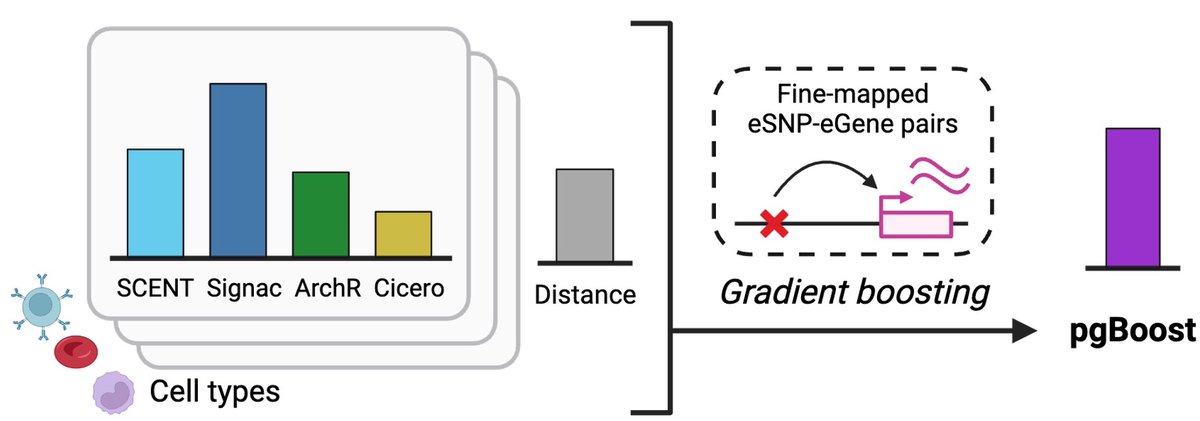
Very excited to share that pgBoost is now published in @NatureGenet !!🧬 pgBoost is a regulatory SNP-gene linking framework combining single-cell multiome methods and genomic distance, informed by eQTL.
Read more here: https://t.co/x3jGVGQ7in
pgBoost, led by @elizabethdorans , is now out in @NatureGenet : highlights the utility of genetic effects on gene expression (eQTLs) to benchmark and unify multiome peak-gene links and genomic distance. https://t.co/QF0Ip8Qrp2
ML and ML+Bio Builders: We @vevo_ai are joining forces with @huggingface & @NVIDIAHealth to organize the 1st hackathon to build on Vevo's Tahoe-100M dataset.
Join us! We will select 40 participants, provide compute and a $400 travel voucher for 10 travelers. Details in 🧵
I am excited to join storied biotech pioneer @Amgen as Chief Scientific Officer and Head of Research. I look forward to partnering with my new colleagues to deepen understanding of biology and develop solutions to the most pressing medical challenges https://t.co/Vqmsv68Q9Z
Excited to share our latest preprint, as part of ENCODE4, on a consensus variant-to-function (cV2F) score for functionally prioritizing variants for complex disease - led by Tabassum Fabiha and co-mentored with Alkes Price.
https://t.co/yCIjgODnY9
I’m so excited to share the first pre-print from my lab at UCSD and the work of two excellent undergraduate researchers. We designed a new method to enhance eQTL mapping in small cohorts and thus improve disease-gene inference in non-EUR populations.
https://t.co/Bbru0KTK8L
So excited to announce that the Kappel Lab will open at @UCLA@uclachem in July 2025! We’ll combine high-throughput experiments and computation to build predictive sequence-structure-function models of RNA, proteins, and their interactions. More here: https://t.co/qxh7QbXnHV
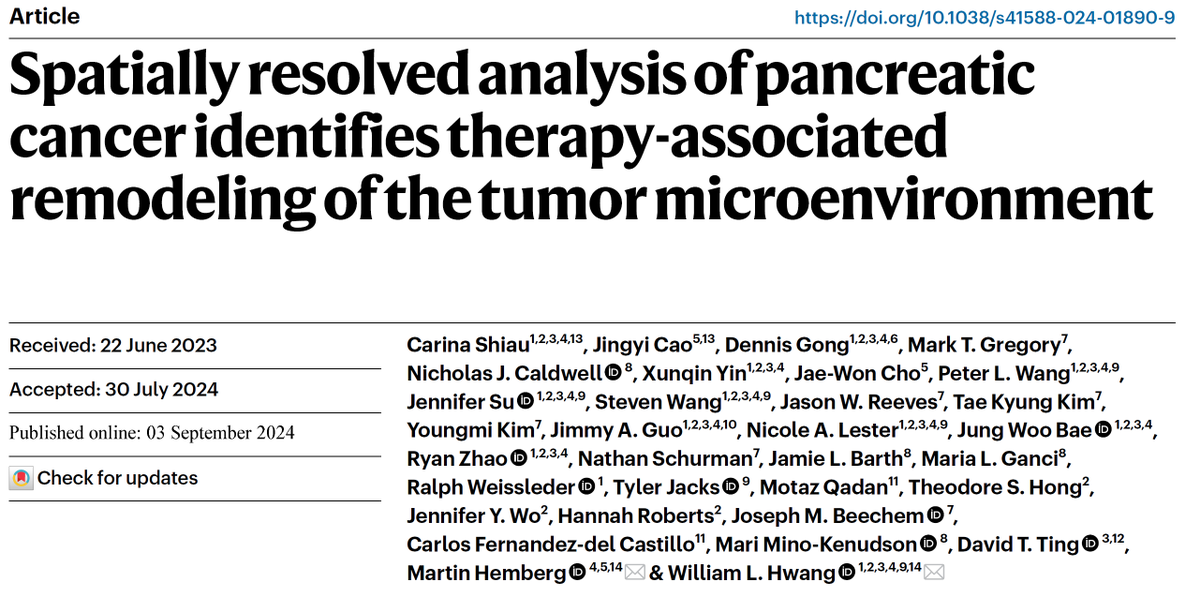
I’m delighted to share our lab’s latest study now published @NatureGenet👉 https://t.co/9qBGLavC3w. Led by the fantastic duo @CarinaShiau#JingyiCao, and a big collaborative effort with @m_hemberg@davetingmgh @nanostringtech and others. 🧵
How do genetic perturbations change cells? How are these effects shaped by cell type and dosage? How do we best extract insight from modern massive perturbation atlases? Im pleased to share a new preprint where we develop a suite of statistical approaches to these Qs (link below)
Excited to share the Smillie Lab's first paper!
We discovered distinct lineages of the gut microbiota that are exquisitely adapted to inflammatory disease.
This was a monumental effort led by Adarsh Kumbhari @mgh_ri @harvardmed@broadinstitute
More: https://t.co/rmfnCdyORP
Researchers from the Smillie Lab at @MGH_RI and the @broadinstitute identifies particular strains of gut bacteria that are more prominent in patients with inflammatory bowel disease (IBD) https://t.co/37Y6lQjoFu
Excited to share our preprint proposing pgBoost, an eQTL-informed gradient boosting model that integrates scores from single-cell enhancer-gene linking methods and genomic distance to predict regulatory SNP-gene links (a key step in interpreting GWAS discoveries)!🧬
1/4
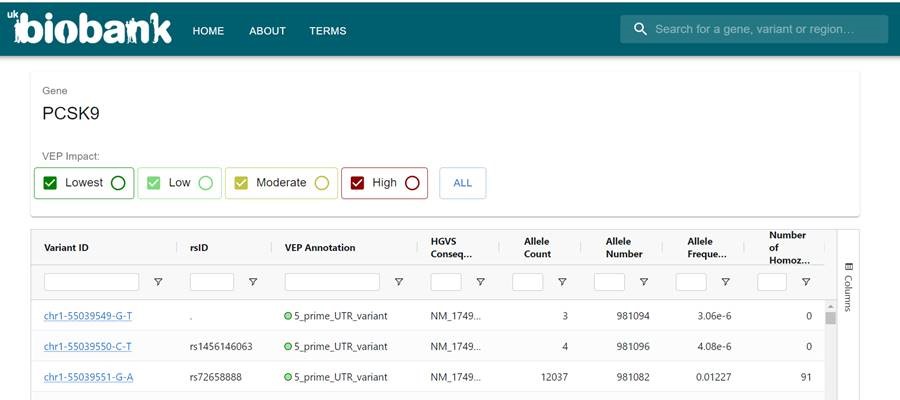
Great news! You can now browse the #500KGenomes summary statistics for all UK Biobank participants free of charge using our Allele Frequency Browser. The browser was launched on behalf of the Whole Genome Sequencing consortium.
🧬https://t.co/SZEtSs2He0