AI has helped resolve an important question in statistics. In the area of multiple hypothesis testing, the goal of controlling the false discovery rate (FDR) has been introduced in a seminal paper by Benjamini and Hochberg (1995). They also introduced a method (the Benjamini-Hochberg or BH method) and proved it controls the FDR. This method has been widely adopted in modern high-throughput science, including in genomics, astronomy, economics, etc. The paper has has garnered more than 130,000 citations to date.
However Benjamini and Hochberg showed FDR control only when the data for the individual tests are *independent*. In practice, these data are often dependent; a good example is data on genetic variants due to linkage disequilibrium. Later work has focused on extending the validity of the BH procedure, e.g., to a form of positive dependence by Benjamini and Yekutieli (2001).
The question of when the BH procedure controls the FDR has remained open. Over the last twenty years, many authors, including Reiner-Benaim (2007), Kim and van de Wiel (2008), Benjamini (2010), Sarkar (2023), Sarkar and Zhang (2025), have conjectured that the BH procedure controls the FDR for two-sided tests using any correlated Gaussian data. These authors have presented both theoretical and empirical evidence supporting, but not directly showing, the conjecture.
With the help of AI (specifically GPT-5.6 Sol Pro), I have settled the question in the negative: The Benjamini-Hochberg procedure does *not* generally control the false discovery rate at the desired level for correlated two-sided Gaussian tests. This was done by exhibiting a Gaussian factor model for which, at a nominal level alpha=0.01, the false discovery rate is proved to be FDR>0.0104.
There is a lot of interesting commentary to be made:
1. This result should be of interest to everybody in the field of statistics. Emmanuel Candes of Stanford University once called the false discovery rate and the Benjamini-Hochberg procedure "one of the two most important developments in statistics after 1950" (the other being James-Stein shrinkage). The present conjecture is probably the most central question about FDR/BH that was unresolved to date.
2. GPT-5.6 one-shot the problem after 90 minutes of reasoning, whereas with 5.5 I was not able to solve it even after iterating with multiple parallel agents for perhaps 20 hours. So the capability improvement is quite real. Exciting times to live in!
3. The argument is not especially surprising, but it does combine an asymptotic approach (standard for FDR analysis, see e.g., Genovese and Wasserman, Efron, etc) with a numerical certificate in a way that would be pretty non-standard in the field. Once we have the specific example, then straightforward simulations also support that the false discovery rate is indeed higher than the nominal value (see attached fig).
4. The current degree of violation over the nominal level is relatively small (0.104 vs 0.1). So the importance of this result is mainly conceptual. The practical implications remain to be determined.
Overall, an exciting development! Preprint is available here (https://t.co/YgiwgDF2qr) and will be on arxiv tonight; supporting code is here (https://t.co/KZhj15qDXC).
On her 12th birthday her mother gave her a red envelope from the mail. The family was poor. The father a drunk. The kids beat her up at school. The envelope had no return address. The upper left hand corner just said:
A GIFT
Well open it, said her mother. And she did.
It was a check for one million dollars.
In the memo section it said “You���ll Never Want Again.”
The address section had no name. It just said TREEHOUSE CORPORATION.
It’s a prank, said the mother. Throw it away.
Yes, the girl agreed. A prank. But it’s funny. I like it. I’ll put it in a frame.
That’s ridiculous, the mother said. Why torture yourself like that.
It’s fine, said the girl. It’s funny.
The next day she skipped school and rode her bike to the bank. Presented the check. I think this is a joke, she said. But can you check to be sure. The teller gave a half smile and went to get the manager. She took the check with her. The girl’s heart picked up. There was a long moment at the window. The radio was playing Fleetwood Mac. Well there you go again– you say you want your freedom. The manager came to the window. He wore a light purple shirt and a dark purple tie. He was holding the check. Are your parents outside, he asked.
No, she said. I rode my bike.
I’m going to need a parent or guardian for this situation, he said.
It was real.
**
Her parents didn’t steal the money. They bought a modest house. She went to a new school. They didn’t beat her up there. She read French. She played viola. Before the school she didn’t know what a viola was. She loved it.
She looked for TREEHOUSE CORPORATION every day at first. Then every week. Every month, every year. But she never forgot. She went to college. Majored in journalism. Asked her professors: how could you find someone from their bank account. Treehouse Corporation was an LLC owned by an S Corp owned by another LLC in Bermuda, and so on. They didn’t want to be found.
She placed little classified ads. Places where someone who owned a corporation would read it. The Financial Times. The Economist. I’m the girl from Oak Grove. You gave me a gift. It changed my life. I’d like to talk to you. Please write to me.
No one did.
She got a job at a newspaper. The Paris bureau. A girl from her town, her home. She met a man, a painter. They married in June. A boy. She would speak at night about the gift. Treehouse. Let it go, he told her. His palm on the back of her neck, kissing her hair. Let it go. It gave you a life that brought us together. It did its work. It doesn’t matter anymore.
And one day there it was. In her very own paper.
A billionaire was dying. He’d built half the homes in America. He never gave interviews but now just once. He grew up poor. The father a drunk, he beat the boy. One day a kindly neighbor gave him a gift. His first ten dollars. He bought lumber. Taught himself to build. Made a place he could be safe. A treehouse.
He had no office anymore. His mysterious foundations didn’t return her calls. Marcel took the baby while she flew 20 hours. Back roads to the mansion outside Omaha. She came to the gate with the high beams from the rental car cutting into cold pouring rain just as night fell. Big black button on the old intercom. Hello, she said. Hello—do you remember me. You gave me a gift.
No one answered.
Please, she said. Please—I’ve looked for you all my life. The cold rain fell and fell. She was crying.
And a voice came.
I can’t believe you’ve found me, a man said. Raspy and tired like waking up from a long sleep. Is there anything you’d like to tell me. And she said: can I have some more money.
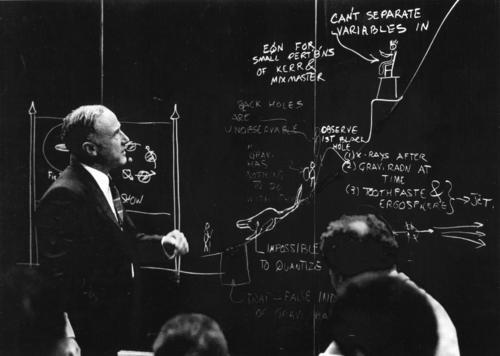
Why does a scientist study nature? by Henri Poincaré 💭
The scientist does not study nature because it is useful to do so. He studies it because he takes pleasure in it, and he takes pleasure in it because it is beautiful. If nature were not beautiful it would not be worth knowing, and life would not be worth living. I am not speaking, of course, of the beauty which strikes the senses, of the beauty of qualities and appearances. I am far from despising this, but it has nothing to do with science. What I mean is that more intimate beauty which comes from the harmonious order of its parts, and which a pure intelligence can grasp.
-- as mentioned in The Selection of Facts, p. 22, Ch. 1
[Image courtesy: Hulton-Deutsch Collection/Corbis]
Have some friends whose careers are absolutely taking off, and the common theme among them is how they’ve surrendered to their nature. They’re done trying to be somebody they’re not.
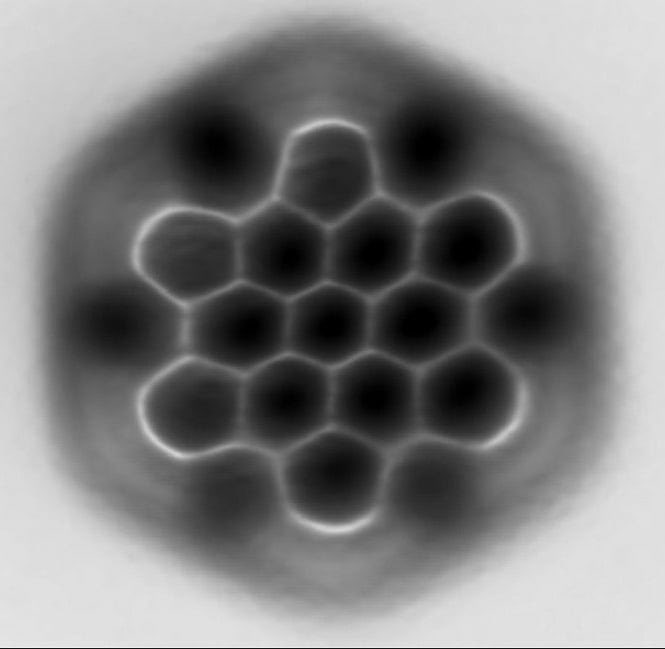
A Dedekind number, which is part of a sequence of numbers that count structures in a variety of mathematical fields, can be explained using Boolean functions, logical procedures that can output only 1 (true) or 0 (false).
https://t.co/BCwlVksZX9
Søren Kierkegaard claimed that if a person behaved perfectly rationally they would be so discordant with civil society that people would deem them mad.
'The universe does not exist "out there" independent of us. We are inescapably involved in bringing about that which appears to be happening. We are not only observers. We are participators. In some strange sense this is a participatory universe.'
-John Archibald Wheeler
Small molecule oral cancer drug kills 100% of solid tumors across 70 evaluated cancer types in vitro and in animal models with a therapeutic index of 6 and no discernible side effects
Phase 1 trials now underway
https://t.co/PfpvPaRD4L
The sum of first n odd numbers is equal to n². Classic.
Here's a very necessary 🧵that consists of 7 different proofs of this fact. Let's get into it! [1/9]
SMS marketing is broken with tons of links, coupon codes and so many action screens to checkout.
That's why I built TexttoBuy. TexttoBuy lets DTC stores on Shopify checkout customers over text with a maximum of two texts.
follow us at @TexttoBuy. website link in bio!






![PhysInHistory's tweet photo. Why does a scientist study nature? by Henri Poincaré 💭
The scientist does not study nature because it is useful to do so. He studies it because he takes pleasure in it, and he takes pleasure in it because it is beautiful. If nature were not beautiful it would not be worth knowing, and life would not be worth living. I am not speaking, of course, of the beauty which strikes the senses, of the beauty of qualities and appearances. I am far from despising this, but it has nothing to do with science. What I mean is that more intimate beauty which comes from the harmonious order of its parts, and which a pure intelligence can grasp.
-- as mentioned in The Selection of Facts, p. 22, Ch. 1
[Image courtesy: Hulton-Deutsch Collection/Corbis]](https://pbs.twimg.com/media/F3eEsszWcAAxyMD.jpg)




![Mathinity_'s tweet photo. The sum of first n odd numbers is equal to n². Classic.
Here's a very necessary 🧵that consists of 7 different proofs of this fact. Let's get into it! [1/9] https://t.co/N4OcHbg3XY](https://pbs.twimg.com/media/F2h1Wv6WIAAJlyu.jpg)




