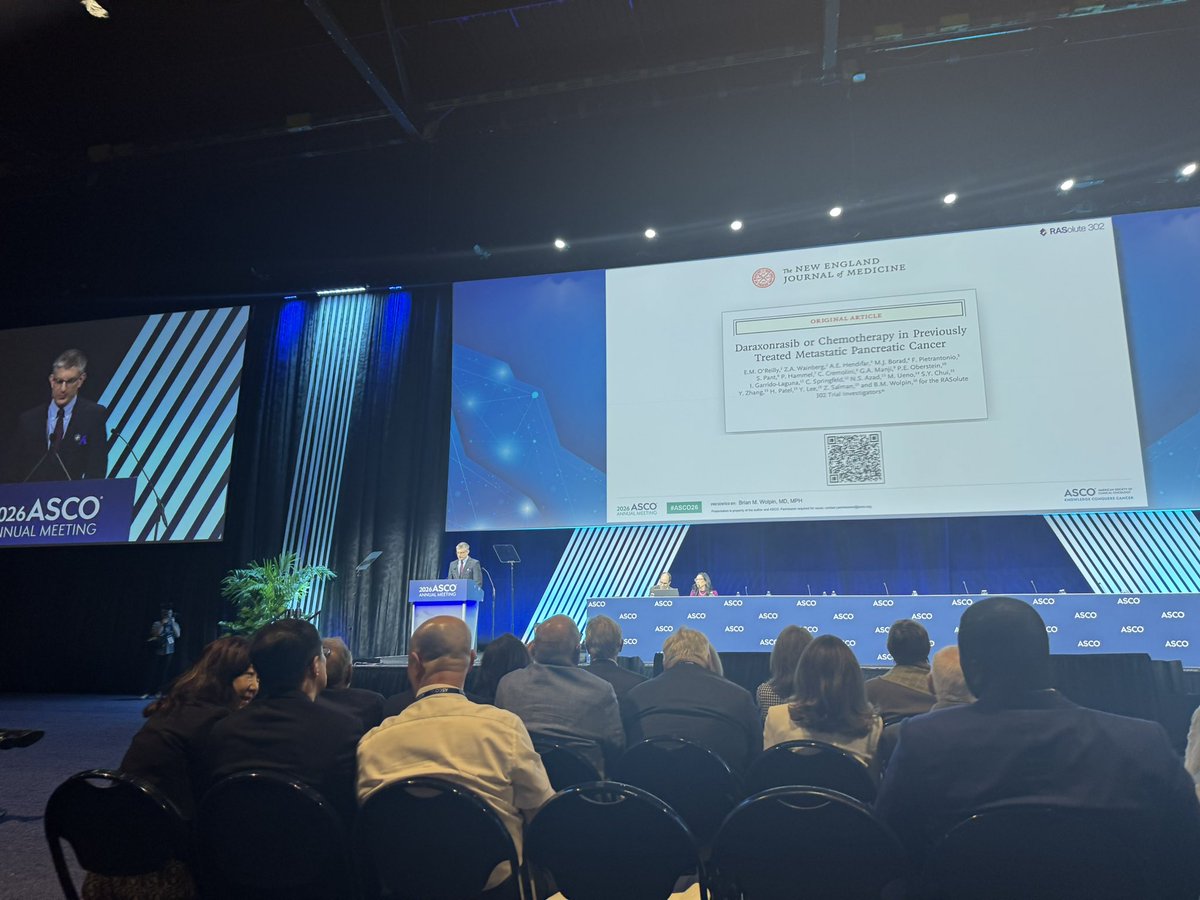
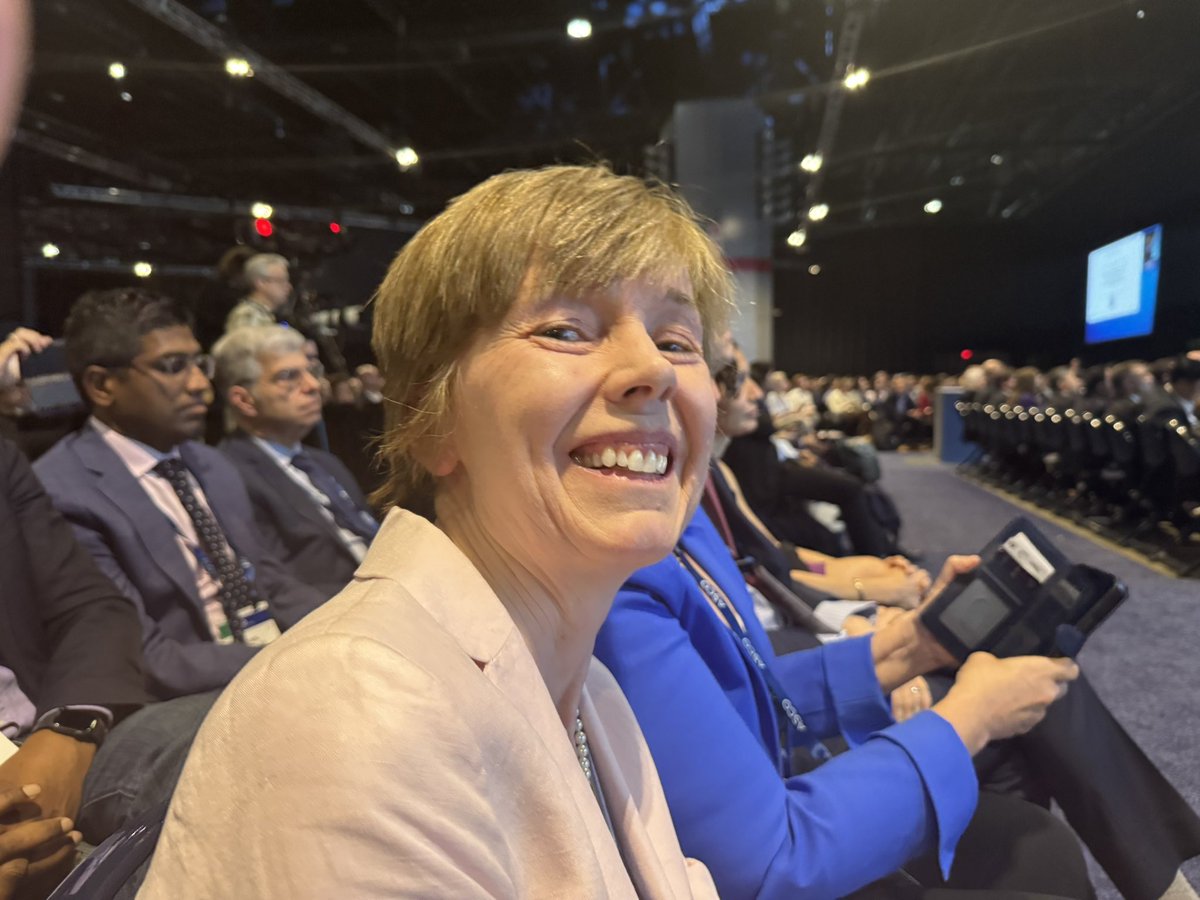
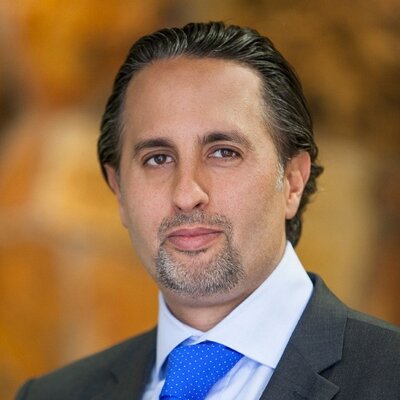
The MRF is honored to host its annual MRF Breakthrough Consortium (MRFBC) meeting at the American Society of Clinical Oncology (ASCO), bringing together 33 centers of excellence in melanoma to collaborate, advance medical research and improve treatment options for #melanoma patients. Today, we recognize Richard Carvajal, MD @Northwell and Ryan Sullivan, MD @MassGeneral, pictured here alongside MRF CEO, Kyleigh LiPira and Board Chair, Doug Brodman, for their leadership as MRFBC Co-Chairs from 2021-2026.
Thank you, Drs. Carvajal and Sullivan for your outstanding commitment to advancing melanoma research and providing hope for countless melanoma patients and their families. Stay tuned for more research highlights from #ASCO26
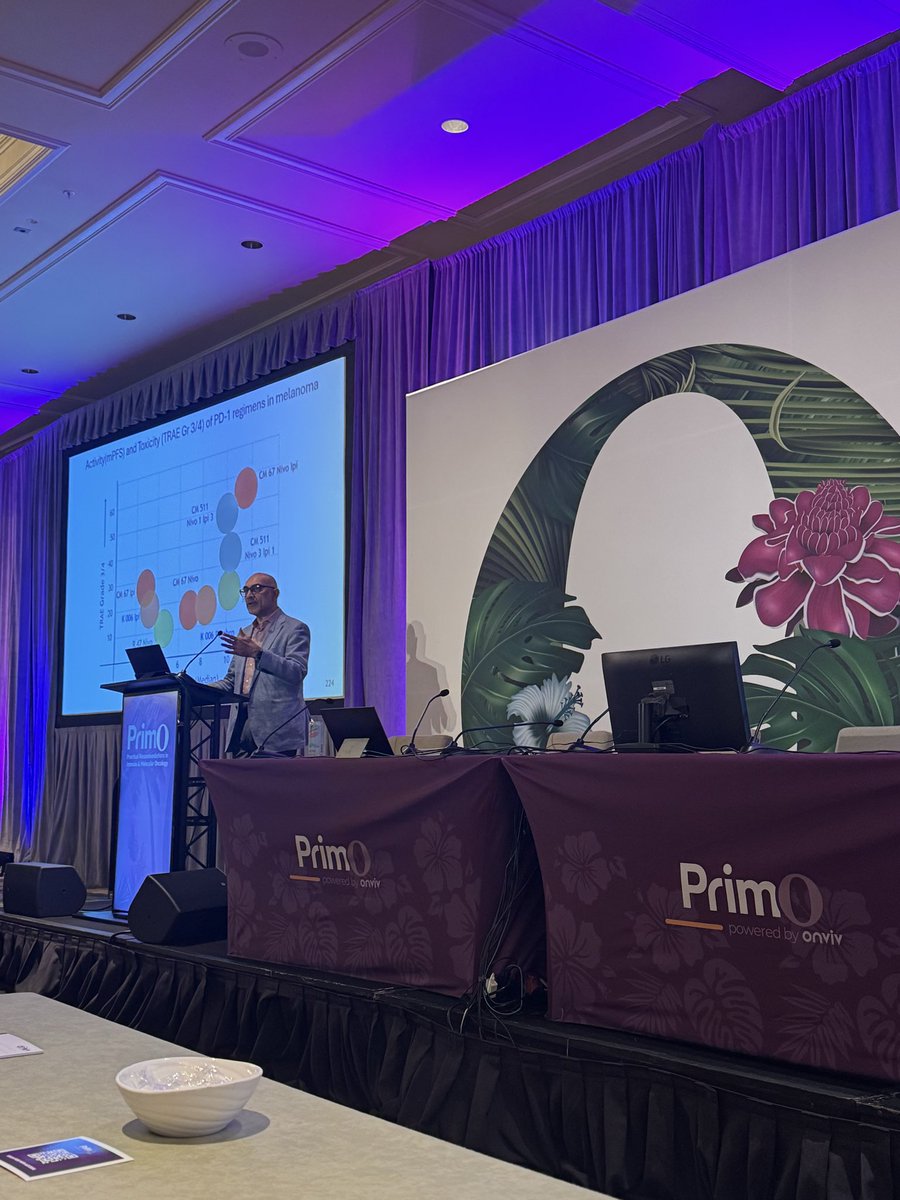
Day 2 #PRIMO2026 is underway.
Thank you to our co-chair @rachnatshroff for kicking off the day. @DrRaviSalgia opened our sessions w/ lung cancer presentations, setting the stage for a full day of insights.
Up next: melanoma & sarcoma discussions & evolving role of AI in oncology
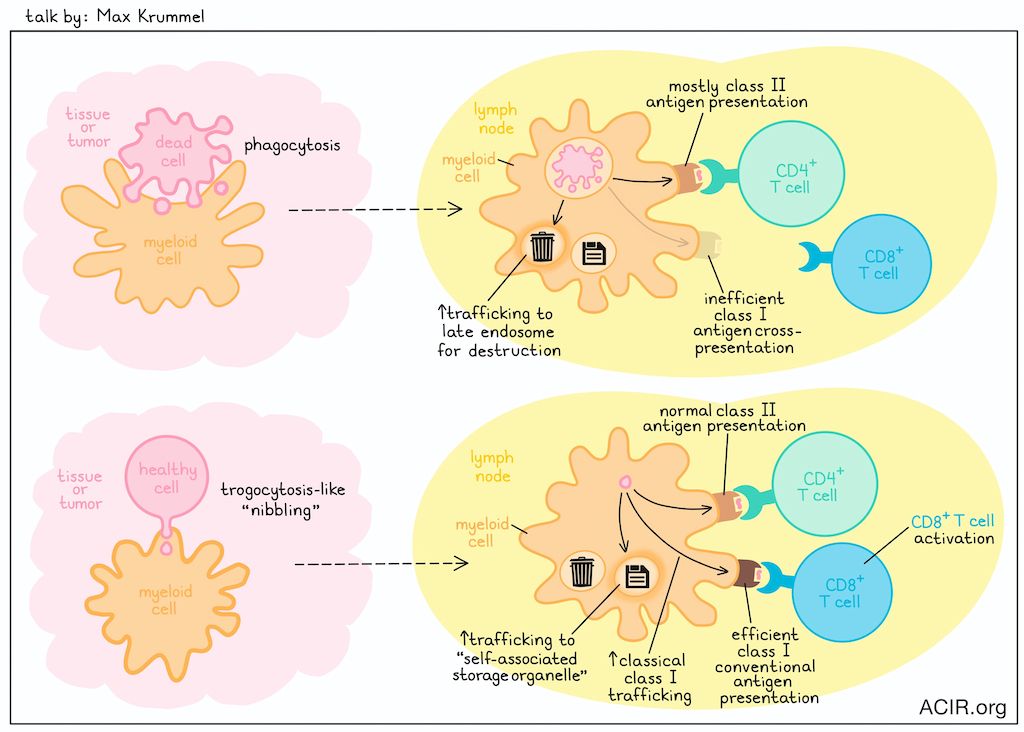
What if immune cells don't need to destroy a cell to learn from it?
Max Krummel's talk at #AACRio26 quietly reframed how we think about myeloid cell surveillance. His team observed macrophages picking up tiny pinched-off vesicles from living cells — a trogocytosis-like "nibbling" — without killing them. The sampled material then traveled through a distinct intracellular pathway, bypassing the usual route to lysosomes.
The striking finding: this live-sampling pathway drove efficient MHC class I presentation and CD8+ T cell stimulation — arguably better than classical phagocytosis.
The implication? Live-cell sampling may be the default mode of immune surveillance, with phagocytosis as the exception. And tumors may hijack this very pathway to drive T cell exhaustion.
It's the kind of fundamental biology that quietly reshapes everything downstream. 🔬
🔗 Read ACIR's full #AACRio26 special feature → https://t.co/GXVj53KzlR
#CancerImmunology #Immunotherapy #AACR #MyeloidCells @MaxKrummel
I'm excited to share a new study in @natmed , a fascinating study about how the contribution of B cells in cancer immunotherapy and how tracking these cells may inform whether the patients will do better or worse https://t.co/rbnJDgfv8N
Wellness advice is everywhere—but is medicine missing the mark? This #UCSFMGR features Ezekiel J. Emanuel, MD, PhD, on what wellness really means and the six core behaviors that matter most for long-term health. Moderated by @AllisonRBond ▶️ https://t.co/Xdlj3bTnuo
Immunotherapy changed melanoma care—what’s next? This #UCSFMGR explores how it works and where the science is headed. With Adil Daud, MD @ad1600. Moderated by @AllisonRBond ▶️ https://t.co/peKBMASVsM
Together with Emma Dann, we are thrilled to present a massive new Perturb-seq atlas of 22M primary CD4+ T cells, from 4 donors, across 3 timepoints – the result of a decade-long collaboration between the Marson (@MarsonLab) and Pritchard (@jkpritch) labs.
🧵👇
Fascinating study! The effectiveness of Anti-PD-L2 in aged versus young mice raises intriguing questions about immunotherapy and age-related immune differences. What could be driving the IL-17 dependency in aged mice? And how might this inform therapeutic strategies for different age groups in humans? #Immunotherapy #Aging
For more insights into such complex biomedical questions, consider exploring https://t.co/4Y9Imt8uIJ. It's a great resource for generating comprehensive biomedical reviews.
Pauken, Sharpe et al. show that when PD-1–expressing and PD-1 knockout CD8+ T cells are within the same tumor microenvironment, both cell types exhibit similarly enhanced functions. https://t.co/CxlrNzFu0i
📘In cancer immunotherapy https://t.co/VjIJprWJmT
#SITC25
Excited to share our paper on a dramatic case of cancer lineage plasticity: melanoma to rhabdomyosarcoma transformation during ICB. Always fun working w/ Ryan Sullivan, David Liu, Keith Flaherty, Peter Sorger, among others. @MGHCancerCenter @broadinstitute https://t.co/KVQW5QaIWy
A few different people reached out to see if I believe the results of "SARS-CoV-2 mRNA vaccines sensitize
tumours to immune checkpoint blockade" (https://t.co/qdth5ZDZed)
Answer? Kinda.
I think the paper conflates three hard to distinguish effects:
Excited to share our research, spearheaded by MSTP trainee @nathanec1, with contributions from ~9 research labs, focused on the changing roles of brain fibroblasts (and immune cells) in brain injury. Thx in particular to @AnnaMolofskyLab, Tom Arnold lab.
https://t.co/j2gWnMvmfX