You could move to New York City.
Walk out your door at 2am for a bacon egg and cheese and not think twice about it. Get on a subway that takes you from a mosque to a synagogue to a cathedral to a noodle shop that's been slinging the same bowl since 1987, all in twelve blocks. Watch strangers from four different continents argue about a parking spot in a language that is somehow entirely made of hand gestures.
Sit in a park designed 170 years ago by geniuses who wanted you, specifically, to have somewhere green to sit. Catch a Tuesday night set from a musician who's about to be enormous, in a room that fits eighty people. Walk past a building where somebody invented something, or wrote something, or changed something, roughly every four minutes, whether you notice or not.
Realize your commute is also a people-watching seminar, a smell-based cultural exchange program, and free comedy.
Order the good pizza at 1am standing up, off a paper plate, next to a guy in a tux and a guy who clearly just got off a double shift, both getting the same slice with the same reverence.
Pay too much for too little space and get, in exchange, eleven million other people's worth of energy pointed directly at your life every single day.
Move to Iowa. Get the four bedrooms, the garage, the yard. Never again have a 3am conversation with a stranger that changes how you think about something. Never walk into a museum on a random Wednesday because it's just there. Never get that specific electric feeling of being one tiny gear in the greatest machine humans have ever built.
But hey. At least parking's easy.
AI can now read your customers' minds.
We raised a $20M Series A lead by 8VC & Lingotto to build this.
Introducing Minerva, built in collaboration with OpenAI:
There were once trees in this country so large, they blocked out the sun for miles.
They shaped trails, towns, and spirit.
Now most are gone and most people don’t even know what was lost.
Not metaphorically.
Physically.
Entire forests erased.
🧵
Sky full of stars.
Following a successful lunar flyby, the Artemis II astronauts captured this breathtaking photo of our galaxy, the Milky Way, on April 7, 2026.
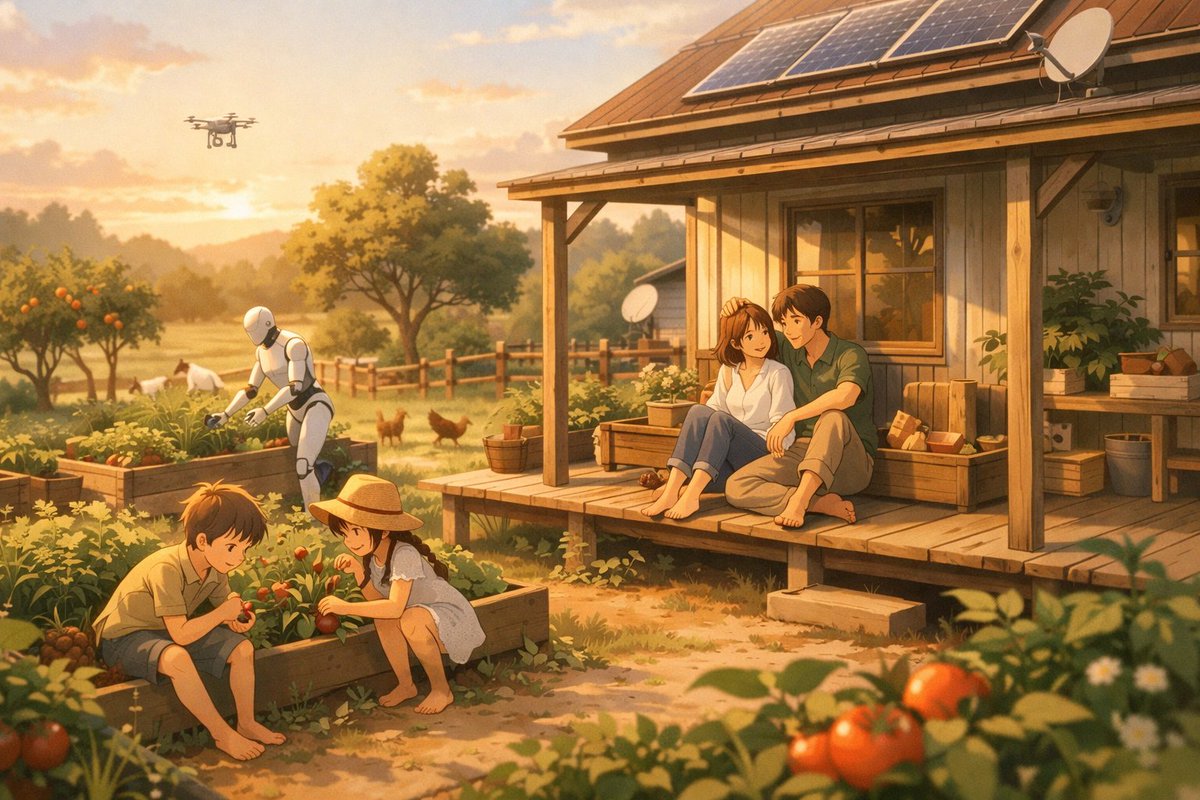
5 acres. Two humanoids. 3D printer. Starlink. Solar roof. A few GPUs running a local AGI.
Security drones, chickens roam, fruit trees heavy with harvest. Kids run barefoot past potato rows, as robots fix the fence.
Civilization optional. Family of 4 on the techno homestead.
By studying samples analyzed by the Curiosity rover, scientists have taken another step toward understanding whether life could have ever existed on Mars.
A new study suggests that non-biological sources cannot fully account for the abundance of organic compounds found in a sample collected by the rover.
Dig into the details: https://t.co/zZKCgKEROr
Good morning. 9 years ago today, a Nashville outsider performed at the Grammys and 99.999% of the people watching asked themselves, “Who the fuck is Sturgill Simpson?”.🐐🔥🔥🔥
"Travel is fatal to prejudice, bigotry, and narrow-mindedness, and many of our people need it sorely on these accounts. Broad, wholesome, charitable views of men and things cannot be acquired by vegetating in one little corner of the earth all one's lifetime".
-- Mark Twain
@sama *Smart man doesn't understand media*
Also lol "As for our super bowl ad...", which no one is talking about. Don't get defensive bc they are catching up, let your product do the talking.
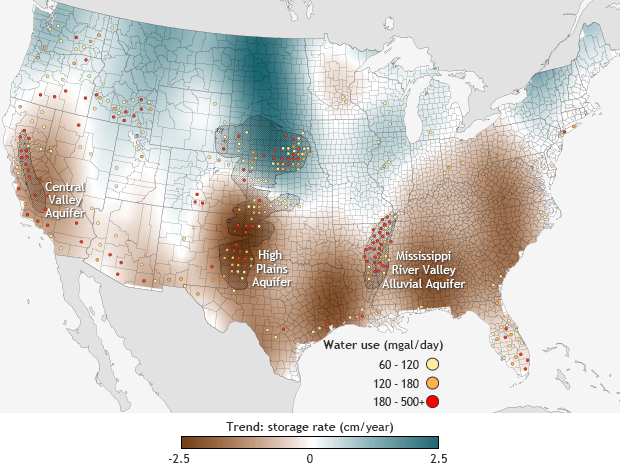
One of the most pressing issue facing agriculture in the US is the rapid and continued depletion of ground water in our most important food producing regions.
But even more concerning is the degradation of farmland's ability to capture, store and cycle rainwater.
The Ogallala Aquifer supports 30% of US irrigation and has lost 286 million acre-feet, or 93.2 trillion gallons, since agricultural development.
Portions of Kansas and Texas are on pace for complete depletion in 20-50 years. Natural recharge occurs at less than one inch annually and full replenishment would take 6,000 years.
California's Central Valley, producing 25% of national food supply, pumps groundwater 5x faster than its rate of recharge.
The land has subsided up to 28 feet, permanently destroying aquifer storage capacity. As alarming as this may be, the long-term – and in some cases permanent – damage caused to aquifers pales in comparison to the disruption of the small water cycle.
The small water cycle depends on vegetation recycling moisture through evapotranspiration, which generates over 50% of precipitation in most river basins. This "green water" accounts for 4-5x more agricultural water use than the "blue water" drawn from aquifers and rivers.
When soil is disturbed and left bare, this pump fails. Further disrupting this cycle, bare agricultural soil reaches surface temperatures up to 24°C higher than vegetated areas, creating heat islands that repel rainfall while eliminating evaporative cooling entirely.
US agricultural soils have lost 50% of original organic matter over that last century.
Each 1% increase in organic matter allows soil to hold 20,000 additional gallons of water per acre.
The widespread loss of 3-4 percentage points of organic matter means farmland now stores tens of thousands fewer gallons per acre than it once did, reducing natural drought resilience and increasing runoff.
Conventional agriculture compounds this by collapsing soil aggregates through excessive tillage, leaving fields bare, applying synthetic fertilizers that accelerate organic matter decomposition, disrupting soil microbiology with pesticide applications and compacting soil with heavy machinery.
The good news is, unlike aquifer depletion, the small water cycle can be repaired rapidly and in ways that offer a cascade of positive benefits to farms.
Continuous living roots maintain the pore structure for infiltration. Growing roots open channels, decaying roots leave voids, and root exudates feed aggregate-building microorganisms.
A functional and diverse soil microbiome produces biological glues that create water-stable aggregates. These networks increase hydraulic conductivity while enhancing water storage.
Permanent soil cover reduces evaporation, prevents raindrop impact from sealing surfaces, and maintains biological activity. Five years of cover cropping can improve infiltration up to 200%.
Integrated biological diversity drives the feedback loops between soil carbon, water retention, and climate regulation. Diverse rotations, livestock integration, and perennial crops restore landscape-scale water cycling.
Aquifer depletion, in large part, cannot be undone. But restoring the small water cycle offers an immediate opportunity to rebuild and maintain agricultural water security.