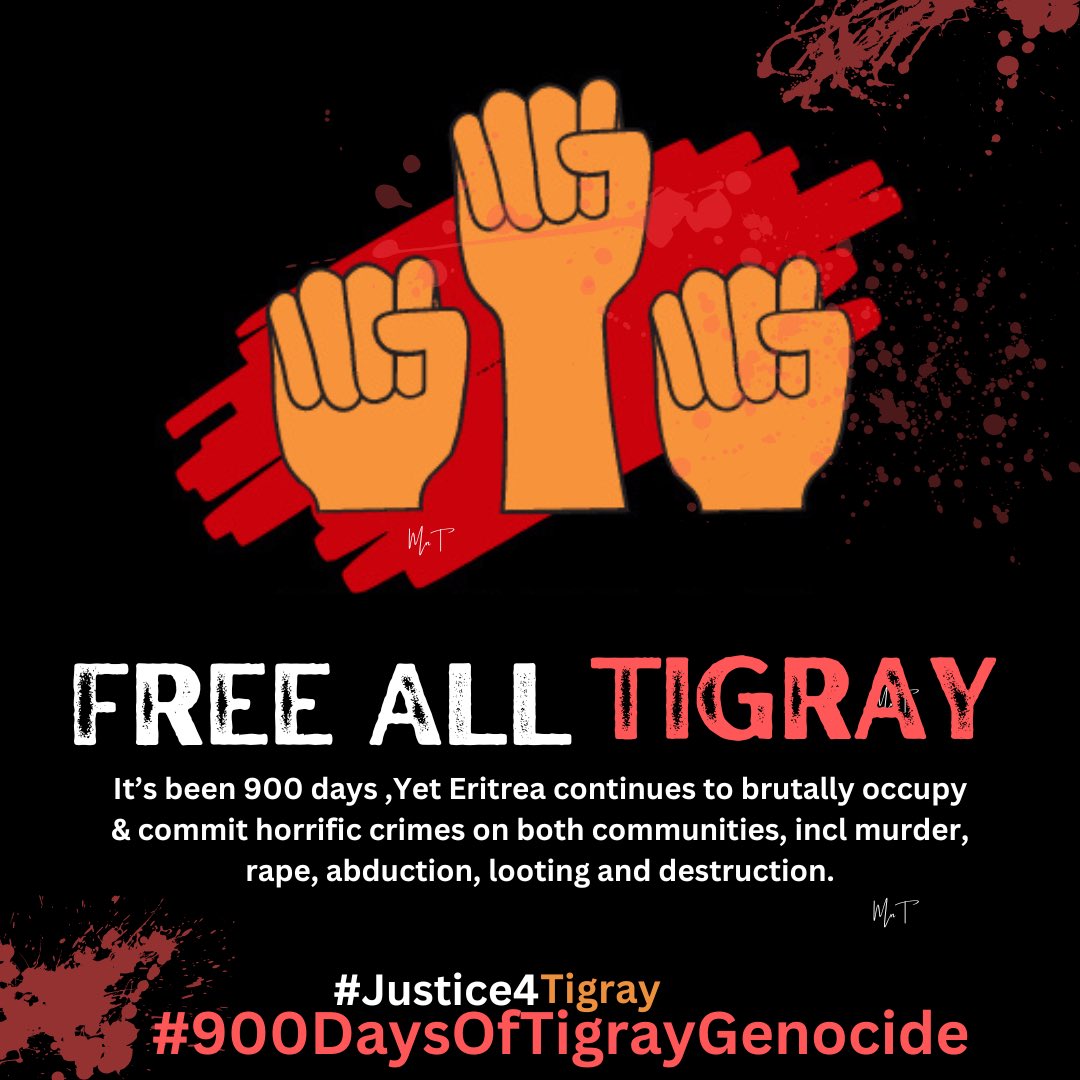
No accountability nor redress for victims of #TigrayGenocide, a Genocide that killed over 800,000 people in 2020-2022 - and yet #Tigray becomes a battlefield for another round war... May God have mercy on our people.
🎆I would like to wish you a new year of healing & happiness. In 2024 & beyond, my hope is for the #Tigray ppl to defeat the unfolding famine , get justice & preserve their fragile peace. I will continue my advocacy through @PJTinter a 501(c3) dedicated for this goal. Join us!
To the people of #Tigray:
I watch with aching heart as you commemorate the sacrifices of your heroes and heroines who lost their precious lives protecting Tigray at the battlefield or for simply being at home, and I grieve with you. 💔
As you go through this excruciating moment of committing the sacrifices of your martyred into its rightful place of your lived memories, and as you try to move forward without justice and reconciliation on your side, I am reminded that this martyrdom is a martyrdom against a genocidal war determined as crimes against humanity, war crimes and the crimes of forced deportation and ethnic cleansing. It couldn’t have been determined by its rightful name, genocide, to give “peace a chance”, when that peace was what Tigray deserved all along.
It is a sacrifice paid against a genocidal war that couldn’t have been determined by its rightful name of the crimes of genocide and extermination for lack of “time and resource.”
I grieve for you.
We failed you, the world failed you; but even through this painful moment, you continued to show us that your fight for freedom and the right to your self determination will go on no matter what. ❤️💛
“Dozens of girls/kids queue inside a humanitarian support middle in Tigray …deal with baby malnutrition. #Tigray, one of many bloodiest wars of the twenty first century, now civilians proceed to starve as a consequence of meals shortage.” @SecBlinken
https://t.co/lW5VKvRM7R
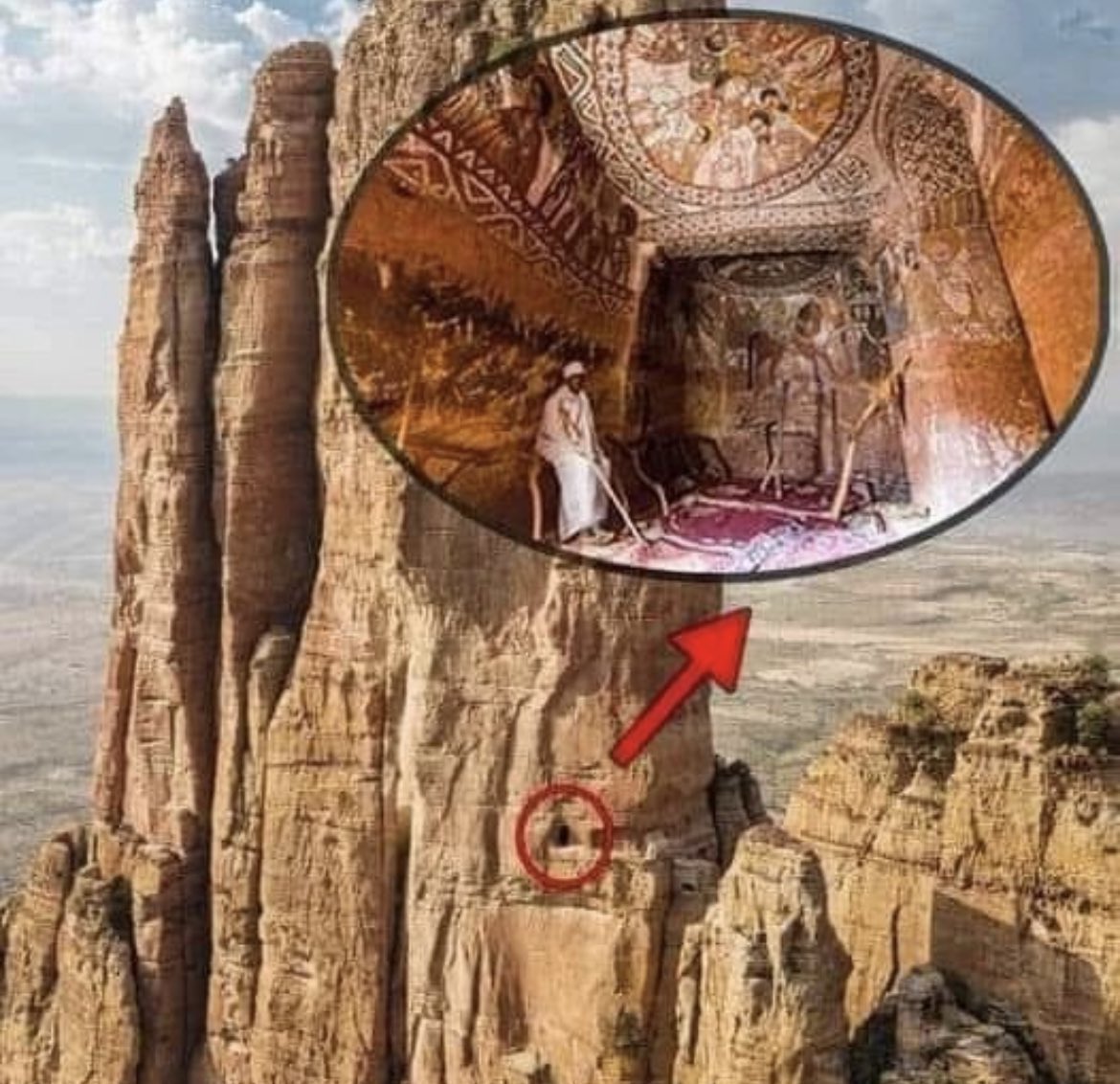
Ethiopia's 'Abuna Yemata Guh' is arguably the most inaccessible place of worship on earth and has to be climbed on foot to reach. Located in the Tigray region of northern Ethiopia, this ancient rock-hewn church stands atop a vertical cliff, perched at an elevation of around 2,580 meters (8,460 feet). It is considered one of the most inaccessible and challenging religious sites to reach in the world.
The construction of rock-hewn churches in Ethiopia has a long history dating back to the 4th century AD, during the time of the Aksumite Empire. These churches were built by carving into solid rock formations, creating impressive architectural masterpieces. The rock-hewn churches served as centers of religious devotion and provided shelter during times of conflict.
Abuna Yemata Guh is believed to have been carved out of the cliff face during the 5th century, making it over 1,500 years old. It is dedicated to Saint Yemata, a legendary Ethiopian saint who is said to have meditated and prayed in this secluded location. The church is named after Abuna (meaning "father" in Amharic) Yemata, who was a prominent Ethiopian religious leader.
What makes Abuna Yemata Guh particularly notable is the challenging ascent required to reach it. Pilgrims and visitors must hike up a steep and narrow footpath, navigating rugged terrain and exposed ledges. The ascent involves scrambling up the cliff face, sometimes using ropes for support. This arduous journey symbolizes a spiritual pilgrimage, testing the devotion and commitment of those seeking solace and connection with their faith.
Despite its remote and inaccessible location, Abuna Yemata Guh has attracted attention in recent years as a testament to Ethiopia's rich cultural heritage and architectural prowess. It is not only a place of worship but also a symbol of the enduring faith and determination of the Ethiopian people.
Furthermore, the Tigray region, where Abuna Yemata Guh is situated, has witnessed significant historical and cultural events throughout the centuries. It has been a center of religious and political power, with various empires and kingdoms rising and falling in the region. Today, Tigray is home to a diverse population, including the Tigrayan people, who have their unique language, culture, and traditions.
In recent years, the Tigray region has faced challenging times due to internal conflicts and humanitarian crises, making access to sites like Abuna Yemata Guh more difficult. Nevertheless, the church continues to be a testament to Ethiopia's rich history and the resilience of its people, reminding us of the enduring power of faith and the importance of preserving cultural heritage.
It is heartbreaking news but why all these always happening in Africa? the life of Africans is always either suffering in different diseases or dying every 10 years in war.#StopWarCrimes
I am asking everyone here to match me- Month of March IWM isn’t over yet- I know we are wiped but we need to be intentional with our help. I can personally vouch that every cent donated here will reach our Women and Girls- so GIVE NOW! https://t.co/rkd5wrmZKN @HPN4Tigray