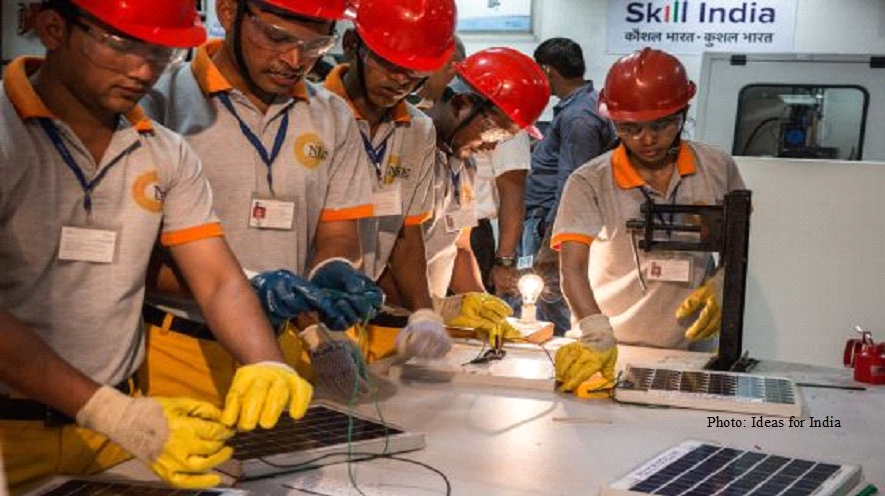
How can India reform its education system to improve employability through vocational education?
In their latest article, NCAER Visiting Faculty Farzana Afridi and her co-author Arjita Chandna argue that integrating vocational education into the school system, strengthening industry linkages, and creating clear pathways from training to employment can significantly enhance employability, boost productivity, and better prepare young people for the world of work.
Read more: https://t.co/vGtDGRy3al
Dr. R. Balasubramaniam, Member, NITI Aayog, reflects on the importance of placing communities at the centre of the development process through meaningful listening and participation.
Drawing on decades of experience, he underscores that lasting development outcomes emerge when policies and programmes are shaped by the lived experiences, knowledge, and aspirations of communities. He highlights that listening is not merely a consultative exercise but the foundation of dignified, citizen-centric governance, enabling better policy design, stronger accountability, and more sustainable development outcomes.
As India advances towards the vision of Viksit Bharat 2047, fostering participatory governance and strengthening community engagement will remain central to building an inclusive and empowered nation.
#CitizenCentricGovernance #ViksitBharat
@PMOIndia@narendramodi@Rao_InderjitS@MIB_India@PIB_India@DDNewslive@ashoklahiribjp@drrbalu
Completely other way around. Countries that break Islamism grow, countries that grow without breaking Islamism are Saudi-Qatar-Iran &c &c. Eventually you can get so stupefyingly wealthy nobody cares, but in the middle people start getting all ideological.
Really interesting:
The British crushed a revolt in India, and the survivors, so enraged by the British, decided to avoid smallpox vaccination, resulting in tens of thousands of their own people dying.
Grudges don't seem helpful!
@sakie339: "Vegetarian-only mid-day meals are state-sponsored discrimination"
Caste and corporate interests now shape what children eat in schools, but soy and paneer cannot replace eggs.
https://t.co/r7vRYlYhmO
Famines were ubiquitous in India, until they weren't. What changed? The best explanation is the railroads built by the British colonizers. Improving market access meant that local income was less responsive to local productivity shocks. 1/
Why was "Satluj" removed from Zee5 despite no law explicitly banning its online release? IFF breaks down the legal position, the role of the CBFC, the IT Rules, 2021, and the broader questions around censorship, transparency, and creative freedom in India.
India is the world's largest producer and exporter of rice, yet the Food Corporation of India (FCI) is holding rice stocks that are nearly five times the prescribed buffer norm, at a carrying cost of over Rs. 10,712 crores in FY25.
In their latest article, Ashok Gulati, Ritika Juneja, and Purvi Thangaraj trace this surplus to three interlinked policy distortions: open-ended MSP procurement, with several states offering bonuses above the MSP; free electricity and heavily subsidised urea.
Instead of addressing these underlying distortions, the government's response has been to divert surplus rice to ethanol production, supplying rice to distilleries at Rs. 23/kg despite FCI's economic cost of about Rs. 44/kg on the justification that it is broken and damaged rice.
The authors also highlight the environmental costs of the current policy framework, including the use of ~ 4,000 litres of water to produce one kilogram of rice, high methane emissions from paddy cultivation, and nitrate contamination of groundwater associated with serious health risks.
To address these challenges, the authors recommend capping state procurement at 40% of production, discontinuing state MSP bonuses, limiting free PDS supplies to the most vulnerable households, shifting ethanol production towards maize, and replacing fertiliser subsidies with direct income support.
Read more:
Financial Express: https://t.co/PGado3L3Dg
Indian Express: https://t.co/43KiCohXWn
Taiwan solved tax evasion in 1951 with a trick so cheap it should embarrass every tax authority on the planet.
The problem was an all-cash economy full of small shops. A merchant pockets the cash, skips the receipt, and the sale never existed. Auditors can't catch what was never recorded, and hiring enough of them to watch every noodle stand costs more than the missing tax.
So finance chief Ren Xianqun flipped the incentive. Print a lottery number on every receipt. Draw winners every two months on live TV. Top prize today: NT$10 million, about $310K.
Suddenly the customer and the shopkeeper want opposite things. The merchant wants the sale off the books. The customer wants the ticket. And there are millions more customers than merchants. Every transaction now carries a built-in witness demanding the paper trail.
Year one, reported tax revenue jumped 75%, from NT$29 million to NT$51 million. Seventy-five years later, roughly 70% of Taiwanese still play. Convenience stores redeem the smallest NT$200 prizes at the register, so even a coffee receipt feels like a scratch card.
The elegant part is what the audit force costs. The prize pool runs about NT$7 billion a year, roughly $20 million. In exchange, the government gets 23 million unpaid auditors working every checkout line in the country, forever. No inspector general on earth delivers that coverage at that price.
Greece, Italy, Portugal, and Slovakia all copied it. The most effective compliance tool ever built looks like a game, and that's exactly why it works.
Investing: The theory and the practice...will suprise you
We all know that we should buy when the market is at its lows and think of booking profits at the high
But the Equity mutual fund flows over 20+ years show the exact opposite! 🙃
While inflows have increased structurally over the last 20 years, the behavioural relationship has remained consistent over two decades: strong market performance is followed by stronger inflows. Similarly market falls are followed by much lowered inflows.
Every major market cycle: 2008 GFC, 2009 recovery, 2014 rally, COVID crash, and 2021–24 bull market and the recent market declines shows that during bull markets, investors increased allocations only after sustained market gains, while during bear markets, inflows weakened only after markets had already corrected.
Nor is this behaviour peculiar to Mutual funds or equity markets. Inflows into Gold funds peaked in January - exceeding even those into equity funds. As gold prices fell, predictably, now the gold investors have begun to head out.
I am reminded of fund managers who were advising you to sell 'unproductive' gold and put it in equities in 2024 and were promoting gold fund end of 2025
Coming to the second part of so called experts analysing market movements.
I recently came across a preposterous suggestion, masquerading as analysis, saying that foreign portfolio investors have got an exit due to Indian mutual fund inflows and the way to stop it is to curb Indian retail money flowing into equity markets via Mutual Funds 🤦
Never mind that all data shows that inflows and outflows into Mutual funds lag and not lead market movements.
The inflows after market peaks have never prevented the markets from crashing. On the other hand, even as inflows reduce drastically after market crashes it does not prevent the market from rising.
Then there is the chasing of Foreign Portfolio Investments without any understanding of their impact on the market
Data free opinions abound!
My column in Mint
@livemint
Want advice that is based on data, not fairy tales? Send a DM to @firstglobalsec@fghumsmallcase@PenguinIndia
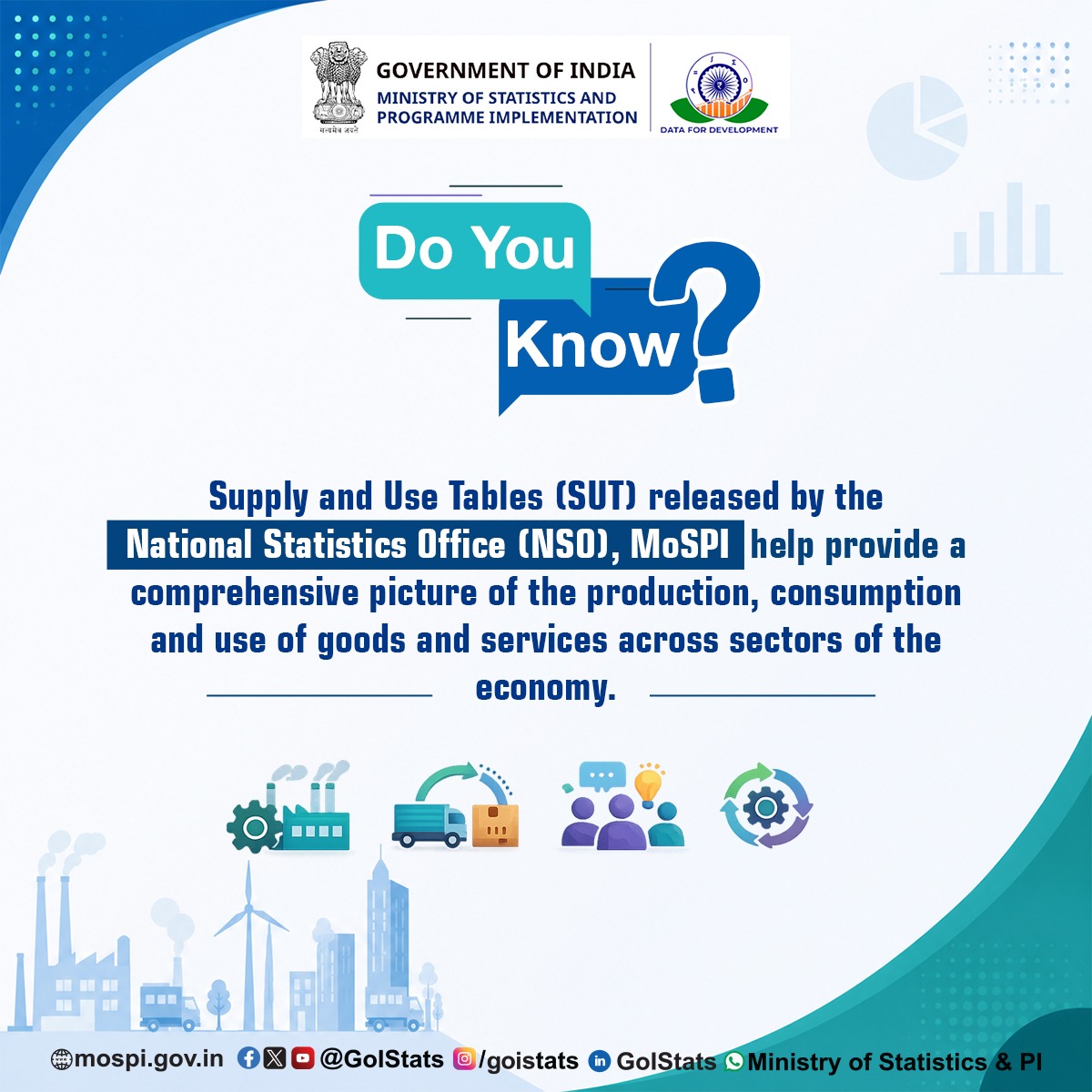
Supply and Use Tables (SUT) provide a comprehensive view of how goods and services are produced, consumed, and utilized across sectors of the economy. By linking production with usage, SUT strengthens economic analysis and supports evidence-based policymaking for informed decision-making.
For related updates and official information, please visit MoSPI’s official website. https://t.co/COjZExnr1j
#NSO #MoSPI #SupplyAndUseTables #OfficialStatistics #EconomicStatistics #DataForDevelopment #NationalAccounts #EvidenceBasedPolicy #EconomicAnalysis #StatisticsForDevelopment #IndiaStats
@PMOIndia@Rao_InderjitS@_saurabhgarg@PIB_India@PibMospi@mygovindia@NITIAayog
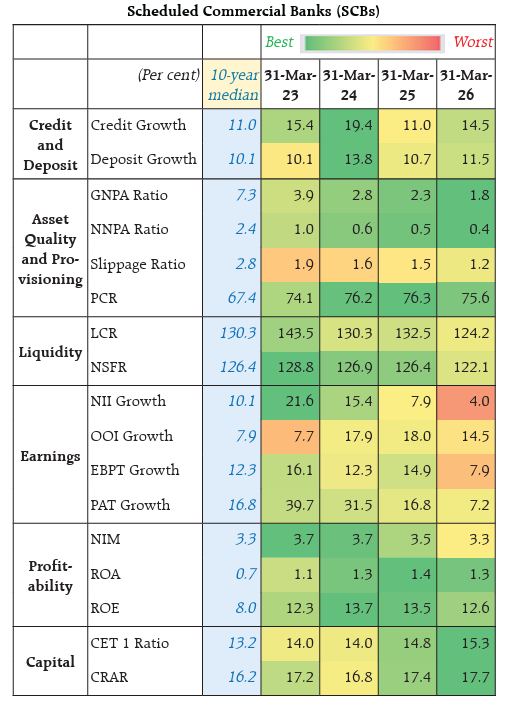
Indian Banking Sector: Health at a Glance in FY26
Net NPAs: 0.4%
Gross NPAs: 1.8%
Fresh Slippage Ratio: 1.2%
Provision Coverage ratio: 75.6%
Capital Adequacy Ratio: 17.7%
Net interest margin : 3.3%
Return on Assets: 1.3%
Return on Equity: 12.6%
Source: @RBI
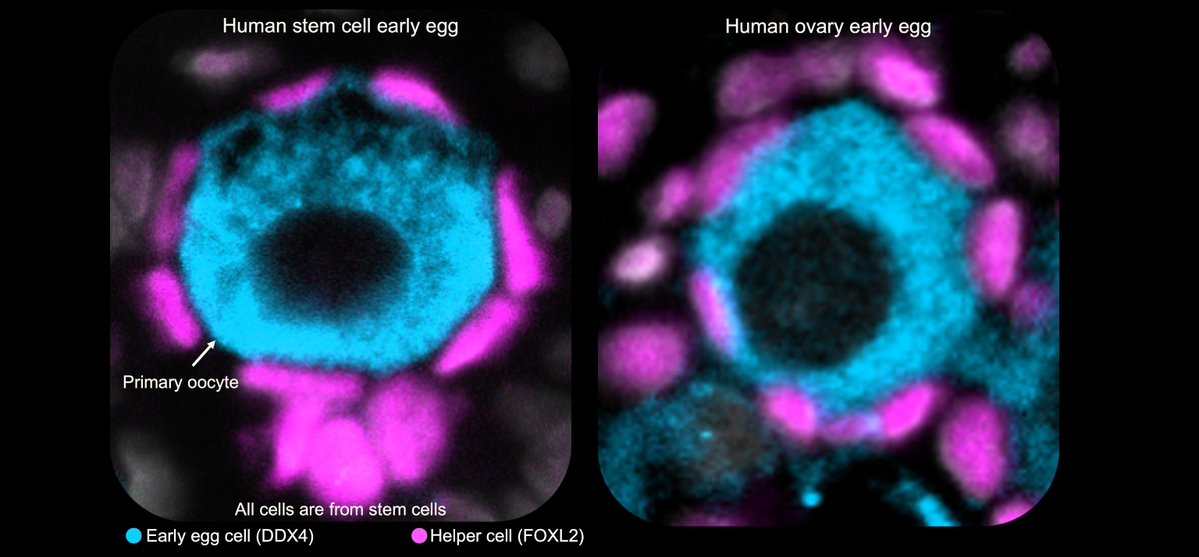
I’m so excited to share this update on @Conception –
We’ve generated the first early human eggs derived from stem cells.
This is a big deal -- the potential to redefine fertility is real.
.@jburnmurdoch: “Economic growth isn’t everything for everyone, but it turns out it’s pretty close. It has delivered remarkable progress on exactly the benchmarks that its critics prioritise — recently even on environmental impact. The problem facing rich and poor alike today is that we don’t have enough of it, not that we’ve had too much.”