Enough is enough. We mapped Bengaluru traffic to prove it is a huge civic and health risk that is taking lives and costing us lakhs just to exist here.
Some extremely sad data we found:
i) In a heart attack every 30 minutes of delay before treatment raises the risk of dying within a year by 7.5%. At 6 pm traffic here can add 25 minutes to an ambulance ride.
ii) Bengaluru has the most deaths from civic negligence in India. In August a 32 year old woman was killed when the bike she was on swerved around a pothole.
iii) Rush hour takes about a month of working hours from a commuter every year, like an 8% pay cut. Living near the tech parks to avoid it costs ₹1.6 to ₹2.4 lakh more a year in rent.
iv) You have access to only 3 out of 10 essential public facilities (schools, hospitals, toilets etc) at 6pm within a 30 minute vicinity.
v) The ORR carries more than double the traffic it can handle. Last year a company said it would leave Bellandur over 1.5 hour commutes and another state invited it within a day.
vi) The ORR bus lane cut bus trips by about 20 minutes. It was removed in 2022 for metro work and still is not back.
This is intolerable for a city that drives so much of India's economy. We cannot let India's Silicon Valley stall.
My team has put the most immediate fixes that will help solve this + how delayed/pushed they have been. Tag the people who can fix it: Traffic police or Namma Metro or GBA or the CM's office and let us all be honest and tell us what 6 pm has cost you.
#Bengaluru #BengaluruTraffic
Putting terrorists and aggressors on the same moral plane as their victims and targets is repugnant. At best it whitewashes horrible crimes, at worst it feeds the culture of murder and martyrdom that Hamas espouses.
₹2 buys a stranger's home address. We tested a Play Store app with 10M+ downloads selling VAHAN/eChallan data, one number plate gave us the owner's full name, father's name, permanent address, insurance policy, chassis and engine numbers, all of which Parivahan masks behind an OTP.
This isn't a hack. Researchers at Cyderes traced it to licensed API keys given to KYC companies, now resold on Telegram.
IFF has written to MoRTH, NIC & CERT-In demanding a forensic audit, and filed RTIs on 22 Sept. Found your own data on these apps or similar website? Write to [email protected]
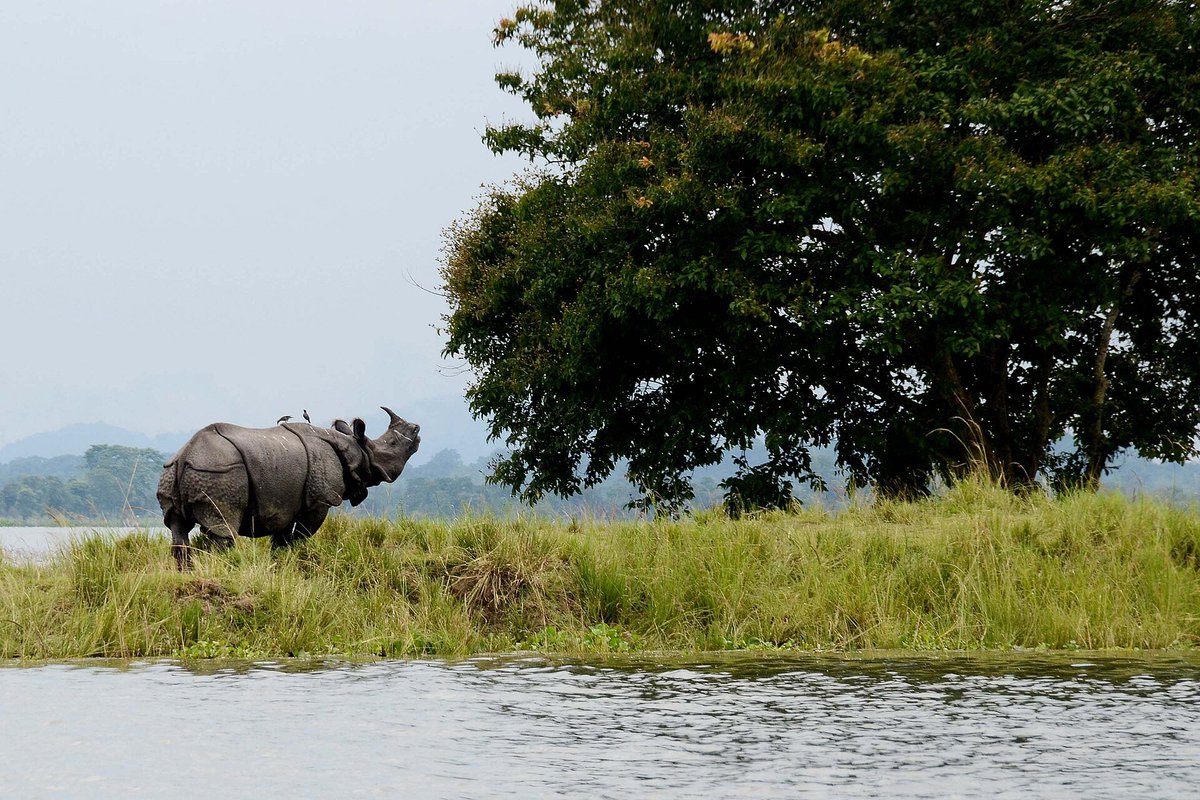
For decades, Kaziranga lost rhinos to men who knew the ground better than the rangers chasing them. Then someone changed the odds. In 2022, for the first time in 45 years, it went a full year without losing one. Read on.
1/12
Next in who after the Ramanujan Series? He is the reason we can find a needle in the digital haystack of the world. Meet Dr. Rajeev Motwani (1962-2009), the Ghost who built the logic of the modern world. A boy from Jammu who went to IIT Kanpur & ended up teaching 2 kids at Stanford how to organize the internet. W/o him, there is no Google. W/o him, the web would be a chaotic library with no index.
He was the master of Randomized Algorithms, the man who proved that sometimes, a bit of chance is the fastest way to the truth. He won the Nobel of his field & mentored the titans of Silicon Valley, yet he remains an invisible legend in his homeland. He is the architect of the digital oracle, the man who taught the world how to search.
Born in 1962 in Jammu, Rajeev grew up in a household defined by the discipline of the Indian Army. As a child, he famously wanted to be a librarian because he loved books so much. He eventually realized that mathematics was the ultimate indexing system for the universe. He belonged to the legendary Class of 1983 at IIT Kanpur. This was a Silo of intense competition that refined his ability to solve problems with extreme speed & elegance.
He moved to the US & earned his PhD from UC Berkeley in 1988, diving into the deep waters of theoretical computer science. Before Motwani, most computer scientists tried to find perfect answers. Motwani realized that for massive amounts of data, perfection is too slow. He proved that by introducing a small, controlled amount of randomness into an algorithm, we could solve complex problems millions of times faster than traditional methods.
In 1995, he co-authored Randomized Algorithms. It is not just a textbook; it is the fundamental blueprint for modern computing. Every time a large system (like a global bank/a social network) processes data, it likely uses a Motwani-style randomized check.
In the mid-90s, at Stanford University, Motwani encountered 2 students: Larry Page & Sergey Brin. They had a rough idea for a search engine. Motwani provided the mathematical rigor. He helped them formulate PageRank, the algorithm that ranks web pages by their importance based on link structure.
He was not just a mentor; he was an early advisor & investor. He was the Ghost in the room when Google was born in a garage. Beyond Google, he was a foundational advisor to PayPal, Airbnb, & Twitter. He saw the Pattern of Success in startups before they even had a name.
In 2001, he won the highest honor in theoretical computer science (The Gödel Prize) for his work on the PCP Theorem (a massive breakthrough in how we verify proofs).
In 2009, at the age of 47, he passed away in a tragic accident at his home in California. Silicon Valley went into a state of deep mourning. Sergey Brin wrote a heartbreaking tribute titled "Rajeev Motwani, my friend & teacher." Yet, in India, his name did not make the front pages. He remains a Ghost in the country that produced him.
He is the Ghost of the Algorithm. Like Ramanujan, he saw the beauty in the approximated truth. He realized that the world is too big to be solved by simple, rigid lines, so he taught machines how to use probability to find the truth.
Key Work: https://t.co/INQyMOp9Bj
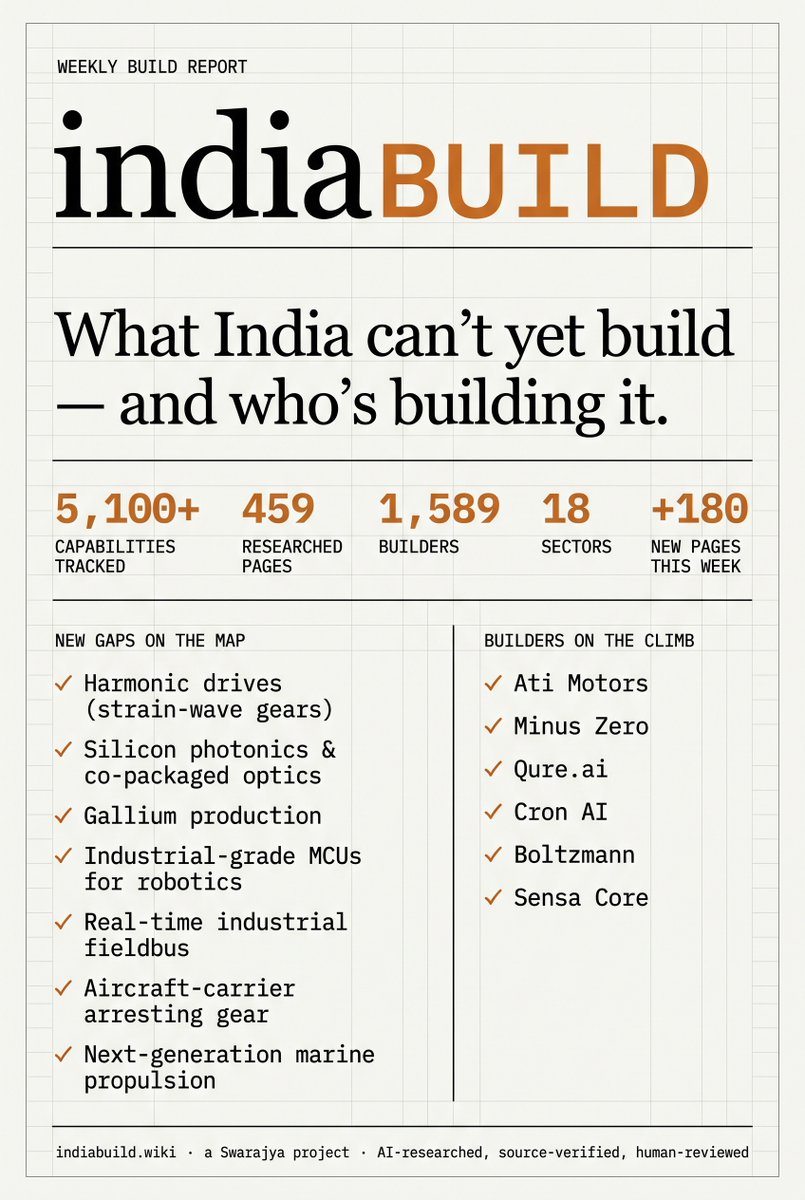
The map of what India can't yet build, and who's building it, is filling in fast.
Where it stands:
-5,100+ capabilities tracked
-450+ fully researched pages
1,580+ builders
-across 18 sectors.
This week alone: 180 new pages, 640+ builders, 70+ reader-flagged gaps.
A slice of the hard ones that went up this week:
• Harmonic drives (strain-wave gears)
• Silicon photonics & co-packaged optics
• Gallium production
• Industrial-grade MCUs for robotics & drones
• Real-time industrial fieldbus (EtherCAT/PROFINET)
• Aircraft-carrier arresting gear
• Next-generation marine propulsion
• Warp knitting machines
• Onboard perception for autonomous machines
• AI-driven small-molecule & peptide drug discovery
And a few of the builders climbing them:
Ati Motors · Minus Zero · https://t.co/HZJzuzGz26 · Cron AI · Boltzmann · Sensa Core - alongside hundreds more, from LMW to Hetero Drugs.
See a gap we're missing? Name it → https://t.co/ayUnuJ58gw
A train that emits water, not smoke. How cool is that? This is India's first Hydrogen Cell Powered Train 🚆
What's cooler? India is one of only 6 nations to develop this technology ⚡
What's even cooler? India has developed the most powerful hydrogen train in the world 🔥
Lightning 3.1 Pro from @smallest_AI is the #1 real-time TTS model for Customer Support in Hindi 🇮🇳 on Voice Arena
In blind human evaluations it outperformed leading Hindi alternatives including Sarvam and Cartesia.
➤ Quality: Bradley-Terry Elo of 1101 (±24) from 478 blind arena appearances in this category, every point earned in head-to-head preference tests, not internal benchmarks or synthetic metrics
➤ Production-ready: native 44.1 kHz output, ~150 ms time-to-first-byte at scale, ~29 languages with premium curated voices, purpose-built for voice agents, IVRs and support workloads
Customer support is the register where TTS actually gets deployed. Samples below 🧵
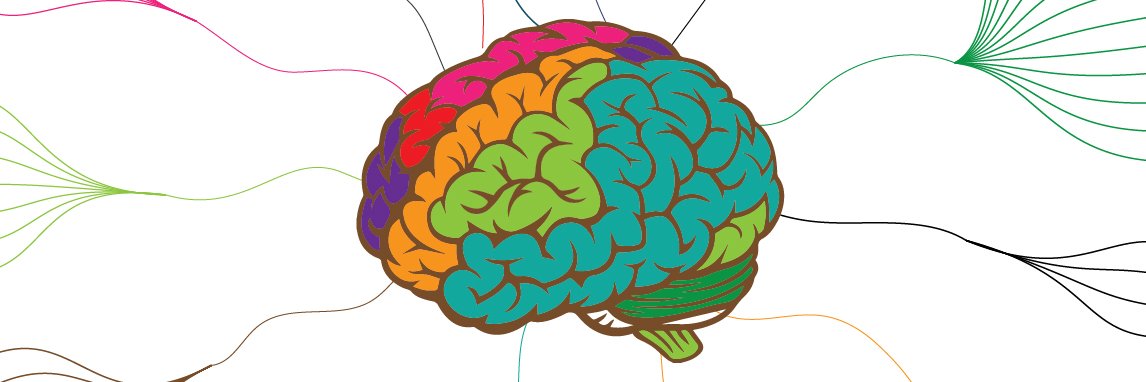
The human brain is strikingly modular, with distinct networks for language, formal reasoning, social reasoning, and physical reasoning. Is this a fundamental principle of how intelligent systems are built, or an accident of biological evolution?
In our latest preprint, we find that a similar modular organization emerges in Large Language Models, another class of intelligent system.
Brains and LLMs are shaped by entirely different kinds of optimization (biological evolution vs. gradient descent). That they arrive at the same modular design anyway suggests modularity may be a fundamental property of intelligent systems.
🌐 Web: https://t.co/ZKrnTSSuSf
📄 Paper: https://t.co/ZibBXz3PUy
💻 Code & data: https://t.co/uBo5iOYNjy
Using circuit analyses across 46 tasks spanning four cognitive domains, we find:
1️⃣ Tasks that draw on the same network in humans recruit overlapping units in LLMs, while tasks drawing on different networks recruit distinct units.
2️⃣ These units are causally linked to model behavior. Ablating the units critical for one domain impairs performance in that domain (−26% accuracy) but barely touches the others (−2.5%).
This project has been in the works for a while :) Huge thanks to my advisors @jacobandreas@ev_fedorenko@devarda_a, and to @Nancy_Kanwisher for valuable conceptual input and feedback throughout. #MIT
Is China really “libertarian,” as @nntaleb claims? A quick look at both the largest and the smallest entities in China suggests otherwise.
Start with the largest entity in the country: the Chinese Communist Party itself, an organization with more than 100 million members that in practice operates largely above the law. It is difficult to reconcile the existence of such an institution with any meaningful conception of libertarianism.
Now look at the smallest entities — private firms, especially SMEs. As recently as one month ago, even People’s Daily, the official mouthpiece of the Party, openly admitted that businesses continue to suffer from persistent problems such as “indiscriminate charging, indiscriminate fines, indiscriminate inspections, and indiscriminate seizures,” as well as “illegal extraterritorial law enforcement and revenue-driven enforcement.”
The scale of the problem is hardly trivial. Over the past year alone, the State Council reported that more than 66,000 cases involving abusive administrative enforcement against enterprises were investigated and corrected nationwide, preventing an estimated 30.7 billion yuan in economic losses for businesses. These official figures merely confirm what countless anecdotal accounts from private enterprises have long demonstrated: small and medium-sized firms in China remain subject to constant regulatory harassment from multiple layers of government authorities.
So no — last time I checked, China is still a communist state characterized by pervasive state intervention, arbitrary enforcement, and political power operating above legal constraint. That is many things, but libertarian is certainly not one of them.
https://t.co/9VuCffwG1b
40 years in shipping gave me one unusual qualification as a historian: I had no academic orthodoxies to protect.
When I began researching the history of maritime trade, I followed the sea lanes backwards into deep antiquity. Without exception, they converged on the Indian subcontinent. This was not the book I had intended to write.
I must give credit to my editor, who gave an unknown author with a controversial approach, an opportunity. His first attempts to find peer reviewers encountered significant resistance. The argument that India sat at the centre of ancient world trade, not its periphery, was considered, to put it gently, inconvenient.
What I found, and what I could not stop finding, is that placing India at the centre of world history does not simply revise one chapter. It cascades. Correct the starting assumption and you are forced to reconsider the origins of mathematics, medicine, philosophy, linguistics, religion. Each conclusion leads to another. I came to call these the collateral heresies.
My three books explain the architecture of how they connect.
If you work in a field where received wisdom is protected by institutional interest rather than evidence, you will recognise the pattern. The question is whether the evidence eventually wins.
It's interesting how lay people (typically not scholars or Indologists) underestimate the intellectual rigour and continuity of India's indigenous traditions.
They tend to apply the same framework they apply for the Middle East to India.
Iraqis forgot about Hammurabi, Ashurbanipal, et al., Egyptians forgot about Khufu, Hatshepsut, et al.; Arabs forgot about Gindibuʾ, Karibʾīl Watār, et al.
These figures were (re)discovered by archaeologists and epigraphers in the 18th-20th centuries.
The accounts of az-Zabbāʾ/Zenobia in medieval Islamic historiography drew from both indigenous (Arab, Syriac) & Greco-Roman/Byzantine sources while the account of Dārā (Darius III) in Firdawsī's Šāhnāmah drew almost entirely from the Alexander Romance tradition (via Syriac translations from Greek, which were later translated into Pahlavi/Middle Persian)
Therefore, it must stand to reason than Indians also must've forgotten the names of rulers like Candragupta, Aśoka, etc. prior to the arrival of Westerners, no?
Yet this is clearly not true.
Although the Brāhmī script used in the inscriptions had changed so much as to be unrecognizable, Candragupta (Sandracottus of the Greeks) was well known through texts and plays like Viśākhadatta's Mudrārākṣasa, which were completely independent of Greco-Roman sources like Megasthenes.
The names of Aśoka Maurya and his sons Daśaratha and Samprati are recorded in the Puranic vaṃśāvalis and he is glorified in Buddhist sources such as the Divyāvadāna (which contains a section known as the Aśokāvadāna) and Srilankan chronicles like the Dīpavaṃsa and Mahāvaṃsa.
A manuscript of the Divyāvadāna in Sanskrit (or Sanskritized Prakrit) was discovered in Nepal in 1824, so the text was continually being copied.
One could argue that modern Persians had no knowledge of Old Persian for over 1,500 years (until the script was deciphered in the 19th century) and minimal knowledge of Avestan.
The Zand and Dēnkard commentaries composed by medieval Zoroastrians dasturs and mobeds often differs from modern philological readings.
Yet in the case of the Vedas, there is a largely unbroken chain or recitation reinforced by the śikṣās, prātiśākhyas, etc. and interpretation based on the Nirukta (the Naighaṇṭuka, Naigama, Daivatakāṇḍa-s of Yāska), Vyākaraṇa (Aṣṭādhyāyī + Vārttikas + Mahābhāṣya, along with the Uṇādisūtras and Phiṭsūtras), etc.
Therefore, the commentaries by Bhaṭṭabhāskara, Sāyaṇa, Veṅkaṭamādhava, Skandasvāmin, Mahīdhara/Uvaṭa are quite close to modern philological interpretations, simply because formal study of Sanskrit (including Vedic Sanskrit) never truly disappeared in India.
Even the study of the medieval Prakrits never disappeared among the Hindus and Jains.
Most people nowadays think of the 16th century grammarian Mārkaṇḍeya as the final Prakrit grammarian, yet Rāmaśarman Tarkavāgīśa composed his grammar of Prakrit and Rāmapāṇivāda composed his Kaṃsavaho and Usāṇiruddho less than two centuries before Norwegian-born German Indologist Christian Lassen's published his Institutiones Linguae Prakriticae.
When it comes to continuity, one can't treat the Indian Subcontinent the same way as the Middle East, Iran, or Central Asia, yet the fact that they rehash the same arguments regardless just highlights that these sorts of arguments (whether applied to India OR the Middle East) are ultimately rooted in racial paternalism ("the White Man's Burden," yet applied to history).
Train on one subject. Deploy on another. No recalibration.That's the dream in neurotech & neural geometry keeps breaking it.
𝐖𝐡𝐚𝐭'𝐬 𝐭𝐡𝐞 𝐫𝐞𝐚𝐥 𝐛𝐥𝐨𝐜𝐤𝐞𝐫 𝐟𝐨𝐫 𝐜𝐫𝐨𝐬𝐬-𝐬𝐮𝐛𝐣𝐞𝐜𝐭 𝐭𝐫𝐚𝐧𝐬𝐟𝐞𝐫? Vote👇
#Neurotech#BCI#Biosignals#Anthriq
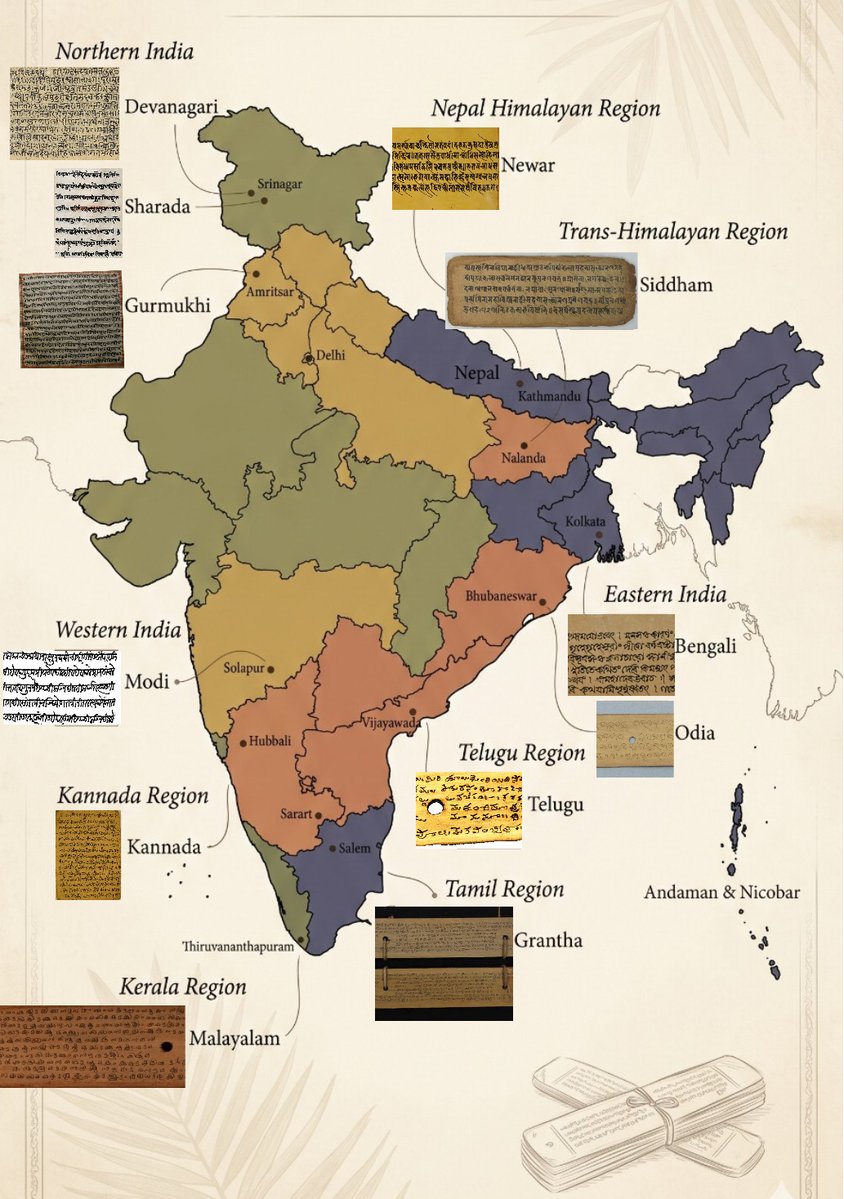
1.2 crore manuscripts & more than 3 lakh inscriptions inside Bharat
> 1% searchable
We are building India's knowledge infrastructure and have a long way to go
Grateful for the response. To fund or participate - DM @porwalpoo8
Our community
https://t.co/OKtrGmeig0
🚨NEW INVESTIGATION: A Fortune 500 company reportedly cancelled a @HinduAmerican training session after employees circulated its Wikipedia page.
That page tells readers HAF aligns with Hindu nationalism, threatens academic freedom, and has been accused of acting as a foreign agent.
We traced who built that narrative. The same handful of accounts kept appearing across HAF, its critics, activist groups, and key public figures—building an interconnected narrative that now feeds Google and AI systems.
Full investigation in thread. Receipts 👇
The text you provided clearly states:
"The Rig Veda was not written down until sometime in the early- to mid-first millennium B.C. at the earliest (Basham 1967; Thapar 2002)."
They are providing a terminus post quem and not a terminus ante quem.
They are NOT claiming that there is strong evidence in favour of transcription of the Ṛgveda during the early mid-first millennium B.C.
Moreover, neither AL Basham nor Romila Thapar are epigraphers or philologists.
If they were, they would've been aware of the problems inherent is assuming such an early transcription of the Vedas.
The inscriptions at the time of Aśoka employ a notoriously minimalist, low-resolution form of the Brāhmī script:
• There is no way to mark sounds like ṛkāra/ḷkāra/ṝkāra, visarjanīya, etc. in the earliest form of Brāhmī.
• There is no way to distinguish between anusvāra and anunāsika in the earliest form of Brāhmī.
• Despite the frequency of geminate consonants in spoken MIA variants (the "Prakrits"), geminate consonants were not explictly marked in the earliest forms of Brāhmī and only true consonant clusters were written as ligatures.
• Early Kharoṣṭhī was even more minimalistic than early Brāhmī & lacked any visual distinction between short and long vowels.
There is simply no feasible way to transcribe नॄँᳲ पा॑हि शृणु॒धी गिरः॑ (nṝ̃́ḫ pāhi śṛṇudhī́ gíraḥ) from ṚV [Śākalya-saṃhitā] 8.84.3 or य इ॒मा विश्वा॒ भुव॑नानि चाकॢ॒पे (yá imā́ víśvā bhúvanāni cākḷpé) from AV [Śaunaka-Saṃhitā] 7.92.1 into minimalist scripts like early Brāhmī or Kharoṣṭhī whilst also maintaining phonemic and accentual precision.
During slightly later periods (i.e. the early centuries AD), when writing in India became advanced enough to capture Vedic Sanskrit phonemic peculiarities (pitch accent, etc.), it's quite likely that portions of the Vedic corpus were committed to writing as mnemonic aids for students, though this practice was also viewed with suspicion in more orthodox circles.
This taboo is reflected in the Vṛddha-Gautama-smṛti and Anuśāsana-parvan of Mahābhārata:
veda-vikrayiṇaś caiva vedānāñ caiva dūṣakāḥ।
vedānāṃ lekhinaś caiva te vai niraya-gāminaḥ॥
"Sellers of the Veda, corrupters of the Veda, and those who commit the Veda to writing are bound for hell."
Those who recite the Vedas using the aid of written transcripts are listed among the six lowest kinds of reciters in the Yājñavalkya-śikṣā and Pāṇinīya-śikṣā:
gītī śīghrī śiraḥ-kampī tathā likhita-pāṭhakāḥ।
anarthajño 'lpa-kaṇṭhaś ca ṣaḍ ete pāṭhakādhamāḥ॥
"The one who sings [the mantras], the hasty reciter, the one who shakes his head when reciting, the ones who read from a written text, the one who is ignorant of the meaning [of the mantras], and the one with a light voice - these six are the lowest kinds of reciters."
It's worth noting that the Vṛddha-Gautama-smṛti is a comparatively late Dharmaśāstra.
Likewise, the Anuśāsana-parvan is absent in the Mahābhārata Parvan list present in the Kuṣāṇa-era Spitzer Manuscript from the Qizil Caves of East Turkestan, indicating that the parvan was likely a comparatively late addition to the Mahābhārata, possibly during the Gupta period.
The dating of the śikṣās is highly contested, though they almost certainly postdate the Nirukta of Yāska, the Prātiśākhyas, and even the Śabdānuśāsanam of Pāṇini (popularly known as the "Aṣṭādhyāyī").
Claims that Yājñavalkya-śikṣā was composed by Yājñavalkya Vājasaneya of Mithilā (or even that the Pāṇinīya-śikṣā was composed by Pāṇini) are highly dubious.
In an ideal world, the people in the street should have come forward voluntarily with the cctv recordings to the police to capture the terrorists. Instead the whole street deleting the videos to protect the terrorists shows the deep rot and decay within the community and a complete lack of humanity.
Another young innocent life lost to fanatic radicalisation. How many more lives should be lost before the civilised section of the society wakes up? 0.5 front threat is real, here and now.
Om shanthi Surya🙏
‼️🚨 ALARMING: Google now treats privacy as suspicious behavior by default. Users of GrapheneOS, CalyxOS, /e/OS, and other deGoogled Android phones are being locked out of millions of websites unless they install the exact Google Play Services software they deliberately removed.
GrapheneOS is recommended by the EFF and used by journalists, lawyers, and activists in high-risk environments. The audience most likely to read Google's data practices and refuse its terms is now flagged as fraudulent for that exact decision.
What happened?:
▪️ Google announced "Cloud Fraud Defense" at Cloud Next on April 22-23, 2026, branding it "the next evolution of reCAPTCHA." Existing reCAPTCHA customers were auto-migrated.
▪️ When the system flags traffic as suspicious, the old click-the-bus puzzle is gone. Users get a QR code instead.
▪️ Scanning the QR code requires Google Play Services running on the device. Internet Archive snapshots show this requirement has been live since at least October 2025, silently rolled out for 7 months before anyone noticed.
▪️ No Play Services = no QR scan = locked out.
The bigger picture:
▪️ Google already tried this in 2023. It was called Web Environment Integrity (WEI), and it would have let Google decide which devices were "real enough" to access the web. Standards bodies and the public pushed back hard, and Google killed it. Three years later, the same idea is back, just hidden behind a QR code instead of a browser feature.
▪️ reCAPTCHA runs on millions of websites. Every developer who keeps using it is now, by default, telling deGoogled Android users they're not welcome...