Edison Analysis Agent can access publicly hosted RNA-seq datasets, perform transcriptomic analyses, and draw accurate biological conclusions. Here we use the Edison Analysis Agent to reanalyze a recently released dataset on Autism Spectrum Disorder (ASD). Identifying how risk-associated mutations mechanistically alter brain development and contribute to ASD remains a significant challenge. In their recent Nature paper, Gordon et al. tackled this problem using patient iPSC–derived cortical organoids and time-resolved bulk RNA-seq, revealing genotype-linked expression similarities of ASD forms and their strongest divergence from normal organoids at the earliest stages. In our new post, the Edison Analysis Agent autonomously reanalyzed the public dataset and reproduced both key results, recovering genotype-driven clustering of ASD forms and independently recapitulating their “early divergence, later convergence” trajectory across development.
Cardiologist wins 3rd place at Anthropic's hackathon. Out of 13,000 applications. Built in 7 days by Michał Nedoszytko MD. Coded day and night - in the hospital, in the cloud, while flying from Brussels to San Francisco.
A few years ago, it would have been impossible for a doctor to build this alone in just a couple of days. AI changed that.
The project is called https://t.co/wAliajqjVF. It is an AI agentic care platform for patients. Including reverse AI scribe it is a companion that guides the patient from the moment they leave the doctor's office.
Powered by the massive context window of Opus 4.6, it allows patients to explore their full medical history, connected devices, Evidence Based resources and external data sources — all in one place.
Today, the barrier to entry has vanished; even a practicing physician can build an application from scratch.
Generative AI for Biosciences: Emerging Threats and Roadmap to Biosecurity
1. The rapid integration of generative AI (GenAI) into biosciences is revolutionizing biotechnology and medicine, but it also introduces significant biosecurity risks. This article highlights how GenAI can be misused to create harmful biological agents, bypass safety filters, and automate risky experiments.
2. The article outlines the dual-use dilemma of GenAI in biosciences. While it can design novel proteins, small molecules, and genetic sequences for therapeutic discovery, the same capabilities can be exploited to generate toxins, virulent pathogens, and other dangerous materials through jailbreak techniques.
3. Privacy and security risks are also emerging. GenAI models trained on sensitive biological data can memorize rare patterns or be manipulated to reveal underlying training data, potentially exposing proprietary datasets and enabling precision-targeted biological attacks.
4. The rise of AI agents with tool access marks a new era in biosciences. These agents can autonomously plan and execute complex scientific workflows, lowering the barrier to entry and increasing the risk of misuse. The article emphasizes the need for secure-by-design architectures to mitigate these risks.
5. The authors conducted 130 expert interviews across academia, government, industry, and policy. A large majority (76%) expressed concern over AI misuse in biology, and 74% called for the development of new governance frameworks to address emerging threats.
6. The article proposes a multi-layered approach to GenAI safety, including rigorous data filtering, alignment with ethical principles during development, and real-time monitoring to block harmful requests. These strategies aim to embed security throughout the GenAI lifecycle.
7. The authors advocate for adaptive biosafety and biosecurity systems that integrate domain knowledge, demonstrate higher-order reasoning, and evolve with technological progress. This includes continuous red-teaming efforts to uncover vulnerabilities and adaptive countermeasures to ensure model security.
📜Paper: https://t.co/0v1MfGuQMd
#GenerativeAI #Biosecurity #Biosciences #AIethics #DualUse #PrivacyRisks #GovernanceFrameworks
New art project.
Train and inference GPT in 243 lines of pure, dependency-free Python. This is the *full* algorithmic content of what is needed. Everything else is just for efficiency. I cannot simplify this any further.
https://t.co/HmiRrQugnP
During the COVID-19 pandemic, genomic studies generated huge amounts of data that were computationally difficult to analyse.
Our researchers developed new methods to accurately reconstruct the phylogenetic tree of more than 2 million SARS-CoV-2 genomes.
https://t.co/DuvXCTrQnB
Major preprint just out!
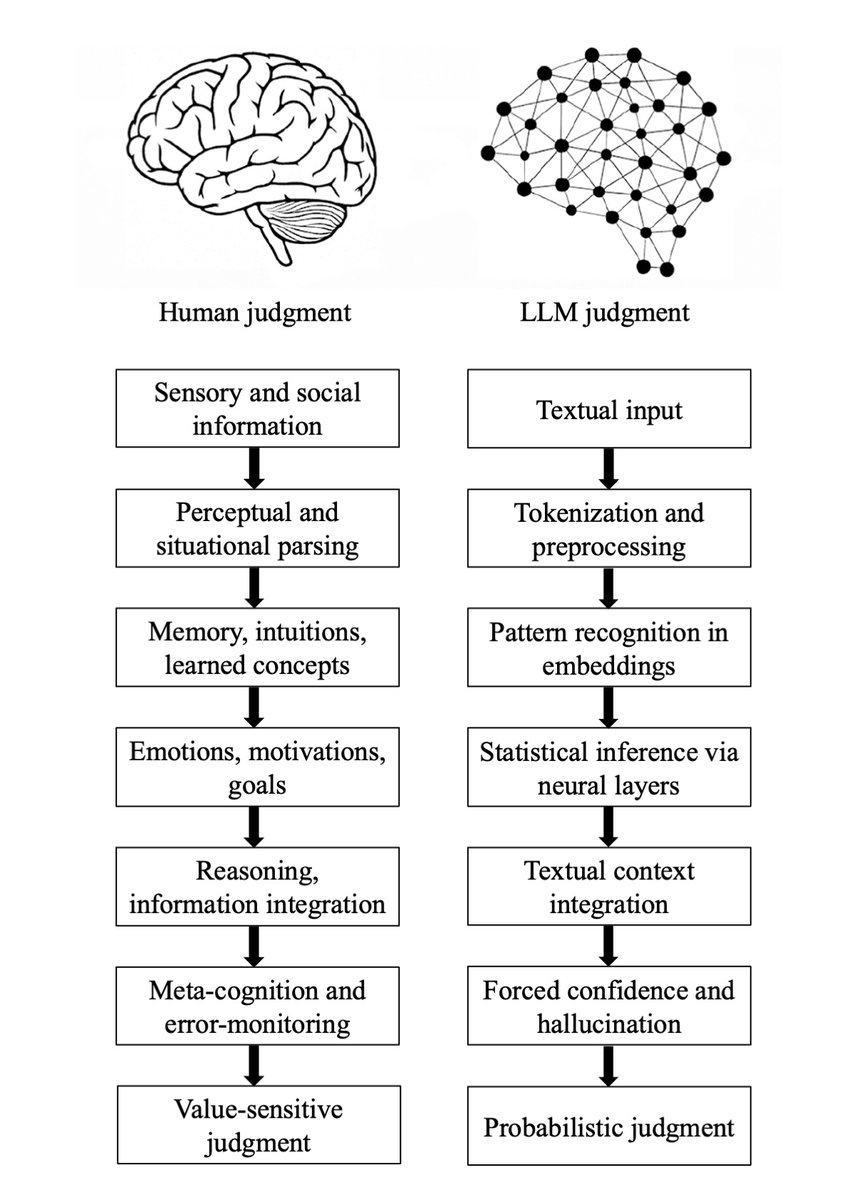
We compare how humans and LLMs form judgments across seven epistemological stages.
We highlight seven fault lines, points at which humans and LLMs fundamentally diverge:
The Grounding fault: Humans anchor judgment in perceptual, embodied, and social experience, whereas LLMs begin from text alone, reconstructing meaning indirectly from symbols.
The Parsing fault: Humans parse situations through integrated perceptual and conceptual processes; LLMs perform mechanical tokenization that yields a structurally convenient but semantically thin representation.
The Experience fault: Humans rely on episodic memory, intuitive physics and psychology, and learned concepts; LLMs rely solely on statistical associations encoded in embeddings.
The Motivation fault: Human judgment is guided by emotions, goals, values, and evolutionarily shaped motivations; LLMs have no intrinsic preferences, aims, or affective significance.
The Causality fault: Humans reason using causal models, counterfactuals, and principled evaluation; LLMs integrate textual context without constructing causal explanations, depending instead on surface correlations.
The Metacognitive fault: Humans monitor uncertainty, detect errors, and can suspend judgment; LLMs lack metacognition and must always produce an output, making hallucinations structurally unavoidable.
The Value fault: Human judgments reflect identity, morality, and real-world stakes; LLM "judgments" are probabilistic next-token predictions without intrinsic valuation or accountability.
Despite these fault lines, humans systematically over-believe LLM outputs, because fluent and confident language produce a credibility bias.
We argue that this creates a structural condition, Epistemia:
linguistic plausibility substitutes for epistemic evaluation, producing the feeling of knowing without actually knowing.
To address Epistemia, we propose three complementary strategies: epistemic evaluation, epistemic governance, and epistemic literacy.
Full paper in the first reply.
Joint with @Walter4C & @matjazperc
She predicted:
• The Deep Learning revolution (2012)
• AI's blindness to the physical world (2018)
• The shift to world models (2024)
Now Fei-Fei Li revealed the 5 next AI waves reshaping every physical industry.
Here's what you should know (& how to position yourself): 🧵
Do NOT install any agentic browsers like OpenAI Atlas that just launched.
Prompt injection attacks (malicious hidden prompts on websites) can easily hijack your computer, all your files and even log into your brokerage or banking using your credentials.
Don’t be a guinea pig.
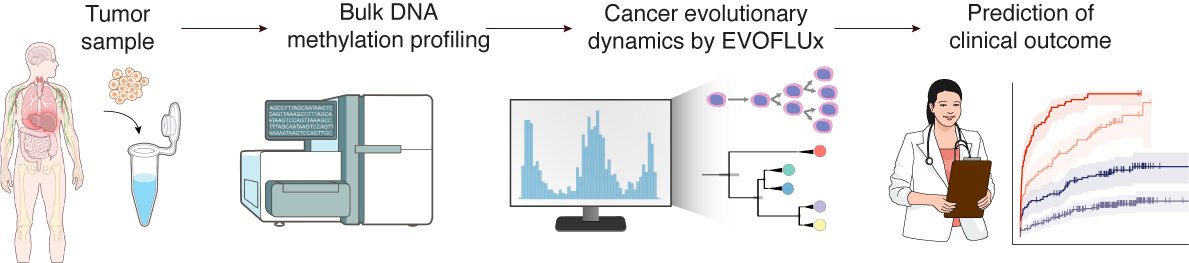
Cancer is an evolutionary disease, but does knowing a cancer’s evolutionary past help predict its future? Out today in @Nature, we learnt the evolution of 2000 lymphoid cancers and found it was highly correlated with clinical outcomes! (1/7, link below)