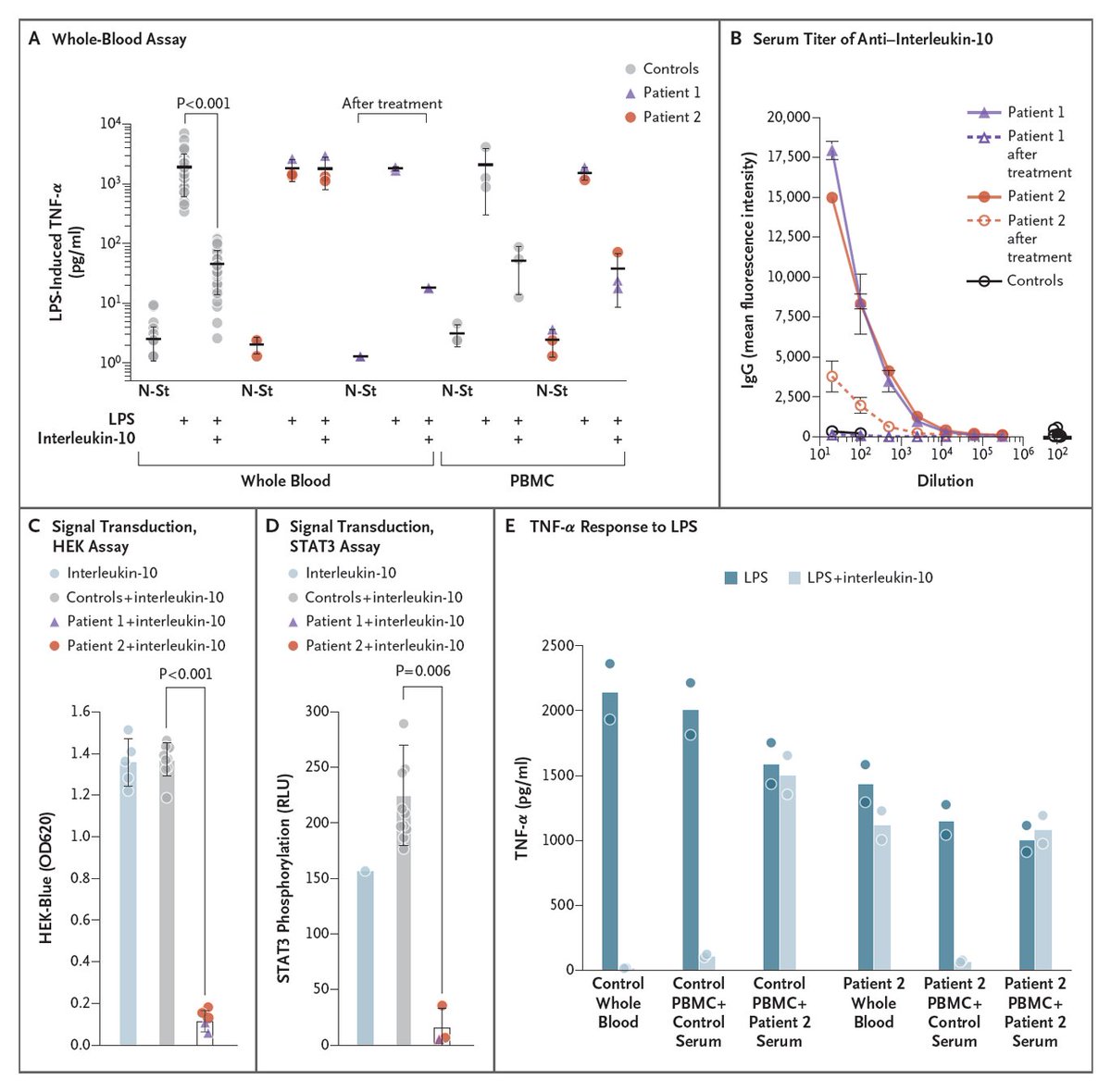
I have to warn you that this is a long read. But it's fascinating. The story of an oncologist who built a kingdom in Montana. Until another physician looked at the data & said: "That doesn’t make any sense” (one of my favorite phrases, by the way...)
https://t.co/eS12lCwuZu
For somebody working on the gut #microbiome, the responses ("gross", "embarrassment", "pseudoscience", etc.) to this @Nature article on the treatment of C-section babies with their mother’s poo are quite sobering. So, I thought I would provide a perspective in the thread below.
🗒️2024 ECCO Guidelines on Therapeutics in Crohn’s Disease: Medical Treatment 💊
@Y_ECCO_IBD#IBD#MedEd#GITwitter#MedTwitter
1️⃣4️⃣ Statements and 6️⃣Practice points
1️⃣ 5-ASA is not recommended🚫for the induction or maintenance therapy in CD➡️consistent lack of evidence.
🧵👇
Exploring the previously reported gut #microbiome acetyltransferase genes involved in metabolism of 5-ASA in #ibd we could not replicate the original findings from @NatureMedicine in our Dutch 1000IBD cohort. More work needed. @GroMicrobiome
https://t.co/o5ckLJrj9J
I really hate to be the negative one but a dose of reality is needed. I think this is an overstatement intended to make people feel good. But the reality as a parent is simply not this. I will remind everyone again that we still don’t know what causes IBDs, or flares of disease, or how to reliably define whether these are different diseases or phenotypes. Despite the assertions in the linked Nature article, we actually have no idea, still, if IBDs are autoimmune. We have the same few drugs approved for pediatric IBD as two decades ago. Even with off-label use of newer drugs the best we can do is trial and error immunosuppression with a high failure rate. It’s a coin flip between optimal outcomes and SAEs, especially long-term. Surgery is still a mainstay. We have hit repeated dead ends with genetics and with biomarkers—at least nothing to date is of clinical utility beyond calprotectin. For years we have been hearing about being on the cusp of a major breakthrough. As much as we all want to feel valued for our work and celebrate a talk or a paper or a grant—and we should—we also need to remember why we’re still here decades on, and stop patting ourselves on the back until we have meaningfully answered the deep enduring questions. Parents feel like they are in a sinking boat and the community applauds itself for bailing out a cup of water.
Our review about endoscopically visible mucosal #biofilms is out in @AGA_Gastro. We discuss pathophysiology, potential treatments and highlight knowledge gaps and open research questions
https://t.co/Udkvj0vj4H
@MedUni_Wien@univienna
Gut microbiome?? Organ implicated in both health & disease... What happens in critical illness?
🧫 intestinal microbiome in #ICU: dysbiosis as potential therapeutic target?
⛑️ protective/ecological restorative strategies
Free to read #FOAMcc on @yourICM
🔓 https://t.co/QWVjPAjMiF
Johann Hammer acknowledges that intestinal dysbiosis but not SIBO is the potential cause of clinical symptoms
Current SIBO tests has lots of limitations and 48% of results are false positive due to rapid transit
#IBSDays2024
There's been amazing coverage of our new paper @Nature https://t.co/qkrUksBYVW but I wanted to put together a walk-through (and make this accessible as possible). It's a bit long so get a cup of tea! The full version is open access so pls do have a read if you are interested...
The use of faecal microbiota transplant as treatment for recurrent or refractory Clostridioides difficile infection and other potential indications. @Gut_BMJ https://t.co/QWzKGSPjrI


![ShahidaDin1's tweet photo. Several stakeholders have advocated for minimising placebo controlled RCTs. We analysed the harms [Adverse Events,[AEs]] associated with placebo in inflammatory bowel diseases (IBD) RCTs. @alex_ford12399 @Bealoquebea @Jonathansegal85 @JonnyBlackwell @DrCJBlack @GastroRes_Leeds https://t.co/QKhGWJ83rU](https://pbs.twimg.com/media/GX34R7QWUAATsHi.jpg)





![ShahidaDin1's tweet photo. Several stakeholders have advocated for minimising placebo controlled RCTs. We analysed the harms [Adverse Events,[AEs]] associated with placebo in inflammatory bowel diseases (IBD) RCTs. @alex_ford12399 @Bealoquebea @Jonathansegal85 @JonnyBlackwell @DrCJBlack @GastroRes_Leeds https://t.co/QKhGWJ83rU](https://pbs.twimg.com/media/GX34R7ZXcAAJcVS.jpg)