How do you build your own tracker of leveraged etf rebalance flow 101
You need two pieces of data per index/commodity/single name you are tracking and one simple formula
Data
1. The AUM of all leveraged ETF's that exist on the underlying of focus
2. The change from prior close
Formula
Using the leverage ratios 2x 3x etc and Kris's attached primer determine the amount of rebalance needed per fund (1) per change in price (2)
Then sum up those flows across asset prices for a summary asset flow while noticing whether certain sectors dominate the flow
Fwiw this is trivial and every decent hedge fund and market maker has built this already. The art is trying to understand the game theory of who is frontrunning the flow. (That I will not share)
How high will inflation go?
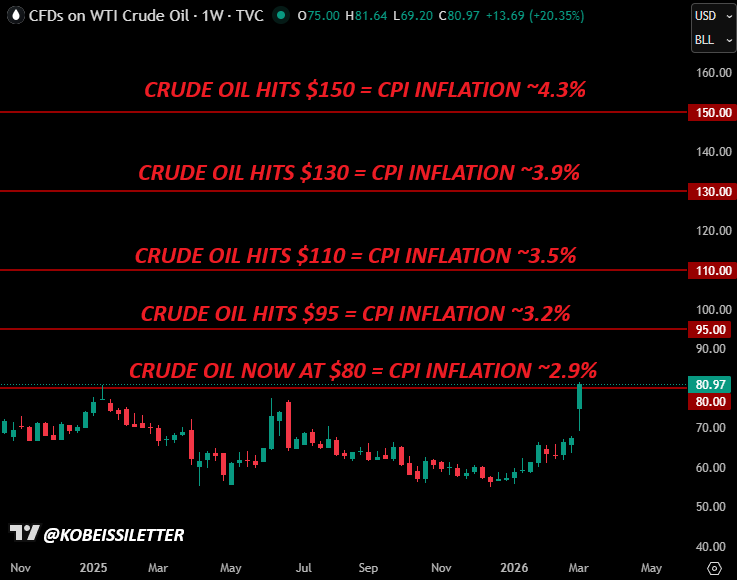
According to a recent Fed study, every $10 rally in oil prices can increase inflation by ~20 bps.
Oil has already surged from $55 to $80 per barrel, implying +50 bps of inflation pressure.
This could push CPI from 2.4% to ~2.9%.
When oil prices rise above $90/barrel inflation becomes hotter, with ~3.2% inflation expected at $95/barrel.
Our chart and below Article summarize why oil prices are now the key leading indicator to watch.
Inflation is heating up.
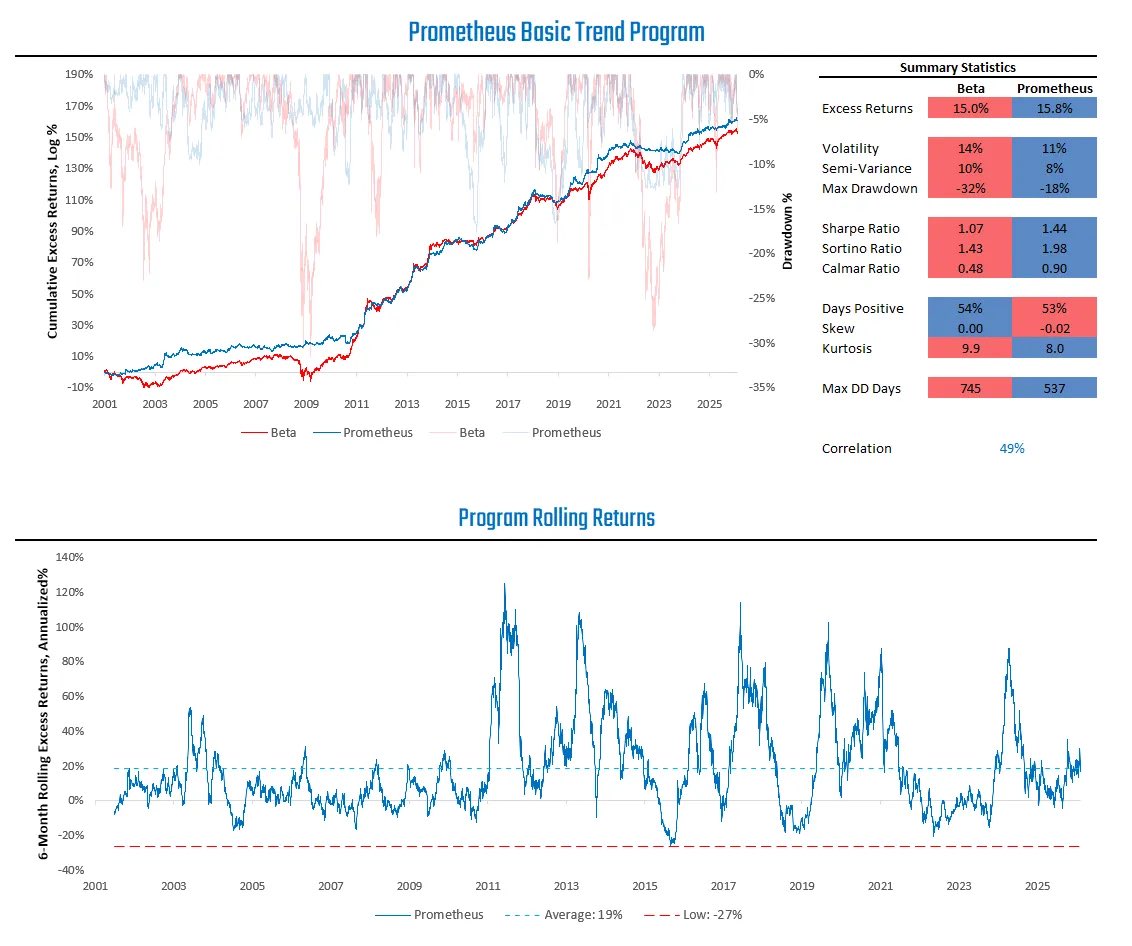
Basic Trend Following: Primer
We’re going to have a more substantive note from @prometheusmacro on how we construct our basic trend program with the empirics.
1/ This thread will focus on the concepts and exact steps to constructing our Basic Trend Program
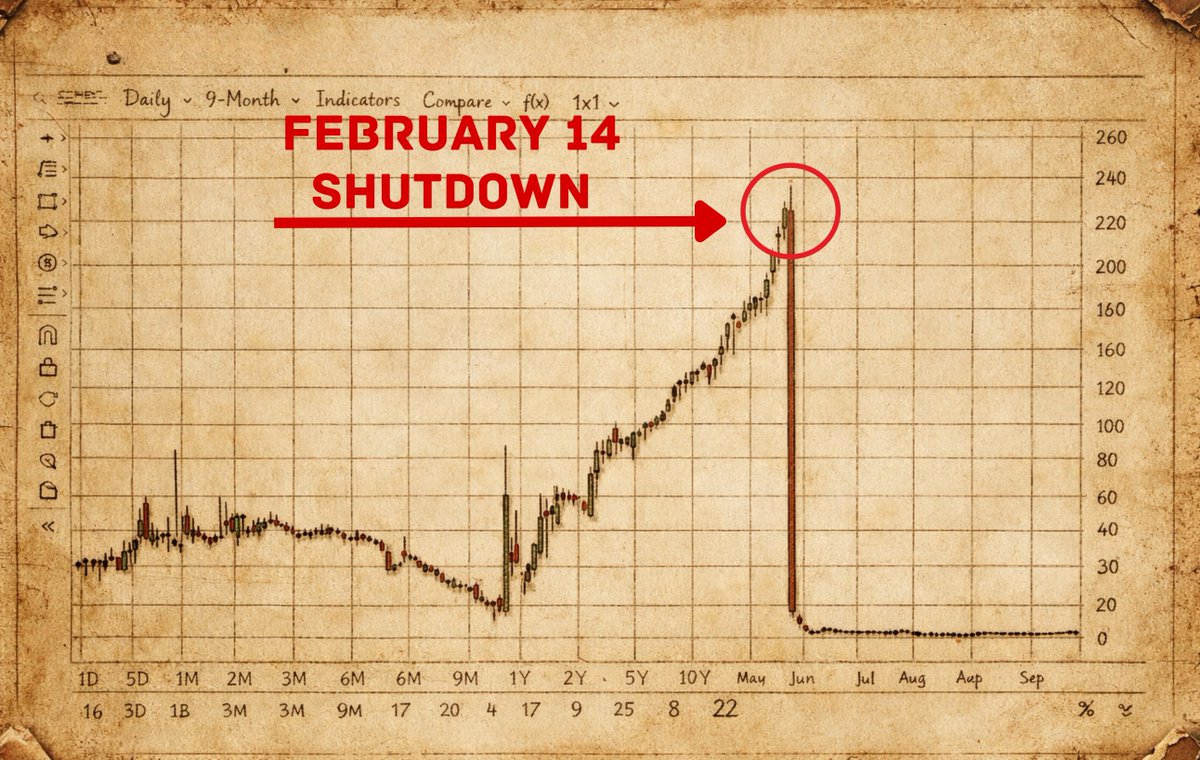
🚨 BREAKING: US GOVERNMENT SHUTDOWN IS CONFIRMED FOR FEBRUARY 14!
Polymarket is pricing a 70% chance of another US government shutdown by February 14.
Read that again.
71%.
And if you forgot what a shutdown does, look at the last one.
Jan 31 → Feb 4, just 5 days:
Crypto:
- $BTC $79K → $74K
- $ETH $2,700 → $2,100
Commodities:
- Gold $5,445 → $4,670
- Silver $118 → $77
GDP: -0.43%
And that's everything in JUST 5 DAYS...
That's not "politics".
That's real damage.
Now here's why the odds are SKYROCKETING.
After the Minneapolis Border Patrol shooting, Democrats are weaponizing it to block the DHS bill on the Senate floor.
That one fact explains a lot.
Because DHS funding is the fuse.
If DHS stalls, the shutdown clock starts ticking again.
And a shutdown is not just "people staying home".
- Paychecks get DELAYED.
- Contracts get DELAYED.
- Approvals get DELAYED.
- Data gets DELAYED.
The economy slows from pure uncertainty.
Markets are not pricing it.
But they will.
I've studied macro for 10 years and I called almost every major market top, including the October BTC ATH.
Follow and turn notifications on.
I'll post the warning BEFORE it hits the headlines.
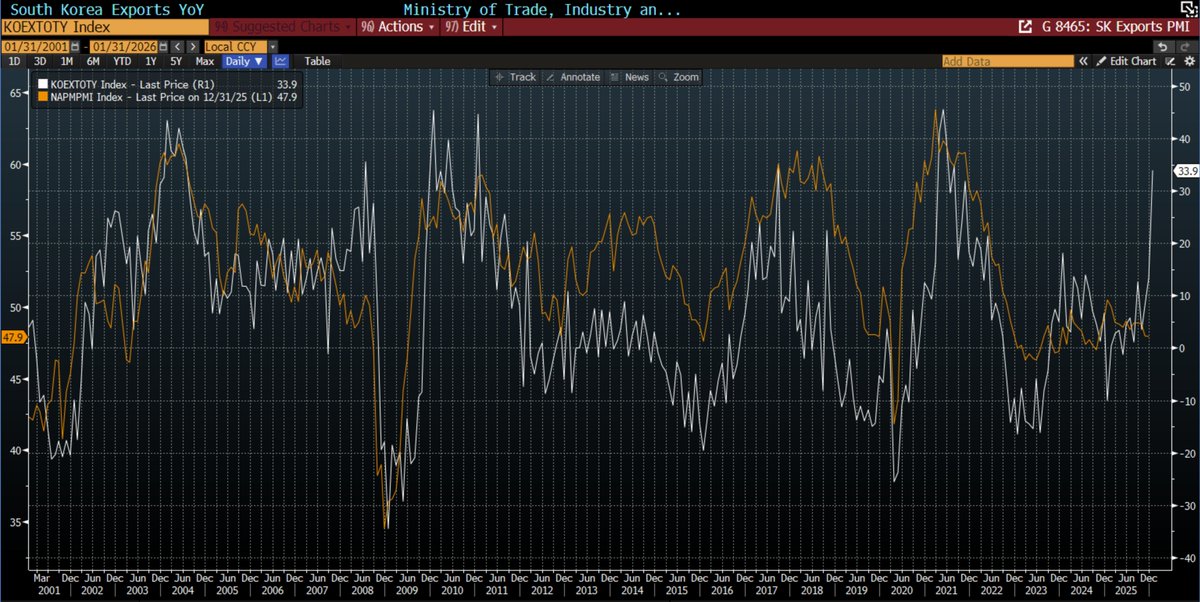
US MANUFACTURING SURGES AT FASTEST PACE SINCE 2022
US manufacturing unexpectedly expanded in January at its strongest pace since 2022, fueled by a surge in new orders and production. The ISM manufacturing index jumped to 52.6 from 47.9, topping forecasts.
Order backlogs grew for the first time since 2022, exports rose, and inventories fell sharply, signaling continued demand. Nine sectors expanded, led by apparel, metals, transportation equipment, and machinery. Employment declined more slowly, while supplier delays and input costs remained elevated.
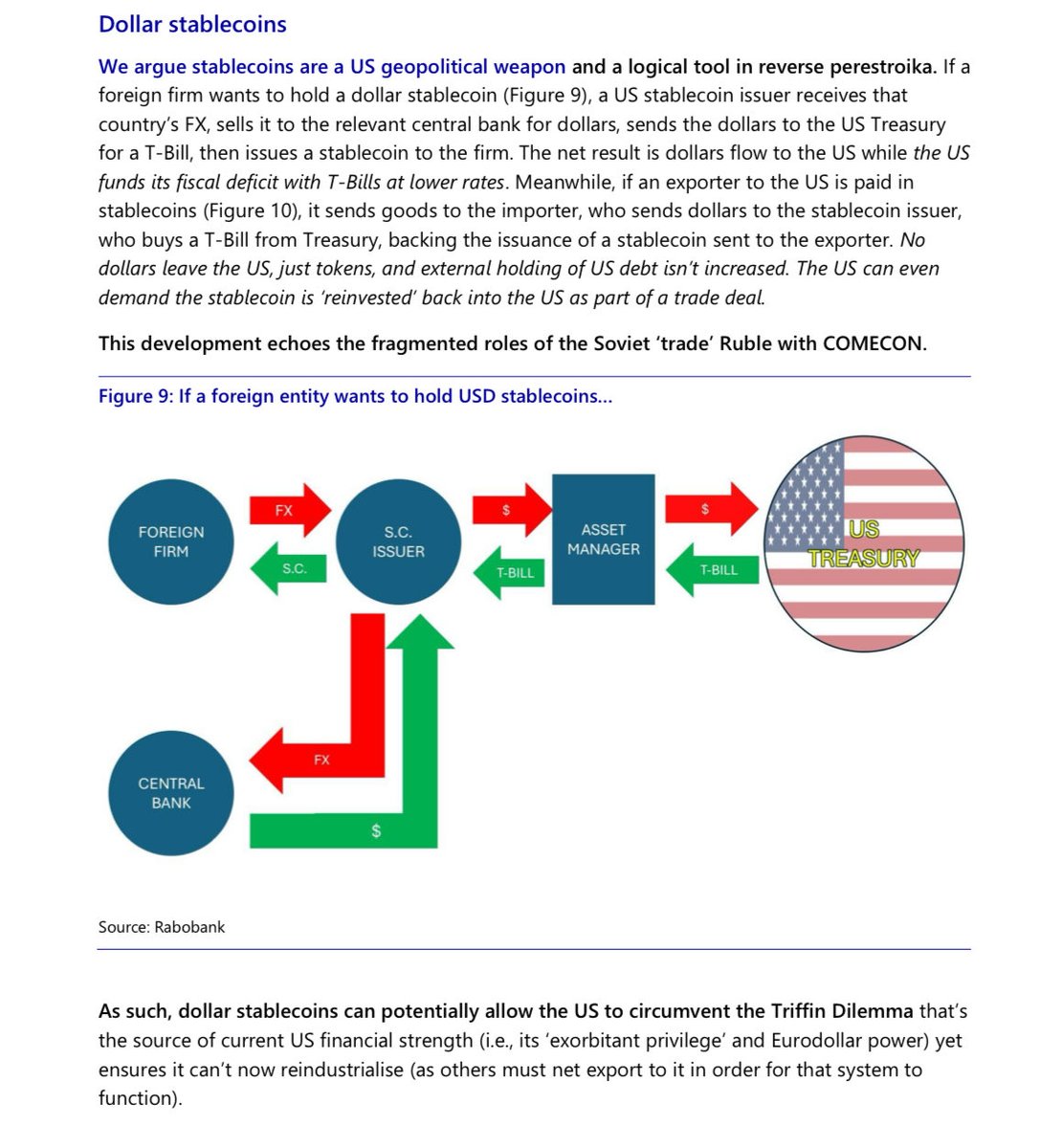
RABOBANK: STABLECOINS ARE A GEOPOLITICAL WEAPON FOR THE US
Rabobank argues dollar stablecoins are becoming a powerful U.S. geopolitical weapon and a tool for what it calls “reverse perestroika.”
Here’s the core mechanism:
When a foreign firm wants to hold a dollar stablecoin, it first provides its local currency to a US stablecoin issuer.
That issuer (ie Tether) converts the foreign currency into dollars via the relevant central bank, then sends those dollars to the US Treasury in exchange for T bills.
The stablecoin is then issued to the foreign firm.
The result: dollars flow into the US, while the US funds its fiscal deficit with Treasury bills at lower rates.
In trade, the effect is even stronger.
If a US importer pays an exporter in stablecoins, the importer sends dollars to the stablecoin issuer.
The issuer buys a T bill from the Treasury and issues stablecoins to the exporter.
No physical dollars leave the US.
Only tokens do.
And foreign holdings of US debt do not increase.
Rabobank notes the US can even require that those stablecoins be “reinvested” back into the US as part of trade agreements.
The bank compares this structure to the Soviet-era “trade ruble” used within COMECON, where settlement units circulated internationally while real monetary control stayed domestic.
In effect, Rabobank argues stablecoins could allow the US to sidestep the Triffin Dilemma.
The same dilemma that underpins America’s exorbitant privilege and eurodollar power, but also constrains its ability to reindustrialize.
Stablecoins export dollars without exporting dollars. And that changes the global monetary game.
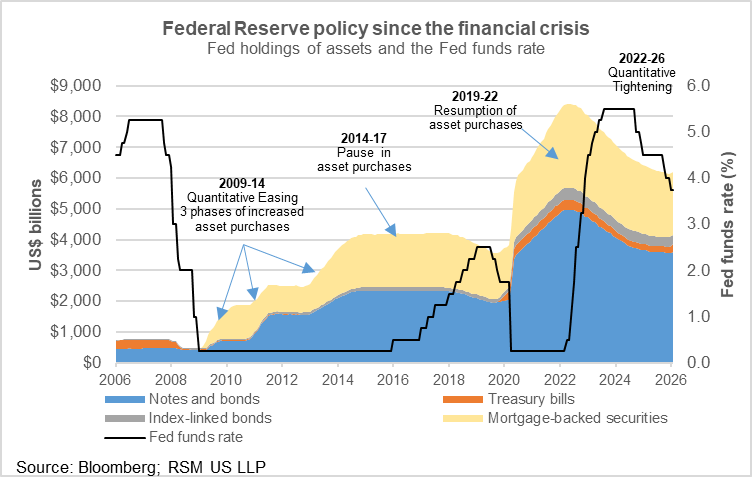
Kevin Warsh Nomination: one reason why market players are interpreting it as a hawkish pick- I agree-is because of his views on the need for a radical balance sheet reduction.
The $31 trillion-dollar American economy demands liquidity & financing needs that are larger than what is commonly understood among policymakers & the public. The type of reduction that Warsh has spoke of should be a major part of the narrative leading up to his confirmation hearings.
Remember, low rates, liquidity and leverage are the holy trinity of modern finance.
The degree to which a Fed Chair is hawkish is far more complex than the instrumental independence that the central bank has-for now-to set the federal funds policy rate. The time has come for a robust discussion on the state of the balance sheet and its impact on the economy.
GLOBAL ECONOMY WILL COLLAPSE IN 4 DAYS
US government funding expires Jan 30
If Congress doesn't land a deal, a shutdown starts Jan 31
The fight is over DHS funding
After the Minneapolis Border Patrol shooting, Democrats are threatening to kill the package on the Senate floor
They need 60 votes to pass
One hard "no" and the clock goes red
POLYMARKET WHALES ARE PRICING IT 85% CHANCE FOR SHUTDOWN
Here's what happens when the machine stops:
> Federal paychecks don't hit accounts. 670,000+ people can't pay rent
> Government contractors stop work. Companies bleed
> Permits, licenses, approvals — all frozen. Construction halts, deals die in limbo
> Economic data goes dark. No jobs reports, no GDP updates, markets fly blind
It's the exact playbook from 2025, and it lasted 43 days
When uncertainty spikes, markets don't wait for confirmation:
• Treasuries reprice fast (safe-haven bid or flight, depending on sentiment)
• Equities dump on the headline, recover only if it's short
• Crypto? Pure volatility. Liquidations cascade because leverage doesn't care about "fundamentals"
Right now, almost no one is positioned for this
That gap between "shutdown risk" and "market pricing" is where the violence happens
🚨 JAPAN WILL CRASH MARKETS THIS FRIDAY!!
April 29, 2024: $BTC DUMPED 23%
May 1, 2024: $BTC DUMPED 26%
July 11, 2024: $BTC DUMPED 31%
And The next Yen Intervention is scheduled THIS Friday.
Let me explain this in simple words.
Yen intervention is not an FX story.
It is a LIQUIDITY story.
Every time Japan steps in, they spend BIG size, usually ¥2.5 TRILLION to ¥5 TRILLION.
That is a real shock, and it hits markets through flows, not headlines.
Japan is the cheap money hub, so people borrow yen and buy everything else with it.
When Japan defends the yen, that cheap money trade gets forced to close fast.
That is why you see a quick risk dump, and crypto gets the violent move first.
That one statement explains a lot.
Now connect the dots.
- US Treasuries get stressed
- Yields jump
- Liquidity gets thin
- Then stocks react.
- Then crypto gets the violent move first.
- People get liquidated.
Markets are not pricing it now.
But they will.
I’ve studied macro for 10 years and I called almost every major market top, including the October BTC ATH.
Follow and turn notifications on.
I’ll post the warning BEFORE it hits the headlines.
🇺🇸UPDATE 1: Senate Banking Committee Chairman @SenatorTimScott has released the bipartisan Crypto market structure bill text after months of negotiations.
🎯LOSS - Passive Yield for Stablecoin = GONE
The Act defines "Custodial and Ancillary Staking Services" as a recognized activity. It distinguishes these services as "administrative or ministerial in nature," allowing registered intermediaries to facilitate staking for customers.
The act requires that customer assets be segregated and not commingled with the platform's own funds, although they may be pooled with other customer funds for convenience (e.g., in an omnibus account).
✅STATUS QUO - AML / KYC - Strict for Intermediaries. Exchanges and brokers must comply with the Bank Secrecy Act, perform KYC, and monitor for illicit finance.
🔥WIN - Self Custody
Right to Self-Custody: Section 105(c) explicitly states that a "United States individual shall retain the right to maintain a hardware wallet or software wallet" for the purpose of facilitating their own lawful custody of digital assets.
Protection of Peer-to-Peer Transactions: The same section guarantees the right to engage in "direct, peer-to-peer transactions" with other individuals using self-custody wallets, without reliance on financial intermediaries.
Protection for Wallet Developers: Section 109 prohibits classifying non-controlling blockchain developers or providers of "hardware or software to facilitate a customer's own custody" as money transmitters. This protects wallet creators (e.g., @Ledger , @Tangem , @MetaMask developers) from being regulated as financial institutions solely for writing code.
🔥WIN - DEFI
The Act seeks to protect decentralized crypto by creating specific exclusions that prevent DeFi protocols and developers from being regulated as centralized exchanges or brokers.
DeFi Exclusions from SEC Regulation: Section 309 explicitly states that a person shall not be subject to the Securities Exchange Act solely for activities like:
Developing or publishing DeFi trading protocols.
Providing user interfaces (front-ends) for blockchain systems. Validating transactions or operating nodes.
The
impact on a consumer using DeFi products and protocols is generally protective, explicitly shielding individual users and software developers from the strict regulations applied to centralized exchanges (like Coinbase).
For consumers, the Act establishes a legal "safe harbor" to continue using DeFi without forced intermediaries, though it does not provide immunity for illicit financial activities.
🎯Likelihood of Passing
Current Status (Jan 13, 2026): Medium-High (60-70%)
👀The bill has a strong chance of becoming law in early 2026, but it will likely require either stripping out or softening the strict "Anti-CBDC" ban, or adding concessions to banks regarding stablecoin reserves, to clear the Senate filibuster threshold.
Full PDF: https://t.co/blPpfzPYKS
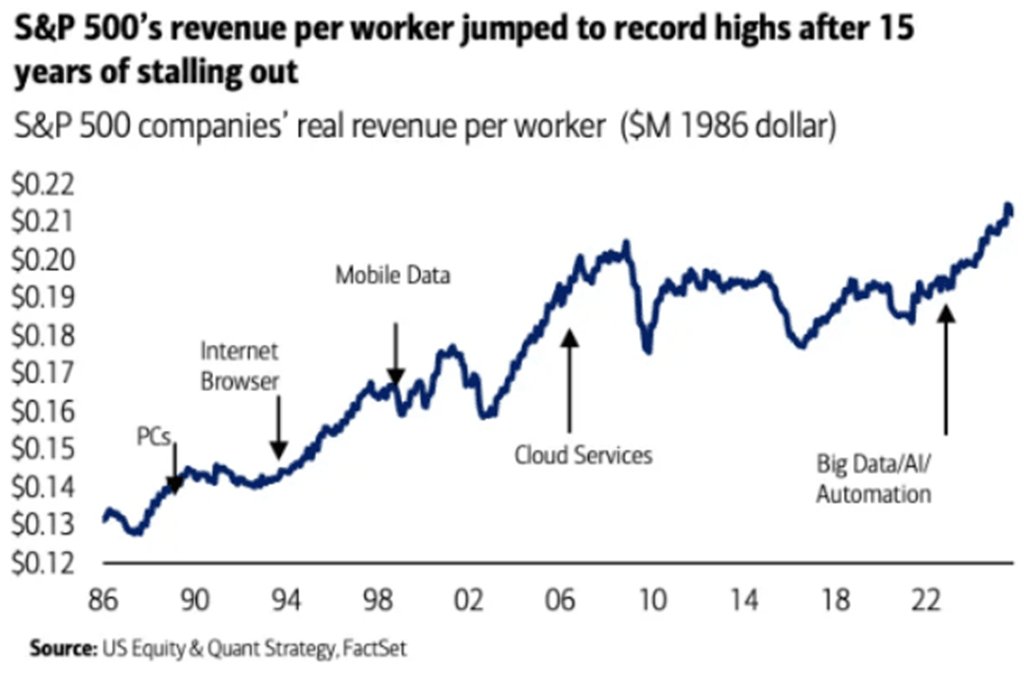
I know this one already made the rounds (I think @SamRo was the first to share it), but it could be an early leader for chart of the year.
S&P 500 real revenue per worker is the highest it has ever been.
Coinbase Ventures, a16z, and Pantera have different outlooks for 2026, but they all agree on the Holy Trinity:
1. RWA/tokenization, 2. prediction markets, and 3. stablecoins.
i read the reports so you don’t have to. here is the breakdown + few projects building the future 🧵👇
1. stablecoins
stablecoins are set to overtake traditional payment systems and become mainstream currency, moving far beyond just crypto exchanges.
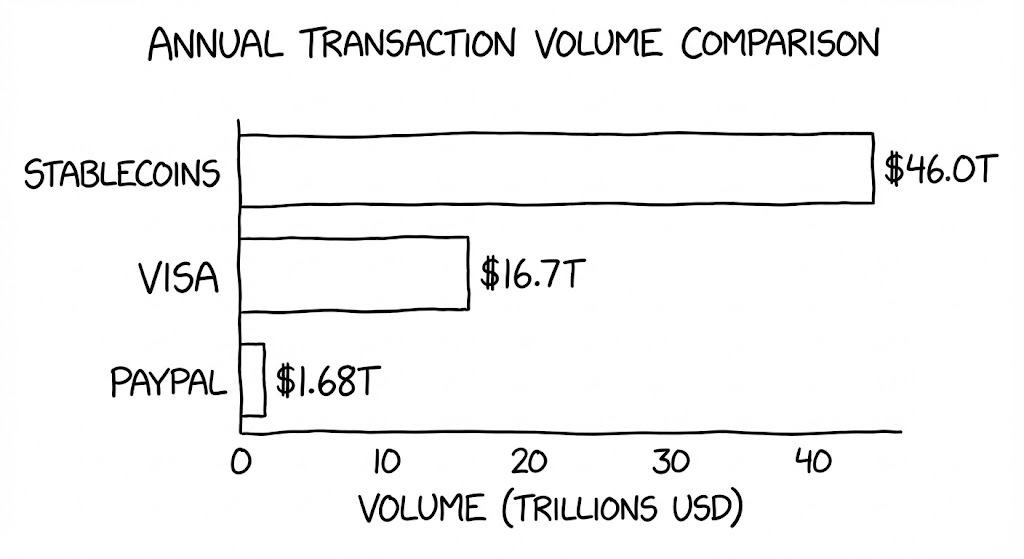
> current stablecoin tx volume ($46 trillion) is 20x PayPal and nearly 3x Visa
> the legal framework is ready to accelerate this vision (GENIUS Act, SEC accepting USD-backed stablecoins as non-securities).
this leads to 3 key outcomes, affording room for projects to build: payments, agentic economy and then internet eventually becomes the bank (neo-bank)
invisible payments: smart on/off ramps linking stablecoins directly to local payment networks > auto-converts to local currency in real-time.
agentic economy: using the x402 standard, AI agents can own wallets and use stablecoins to pay each other > a fully automated economy with AI actors and 24/7 efficiency.
ultimately, the internet becomes the bank (neobank):
just as the internet became the hub for information flow, it is now becoming the hub for currency flow: cross-border, 24/7, and as easy as sending an email.This allows for programmable and reactive settlement, where AI agents can transact without human intervention
call-to-action: the infrastructure is in its most mature phase yet. there is no fcking reason to leave crypto now.
2. RWA / Tokenization: the pivot to “origination.”
the narrative is shifting from “tokenization” (moving assets on-chain) to “onchain origination” (issuing them there first)
> debt, private company, real estate and exotic assets will be issued directly onchain from the start.
> opens previously exclusive and illiquidity markets such as private equity, pre-IPO companies, private credit to retail investors. this shift enables “weahlth management for all” where sophisticated porf strategies can be executed for everyone, not only high-net-worth indiv.
> reduces loan servicing and structuring costs and time
> enables the creation of perpetual futures for these assets, providing a faster and more flexible path to liquidity than traditional tokenization. for examp, instead of owning land or stocks, you trade their price fluctuations via smart contracts -> gaining asset exposure without the capital outlay to buy the underlying asset.
3. prediction parkets
prediction markets are ALREADY mainstream. the future is about depth, scaling, and tooling. we need
> trading terminal: a single interfaces to track odds and volume instead of 20 tabs
> smart markets: PMs for everything, not just elction/sports.
> pm x AI: ai intergration to help users scan data and execute trades on their behalf
4. early project to watch
@codexfx : stablecoin ramps for Foreign exchange tx
@inference_labs, @miranetwork: verifying AI outputs
@SeismicSys : privacy layer for neo-banks
@idoldotfun (Talus labs): AI-intergrated prediction markets
@useTria : neobank infr
who else building here?… shill me some mo guys
GM CT
Crypto grows up in 2026: infra, revenue, real users
Here’s my take on the narratives that matter:
(1) Prediction markets are the consumer wedge
One of the few crypto products normies get
Truth markets work in any market
(2) App-chains will beat generic L1s
Winners do one thing insanely well and earn
Hyperliquid was the 2025 blueprint
And yeah, @fogo looks like an early runner for this thesis in 2026
(3) Stablecoins are the real adoption thesis
Payments, settlement, yield products
Boring is bullish because it scales
(4) DeFi banks are maturing
10/10 was a reminder we need more transparency
Less ponzi yield, more real risk management
(5) Сrypto prints if it goes native in AI and robotics
Machines transacting and coordinating onchain
ERC-8004 is pointing toward onchain identity and trust for agents
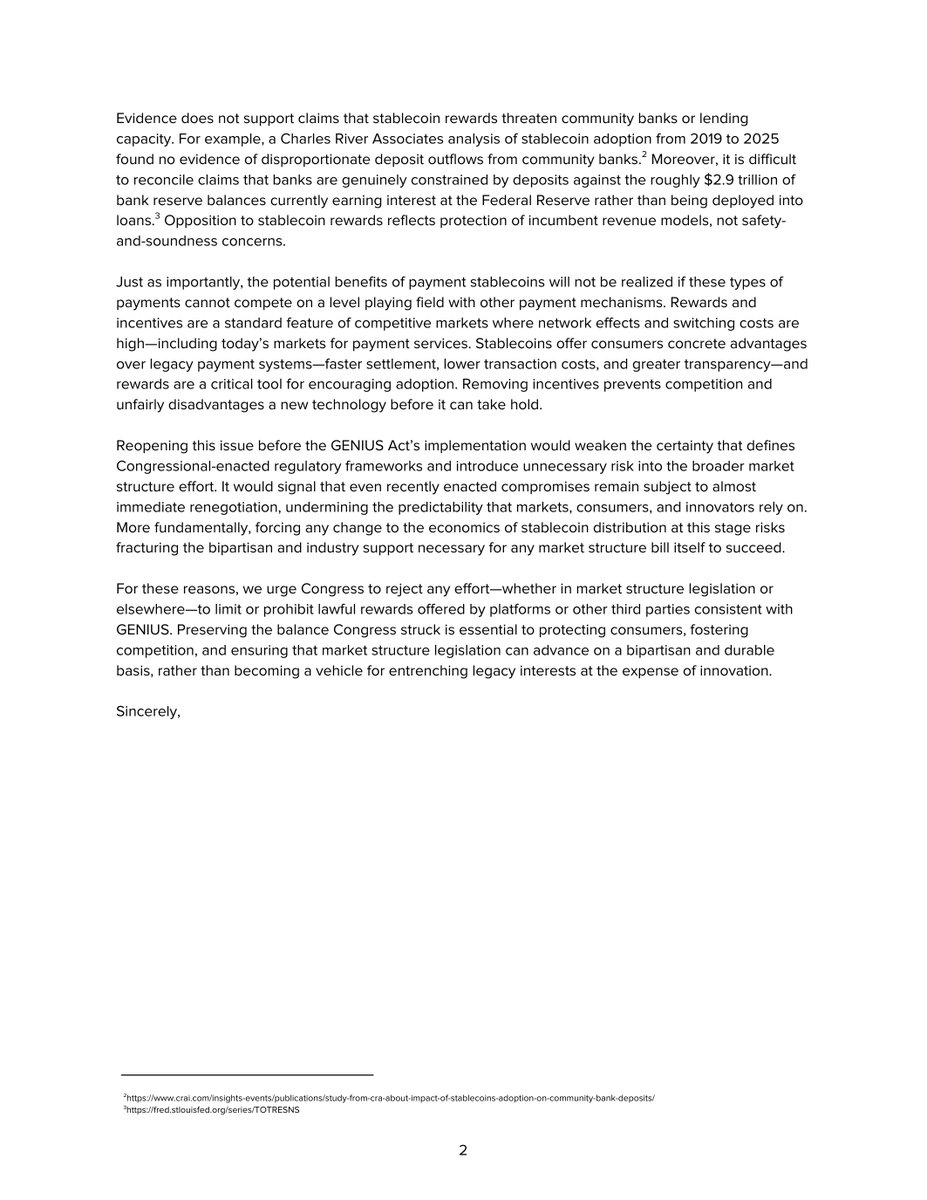
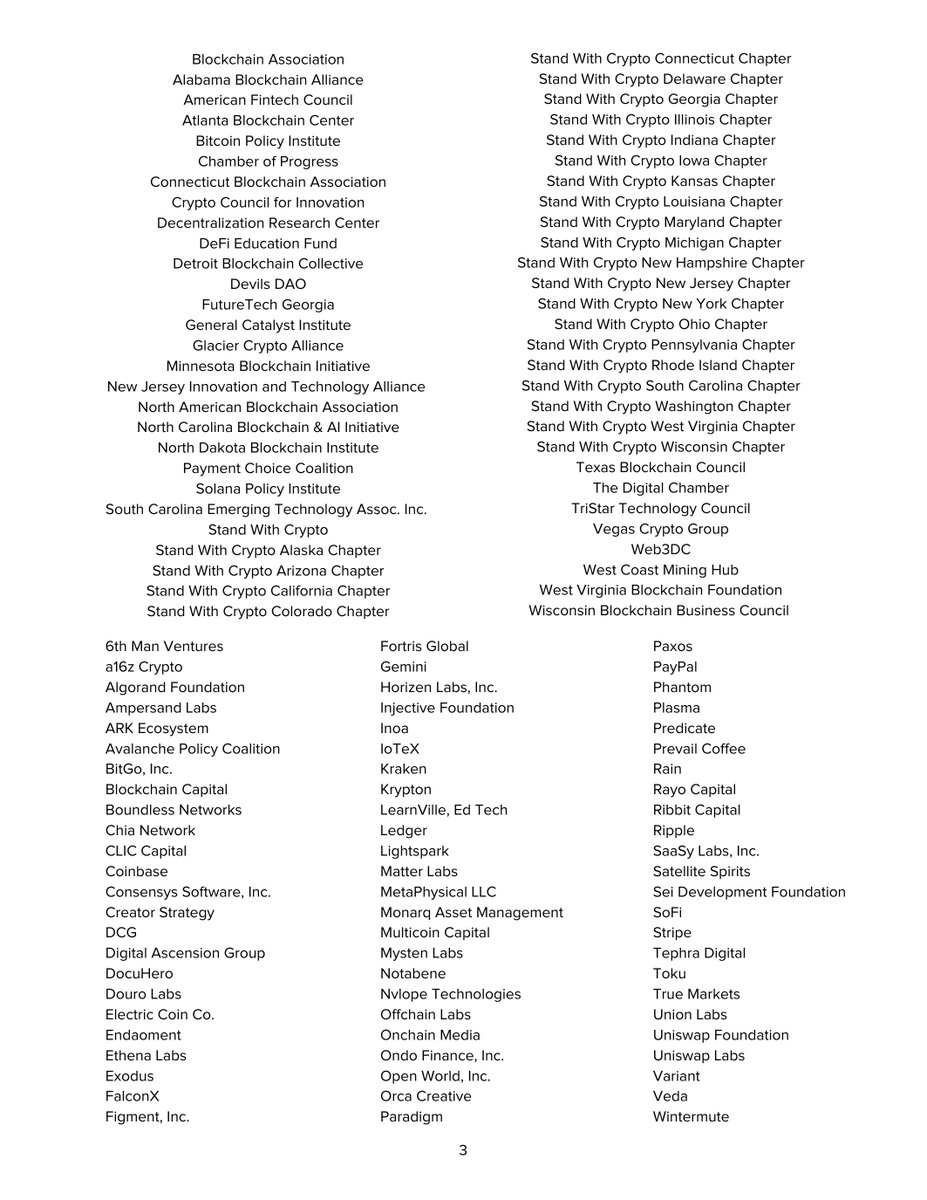
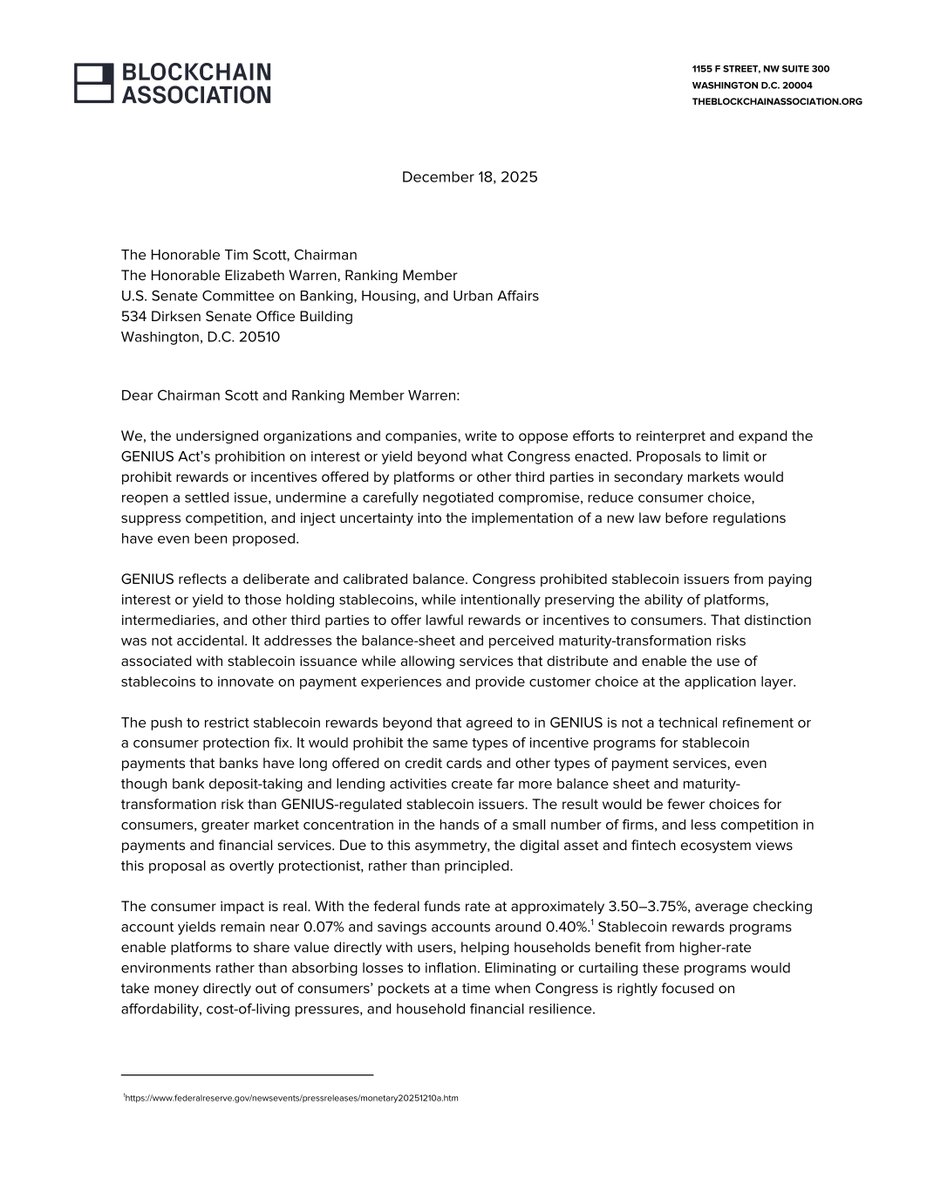
1/ Today, we led a broad coalition of more than 125 industry leaders in a letter to Congress urging lawmakers to preserve the rights enumerated in the GENIUS Act that ensure the United States remains the most competitive and innovative capital market in the world.
🧵👇