New mouse model of premature aging based on direct induction of epigenetic dysregulation (loss of H3K9me3). Amazing age-associated phenotypes. First of its class and strongly supporting the "loss of heterochromatin" theory of aging. @AgingBiology @AgingHighlights @agingdoc1
Extremely happy to present our new manuscript investigating the role of epigenetic dysregulation as driver of mammalian aging. Congratulations to @calidamrabti and all the authors and collaborators for the fantastic work!! https://t.co/XcFV1bFV0N
It was a great pleasure and an incredible honor to co-host partial reprogramming workshops at @LBF_org’s LBF4 with Alejandro Ocampo (@aocampox) — the person whose 2016 Ocampo et al. paper has started the entire partial reprogramming field!🚀
🙏@realNathanCheng, @MarkHamalainen
Today in @ScienceMagazine, together with my former colleagues at NIBR, we report the discovery and characterization of first molecular glue degraders of the WIZ transcription factor (TF) for fetal hemoglobin derepression and therapeutic consideration in Sickle Cell Disease. 1/10
https://t.co/rJypcBl75C
Some days I feel like a loser.
This is not a post asking for pity. I'm just being honest about the ups and downs of life, in case someone out there is feeling the same today and might read these words: we're in this together 👊
Keep going, keep trying, keep creating ❤
Great manuscript describing our work in C. elegans to identify novel molecules that can extend lifespan across species. Congratulations to @kgiperez Grace Phelps and the rest of the team at @epiterna_ 🪱🚀
Glad to share our second manuscript coming out of @epiterna_!
https://t.co/x26IDoilK9
In this study, we evaluated some of the most commonly reported lifespan-extending molecules in C. elegans, examining their effects on lifespan with different diets, strains, and starting age. By performing combinatorial testing, we identified combinations of molecules with synergistic effect and dramatic lifespan extension. Lastly, we performed a small proof-of-concept screen with more than 200 molecules, and identified novel lifespan extending drugs in C. elegans.
I’m going to have to file this one under “water is wet”. Until extremely recently, FDA required ALL drugs to be tested in animals before they go to humans. And thereafter, they follow clinical trial failure rates writ large, which are 90-95%.
https://t.co/ESZnBAvqZB
Here are 8 drugs that researchers have tested in the Interventions Testing Program. What do these have in common?
Find out from @mkaeberlein:
https://t.co/Pn3cRLn7N7
Fantastic to finally meet and chat to partial reprogramming pioneer @aocampox at the Systems Aging @GordonConf in Castelldefels, Spain.
Many exciting studies and discussions on cellular rejuvenation and how to use it to develop safe and effective therapies.
Yes, let’s create a new path to prevent functional decline and chronic diseases. It’s unfortunate that almost every longevity company is forced to go after a disease once it has occurred. It’s a distraction from their goal.
The pleasure was mine. Thank you @LBF_org for the invitation and @ydeigin for co-hosting this workshop. Yuri has been a great supporter of partial reprogramming from the early days and I am very happy to collaborate with him and follow his progress in the field!
It was a privilege to co-host an @LBF_org workshop on partial reprogramming with @aocampox himself. The rejuvenating potential of this approach is extremely promising, and hearing firsthand the story of how the Ocampo et al. 2016 paper came together was a rare treat!
I wonder if this is what the more radical AI drug discovery advocates (and their capital sources) are thinking about doing with all those human scientists who require so much care and feeding 🤔
Instead of a large animal (mice🐀), we decided to investigate the effects of in vivo reprogramming in a smaller one (worms🪱). Happy with the results and excited about the new experiments that we are currently performing, which would take years in mice. The best is yet to come!
New Preprint Alert! Induction of in vivo reprogramming in C. elegans has negative effects during development and is highly toxic. Congratulations to @haque_nibrasul members of @OcampoLab and collaborators! The best is yet to come! 🪱 https://t.co/JEwKW1Ketj
@OraBiomedical CEO @mitchellblee33 gave @mkaeberlein the lowdown on doing high-throughput longevity drug discovery using worms, robotics + AI, and the general public.
He aims to create the world's largest and most robust longevity interventions database.
https://t.co/IqNvnoUR54
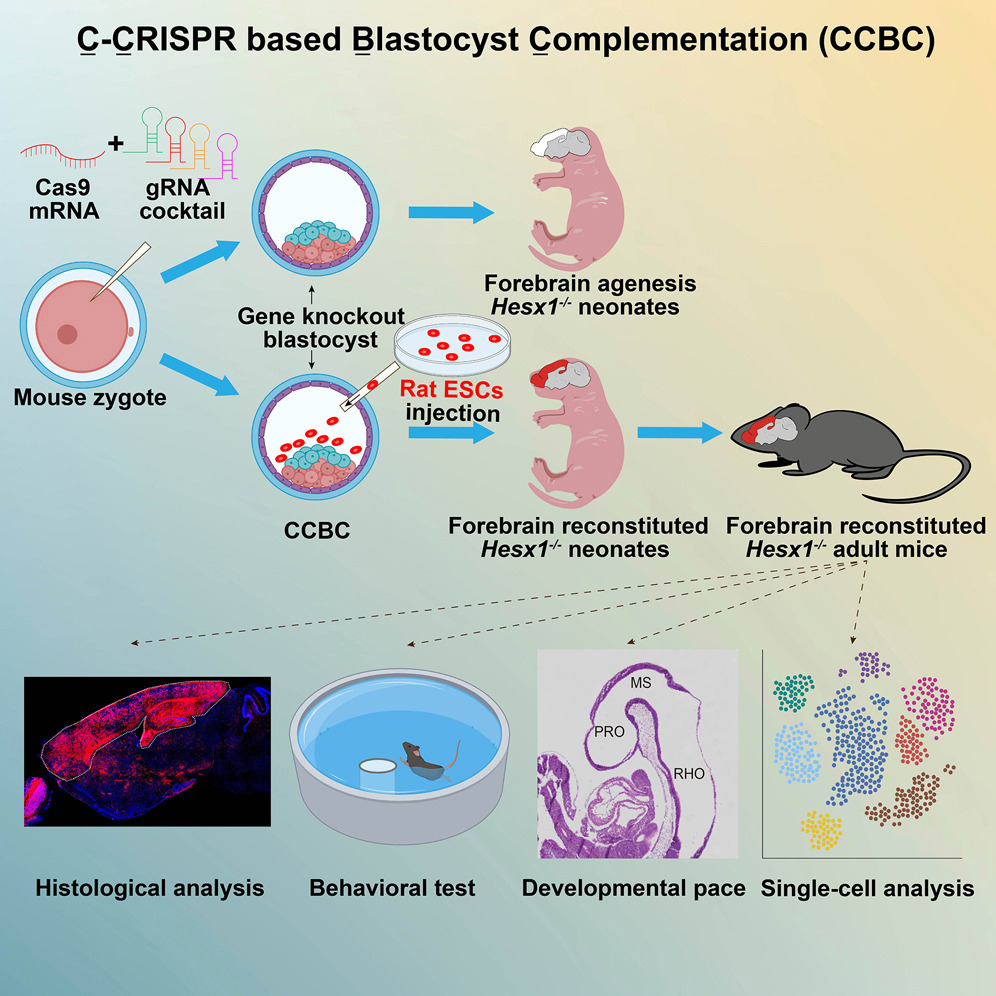
In a pair of studies published in Cell today, we used interspecies blastocyst complementation to study brain function and evolution. https://t.co/v7oFHBp6oz.
https://t.co/5Eb4h7ktnw.
It is amusing that, for example, of the 2 approved treatments for age-related lung fibrosis (nintedanib and pirfenidone) - clinicians have no idea for how either of them work. And, in contrast, all the treatments for which we had “rationale” (eg Pamrevlumab) failed IPF trials miserably.
Rationale is an irrelevant joke when you realize it is sampled from the 1% of the little that we know about these diseases (with the 99% being a dark matter)