#TearsOfThemis X #MeloMelo Collab Event has ended.All the staff at Melomelo extend our sincere gratitude to everyone. Looking forward to joining forces again in the future to create more wonderful moments together. Hope to see you again next time.
Delivered my debut conference talk at the #KeystoneSymposium on #Neurodegeneration. A heartfelt thanks to Li-Huei Tsai and Aaron Gitler for organizing such a dynamic and insightful conference. Thrilled by the promising advances we're making in understanding #AlzheimersDisease
Super excited to host @BrandonDLe from @jsteinlab next Tuesday at 3pm for the #neurogenomics seminars. Bran will present the lab's excellent recent work linking wnt pathway activation with context specific regulatory QTLs. DM/email for the zoom link
Rather than studying evolution based on conservation of specific nucleotides, we using machine learning to find conservation/convergence based on predicted tissue-specific open chromatin across >200 genomes.
It was wonderful to be a part of the amazing #zoonomia team! Congrats Irene, @alyssajolawler, and Daniel on the TACIT manuscript as a part of this package.
Researchers in Science have pinpointed parts of the genome linked to a few exceptional traits in the mammalian world, such as extraordinary brain size, superior sense of smell, and the ability to hibernate during the winter. https://t.co/106eJqWecE #Zoonomia
The @ZoonomiaProject’s sequencing of more than 240 mammal genomes is paving new roads for understanding mammalian diversity and evolution and ourselves.
Learn more in a new special issue of Science: https://t.co/s4N159JW7o #Zoonomia
The current issue of Science is out online with a lot of evolutionary genomics from https://t.co/TvyUGaL8w5 and the @apfenning lab, a massive effort!
On mammals: https://t.co/BZtKQjcP9z
On humans: https://t.co/bxzo4jdfgz
On regulatory evolution: https://t.co/RCOAbH8vNo
As a part of the @ZoonomiaProject, a team of CBD researchers developed the Tissue-Aware Conservation Inference Toolkit to identify genome parts critical to understanding how certain species' traits evolved. Read about it in this month's @ScienceMagazine!
https://t.co/Iqte5RKjdj
It's so cool to see @CMUCompBio colleagues' work on connecting mammalian regulatory regions to phenotype get published in @ScienceMagazine !
Even more exciting is that one of the first authors on this work is our *undergrad* student Daniel Schaffer. Such a huge deal!
Excited to share that I will join @CMUCompBio as a tenure-track assistant professor in fall 2023! I am thrilled about starting this new chapter with my amazing new colleagues. I will work on #GWAS#scRNAseq#eQTL#machinelearning, #AIforScience
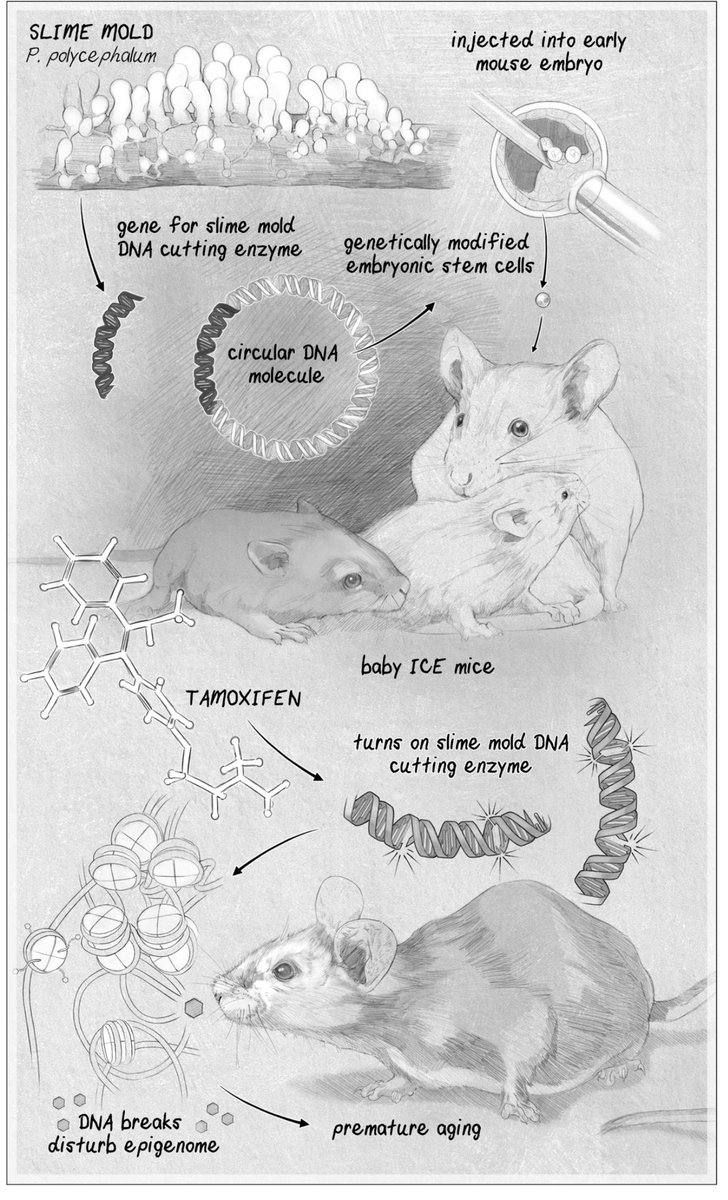
Delighted to share our latest study that tests The Information Theory of Aging. 13 years of work. Available at 11 AM EST today @CellCellPress. What’s it about? Here’s a clue from Catherine Delphia’s illustration in Lifespan
Please Vote this cycle in the USA (between now and Nov 8th 2022). Don't let someone else decide your future for you. Vote for those that allow women to choose their future, and that accept the majority of the people's choice, especially when they were not chosen.
@anshulkundaje Sounds fun! Selfishly focussed on brain/though, though. We think we can do it rare populations without transgenics by combining https://t.co/bepCLEM58E for isolation with https://t.co/YlKib6717d for labelling.
If you missed Gene's inspiring talk you can catch up on the #BG22 platform - a great historical perspective from someone with such experience is a real education ... many researchers working with #genome sequencing data today sometimes forget how far things have come!
.@CMU_Bio professor Zheng Kuang has received a National Institutes of Health Director's New Innovator Award from @NIH_CommonFund to support his research into how intestinal bacteria regulate metabolism and immunity.
https://t.co/JDyYYKdUCp