📢 New @auth0 product: Auth for GenAI 🤖 our new product for devs building apps with GenAI
It helps devs secure their GenAI apps, with the dev experience @auth0 is known for
You can start using Auth for GenAI today: auth0 dot ai
What's in the box?
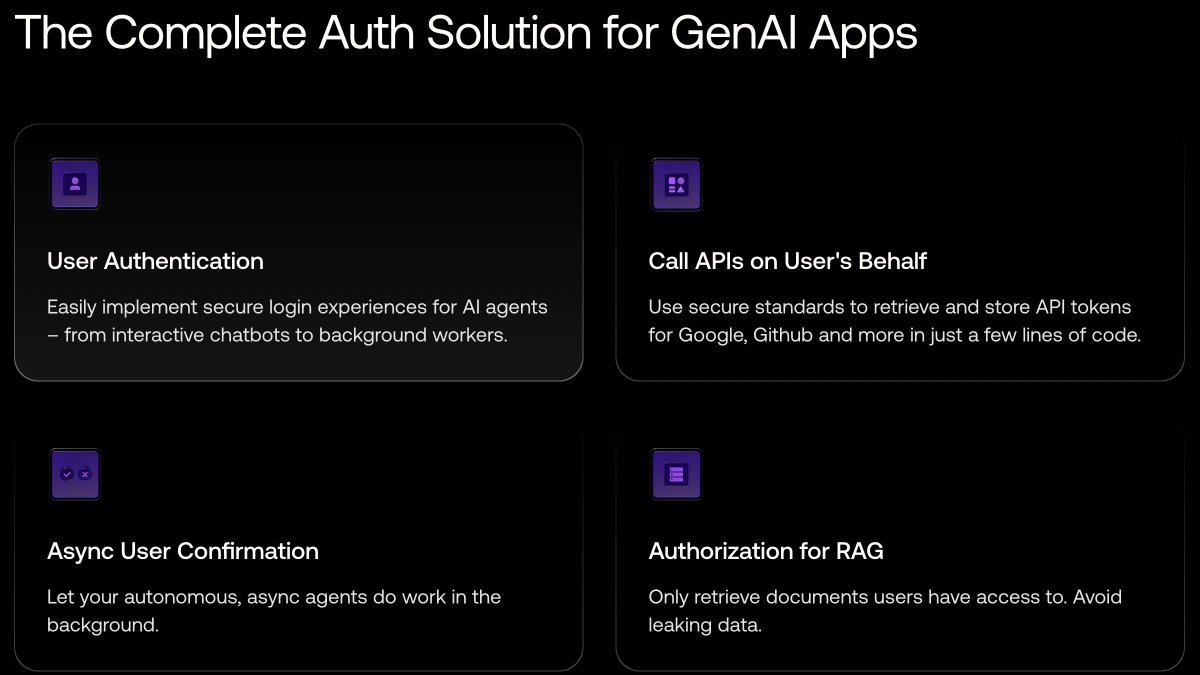
This developer preview supports 4 use cases:
1️⃣ User Authentication
2️⃣ Calling APIs on the users' behalf
3️⃣ Async User Confirmation
4️⃣ Authorization for RAG
1️⃣ User Authentication
GenAI agents or apps still need to know who the user is. e.g. a chatbot might need to display chat history, or know the user age/country to customize replies This requires authentication, and Auth for GenAI makes it easy to implement in GenAI apps
2️⃣ Calling APIs on the users' behalf
GenAI apps interact with other apps, e.g. to read emails or send a pull-request And they don't need a UI Agents need to call APIs with credentials that are for a single user, with narrow permissions
3️⃣ Async User Confirmation
Many GenAI workflows are async, take "longer" to reply @OpenAI's o family of models is a good example of it. Users won't wait in front of a chat window. GenAI agents need to support async confirmation securely
4️⃣ Authorization for RAG
GenAI apps use RAG to make relevant data available to LLMs for replies To avoid disclosing sensitive information, it is paramount to ensure that the content used to generate answers is content each user can access
How do we make all of this easy?
We have SDKs, docs and sample apps for many of the popular GenAI app frameworks: @aisdk@langchain@llama_index@Firebase Genkit and others like @CloudflareDev AI and @crewAIInc are coming soon
And we really want your feedback (my DMs are open, we have a Discord community). If you have issues, want other features, frameworks, or want to collaborate on making Auth for GenAI easy to integrate into your platform, I'd love to chat
I am very excited about how this product will enable all of us devs to make prod ready AI apps a reality. Looking forward to learning how you are using it!
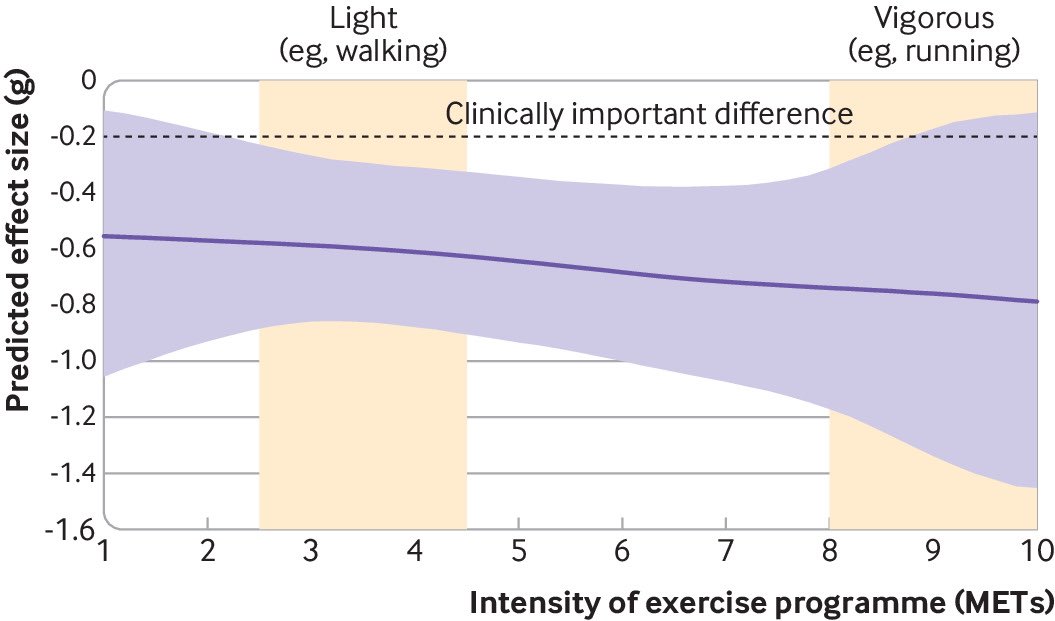
Switching brain state costs energy
"Stable" brain states exist in local energy minima, so there is an energy barrier to overcome to switch from one state to another
Nice summary of relevant papers and work by @DaniSBassett here:
https://t.co/wanGBIwpoX
Okta Showcase is LIVE! 🎬
We're unveiling the latest innovations to automatically detect, manage, and mitigate risks - from non-human Identity management to AI-ready security.
Tune into the livestream now: https://t.co/69Z9kP6WTc #OktaShowcase
📢 New @auth0 product: Auth for GenAI 🤖 our new product for devs building apps with GenAI
It helps devs secure their GenAI apps, with the dev experience @auth0 is known for
You can start using Auth for GenAI today: auth0 dot ai
What's in the box?
This developer preview supports 4 use cases:
1️⃣ User Authentication
2️⃣ Calling APIs on the users' behalf
3️⃣ Async User Confirmation
4️⃣ Authorization for RAG
1️⃣ User Authentication
GenAI agents or apps still need to know who the user is. e.g. a chatbot might need to display chat history, or know the user age/country to customize replies This requires authentication, and Auth for GenAI makes it easy to implement in GenAI apps
2️⃣ Calling APIs on the users' behalf
GenAI apps interact with other apps, e.g. to read emails or send a pull-request And they don't need a UI Agents need to call APIs with credentials that are for a single user, with narrow permissions
3️⃣ Async User Confirmation
Many GenAI workflows are async, take "longer" to reply @OpenAI's o family of models is a good example of it. Users won't wait in front of a chat window. GenAI agents need to support async confirmation securely
4️⃣ Authorization for RAG
GenAI apps use RAG to make relevant data available to LLMs for replies To avoid disclosing sensitive information, it is paramount to ensure that the content used to generate answers is content each user can access
How do we make all of this easy?
We have SDKs, docs and sample apps for many of the popular GenAI app frameworks: @aisdk@langchain@llama_index@Firebase Genkit and others like @CloudflareDev AI and @crewAIInc are coming soon
And we really want your feedback (my DMs are open, we have a Discord community). If you have issues, want other features, frameworks, or want to collaborate on making Auth for GenAI easy to integrate into your platform, I'd love to chat
I am very excited about how this product will enable all of us devs to make prod ready AI apps a reality. Looking forward to learning how you are using it!
Introducing the Evals API.
You can now programmatically define tests, automate evaluation runs, and quickly iterate on prompts.
Evals are still available in the dashboard—and now through the API, so you can integrate them anywhere in your workflow.
The reality of building web apps in 2025 is that it's a bit like assembling IKEA furniture. There's no "full-stack" product with batteries included, you have to piece together and configure many individual services:
- frontend / backend (e.g. React, Next.js, APIs)
- hosting (cdn, https, domains, autoscaling)
- database
- authentication (custom, social logins)
- blob storage (file uploads, urls, cdn-backed)
- email
- payments
- background jobs
- analytics
- monitoring
- dev tools (CI/CD, staging)
- secrets
- ...
I'm relatively new to modern web dev and find the above a bit overwhelming, e.g. I'm embarrassed to share it took me ~3 hours the other day to create and configure a supabase with a vercel app and resolve a few errors. The second you stray just slightly from the "getting started" tutorial in the docs you're suddenly in the wilderness. It's not even code, it's... configurations, plumbing, orchestration, workflows, best practices. A lot of glory will go to whoever figures out how to make it accessible and "just work" out of the box, for both humans and, increasingly and especially, AIs.
A deindustrialized America simply does not produce enough to pay for what it consumes.
It prints money instead. And exchanges these pieces of paper for valuable goods.
But if the world stops using that money, the US has a real problem. So, alienating allies is not a good idea.
What happens if high quality AI models become free, ubiquitous, and inexpensive to run on even low-spec hardware?
(1) First, you can rebuild every productivity app AI-first. That starts with Microsoft Word, Google Sheets, and Apple Keynote. But it extends to wholly new kinds of productivity apps.
(2) Second, every “smart” device becomes truly smart. Your fridge can double as your nutritionist. Your alarm clock is your sleep therapist. And so on. Just like your car is already your driver.
(3) Third, moats move to the app layer. As others have remarked, the GPT wrappers may end up more defensible than the GPT model itself.
(4) Fourth, physicality becomes relatively more valuable. The hardware, the secure real estate, the in-person community — these are all things digital AI can’t deliver.
(5) Fifth, high human IQ actually becomes increasingly valuable. Because AI is really amplified intelligence rather than truly agentic intelligence, since it requires the creative prompt to get started.
(6) Sixth, prompt engineering is here to stay, because prompting is programming — just in a higher-level language.
(7) Seventh, the most common form of AI doomerism is proven false, because we are getting decentralized ubiquitous AI rather than centralized monotheistic AI. More like a garden of smart things than a vengeful Old Testament God that’ll turn you into paperclips.
(8) Eighth, the combination of cuts to US “industrialized” academic research at the same time AI models accelerate discovery will mean a return to individual gentleman scientists and the advance of desci (decentralized science).
(9) Ninth, the complement to probabilistic AI is deterministic crypto. For captchas, for identity, for money, for all these things — crypto is the digital scarcity that AI can’t fake.
(10) Tenth, the main cost of software development may reduce to reducing the costs of the physical environment. That is: to providing society-as-a-service, to simply giving engineers time to type and experiment in peace. This was already so, but may become even more so.
Several of these points have been made by others, but I think that collectively they help define the second mover era.
building AI agents with python 🐍 and need to do RAG ? everyone does 😅
@langchain LangGraph 🤝@auth0 FGA make it easy and secure
@bajcmartinez explains how 👇
https://t.co/dGPWJR8eqd
New Auth0 Extension for @Netlify: Available NOW!
Want to add authentication to your Netlify project seamlessly? We've got you covered.
Let’s break it down. 🧵👇