@alliekmiller You make some fair points but I think a better analogy is that you’re giving cars for the first time to people who have been walking. I think this will be a game changer for everyone
The rumor is true: you can now buy Korean stocks via Interactive Brokers. I'll therefore ramp up my coverage of Korean equities in the next few months.
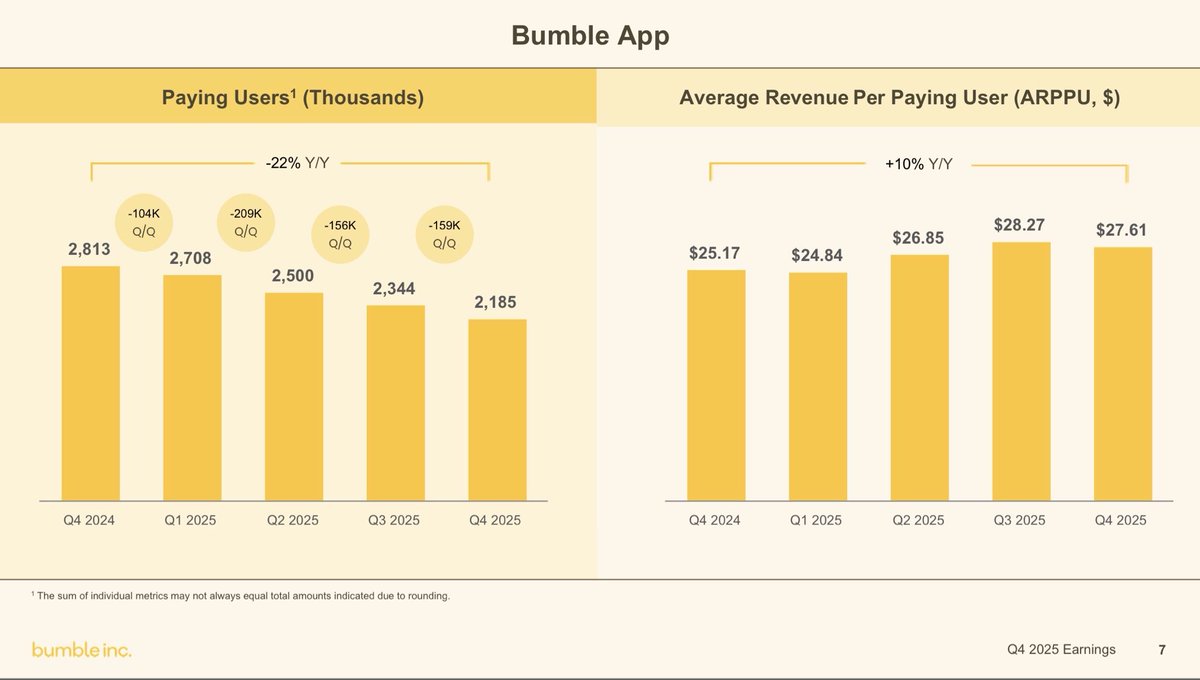
@JoeCandito12@sadandlonely_69 13% FCF yield at today’s price and FCF has been growing amidst the user declines. Hinge still has a ton of runway left and Sensor Tower data for Tinder looked a little better for Q1. I also think there’s meaningful potential for gross margin surprise to the upside
Back from the Fastmarkets Battery Raw Materials Conference in Shanghai — the mood in the lithium market is unrecognizable from October. Optimism is real, and here's what's driving it:
Consensus is building around a coming shortage. BESS demand is accelerating and some predict it will overtake EV as the growth driver, helped by improving cycle life economics. EV growth is slowing domestically, but Chinese exports are expected to compensate.
Africa supply expansion remains a concern. Li sulfate is becoming the go-to intermediate. Sodium-ion barely came up — though above $35/kg it could start taking share.
With ~90% of global lithium demand sitting in China, this is a must-attend event for any producer or future producer. If you're not in the room, you're missing the conversation that matters.
A market in transition. #Lithium #EnergyStorage #BatterySupplyChain #Fastmarkets
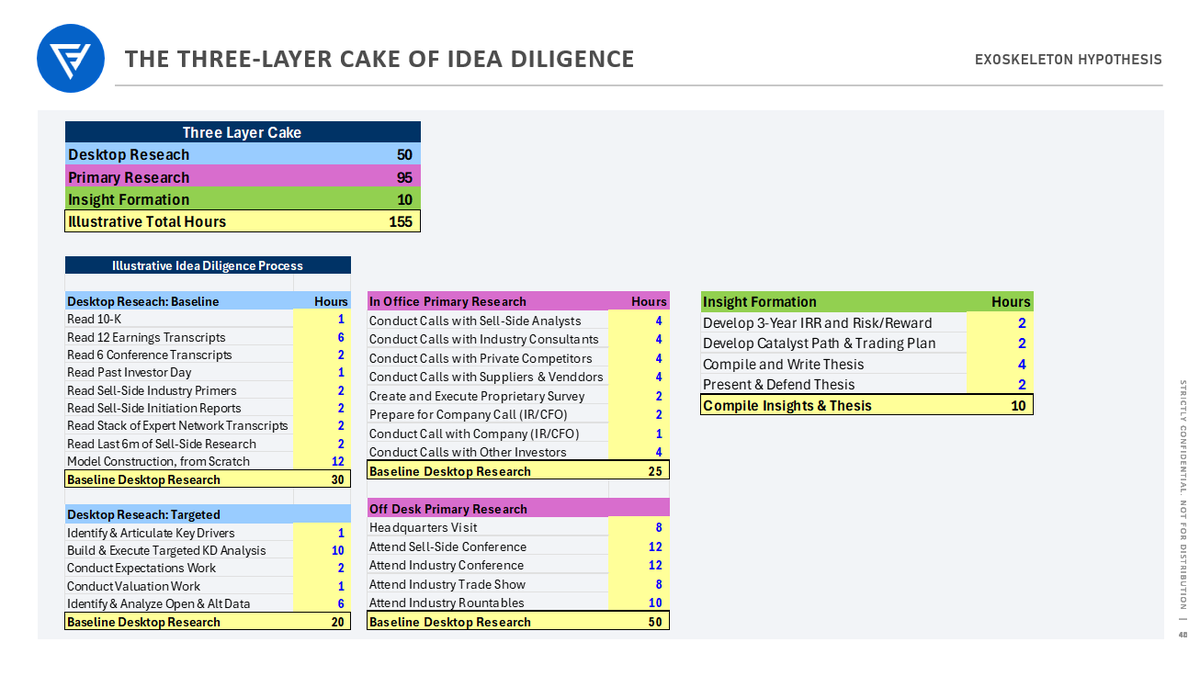
The Three-Layer Cake of Hedge Fund Due Diligence
On two recent podcasts, Dan Sundheim gave some high level scoping of the institutional due diligence process, saying to David Rubenstein "if it's a new company, it will probably take us 3-4 weeks" and on Cheeky Pint, "if you have a good idea, you could take a month and a half to write a memo".
To the casual observer, this seems like an insane amount of work (and certainly to an average retail investor who spends, on average, 6 minutes of due diligence on a name). Having been trained in the forge of a Tiger Cub where we had ~3 ideas per analyst in the portfolio, I could write a book on how to spend 150 hours on a name (and teaching this deep due diligence process is a core pillar of the Analyst Academy).
To me there are really three layers to the cake:
1) Desktop Research: anything I can do in front of a computer
2) Primary Research: Anything i can do on a phone call or off the desk
3) Insight Formation: This is the mental process that happens while conducting desktop and primary research. The output of the mosaic that I am feeding my brain. The "aha" moment when your pattern recognition sense kicks in while reading a paper transcript or 10-K with pen & highlighter in hand. There are some tangible parts of this layer, such as writing and compiling the thesis, but insight formation is just as likely (or more likely) to happen in the shower after 3 days of wrangling with desktop/primary research than it is to happen in front of a Bloomberg terminal. There is some ineffable magic that happens in feeding your brain with raw information, giving it the task of making sense of it all, sleeping on it, and seeing what comes out.
This is a directional recipe for the sort of idea diligence that high level institutional investors conduct.
And an important skeleton to consider when we consider wrapping our process in an AI exoskeleton. Despite what AI-maximalists may claim about "AI being able to do anything an analyst does", what you will observe here is that creating a differentiated investment thesis goes way beyond reading the 10-K and building the model. These are necessary but not sufficient parts of the workflow, but the real value-added parts of the investment process are the steps along that way that build the mosaic of differentiation that supports conviction in the idea (and only kicks off the real challenge of Bayesian updating of the thesis). A lot of this happens on the phones and off the desk.
And there is a very important and very meta question of if I speed run the desk-top research, do i short circuit the mosaic that is so critical in building that mental insight on a name? Sure, reading a 3-page summary of the K and transcript may save me 10 hours, but I do pay for that in weaker insight formation? And I've ruined the whole process. For this and many other reasons, AI adoption has been quite a bit slower among most institutional stock pickers than you might think.
Investing is an incredibly competitive game of poker, and my money will continue to be on the players who conduct rigorous, close to source investment diligence vs. those who speed-run the due diligence process & produce AI slop. AI is incredibly powerful, but should be used to *carefully* compress mechanics, deepen rigor, and add validation and emotional neutrality in the context of this ~3-4 week process, not compress it down to 3-4 hours.
NEW: Internet users have raised $280,000 for an elderly man who became a DoorDash delivery driver to help pay for his and his wife's bills.
A Tennessee woman decided to take matters into her own hands when she saw the man delivering her Starbucks.
"I work because I have to. I don't really want to. I was actually retired, but my wife lost her job at no fault of her own, which also means she lost her health insurance," the man told the customer who tracked him down after seeing him on her Ring camera.
"So by the time we pay our living expenses plus our medical expenses for our medicines, we have nothing left at the end of the month."
Video: savetheweens931 / tt.
@chamath@mcuban I think SSaaS say to their customers, “this new AI tool cut your need for a $80k/yr human. We will charge you $20-$30k/year for this”. So basically if these AI productivity tools cut half the seats, it needs to be priced at 2x to sustain current revenue. I think that’s feasible
@morpheus7447x@value_invest12@joemvnuel We shall see how it all plays out. BMBL is too risky for me but I like MTCH’s risk-reward. User losses are not nearly as bad and Hinge is a crown jewel asset. I’ll have a write up posted shortly