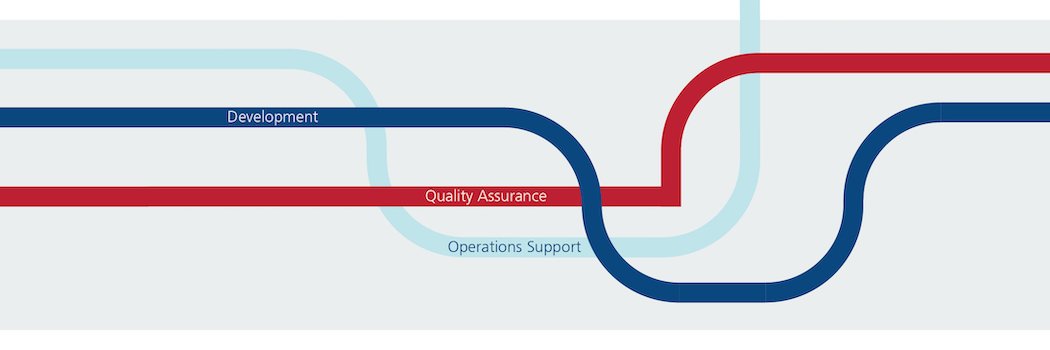
We provide services in software development, Software QA and 24x7 IT support.
Besides that we have a product for appointment management for the doctors.
Think twice before buying on @TataCLiQFashion , last couple of days I received 3 calls asking me to do repayment since payment is blocked, one of the number is 9088644354, Google flagged it spam. They were having all my details and order details as well. How this data was leaked?
Delighted to welcome the announcement made today in #Geneva!
The global conversation on #AI will continue in #Switzerland, following the handover from 🇮🇳 Prime Minister @narendramodi to🇨🇭President @ParmelinG at the 2026 AI Summit in New Delhi.
At the Geneva #AISummit on 21-22 June, 2027, world leaders, experts and international organisations will gather in the city, built on dialogue and #multilateralism, on 2 key priorities- AI as a driver of global prosperity and progress, and fostering its safe use.
Big conversations. Bold ideas. One global stage: #InternationalGeneva. 🌍
#SwissAI #tech #artificialintelligence #summit
@SwissMFA | @DefrWbf | @bakomCH | @UVEK | @ITU | @Geneve_int | @SwissEmbassyIND | @swissnexindia
our knee can heal itself. It just needed Germany to hand it the blueprint.
Doctors in Stuttgart did something quietly radical. They built a gel that lets damaged joint cartilage rebuild itself, no implants, no metal, no major reconstruction.
It's called ChondroFiller liquid.
Here's how it works.
A surgeon injects the liquid into the damaged spot during a single minimally invasive arthroscopic procedure. Within 3 to 5 minutes, it hardens into a stable matrix, molding perfectly to the exact shape of the lesion.
Then the real magic starts.
That matrix becomes a scaffold. Your own repair cells migrate in from the surrounding tissue, multiply, and slowly transform into chondrocytes, the cells that actually build cartilage. Over the following months, your body replaces the gel with brand-new tissue grown from you.
No fibrin glue. No drilling into the bone.
This isn't a fringe experiment, either.
The device is made by Meidrix Biomedicals, developed alongside scientists at the Fraunhofer Institute for Interfacial Engineering and Biotechnology in Stuttgart. It's been CE-certified since its market launch in 2013 and has already been implanted in more than 20,000 patients worldwide.
The numbers back it up.
In one study of 26 patients with hip cartilage defects larger than 2 cm², 81% achieved good or excellent results. MRI scans confirmed significant healing in over 90% of cases.
One important caveat: it's built for small, focal cartilage defects, not advanced arthritis. Patients with severe osteoarthritis saw weaker results.
But for the right injury, this flips the script entirely.
Instead of replacing the joint, you give it the tools to repair itself.
Source: Meidrix Biomedicals / Fraunhofer Institute IGB, Stuttgart; clinical data via Kazinform News Agency
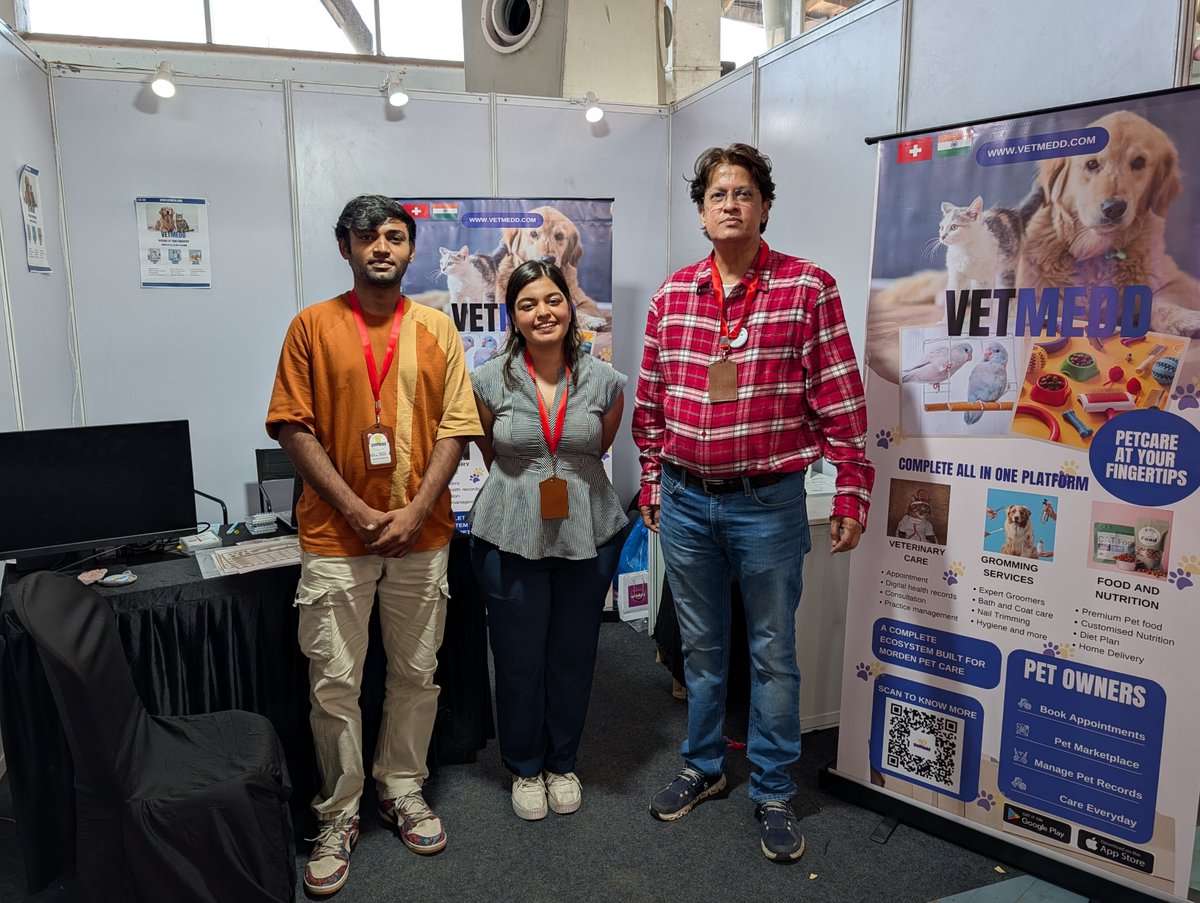
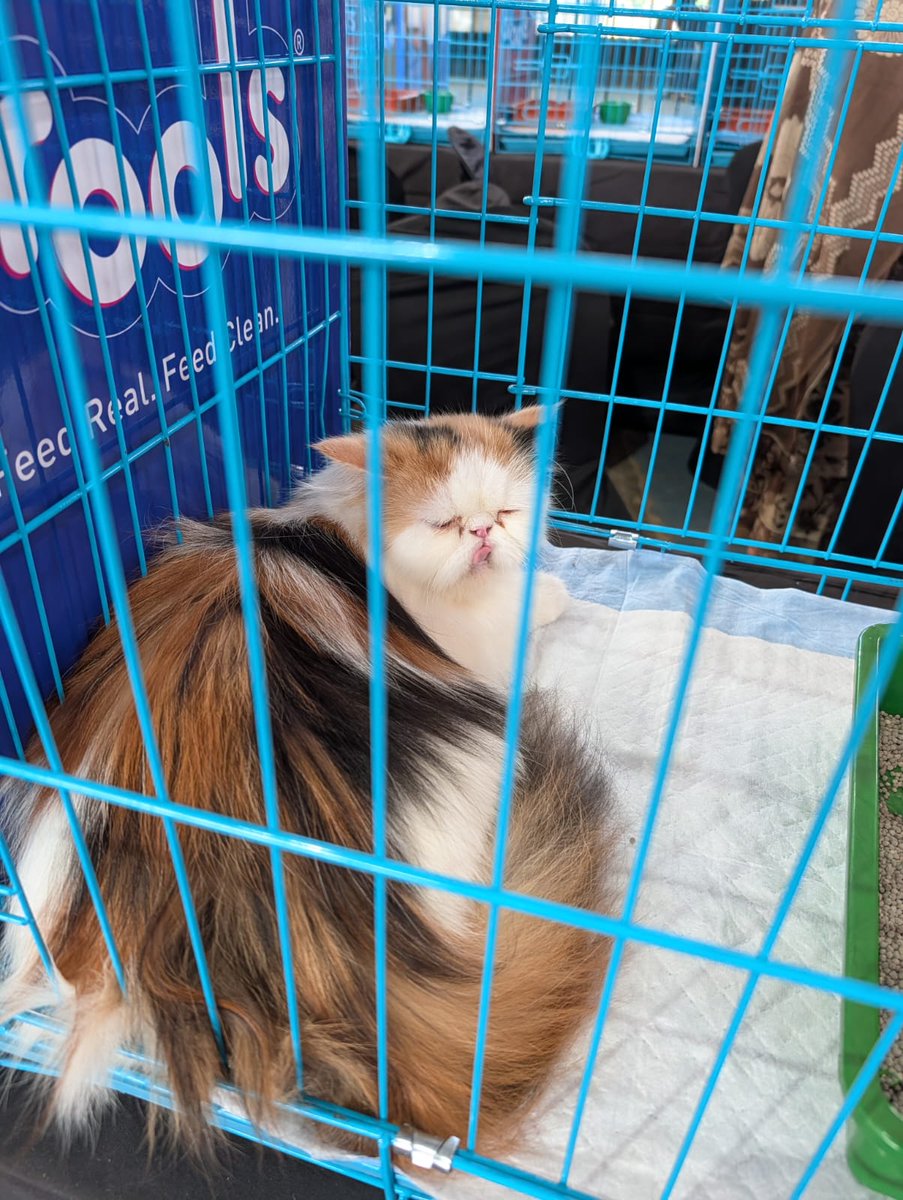
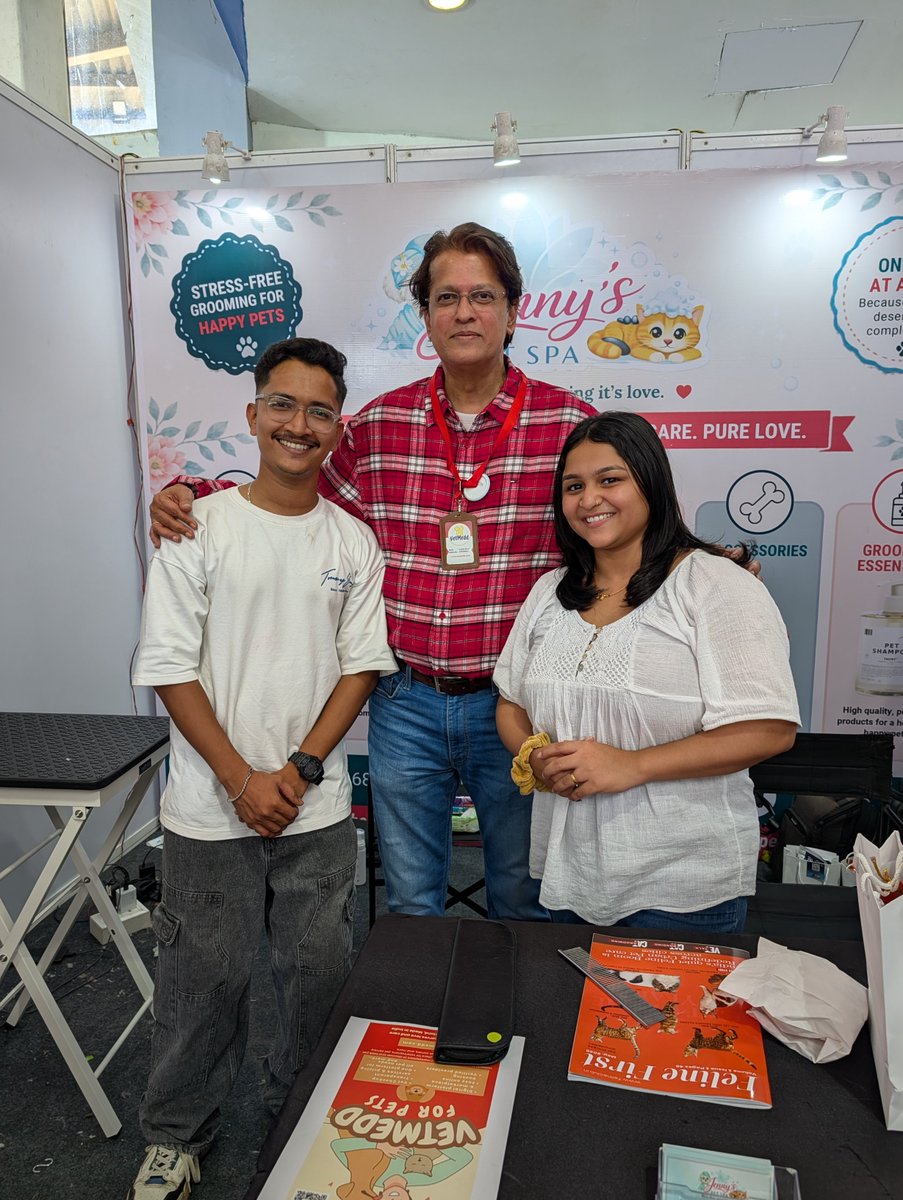
Amazing day representing VetMedd at the 🐱🚀Connected with breeders, vets, pet parents & leading pet brands while showcasing how VetMedd is digitizing pet healthcare in India.#VetMedd#CatExpo2026#PetTech
268 years ago this day, on May 8, 1758 - The Marathas defeated the armies of the Durani Empire at the 'The Battle of Peshawar'.
Peshawar was captured by the Maratha forces. The Marathas were led Raghunathrao (younger brother of Nanasaheb Peshwa) and Malharrao Holkar.
(Read more about this campaign in @MulaMutha's excellent books about 18th century Maratha History).
This victory helped the Maratha Empire reach its peak - its control now extended to the border of present day Afghanistan, located nearly 2,000 km away from their base in #Pune.
Most of Central and Eastern India was also under their control. The Maratha Empire extended from 'Attock to Cuttack'. Ten days earlier, the Marathas had won 'The Battle of Attock', on the banks of the Sindhu (Indus) river.
The planting of the Maratha flag on the Attock fort was a key moment in the history of Maratha Empire's expansion.
An expression popular to this date: 'Atkepar Zende' ... ['(Maratha) Flags Beyond Attock'] was coined.
Historically, the Attock Fort guarding the passage across the Indus river, and Peshawar were considered to be the northwest frontiers for many empires.
Around the time of Battle of Peshawar, there is a record of correspondence between Raghunathrao and the Shah of Iran. The Shah wanted to cooperate with the Marathas in crushing the Durani Empire. Raghunathrao mentions how an Indian empire needs to reach Kabul and beyond (as in the past).
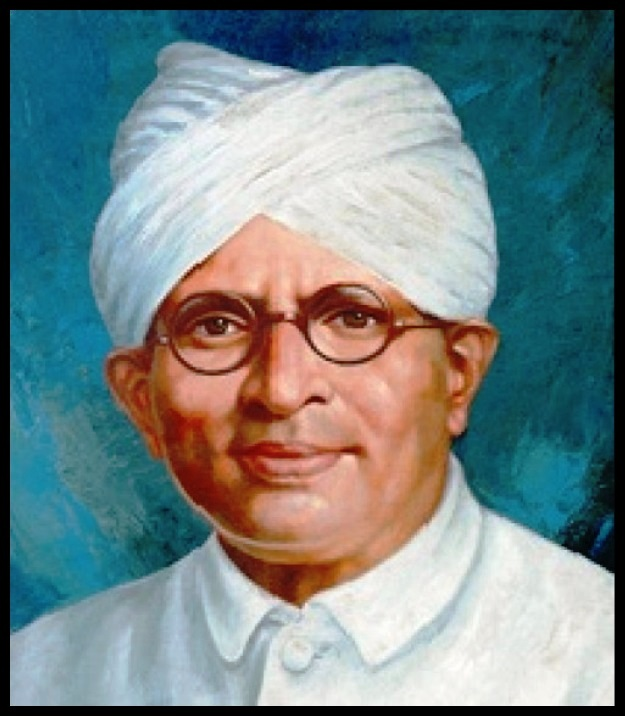
In 1919, 1 man bought a Ghost Ship & challenged the entire British Navy. They tried to bankrupt him with a Zero-Price war, but he won by turning a ferry ticket into a vote for Freedom. From building India’s 1st aircraft factory in secret to carving railway tunnels through impassable mountains, he was the Industrial Guerilla who taught a colony how to fly, sail, & drive. Discover the man who made Made in India a threat to the Empire.
He is the man who looked at the British "No Entry" signs across Indian industry & decided to build a sledgehammer.
After WWI, the British shipping giant BI (British India Steam Navigation) had a total monopoly on Indian waters. No Indian was allowed to own a large-scale shipping line. On 5th Apr 1919, just days before the Jallianwala Bagh massacre, an Indian man, with no background in shipping, Walchand Hirachand Doshi spotted a ship called the SS Loyalty in Bombay harbor. It was a hospital ship being sold after WWI. W/o waiting for a license, he bought it & launched the SS Loyalty, the 1st ship of the Scindia Steam Navigation Company.
The British tried to sink him financially. They started a Price War, dropping ticket prices to almost zero to bankrupt Walchand. Walchand did not blink. He appealed to Indian pride. He told the public: "Even if their tickets are free, if you travel with them, you travel in chains." Indians chose to pay for Walchand's tickets. He broke the 100 yr British naval monopoly. This is why 5th April is still celebrated as National Maritime Day.
The British govt in India had a strict policy: "India will produce raw materials; Britain will produce machines." They flatly refused to give a license for an Indian car factory. Walchand realized he could not wait for permission. He went to the USA & met Walter Chrysler.
He told Chrysler, I want to build an Indian car for Indian roads. Chrysler was impressed by his grit. Together, they bypassed British red tape to set up Premier Automobiles (the birthplace of the legendary Padmini/Fiat). He proved that an Indian could build an engine, not just a bullock cart.
During WWII, the British were desperate for aircraft maintenance in the East but did not want Indians to know the secrets of aviation. Walchand did not ask the British. In Oct 1939, Walchand was returning from the United States (where he had gone to explore setting up a car factory, including talks with Chrysler).
On a Pan Am Clipper flight from San Francisco to Hong Kong, he had a chance meeting with American industrialist William D. Pawley (president of Intercontinent Corporation and involved in aircraft manufacturing for China). Pawley was on his way to China to support aircraft production there (for the Chinese government amid the war with Japan).
During the flight, Walchand discussed his ambitions with Pawley, who shared insights from his China operations. This conversation sparked the idea for an aircraft factory in India. With the help of Maharaja of Mysore, he set up Hindustan Aircraft Ltd. (now HAL) in Bangalore in 1940. When the British realized what he had done, they were furious but had to nationalize it because they needed the planes for the war effort.
Every time we see a Tejas/a Sukhoi take off today, remember that the runway was laid by Walchand’s defiance in 1940.
Walchand’s company, Hindustan Construction Company (HCC), was responsible for the Bhor Ghat & Thull Ghat railway tunnels. British engineers said the Sahyadri mountains were too tough for Indian contractors. They wanted to give the contracts to London firms. Walchand took the contract, used indigenous techniques, & completed the tunnels ahead of schedule & at a lower cost. He proved that Indian Civil Engineering could move mountains.. literally.
Despite being 1 of the richest men in India, Walchand was a symbol of the Swadeshi spirit. He would walk into boardrooms with British Lords & present his papers in Marathi/Gujarati if he felt they were being condescending. His agenda was clear: "I do not want to be a rich man in a poor country; I want to be a productive man in a rich country.
Walchand Hirachand was the Architect of Infrastructure. If Tata built the Steel, Walchand built the Speed.... the ships, the cars, & the planes. He was the 1st Indian to understand that true independence is the ability to move our own people on our own machines.
He was the man who turned "Made in India" from a dream into a Turbine. He did not just compete with the British; he made them irrelevant in their own specialized fields.
You can now ask Gemini to create Docs, Sheets, Slides, PDFs, and more directly in your chat. No more copying, pasting, or reformatting, just prompt and download.
Available globally for all @GeminiApp users.
Cheese from India makes its mark globally…
India made an impressive debut at the Mundial do Queijo do Brasil 2026, which is a vibrant international competition for cheese and dairy products. Four Indian products won medals, including 1 Super Gold, 2 Golds and 1 Silver.
The Super Gold was won by Eleftheria Gulmarg (Brie Style), the Golds were won by Yak Churpi-Soft, Nordic Farm, Leh, Ladakh and Eleftheria Brunost (Whey Cheese) while the Silver was won by Eleftheria Kaali Miri (Belper Knolle Style). Congratulations to Mausam Narang and Thenlay Nurboo.
Such successes strengthen India’s artisanal dairy sector on the world stage.
Kapil Dev's legacy in terms of number -
He remains the only man in the history of Test cricket to claim 400 wickets and score 5,000 runs. No one else has even managed the 400-wicket and 4,000-run double.
From 1988 to 1994, he was the leading wicket-taker in the world in ODIs, finishing ahead of legends like Imran Khan, Richard Hadlee, and Malcolm Marshall.
He was the first bowler ever to reach both 200 and 250 ODI wickets.
He is the only captain in the 140-year history of Test cricket to take 9 wickets in a single innings.
He is also still the youngest captain to ever win a World Cup, lifting the trophy at just 24 years old.
If you want to talk about sheer aggression, his ODI batting strike rate was 95, and his Test strike rate was over 80.
He hit four consecutive sixes in a Test match to avoid a follow-on.
He still holds the record for the fastest Test fifty at Lord's off just 35 balls.
Add in the fact that he batted 184 times in Test cricket and was never run out a single time.




![aparanjape's tweet photo. 268 years ago this day, on May 8, 1758 - The Marathas defeated the armies of the Durani Empire at the 'The Battle of Peshawar'.
Peshawar was captured by the Maratha forces. The Marathas were led Raghunathrao (younger brother of Nanasaheb Peshwa) and Malharrao Holkar.
(Read more about this campaign in @MulaMutha's excellent books about 18th century Maratha History).
This victory helped the Maratha Empire reach its peak - its control now extended to the border of present day Afghanistan, located nearly 2,000 km away from their base in #Pune.
Most of Central and Eastern India was also under their control. The Maratha Empire extended from 'Attock to Cuttack'. Ten days earlier, the Marathas had won 'The Battle of Attock', on the banks of the Sindhu (Indus) river.
The planting of the Maratha flag on the Attock fort was a key moment in the history of Maratha Empire's expansion.
An expression popular to this date: 'Atkepar Zende' ... ['(Maratha) Flags Beyond Attock'] was coined.
Historically, the Attock Fort guarding the passage across the Indus river, and Peshawar were considered to be the northwest frontiers for many empires.
Around the time of Battle of Peshawar, there is a record of correspondence between Raghunathrao and the Shah of Iran. The Shah wanted to cooperate with the Marathas in crushing the Durani Empire. Raghunathrao mentions how an Indian empire needs to reach Kabul and beyond (as in the past).](https://pbs.twimg.com/media/HHxeQC9agAA2O9J.png)
![aparanjape's tweet photo. 268 years ago this day, on May 8, 1758 - The Marathas defeated the armies of the Durani Empire at the 'The Battle of Peshawar'.
Peshawar was captured by the Maratha forces. The Marathas were led Raghunathrao (younger brother of Nanasaheb Peshwa) and Malharrao Holkar.
(Read more about this campaign in @MulaMutha's excellent books about 18th century Maratha History).
This victory helped the Maratha Empire reach its peak - its control now extended to the border of present day Afghanistan, located nearly 2,000 km away from their base in #Pune.
Most of Central and Eastern India was also under their control. The Maratha Empire extended from 'Attock to Cuttack'. Ten days earlier, the Marathas had won 'The Battle of Attock', on the banks of the Sindhu (Indus) river.
The planting of the Maratha flag on the Attock fort was a key moment in the history of Maratha Empire's expansion.
An expression popular to this date: 'Atkepar Zende' ... ['(Maratha) Flags Beyond Attock'] was coined.
Historically, the Attock Fort guarding the passage across the Indus river, and Peshawar were considered to be the northwest frontiers for many empires.
Around the time of Battle of Peshawar, there is a record of correspondence between Raghunathrao and the Shah of Iran. The Shah wanted to cooperate with the Marathas in crushing the Durani Empire. Raghunathrao mentions how an Indian empire needs to reach Kabul and beyond (as in the past).](https://pbs.twimg.com/media/HHxeOrMbUAABTwV.png)
![aparanjape's tweet photo. 268 years ago this day, on May 8, 1758 - The Marathas defeated the armies of the Durani Empire at the 'The Battle of Peshawar'.
Peshawar was captured by the Maratha forces. The Marathas were led Raghunathrao (younger brother of Nanasaheb Peshwa) and Malharrao Holkar.
(Read more about this campaign in @MulaMutha's excellent books about 18th century Maratha History).
This victory helped the Maratha Empire reach its peak - its control now extended to the border of present day Afghanistan, located nearly 2,000 km away from their base in #Pune.
Most of Central and Eastern India was also under their control. The Maratha Empire extended from 'Attock to Cuttack'. Ten days earlier, the Marathas had won 'The Battle of Attock', on the banks of the Sindhu (Indus) river.
The planting of the Maratha flag on the Attock fort was a key moment in the history of Maratha Empire's expansion.
An expression popular to this date: 'Atkepar Zende' ... ['(Maratha) Flags Beyond Attock'] was coined.
Historically, the Attock Fort guarding the passage across the Indus river, and Peshawar were considered to be the northwest frontiers for many empires.
Around the time of Battle of Peshawar, there is a record of correspondence between Raghunathrao and the Shah of Iran. The Shah wanted to cooperate with the Marathas in crushing the Durani Empire. Raghunathrao mentions how an Indian empire needs to reach Kabul and beyond (as in the past).](https://pbs.twimg.com/media/HHxeNnAbIAAx8Gk.png)




![aparanjape's tweet photo. 268 years ago this day, on May 8, 1758 - The Marathas defeated the armies of the Durani Empire at the 'The Battle of Peshawar'.
Peshawar was captured by the Maratha forces. The Marathas were led Raghunathrao (younger brother of Nanasaheb Peshwa) and Malharrao Holkar.
(Read more about this campaign in @MulaMutha's excellent books about 18th century Maratha History).
This victory helped the Maratha Empire reach its peak - its control now extended to the border of present day Afghanistan, located nearly 2,000 km away from their base in #Pune.
Most of Central and Eastern India was also under their control. The Maratha Empire extended from 'Attock to Cuttack'. Ten days earlier, the Marathas had won 'The Battle of Attock', on the banks of the Sindhu (Indus) river.
The planting of the Maratha flag on the Attock fort was a key moment in the history of Maratha Empire's expansion.
An expression popular to this date: 'Atkepar Zende' ... ['(Maratha) Flags Beyond Attock'] was coined.
Historically, the Attock Fort guarding the passage across the Indus river, and Peshawar were considered to be the northwest frontiers for many empires.
Around the time of Battle of Peshawar, there is a record of correspondence between Raghunathrao and the Shah of Iran. The Shah wanted to cooperate with the Marathas in crushing the Durani Empire. Raghunathrao mentions how an Indian empire needs to reach Kabul and beyond (as in the past).](https://pbs.twimg.com/media/HHxeRc-bcAABts5.png)