PhD fellow at @iiit_hyderabad @precogatiiith| Researcher at TCS Research | NLP researcher at @iiit_hyderabad. Interested in NLP, Deep Learning and Robotics.
🚨 New Paper Alert! 🚀
Introducing Shadow Unlearning, a novel task in privacy-preserving unlearning, which enables selective unlearning on anonymized forget data.
Preprint: https://t.co/wel8MHfznb
Code: https://t.co/5LCLa4sT8A /c @precogatiiith@ashokurlana
1/n 🧵
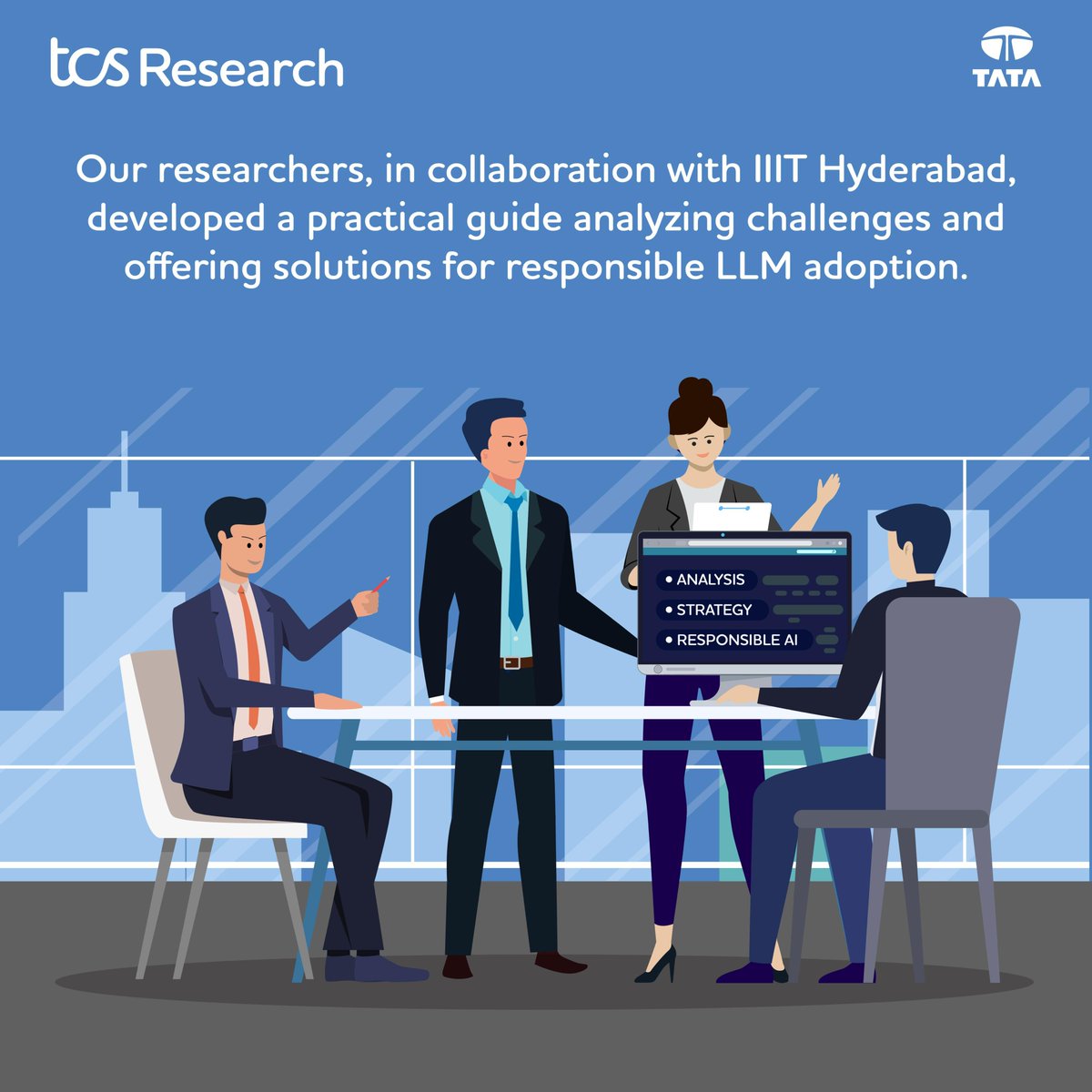
Implementing LLMs remains a challenge due to diverse industry requirements and constraints.
At COLING 2025, our researchers in collaboration with IIIT Hyderabad, presented a practical guide to help industries optimize LLM usage responsibly.
Know more- https://t.co/ShpKLhqVGq
#AIAdoption #DataPrivacy #COLING2025 #Research
I will be presenting our accepted paper at @coling2025, Abu Dhabi. Looking forward to connect and discuss. I am also interested to discuss explainability, interpretability, source attribution of LLMs and more.
@TCSResearch,@iiit_hyderabad, #LLMs, #industry_track
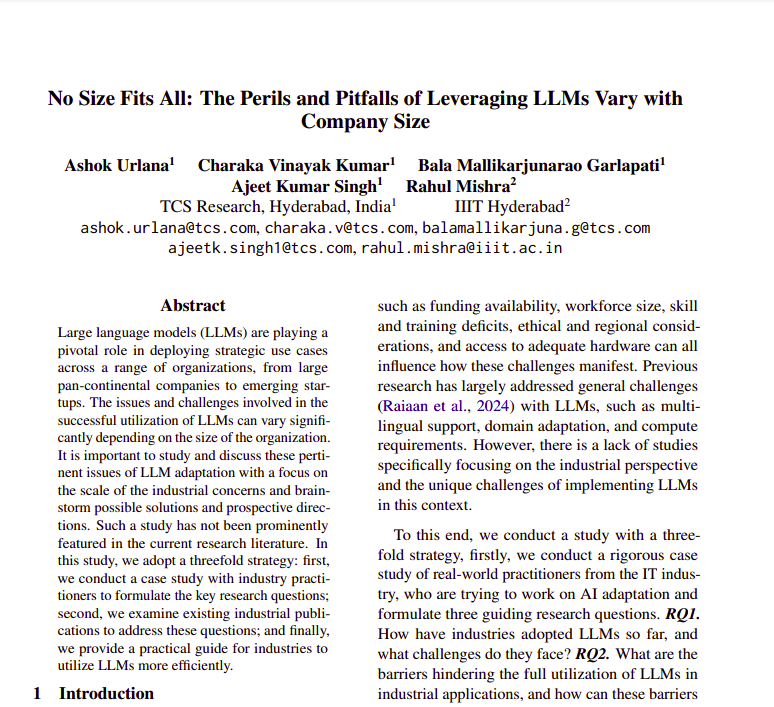
Thrilled to announce that our work "No Size Fits All: The Perils and Pitfalls of Leveraging LLMs Vary with Company Size" has been accepted to @coling2025 (Industry track). Congrats to co-authors Vinayak, Bala, Ajeet, @robustrahul.
Pre-print: https://t.co/xW9VtlMunA
Thrilled to announce that our work "No Size Fits All: The Perils and Pitfalls of Leveraging LLMs Vary with Company Size" has been accepted to @coling2025 (Industry track). Congrats to co-authors Vinayak, Bala, Ajeet, @robustrahul.
Pre-print: https://t.co/xW9VtlMunA
Gradient checkpoint seems to be an underappreciated feature of @huggingface models. It looks like that you can (SOMETIMES) even reduce training time by enabling gradient checkpointing and increasing the batch size. Thoughts?
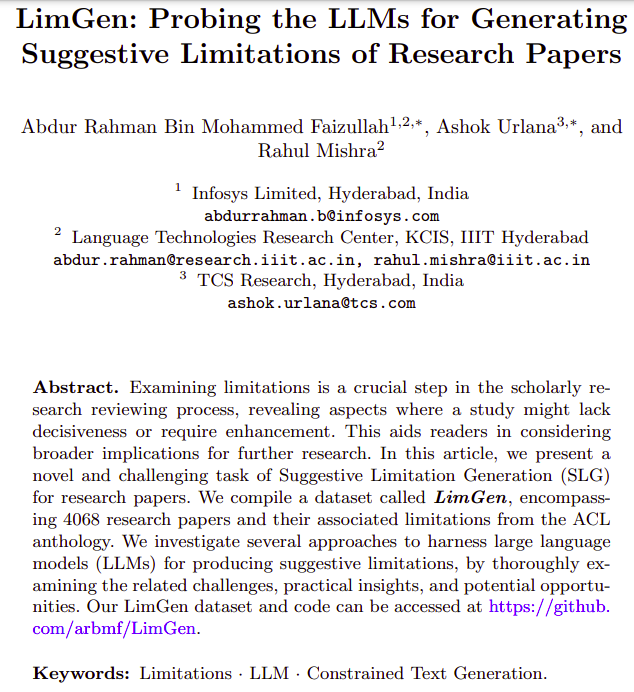
Happy to share that our work "LimGen: Probing the LLMs for Generating Suggestive Limitations of Research Papers" accepted to @ECMLPKDD. Thanks to all the amazing co-authors Abdur Rahman, @robustrahul.
Paper: https://t.co/BVqJFA37BP
Happy to share that our work "Controllable Text Summarization: Unraveling Challenges, Approaches, and Prospects - A Survey" has been accepted to @aclmeeting Findings. Thanks to all the amazing co-authors @robustrahul,@pruthwiknitrkl,Thathagato Roy.
Paper: https://t.co/LzZEZ0iul5
I needed to analyze data, would've taken me 15 mins to code
I asked GPT4 to code it cause it's 2024 and humans dont code anymore
It made a mistake so I asked it to fix it. There was a mistake in the fix so I asked again
Anyways its 1 hour later now and I still dont have the code
Let's discuss Indian language summarization datasets. First up, TeSum, a Telugu Abstractive Summarization dataset containing 20k+ article-summary pairs (with a 80,20,20% train/valid/test split).
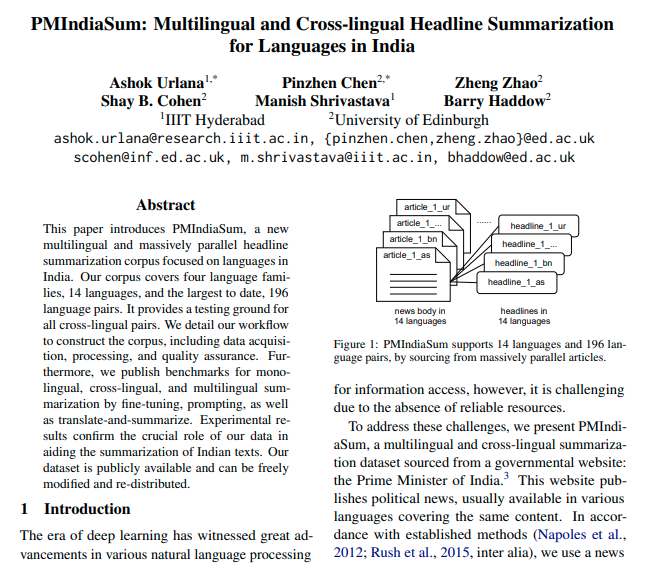
Also check out another work on releasing a multilingual and cross-lingual summarization dataset for languages in India with my amazing collaborators. @pinzhen_chen and I will be presenting the posters in person at PS6 on the 10th starting from 9AM! #EMNLP2023#NLProc
Our work "PMIndiaSum: Multilingual and Cross-lingual Headline Summarization for Languages in India" accepted at @emnlpmeeting 🎉 collaboration b/w @iiit_hyderabad and @EdinburghNLP, thanks to all my amazing co-authors @pinzhen_chen @zhengzhao97 Shay B. Cohen @manshri@bazril
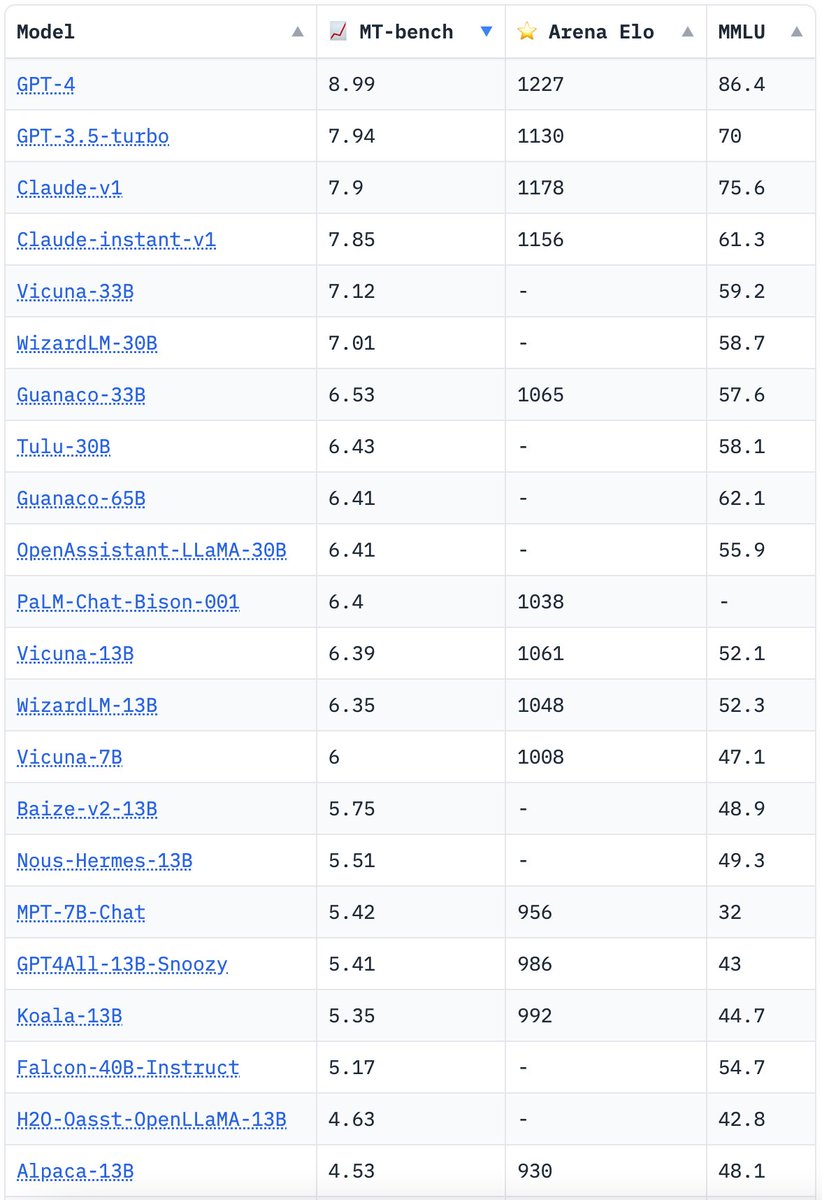
🔥Big news from Chatbot Arena: Meet our new MT-Bench leaderboard & Vicuna-33B!
We present a comprehensive, scalable, and validated leaderboard differentiating across open (Falcon, Wizard & Guanaco) and proprietary models (GPT-4, Claude & PaLM).
Blog post:
https://t.co/6KHT4UqE3n
🚀 Start summarizing! Cohere just launched Cohere Summarize Beta, a revolutionary new endpoint for text summarization! Matthias Gallé and Sheena Hillier spill the tea in their latest blog post. 🧵1/4
Don't miss out: https://t.co/VVPf2sNwIP
Excited to announce that our work "Indian Language Summarization using Pretrained Seq2Seq Models" was accepted in the ILSUM track of the FIRE conference (first rank across all tasks).
A big thank you to my collaborators: @ashokurlana, Nirmal Surange and Prof. Manish Shrivastava.
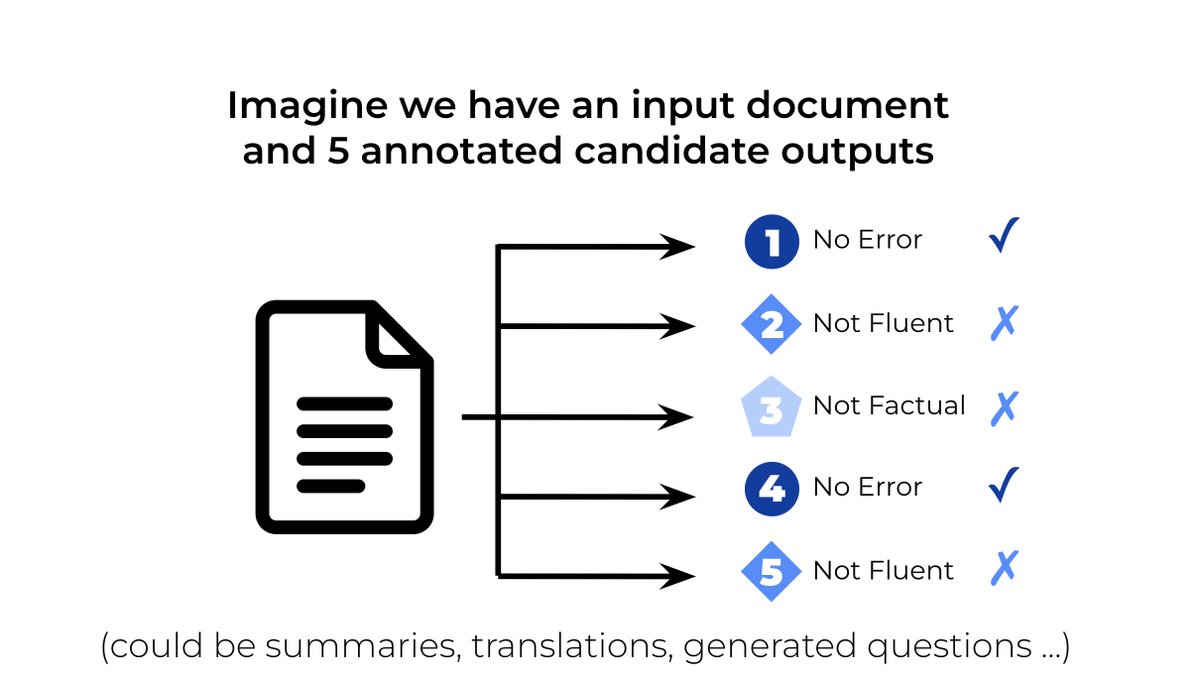
As text generation models become more creative, evaluating progress becomes more challenging. Near-Negative Distinction is a new evaluation method bridging human and automatic evaluation by re-purposing previous human evaluation annotations. Learn more > https://t.co/1RJl8Hrcvv