Also shouting out @zhou_jian who did a lot of pioneering work on sequence-to-function models. DeepSEA is one of the earliest papers in this field, and he continues to make great contributions to the space
New in @NatureBiotech from Aly Khan: a platform combining yeast display with fine-tuned protein language models to identify antigens driving autoimmune disease. In collaboration with Chris Garcia at @Stanford / @hhmi_science 🧵
@sokrypton@DeryaTR_ I bet the demand of scientists for experimental structure determination and functional characterization increased instead of decreased after we “solved” the protein folding problem with AI.
@DdelAlamo This has been the case for a couple of recent works, fine tuned pLMs are less effective in structure prediction tasks. Some of them don’t want to highlight this because they spent a lot of effort on their pLMs.
It was my pleasure to work with you and the team on this exciting hybrid protein engineering platform! Can't wait to see the potential applications that come out of this!
Delighted to share a summary of my recent research paper on Deploying synthetic coevolution and machine learning to engineer protein-protein interactions! We
developed a new approach for coevolution of protein interfaces! (1/8)
https://t.co/tu9xkWyyjZ
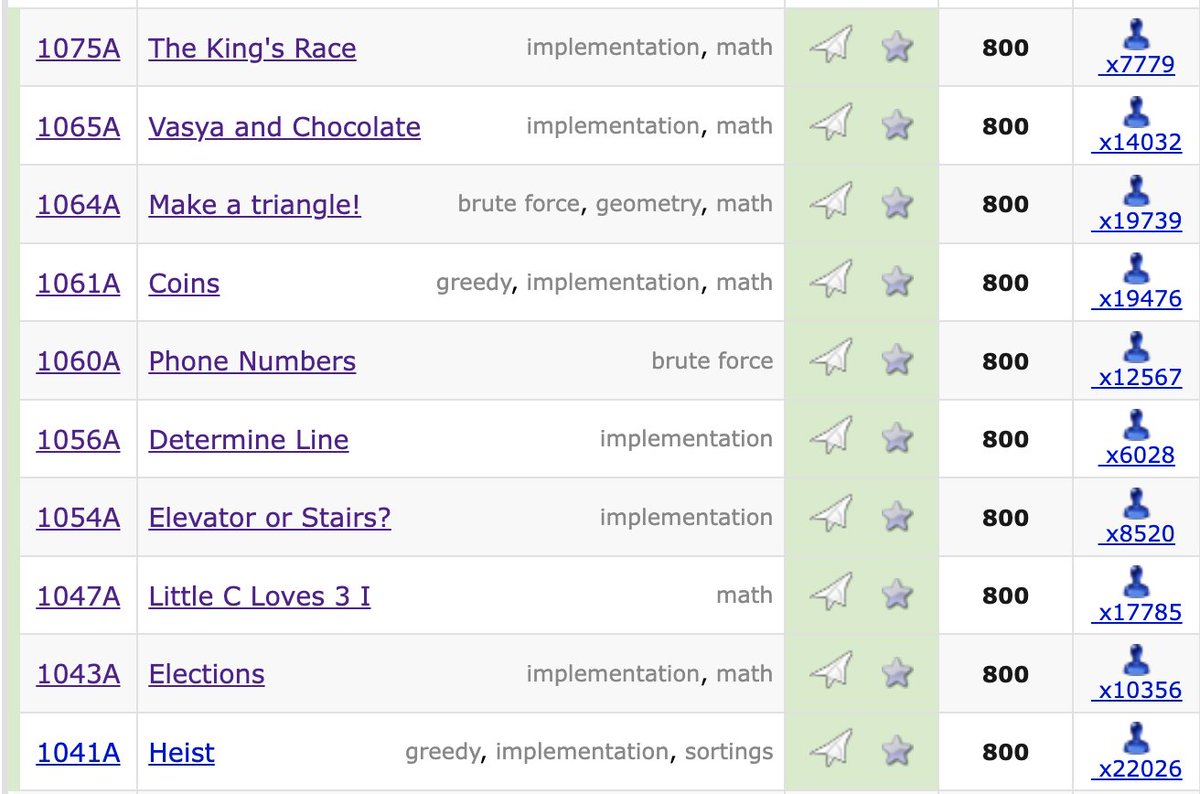
I suspect GPT-4's performance is influenced by data contamination, at least on Codeforces.
Of the easiest problems on Codeforces, it solved 10/10 pre-2021 problems and 0/10 recent problems.
This strongly points to contamination.
1/4
@robin_andersson@Salvatore3Marco Nice Work! We have explored transfer learning for regulatory profiling in the context of the neural developmental process in https://t.co/1jWsGoKsop with a very similar framework named MetaChrom. It will be interesting to see the comparison of performance between these methods.
Read this new article, "Annotating functional effects of non-coding variants in neuropsychiatric cell types by deep transfer learning", here: https://t.co/L8Poj0ACg3